
Yunus - Jonas
Arabic Name: يُوْنـُس
Urdu Name: یونس
Type: Makki
Serial Number: 10
Revelation Order: 51
Total Verses: 109
Parah: 11
Rukus: 11
Sajda: None
Related Hadith
"The story of the origins of idol worship after the death of righteous men in the nation of Prophet Nuh."
Confirms that 'partners' often refers to deceased humans who are unaware of the worship directed at them, as stated in the verse.
Share Verse Art
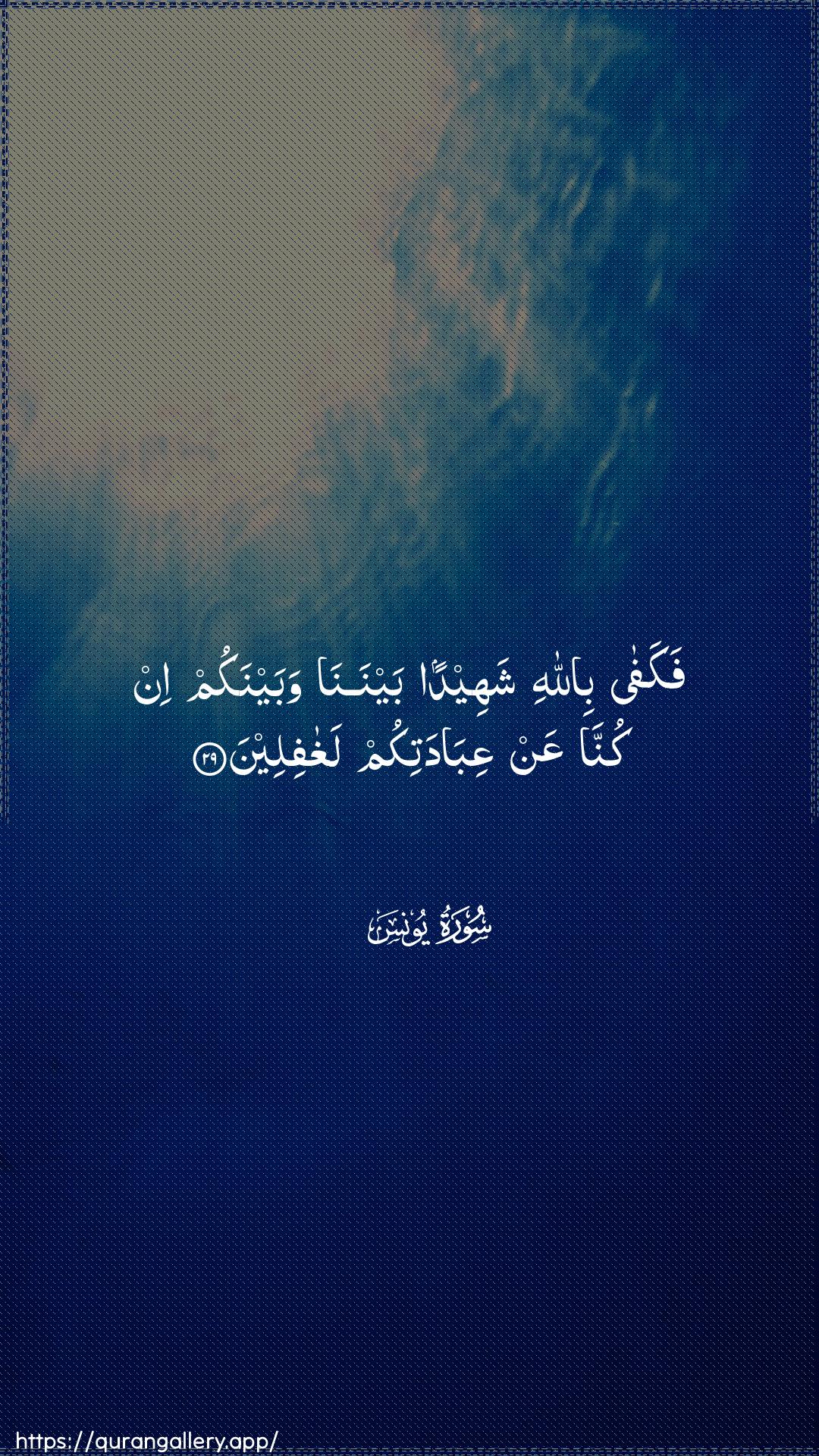
Arabic
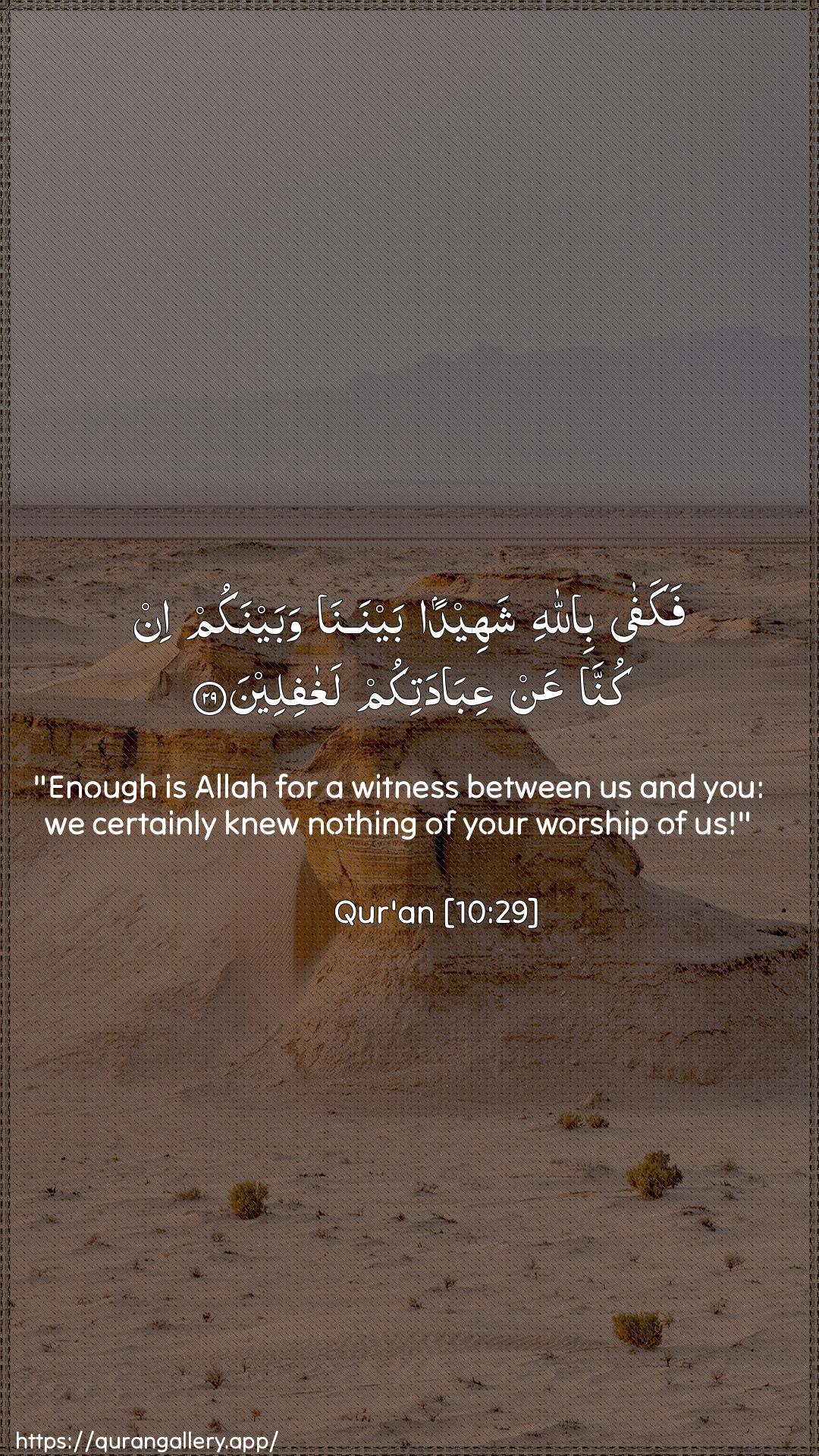
Arabic + English
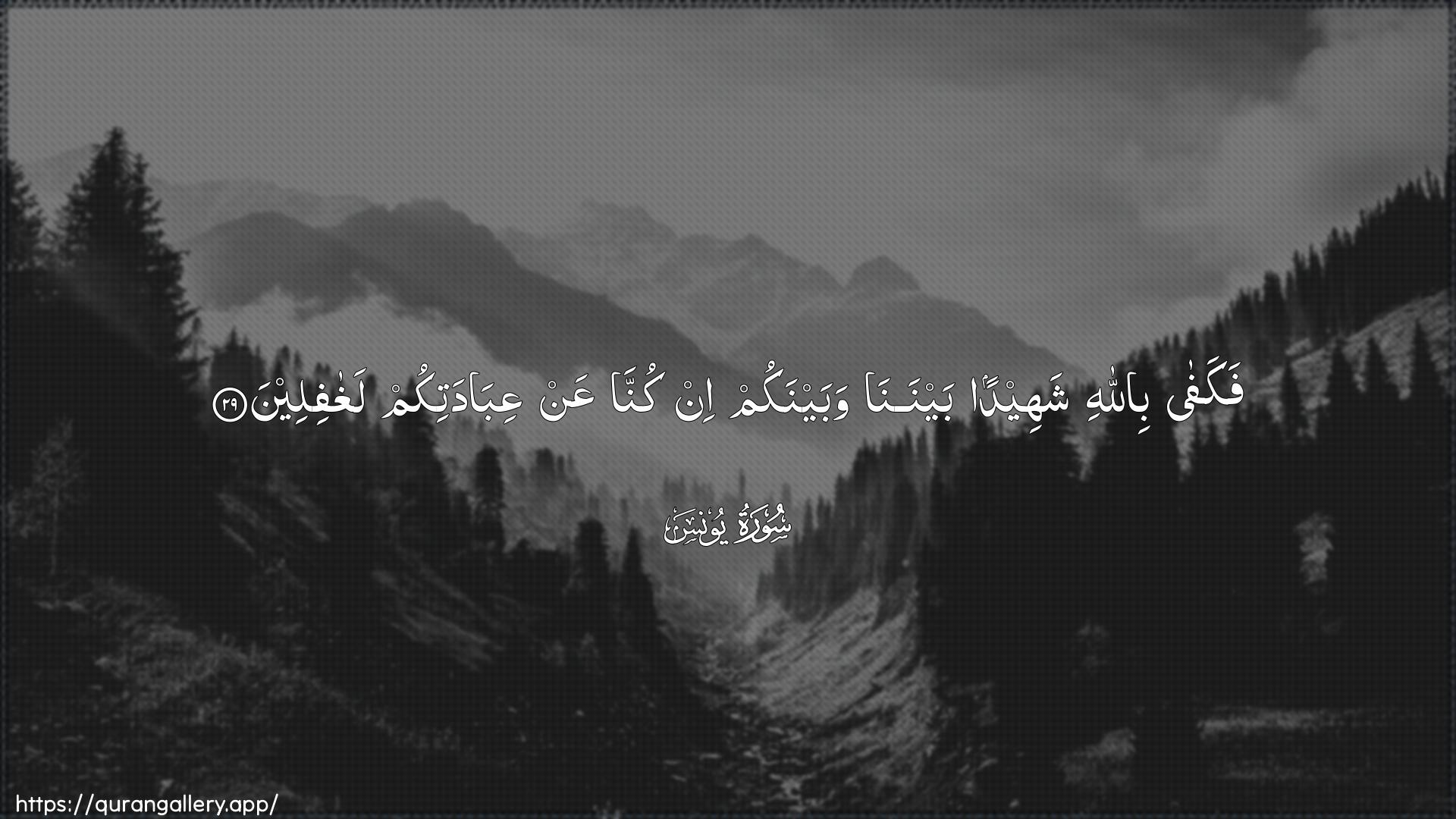
Arabic (Wide)
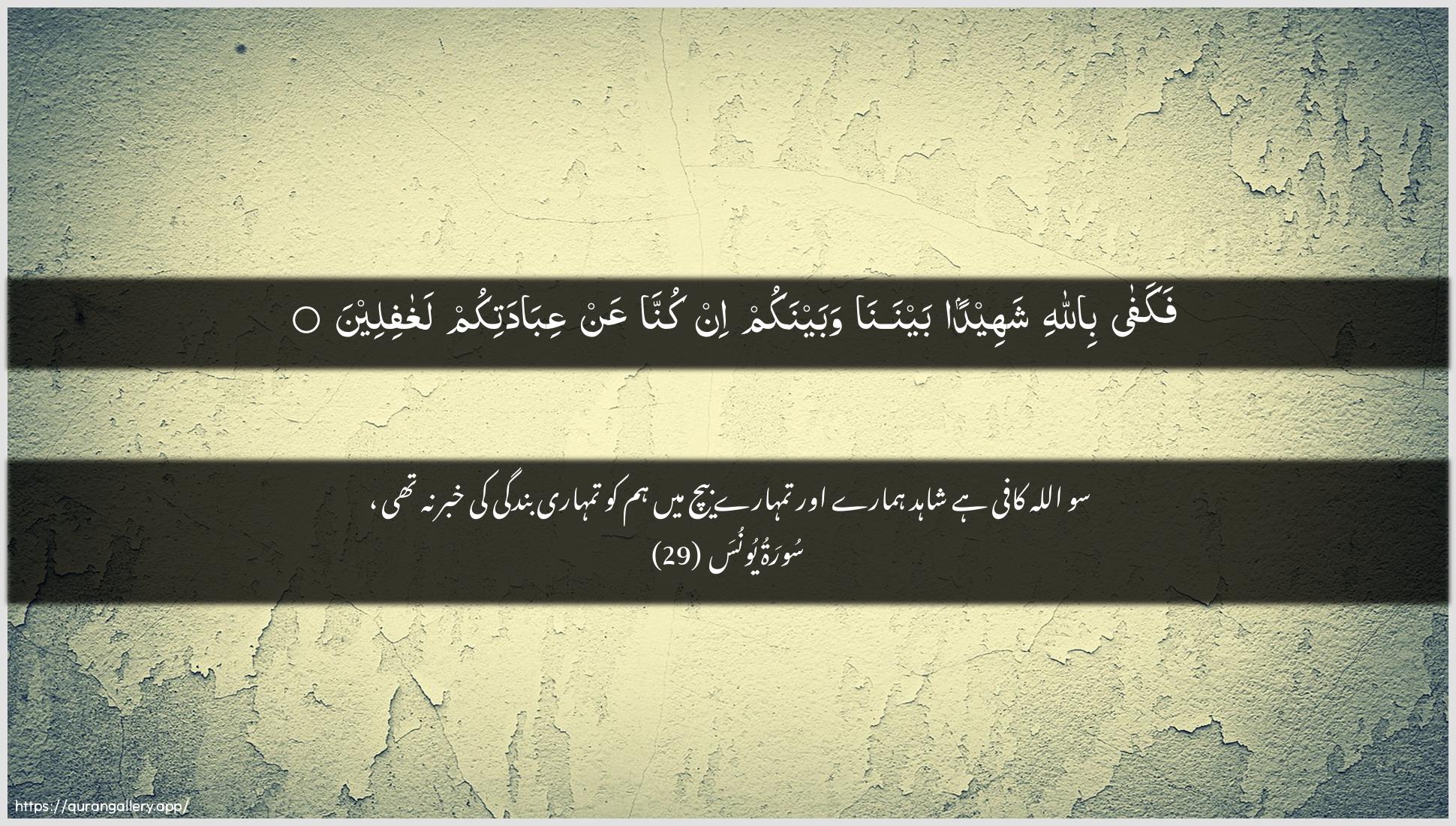
Arabic + Urdu
Free for personal & educational use with attribution
Quick Facts about this Verse
Surah
Yunus
Revealed
Makki
Position
Juz 11
Explore this Verse
Verse Meaning
According to the classical scholar Imam Al-Tabari, Quran 10:29 presents a dramatic courtroom scene from the Day of Judgment where false deities utterly disown their worshippers. This is synthesized by Ibn Kathir, who describes it as a 'great rebuke' to the polytheists. The core of the verse is the declaration by these 'partners'—be they angels, prophets, saints, or inanimate idols—who will call upon Allah Himself as the ultimate witness to their innocence and ignorance, stating, '...we were totally unaware of your worship.' A profound insight, highlighted in the tafsir of Sa'di and others, is that this verse demonstrates the complete futility of shirk. The worshipped entities will not only deny knowledge but will actively distance themselves from their followers at the most critical time. A hidden gem from detailed Urdu commentaries, referencing classical sources, clarifies that this verse is a definitive proof (nasṣ ṣarīḥ) that even the most righteous deceased individuals are unaware ('ghafilin') of the veneration, pleas, and rituals performed at their graves by their followers in the world, reinforcing the Islamic principle of directing all worship exclusively to the Ever-Living God.
Questions for Reflection
Theatrical Contemplation (The Scene)
Imagine the absolute despair of the worshipper as the beings they revered declare, 'we were unaware of your worship.' As Ibn Kathir describes this as a 'great rebuke,' reflect on the emotions: betrayal, hopelessness, regret. How does this vivid scene redefine the risk of placing ultimate trust in anyone besides Allah?
Theological Contemplation (The Witness)
The false deities say, 'Allah is sufficient as a witness between us and you.' Contemplate the concept of 'sufficiency' (Kafā). In what areas of your life do you practically feel Allah is not 'sufficient,' leading you to seek validation, support, or power from creation? How does this verse correct that impulse?
Personal Contemplation (The Unawareness)
The declaration is 'we were unaware' (ghafilin). This applies to revered prophets and saints, as commentaries clarify. Reflect on this: the most pious souls are oblivious to being venerated after their death. How does this definitive statement liberate you from the cultural or personal pressure to seek intercession from the deceased, and redirect you to the One who is never 'ghafil'?
Practical Applications
Conduct a 'Worship Purity Audit' by examining every act of hope, fear, and supplication to ensure it is directed exclusively to Allah, recognizing that any other being is 'unaware' (ghafil).
Apply this when feeling tempted to seek help through intermediaries, venerating personalities, or placing ultimate hope in people or systems.
In moments of need or when making dua, consciously invoke Allah as 'Ash-Shaheed' (The All-Sufficient Witness), internalizing that His witness is all that is required, eliminating the perceived need for intercessors.
Practice this before important meetings, during personal crises, or when feeling unheard, to build confidence in Allah's direct oversight.
Hidden Gem
The synthesis reveals a profound irony: the polytheists seek intercessors because they feel distant from God, yet on Judgment Day, it is those very intercessors who use God ('Fakafa billahi shahidan') as their ultimate proof and witness to create an unbridgeable distance from their worshippers. Contemplating this reversal transforms our understanding of nearness to Allah.
Scroll to see more verses or use the dropdown in the breadcrumb to jump to any verse
Common Questions
2 more questions available in the full page