
Hud - Hud
Arabic Name: هُوْد
Urdu Name: حود
Type: Makki
Serial Number: 11
Revelation Order: 52
Total Verses: 123
Parah: 12,11
Rukus: 10
Sajda: None
Share Verse Art

Arabic
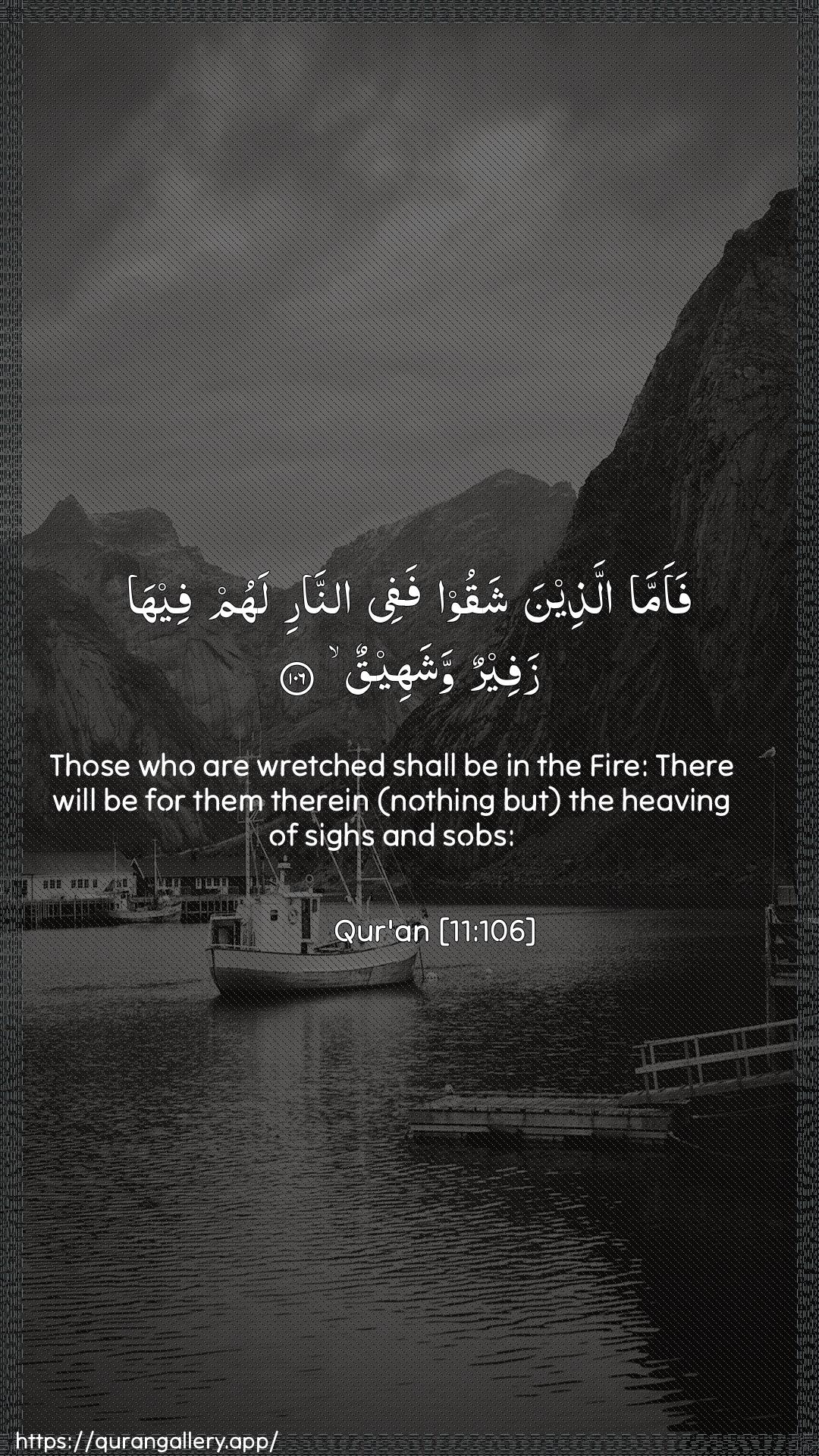
Arabic + English
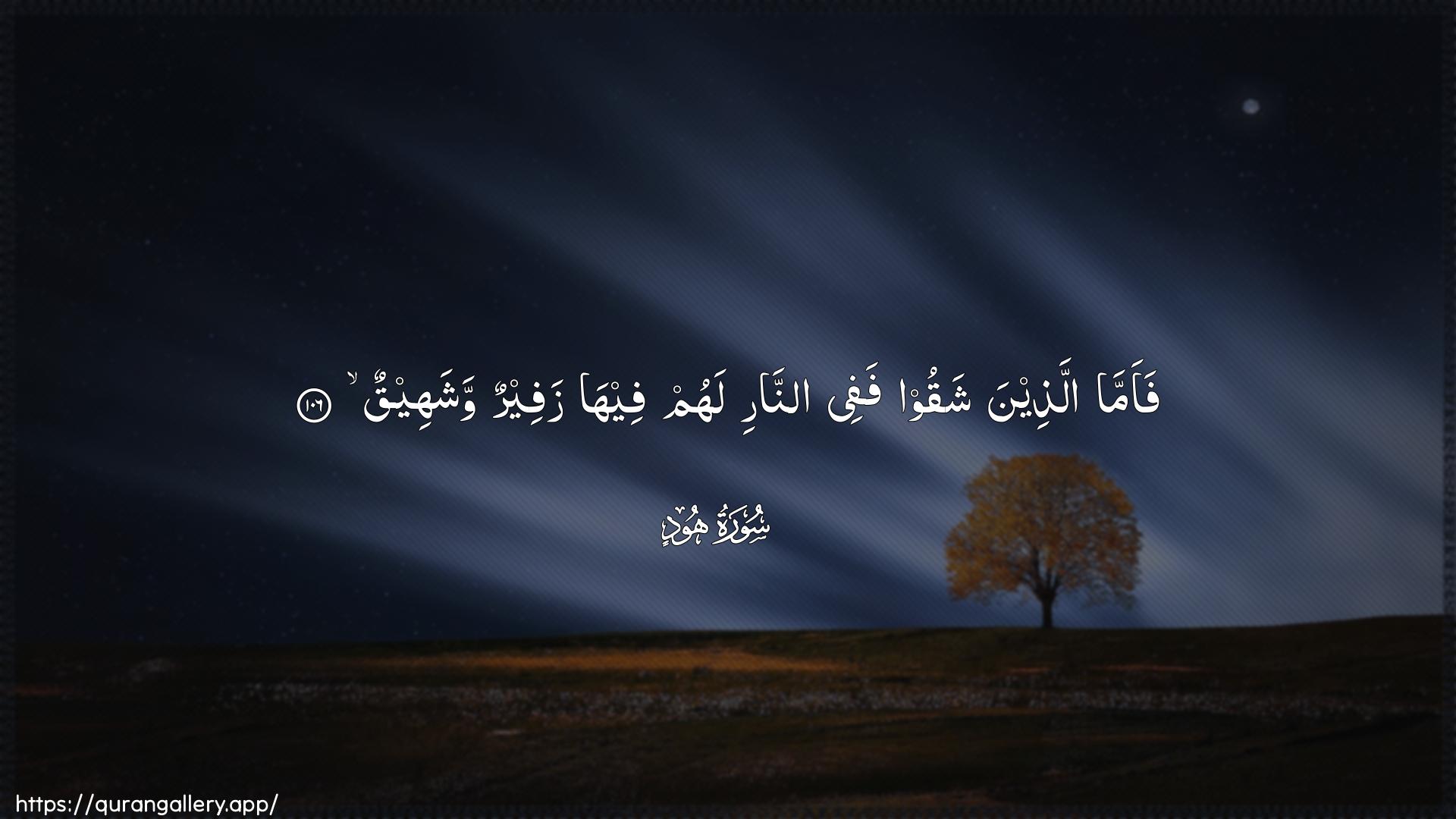
Arabic (Wide)
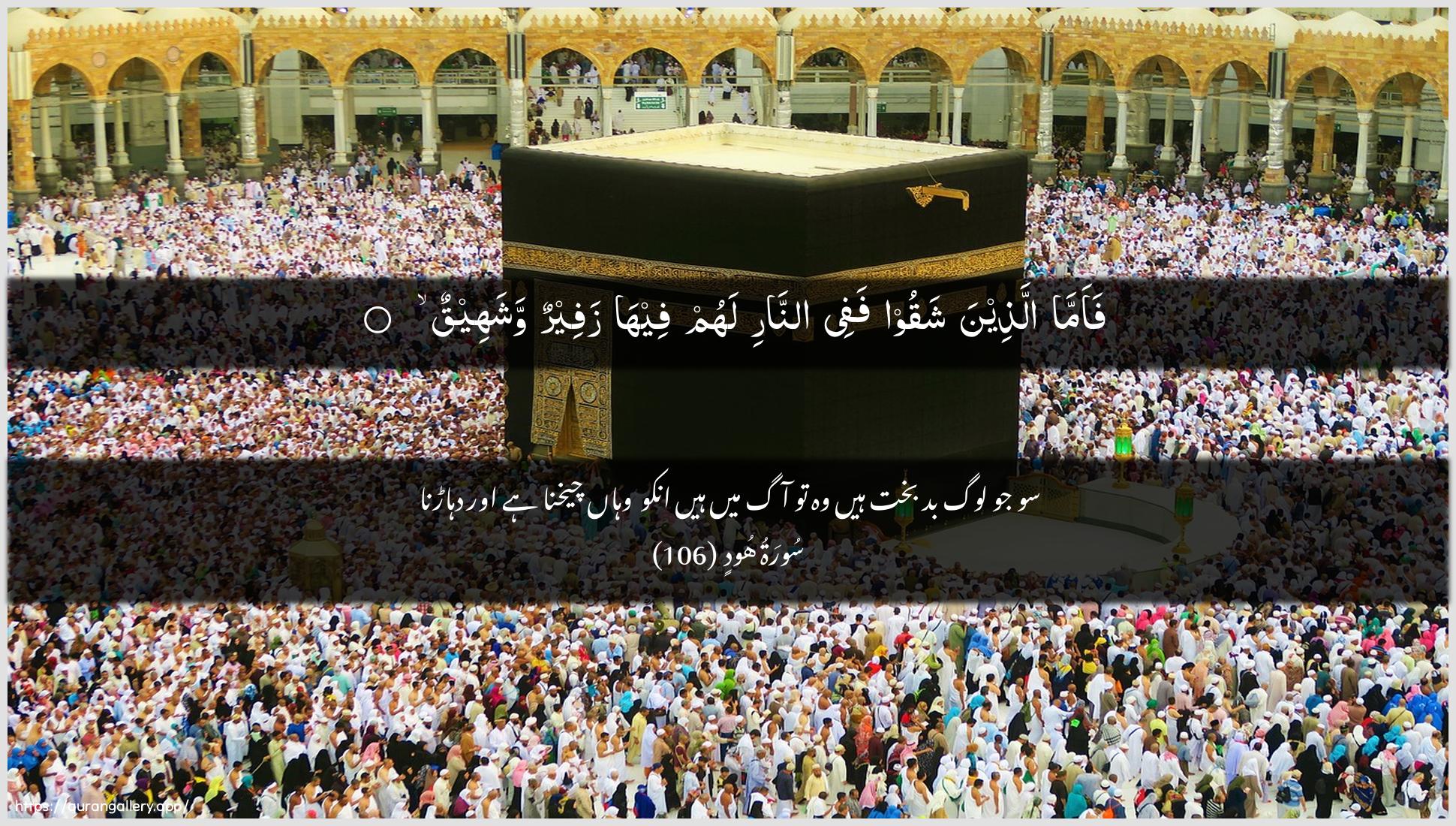
Arabic + Urdu
Free for personal & educational use with attribution
Quick Facts about this Verse
Surah
Hud
Revealed
Makki
Position
Juz 12,11
Explore this Verse
Verse Meaning
According to the classical scholar Imam Al-Tabari, verse 11:106 of Surah Hud paints a terrifying auditory picture of the fate awaiting the 'wretched' (al-ladhīna shaqū) in the Hellfire. The verse specifies their state with two graphic terms: 'Zafīr' (a deep, violent exhalation) and 'Shahīq' (a harsh, rattling inhalation). A synthesis of scholarly commentary reveals these are not mere sounds of pain, but the most agonizing and debased forms of respiration, stripped of all humanity. Ibn Kathir clarifies that 'Zafīr' is a sound from the throat while 'Shahīq' is from the chest. Imam Al-Qurtubi and other linguists compared these sounds to the braying of a donkey—'Zafīr' being the harrowing beginning of the bray and 'Shahīq' its agonizing end. This comparison underscores a complete loss of human dignity, where the cries of the damned are reduced to harsh, animalistic gasps. The choice of these words powerfully conveys a state of perpetual, suffocating torment, where the very act of breathing is a form of punishment.
Questions for Reflection
The Sound of Regret
The scholars describe 'Zafir' and 'Shahq' as the ugliest of sounds. How does this auditory imagery represent the internal state of someone who has lost everything and is filled with eternal regret? Reflect on what actions in your life might lead to a state of 'spiritual sighing' and how you can change course.
The Mercy in the Warning
Allah describes this terrible fate with such vivid detail. How is this graphic description itself an act of profound mercy? Consider how a stern warning from someone who loves you is meant to protect, not merely to frighten.
The Loss of Human Dignity
Imam Al-Tabari and Al-Qurtubi use the analogy of a donkey's bray to explain the sounds. What does this comparison teach us about the consequences of arrogance and refusing to submit to the Creator? Reflect on how submission to Allah elevates our humanity, while rebellion can debase it.
Practical Applications
Cultivate sincere gratitude for the blessing of easy breath by reflecting on the agonizing breathing of the damned.
Practice this reflection during moments of mindfulness, meditation, or when feeling stressed, to recenter on divine blessings.
Use this verse as a motivation to control the 'tongue and throat' from harmful speech, connecting the source of Zafir to the source of gossip and lies.
Before speaking in anger, gossiping, or posting online, recall this connection to purify one's communication.
Strengthen your resolve against sin by internalizing the severity of its consequence, using this verse as a shield against temptation.
When faced with a temptation, briefly recall the harrowing sounds described to reinforce your commitment to righteousness.
Hidden Gem
The synthesis of tafsirs reveals that the punishment is intrinsically linked to the crime. The arrogant disbeliever, who refused to use their voice for praise (Tasbih) and their breath for gratitude (Shukr), is condemned to an existence where their voice and breath become instruments of their own torture. Contemplating this transforms our understanding from an external punishment to a state of being that is the ultimate, inevitable consequence of one's own choices.
Scroll to see more verses or use the dropdown in the breadcrumb to jump to any verse
Common Questions
2 more questions available in the full page