
Hud - Hud
Arabic Name: هُوْد
Urdu Name: حود
Type: Makki
Serial Number: 11
Revelation Order: 52
Total Verses: 123
Parah: 12,11
Rukus: 10
Sajda: None
Related Hadith
"The Prophet's warning to the Quraysh from the hill of Safa, asking if they would believe him if he warned of an impending attack."
Provides a direct, historical example of the Prophet fulfilling his role as a 'warner' (Nadhir) as stated in the verse.
Share Verse Art

Arabic
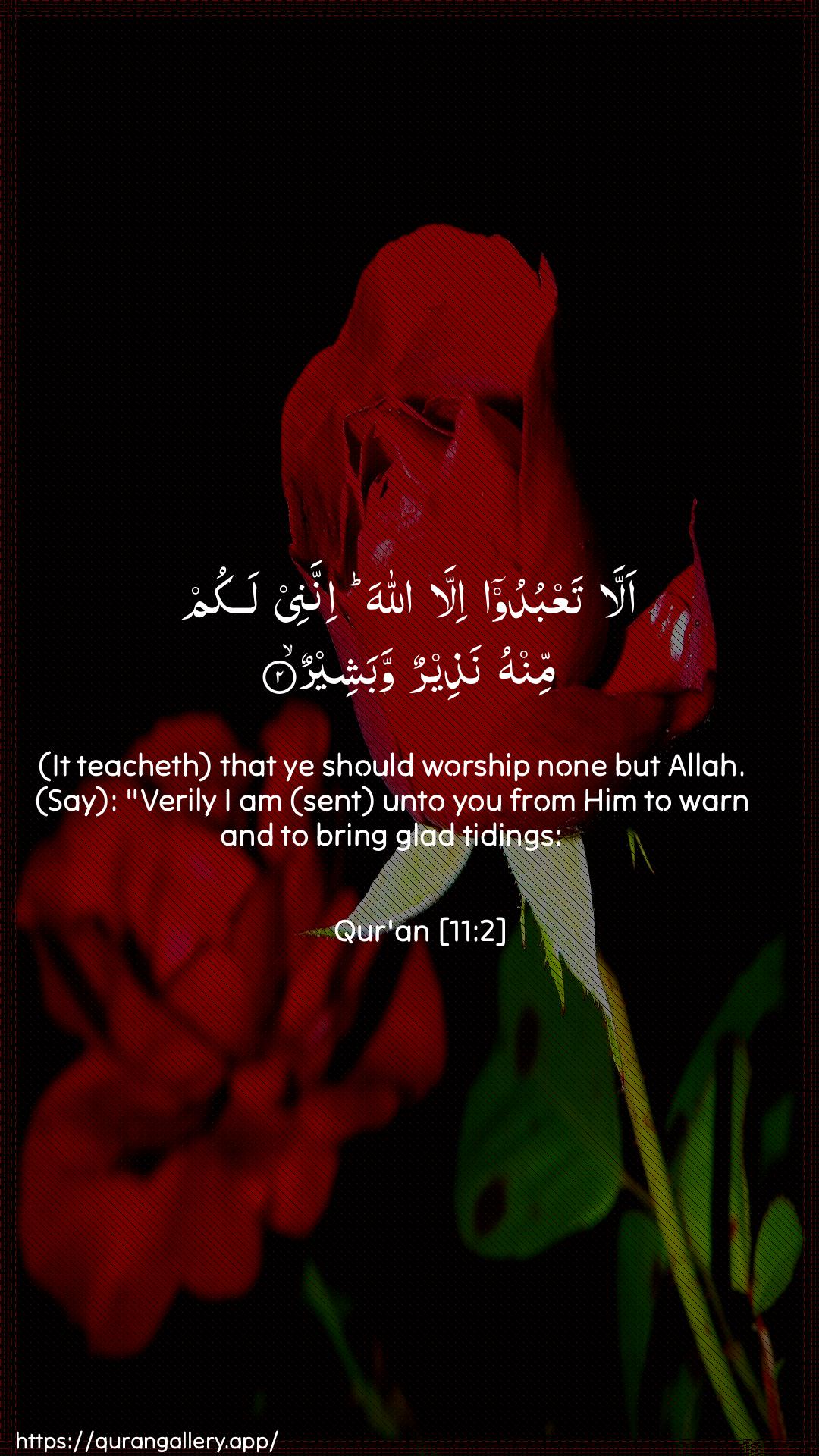
Arabic + English

Arabic (Wide)
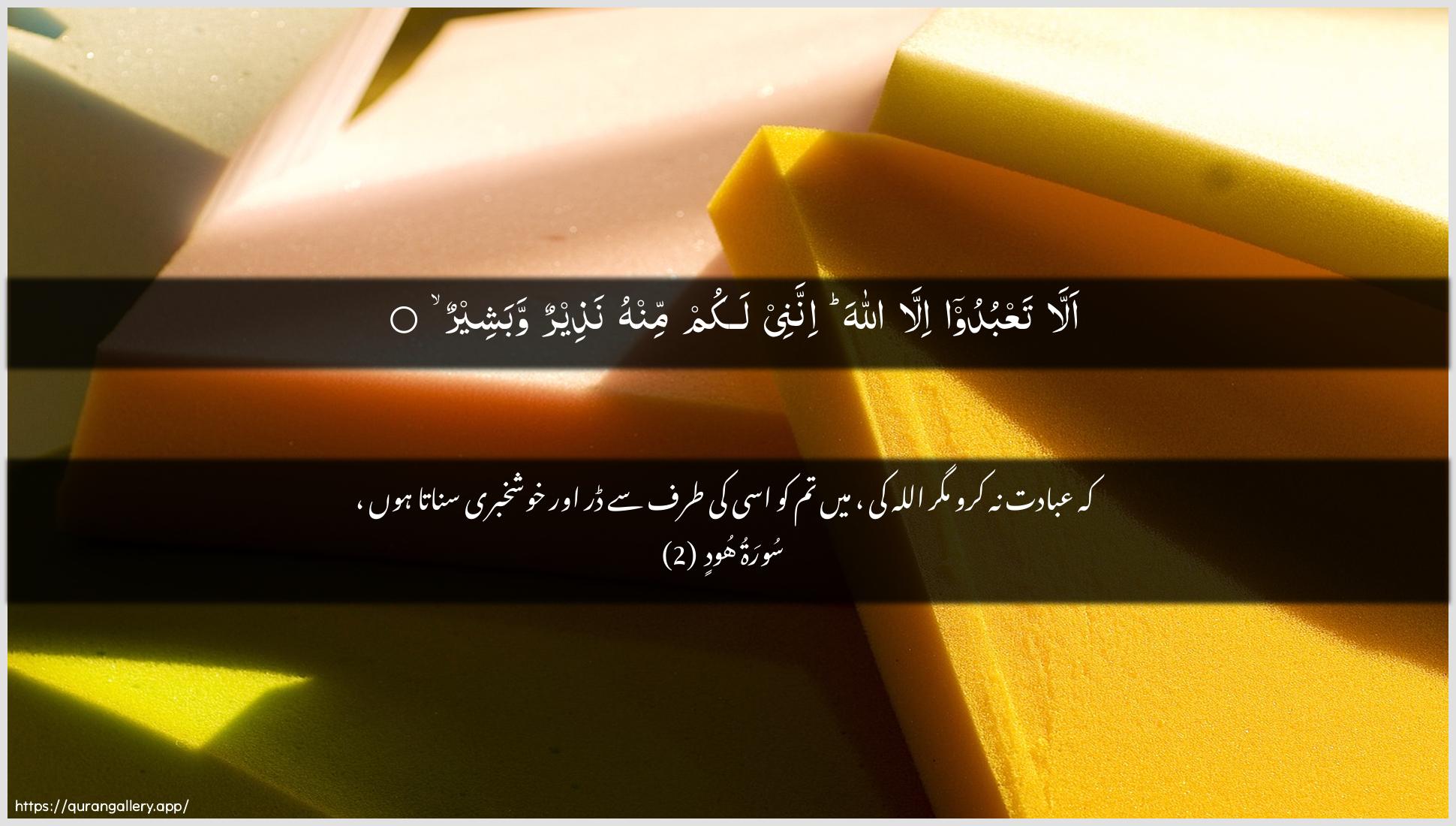
Arabic + Urdu
Free for personal & educational use with attribution
Quick Facts about this Verse
Surah
Hud
Revealed
Makki
Position
Juz 12,11
Explore this Verse
Verse Meaning
According to the classical scholar Al-Tabari, Quran 11:2 encapsulates the ultimate purpose for which the perfected and detailed Book was revealed: 'that you worship none but Allah.' This foundational command establishes the principle of pure monotheism (Tawheed) as the central axis of faith. Ibn Kathir expands on this, explaining that this message is not new but is the consistent, universal call of every prophet sent to humanity. The synthesis of scholarly thought, including insights from Al-Qurtubi and As-Sa'di, reveals that this command is a direct consequence of the Quran's divine origin from a source that is All-Wise and All-Aware; because the revelation is perfect, its core directive must be the most beneficial for creation. The verse then defines the Prophet Muhammad's specific mission in relation to this core message, having him declare, 'Indeed, I am to you from Him a warner and a bringer of good tidings.' This establishes the balanced, dual nature of prophetic guidance: a clear warning (Nadhir) of the consequences of rejecting Tawheed, and the joyous good news (Bashir) of divine reward for embracing it and living a life of obedience.
Questions for Reflection
Textual Contemplation
As-Sa'di explains that this command 'worship none but Allah' comes from a source that is 'All-Wise, All-Aware' (11:1). Contemplate how understanding the perfection of the Source changes your perception of the command. How does the wisdom behind the command make the act of exclusive worship feel less like an obligation and more like a gift?
Personal Transformation
Al-Tabari clarifies that the Prophet ﷺ is a 'warner' of punishment and a 'bringer of good tidings' of reward. Examine your own heart: which of these two roles motivates you more strongly? Reflect on how you can cultivate a more balanced spiritual state that is equally receptive to both the divine warning and the divine promise.
Relational Wisdom
Ibn Kathir connects this verse to the mission of all prophets. Contemplate the fact that you are part of a continuous chain of humanity that has received this exact same core message for thousands of years. How does this realization deepen your sense of connection to the prophets and the universal human quest for truth?
Practical Applications
Conduct a 'Tawheed Audit' of your daily life, identifying actions or reliances that subtly compete with exclusive devotion to Allah, such as seeking ultimate approval from people or placing absolute trust in material means.
Apply this to career ambitions, social media presence, and financial planning to ensure they are means to an end, not ends in themselves.
Balance your spiritual outlook by consciously reflecting on the Prophet's dual role. When facing temptation, recall his role as a 'warner' (Nadhir). When striving in good deeds, embrace his role as a 'bringer of good tidings' (Bashir).
Use this framework when evaluating personal progress, dealing with setbacks, or celebrating successes to maintain spiritual equilibrium.
Hidden Gem
The synthesis of tafsirs reveals a profound subtlety: the Prophet ﷺ says 'I am to you *from Him* a warner and a bringer of good tidings.' This small phrase, highlighted by scholars like Al-Tabari, completely removes the ego and personal authority from the message. Contemplating this transforms our understanding of Dawah (inviting others to Islam) – it is never about us, but purely about being a clear conduit for the divine message.
Scroll to see more verses or use the dropdown in the breadcrumb to jump to any verse
Common Questions
1 more question available in the full page