
Al-Aadiyaat - The Chargers
Arabic Name: الۡعٰدِيٰت
Urdu Name: دوڑنے والے گھوڑے
Type: Makki
Serial Number: 100
Revelation Order: 14
Total Verses: 11
Parah: 30
Rukus: 1
Sajda: None
Share Verse Art
Arabic
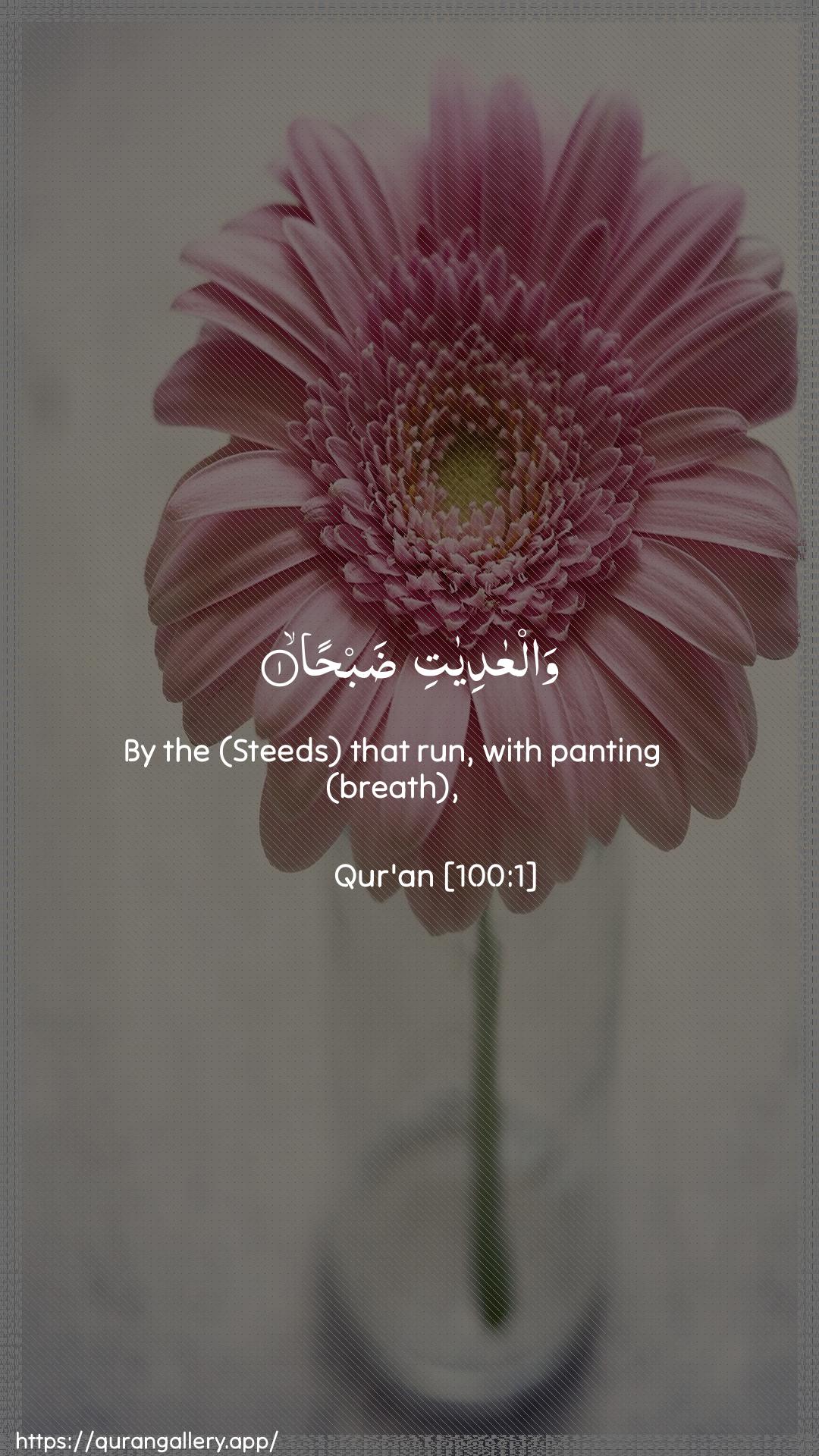
Arabic + English
Arabic (Wide)
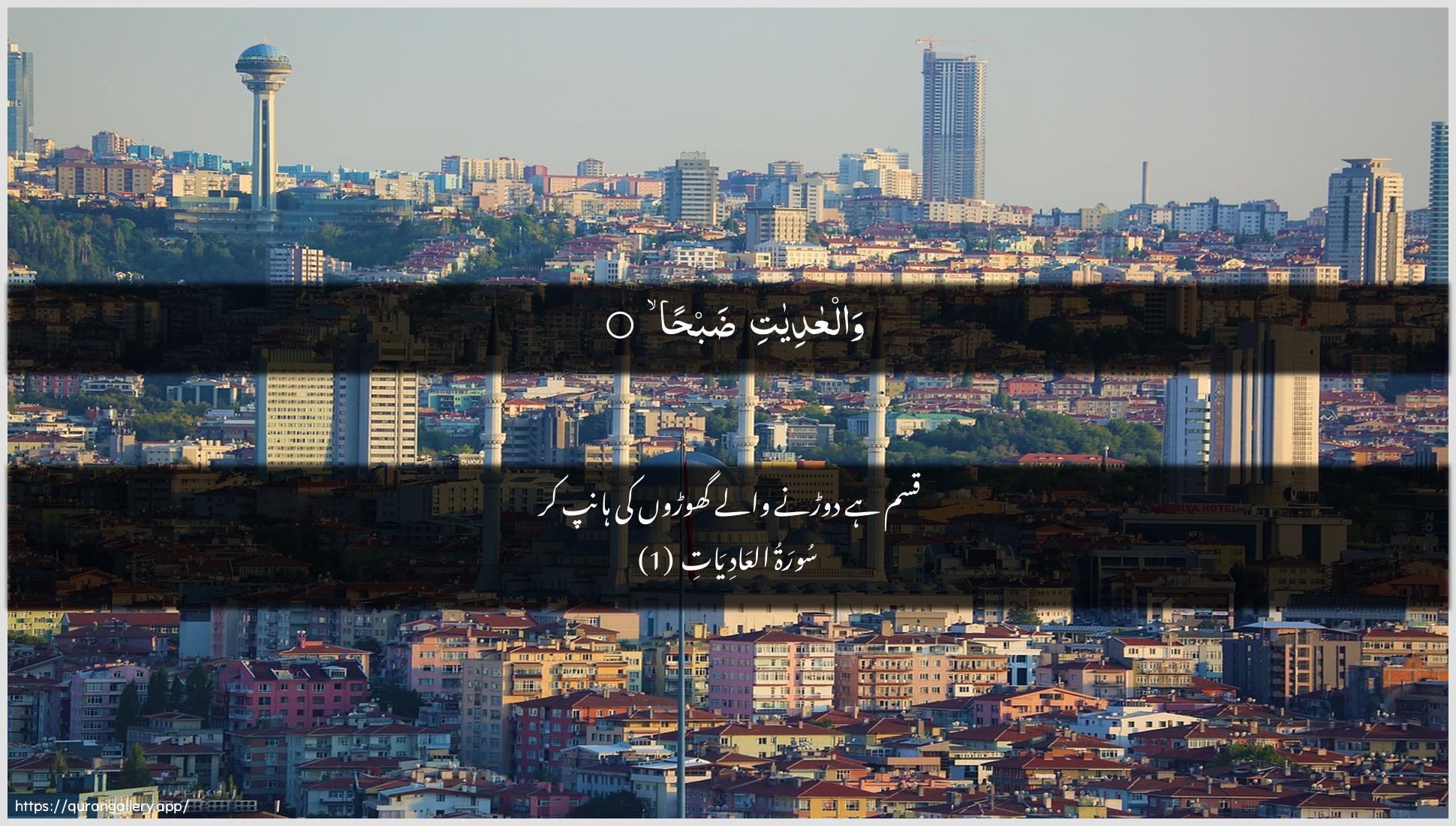
Arabic + Urdu
Free for personal & educational use with attribution
Quick Facts about this Verse
Surah
Al-Aadiyaat
Revealed
Makki
Position
Juz 30
Explore this Verse
Verse Meaning
According to the classical exegete Imam Al-Tabari, the interpretation of Allah's oath in Quran 100:1, 'Wal-'Adiyat Dabha' (By the charging steeds, panting), is centered on a significant scholarly discussion among the early Muslims. The verse's meaning hinges on identifying 'Al-'Adiyat'. One major view, championed by Ibn Abbas and supported by scholars like Mujahid and Qatada, is that it refers to the charging war horses of mujahideen in battle. The term 'Dabha'—the sound of panting or snorting—is cited as strong evidence, as this sound is characteristic of a running horse. This interpretation paints a vivid picture of sacrifice and striving in the path of Allah. Conversely, a second prominent interpretation, narrated from Ali ibn Abi Talib and supported by Ibn Mas'ud, holds that the verse refers to the camels of pilgrims as they rush from Arafat to Muzdalifah during Hajj. Imam Ali's argument was historically contextualized, noting the scarcity of horses in early Islamic battles like Badr. [2] In this view, the oath honors the sacred rituals of pilgrimage and the striving of the worshippers. Although Ibn Abbas is reported to have later adopted Imam Ali's view, the majority of commentators, including Al-Tabari and Ibn Kathir, ultimately favored the interpretation of 'Al-'Adiyat' as war horses, finding the descriptive language more fitting for the intensity of battle.
Questions for Reflection
Textual Contemplation (The Sound of Effort)
Ibn Abbas and Ata noted that the sound 'Dabha' is specific to a horse or dog. Contemplate why Allah would swear by such a visceral, almost primal, sound of physical exertion. How does this sound represent a state of being that is honored by the Divine?
Personal Transformation (Your Battlefield)
Following the interpretation of Ibn Abbas, the verse speaks of horses charging into battle at dawn. What is the primary 'battlefield' in your personal life right now (e.g., a bad habit, a difficult project, a spiritual weakness)? How can you emulate the courage and forward momentum of these steeds in your own jihad al-nafs (struggle against the self)?
Relational Wisdom (The Collective Rush)
Imam Ali's interpretation points to the collective movement of pilgrims. Reflect on the spiritual power of moving together with a community towards a single sacred goal. In which areas of your life (family, community, work) can you foster this sense of shared purpose and collective striving towards good?
Practical Applications
Channel the 'Adiyat' Energy in Your Goals: Approach your important worldly and spiritual goals with the intensity and focus of a charging steed, exerting your full effort without hesitation.
Apply this to your career, studies, fitness goals, or any major project requiring dedication. When you feel tired, remember the panting steeds and push through.
Embrace the Spirit of Hajj in Daily Rituals: Perform your daily prayers and acts of worship with the sense of purpose and forward momentum of the pilgrims' camels rushing towards their sacred destination.
Before Salah, remind yourself you are on a journey to meet Allah. Treat each pillar of Islam as a milestone on your personal pilgrimage.
Hidden Gem
The synthesis of both interpretations reveals a profound spiritual insight: whether in the chaos of battle or the sacred rush of pilgrimage, the common denominator is a loss of self in a greater cause. The horse forgets its fear, and the pilgrim forgets individual comfort, both driven by a purpose beyond themselves. The hidden gem of contemplation is to ask: In what moments do I lose myself for a higher purpose, and how can I cultivate more of those states in my life?
Common Questions
1 more question available in the full page