
Hud - Hud
Arabic Name: هُوْد
Urdu Name: حود
Type: Makki
Serial Number: 11
Revelation Order: 52
Total Verses: 123
Parah: 12,11
Rukus: 10
Sajda: None
Related Hadith
"The Prophet (ﷺ) referred to Riya' (showing off) as 'the minor shirk' (hidden polytheism)."
This hadith establishes the gravity of performing deeds for reasons other than Allah, which is the central theme of the verse.
Share Verse Art
Arabic
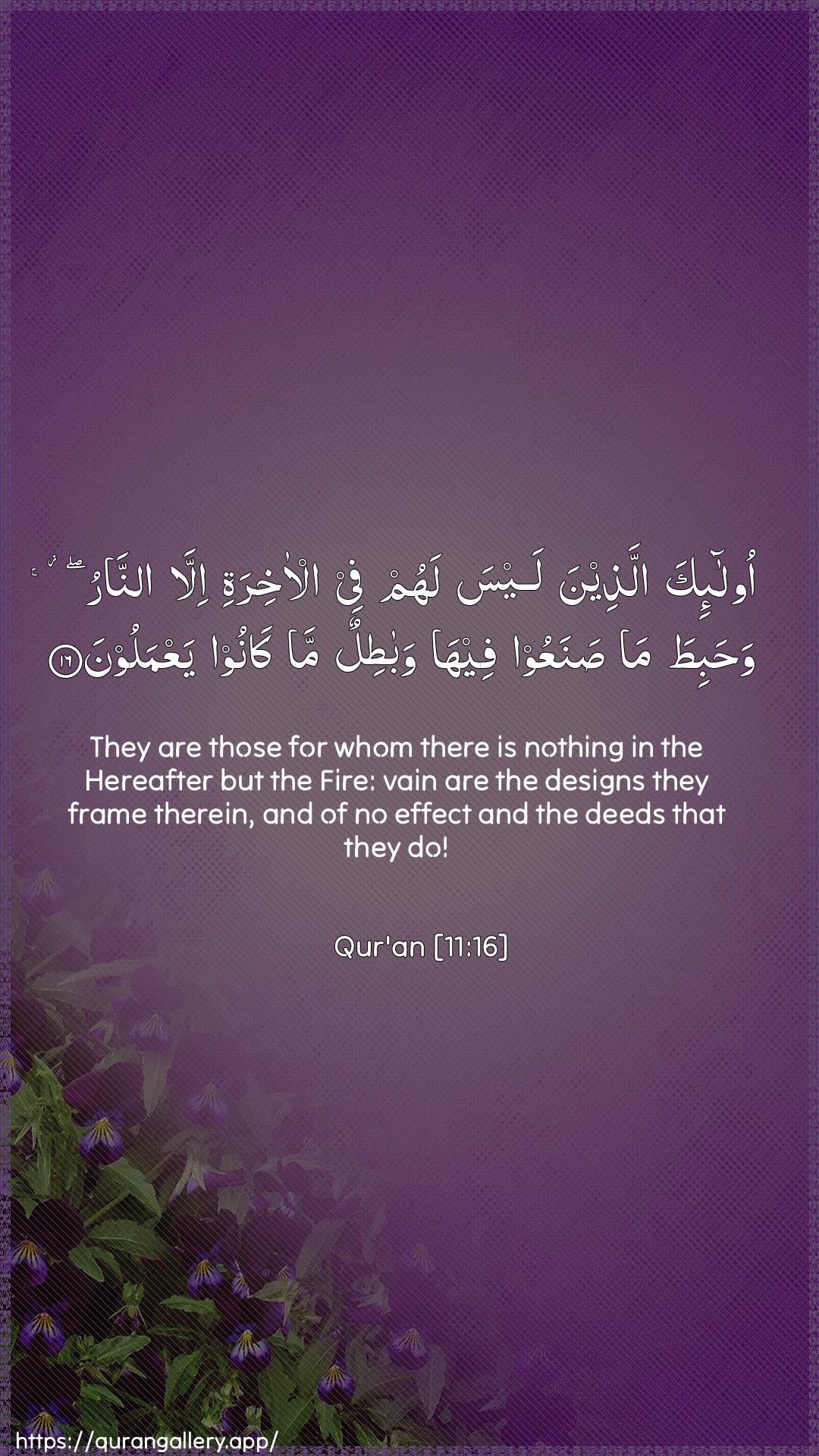
Arabic + English
Arabic (Wide)
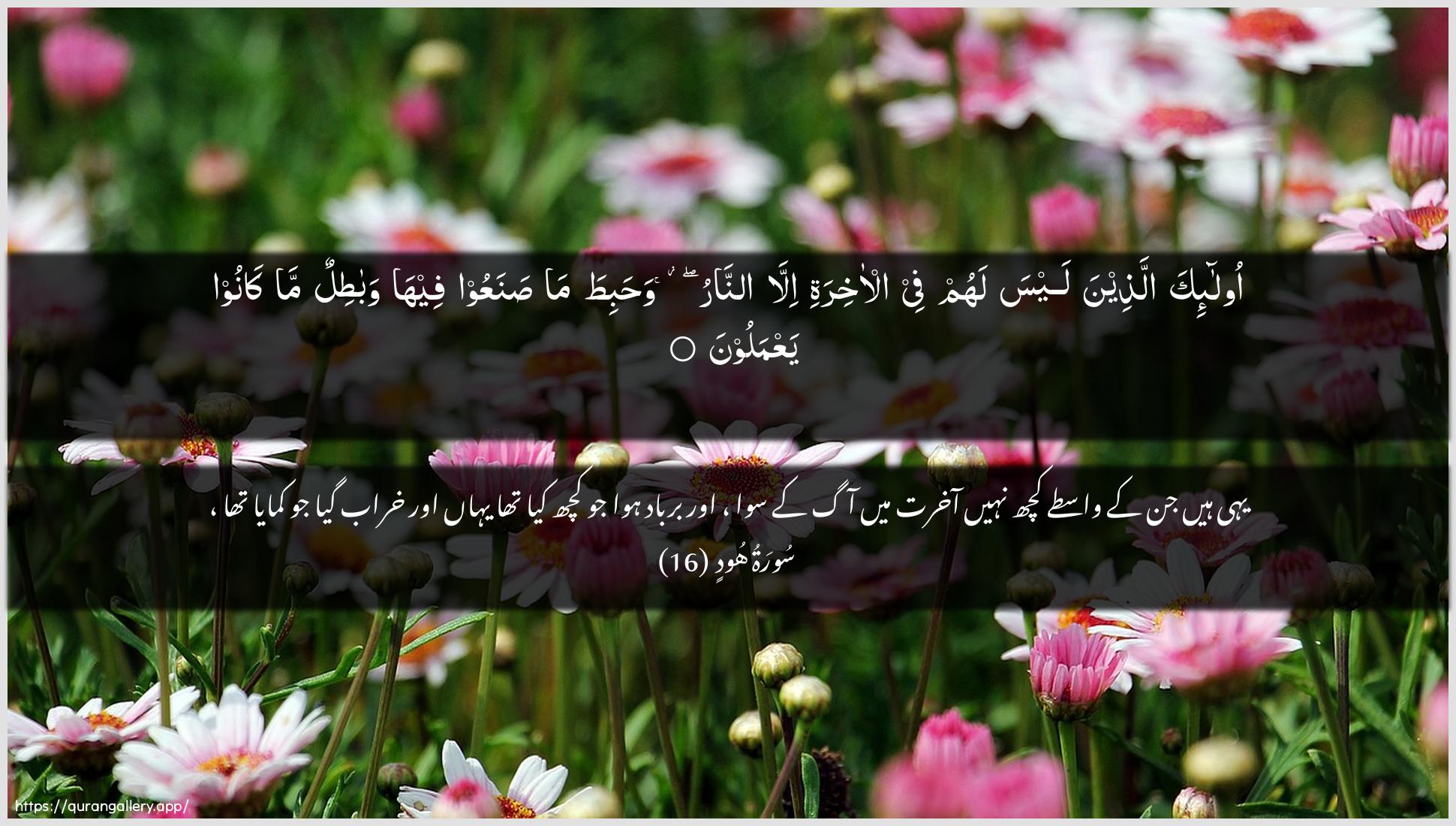
Arabic + Urdu
Free for personal & educational use with attribution
Quick Facts about this Verse
Surah
Hud
Revealed
Makki
Position
Juz 12,11
Explore this Verse
Verse Meaning
According to the classical exegesis of Al-Tabari, Quran 11:16 delivers a final, stark verdict for those whose actions are solely motivated by worldly desires. This verse declares that their only portion in the Hereafter is the Fire, and all their worldly achievements and seemingly good deeds will be rendered utterly void. A comprehensive analysis, incorporating insights from Ibn Kathir, reveals this is a recurring Quranic principle, paralleled in Surah Al-Isra and Surah Ash-Shura. The synthesis of scholarly opinion, including that of Al-Qurtubi, delves into whether this applies exclusively to disbelievers or also to Muslims who act for show (riya). What emerges is a profound warning: actions devoid of sincere intention for the Hereafter are bankrupt. The terms 'habita' (nullified) and 'batil' (worthless) signify a complete and total loss, where all earthly efforts evaporate, leaving no credit for the Day of Judgment.
Questions for Reflection
The Nature of 'Worthlessness'
The verse uses two powerful words: 'habita' (rendered worthless) and 'batil' (void). Reflect on a significant effort you made in your life for worldly recognition. How does contemplating its ultimate 'worthlessness' in the Hereafter, as explained by Al-Tabari, change your perspective on what truly constitutes 'success'?
The Transaction of Deeds
Ibn Kathir and other scholars explain that the disbeliever or show-off is 'paid in full' in this world. Contemplate an act of kindness you performed. Did you feel a sense of satisfaction from the person's gratitude or your own self-image? How can you ensure the 'payment' you seek is deferred to the Hereafter, where its value is infinitely greater?
The Audience of One
Al-Qurtubi and others discuss this verse in the context of riya (showing off). Consider your acts of worship (prayer, charity). Is there a subtle difference in your performance when you are alone versus when you are seen by others? How does this verse's stark image of 'nothing...except the Fire' motivate you to purify your actions for an Audience of One?
Practical Applications
Before any good deed, pause and ask: 'Am I doing this for Allah's acceptance or for human appreciation?'
Especially crucial in the age of social media, where charitable acts or worship can be performative. Apply this before posting about a good deed or leading a public prayer.
When receiving praise for a good deed, immediately redirect the praise to Allah in your heart and verbally if possible.
When a colleague praises your work ethic (which you maintain for Allah's sake) or someone compliments your charity, respond with 'Alhamdulillah' or 'All praise is due to God.'
Hidden Gem
The synthesis of tafsir reveals a profound spiritual equation: any portion of a deed dedicated to the dunya is a portion subtracted from the Akhirah. If 100% of the intention is for the world, 100% of the otherworldly reward is nullified. This transforms sincerity from a passive hope into an active, conscious allocation of spiritual energy.
Scroll to see more verses or use the dropdown in the breadcrumb to jump to any verse
Common Questions
2 more questions available in the full page