
Al-Baqara - The Cow
Arabic Name: الْبَقَرَة
Urdu Name: گائے
Type: Madani
Serial Number: 2
Revelation Order: 87
Total Verses: 286
Parah: 1,2,3
Rukus: 40
Sajda: None
Share Verse Art
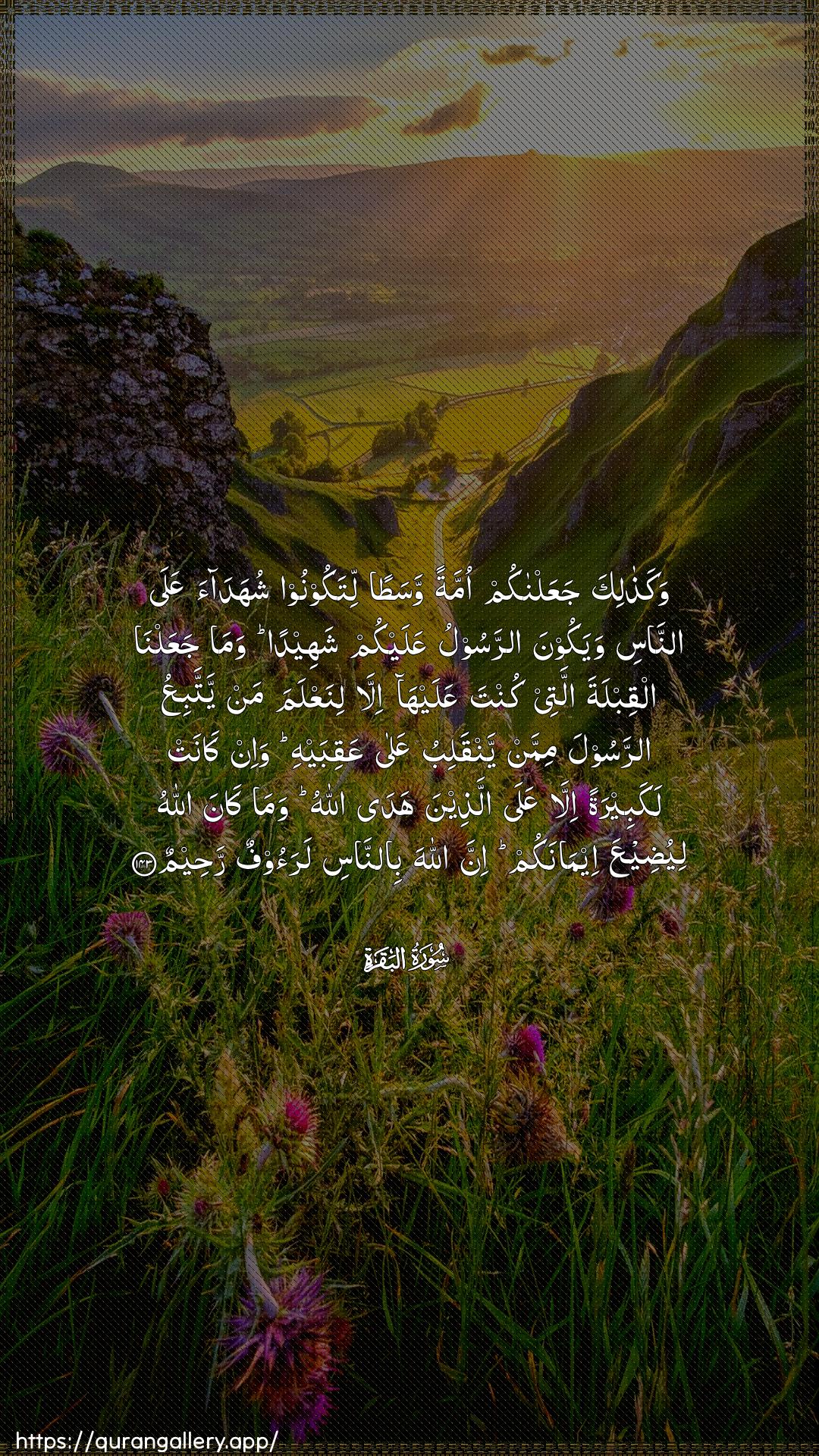
Arabic
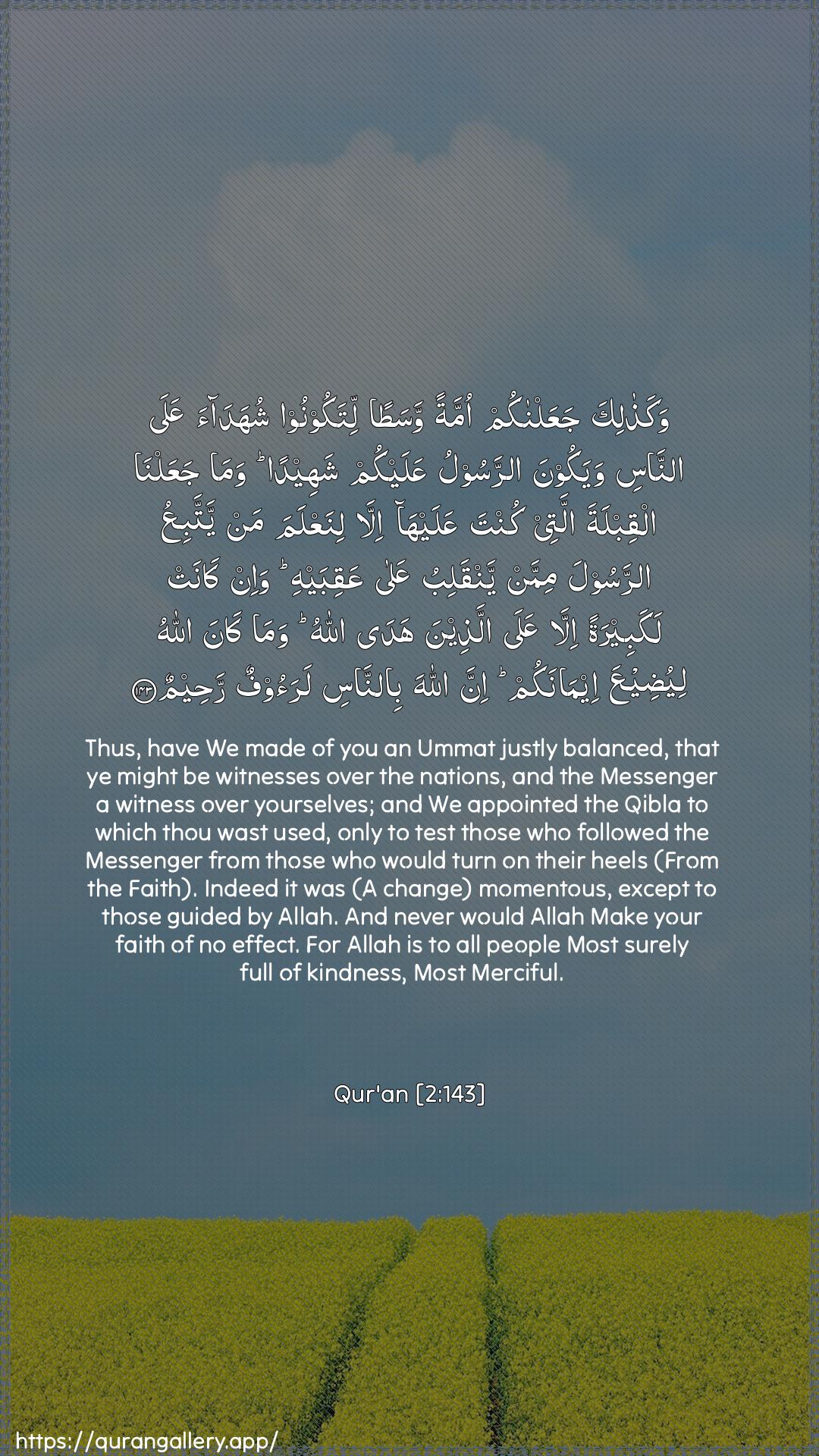
Arabic + English
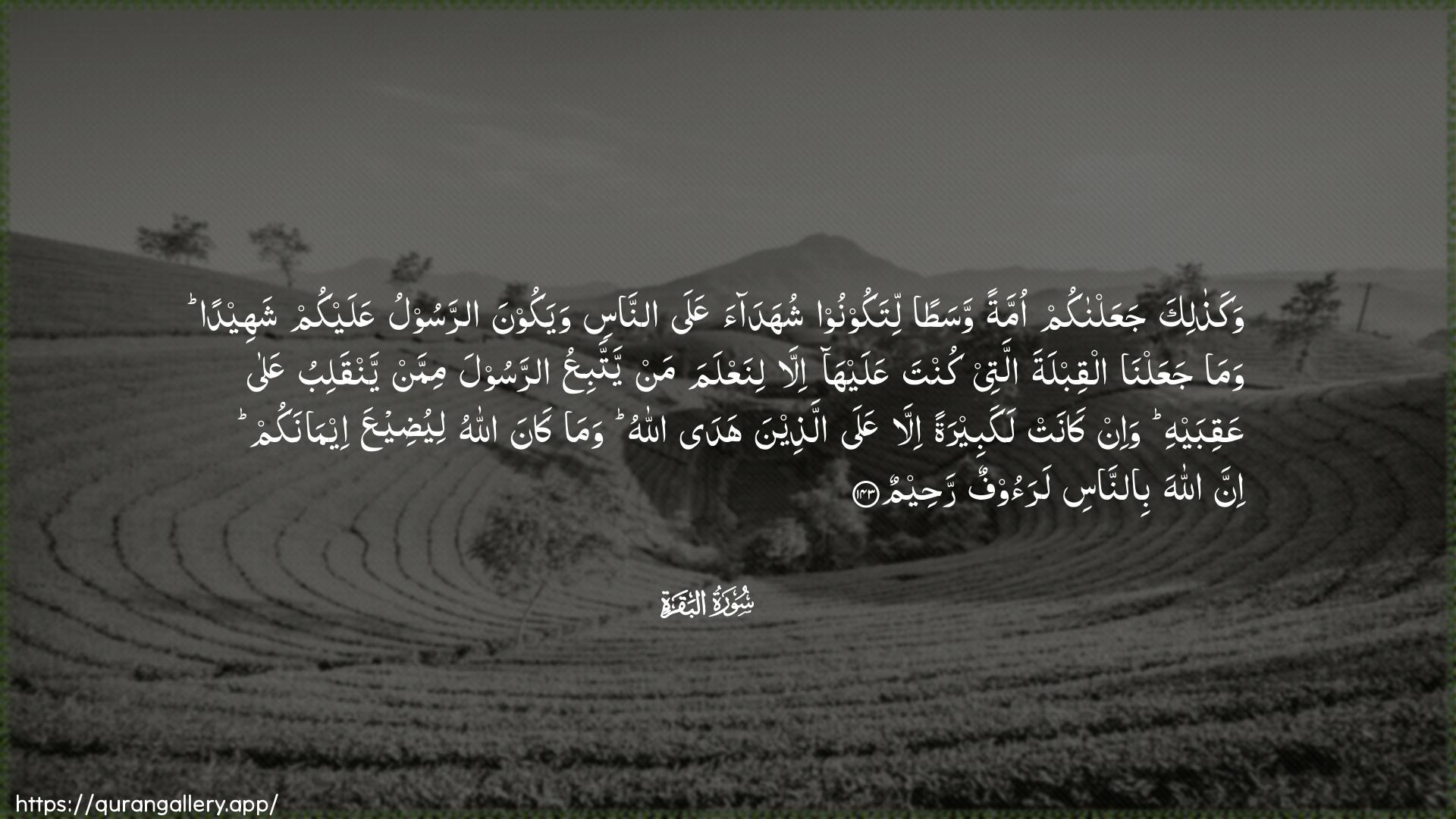
Arabic (Wide)
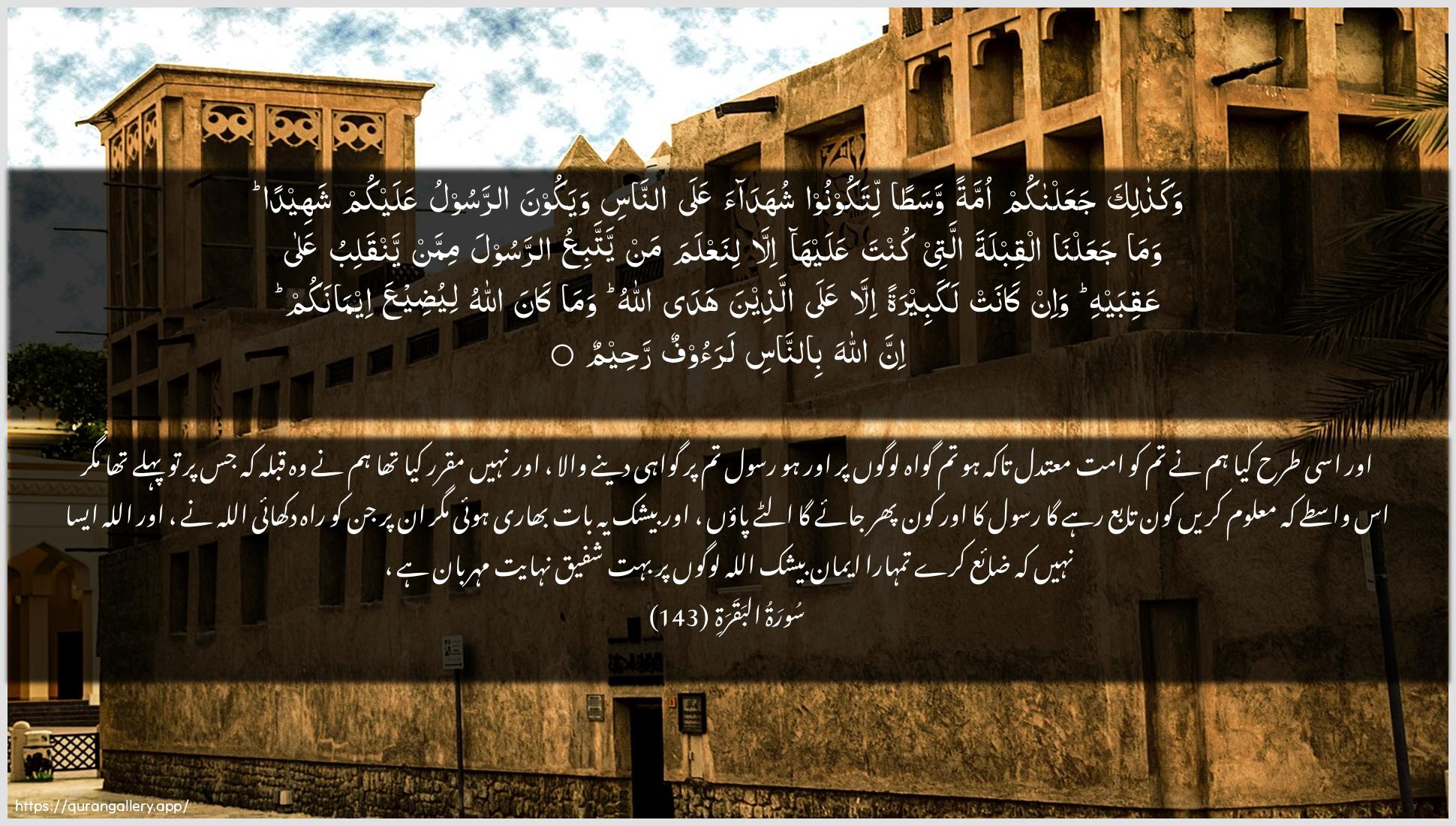
Arabic + Urdu
Free for personal & educational use with attribution
Quick Facts about this Verse
Surah
Al-Baqara
Revealed
Madani
Position
Juz 1,2,3
Explore this Verse
Verse Meaning
According to Imam Al-Tabari, Quran 2:143 establishes the Muslim community as an "Ummah Wasat"—a term signifying a community of balance, justice, and excellence. This divinely appointed status is not merely an honor but a profound responsibility. As Ibn Kathir clarifies through authentic Hadith, this role makes the Ummah witnesses over all of humanity on the Day of Judgment, testifying that the previous prophets delivered their messages. This verse intrinsically links this mission to the historical change of the Qibla (direction of prayer) from Jerusalem to the Kaaba in Makkah. This change, as explained by As-Sa'di, was a divine test designed to distinguish those who truly follow the Messenger from those who would falter in their faith. The synthesis of these scholarly views reveals a powerful concept: the physical orientation of the Muslim community in prayer is a symbol of their spiritual and moral orientation in the world—a balanced, just, and upright stance that qualifies them for their universal testimony. The assurance that Allah would not let their previous prayers be wasted ('your faith') highlights that true obedience is following God's command at any given time, reinforcing Allah's ultimate compassion and mercy.
Questions for Reflection
personal
Al-Tabari defines 'Wasat' not just as 'middle' but as the 'best' and most 'just'. Reflect on the areas of your life—spending, speech, worship, relationships. Where do you lean towards extremes of excess or negligence? What single, practical step can you take this week to move towards a more just and excellent balance in one of these areas?
communal
Ibn Kathir narrates the Hadith where this Ummah will testify for Prophet Nuh. Contemplate the weight of this responsibility. If humanity were to judge Islam based solely on the conduct of your local community or online Muslim interactions, what testimony would they give? What is your personal contribution, positive or negative, to this collective witness?
historical
As-Sa'di frames the Qibla change as a difficult test ('lakabirah') that revealed true followers. The companions who had prayed towards Jerusalem had their past faith affirmed by Allah. Reflect on a past trial in your life. How did it test your faith? How can the assurance 'Allah will not let your faith go to waste' bring comfort and meaning to your past struggles and acts of obedience?
Practical Applications
Practice moderation in all affairs, avoiding extremism in religious practice, social interactions, and personal habits.
In debates on social or political issues, strive to present a balanced, well-reasoned Islamic perspective, avoiding reactionary or overly rigid stances.
Uphold justice in your testimony and dealings, even if it is against yourself, your kin, or your community.
When witnessing an injustice online or in person, speak the truth fairly, without letting group identity cloud your judgment.
Embrace divine commands with trust, even when the wisdom isn't immediately apparent, like the companions did with the Qibla change.
When faced with a challenging Islamic ruling, focus first on submission and trust, seeking understanding with a humble heart.
Hidden Gem
The synthesis of scholarly thought reveals a subtle connection: the act of turning physically towards one center (the Kaaba) was the very test that spiritually unified and defined the community, empowering them to become a moral and spiritual center ('Wasat') for all humanity. Our unity in direction is the foundation of our mission in the world.
Scroll to see more verses or use the dropdown in the breadcrumb to jump to any verse