
Hud - Hud
Arabic Name: هُوْد
Urdu Name: حود
Type: Makki
Serial Number: 11
Revelation Order: 52
Total Verses: 123
Parah: 12,11
Rukus: 10
Sajda: None
Share Verse Art
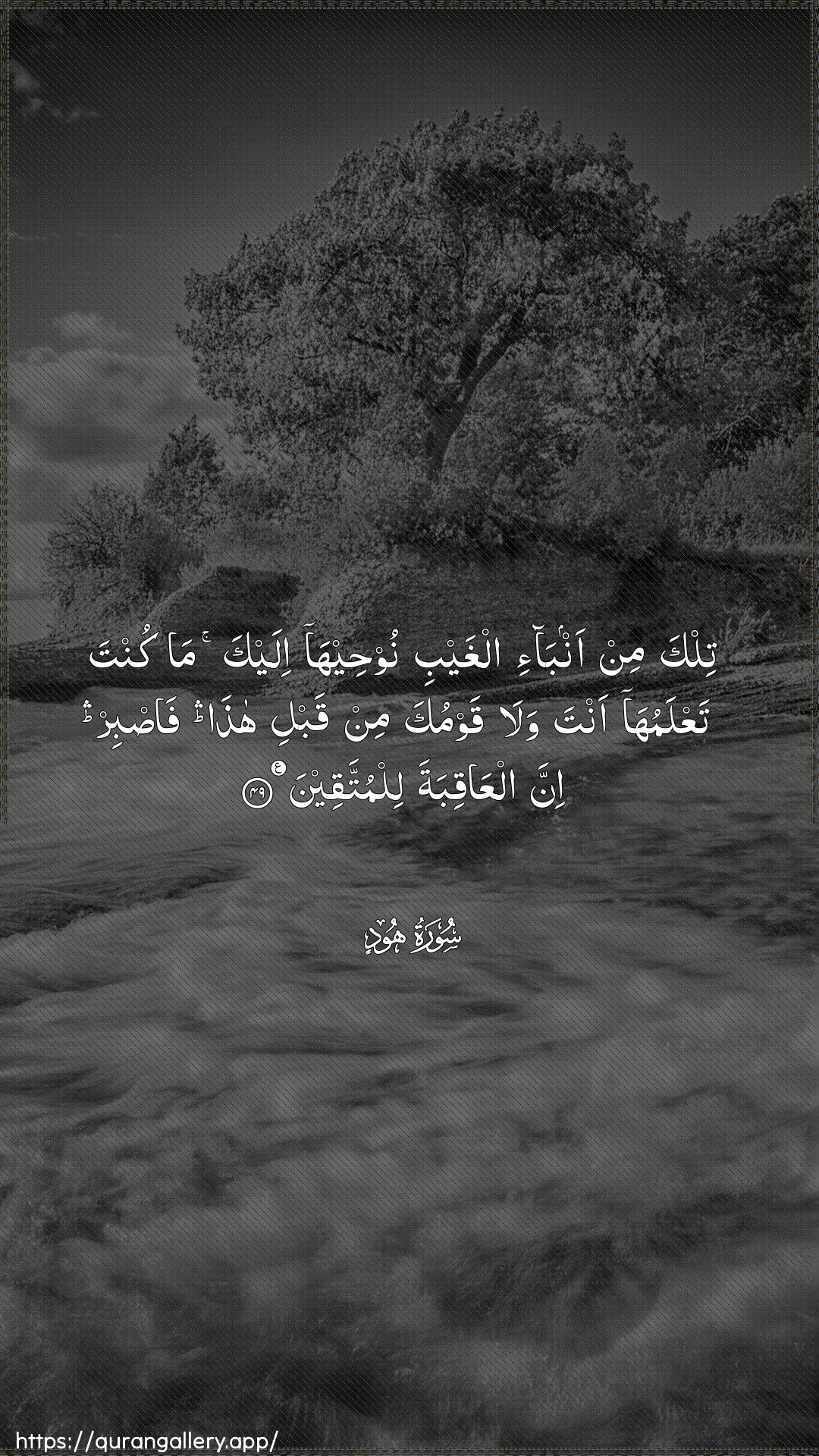
Arabic
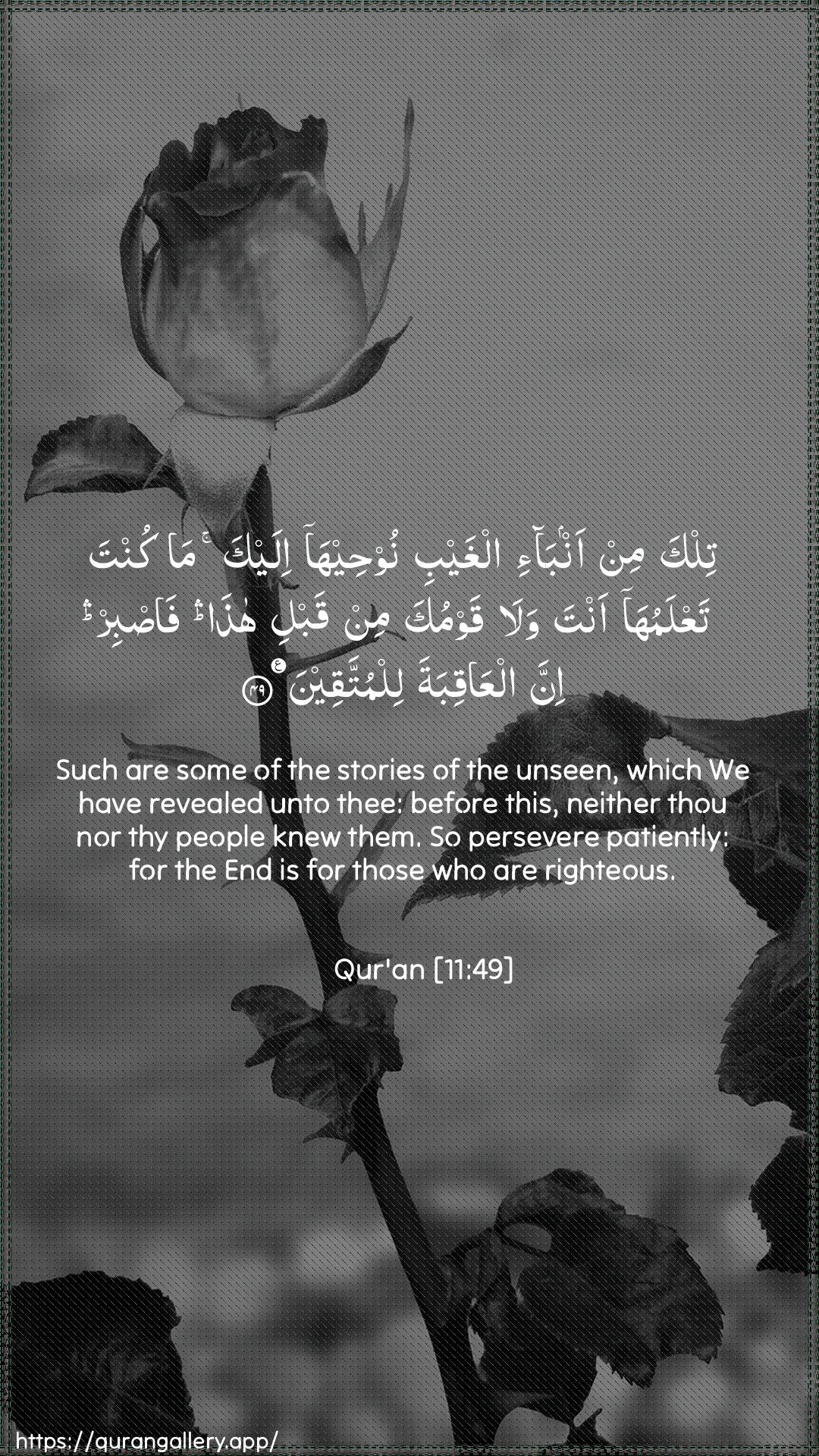
Arabic + English
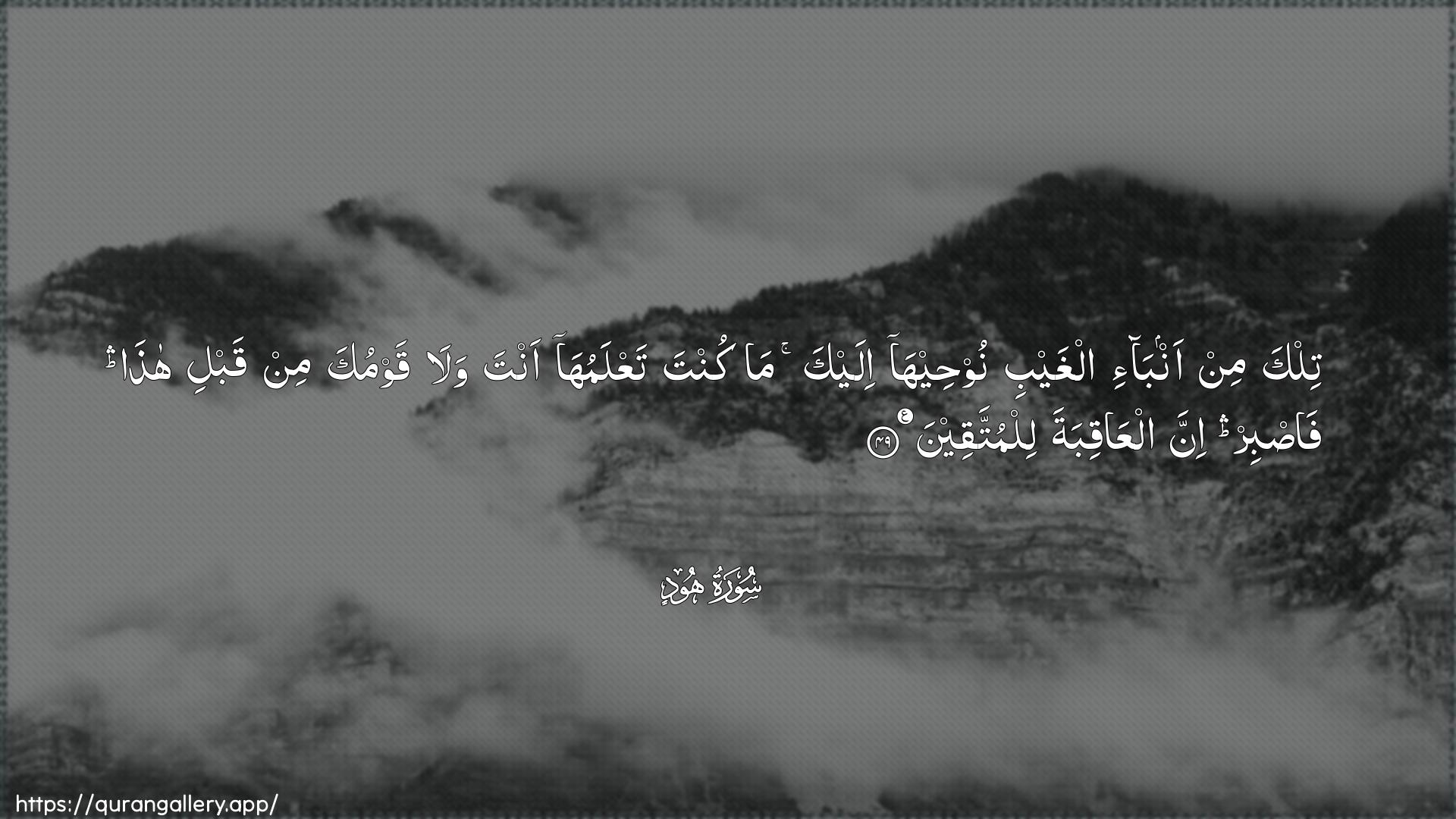
Arabic (Wide)
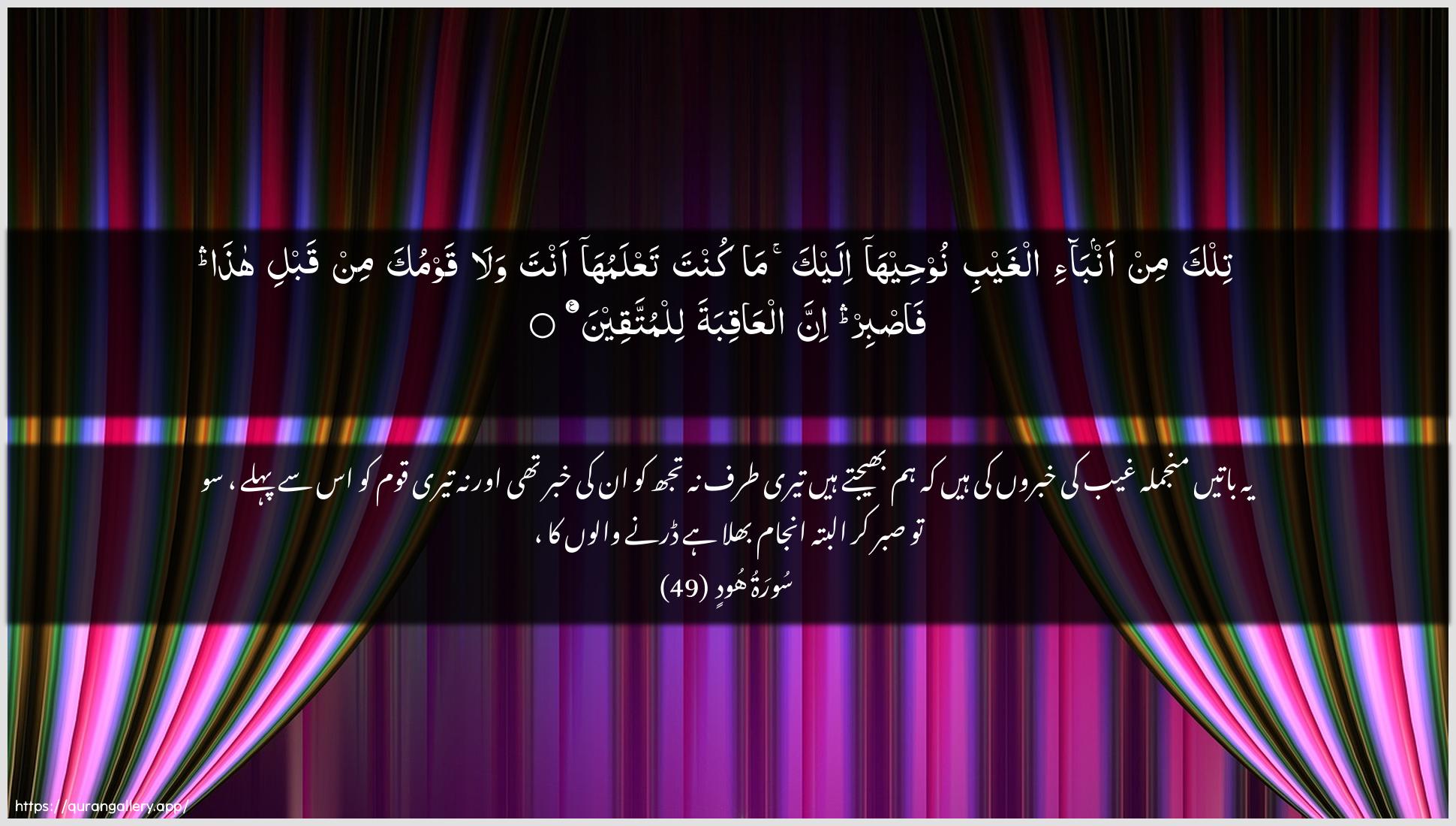
Arabic + Urdu
Free for personal & educational use with attribution
Quick Facts about this Verse
Surah
Hud
Revealed
Makki
Position
Juz 12,11
Explore this Verse
Verse Meaning
According to classical scholars like Ibn Kathir and Al-Tabari, Quran 11:49 is a profound divine address to the Prophet Muhammad ﷺ, serving as a powerful conclusion to the story of Nuh. It establishes the Quran's divine origin by stating that these detailed historical accounts are 'news of the unseen' (anbā' al-ghayb) which neither the Prophet nor his people knew beforehand. [1, 2] This fact, as Al-Qurtubi notes, acts as a clear proof of his prophethood, refuting any claim that he learned these stories from human sources. [2, 6] The verse then transitions to a direct command: 'So be patient' (faṣbir), drawing a parallel between the perseverance of Nuh against his people and the trials faced by Prophet Muhammad ﷺ. [4] It culminates in an immutable promise: 'Indeed, the (best) outcome is for the righteous' (inna al-ʿāqibata lil-muttaqīn). This assurance, according to Saadi, was not just a comfort but a divine guarantee of eventual victory and success for those who maintain taqwa (God-consciousness), just as it was for Nuh and his followers. [1, 5]
Questions for Reflection
The Nature of Divine Knowledge
The verse states this knowledge was unknown to 'you nor your people.' Contemplate the humility this requires. How does recognizing that the most profound truths come from a source beyond human discovery change your approach to seeking knowledge and guidance?
The Function of Patience
Allah connects the story of Nuh directly to the command, 'So be patient.' Reflect on why hearing a story of past perseverance is a divine tool for granting present patience. How can you actively use the stories of the Quran to fuel your own sabr?
The Certainty of the Outcome
The verse ends with a definitive statement: 'Indeed, the outcome is for the righteous (muttaqin).' Contemplate what it means to be among the 'muttaqin.' What specific qualities define them, and how does striving for these qualities connect directly to achieving a successful outcome in this life and the next?
Practical Applications
Reframe personal trials as a parallel to prophetic stories, cultivating patience by remembering their ultimate victory.
When facing career setbacks, family difficulties, or health challenges, consciously recall the story of Nuh and this verse's promise.
Strengthen your faith (iman) by reflecting on the Quran's 'news of the unseen' as a proof of its divine origin.
During moments of doubt, or when explaining Islam to others, use this verse as a logical argument for the Quran's authenticity.
Anchor your long-term goals and hopes in the principle that 'the best outcome is for the righteous,' not in worldly metrics.
In career, parenting, or community projects, prioritize ethical conduct and taqwa over shortcuts, with full trust in a positive final result.
Hidden Gem
A deeper synthesis reveals that the verse isn't just a statement, but a divine strategy. Allah reveals the unseen past (Nuh's story) to give us the strength to be patient in the unseen present, so we can attain the unseen future (the promised good outcome). Contemplating this flow transforms the verse into a personal roadmap for navigating uncertainty.
Scroll to see more verses or use the dropdown in the breadcrumb to jump to any verse