
Al-Faatiha - The Opening
Arabic Name: الْفَاتِحَة
Urdu Name: کھولنے والی
Type: Makki
Serial Number: 1
Revelation Order: 5
Total Verses: 7
Parah: 0
Rukus: 1
Sajda: None
Related Hadith
"The Prophet (ﷺ) said: 'The ones who have earned anger are the Jews, and the ones who are astray are the Christians.'"
This is the primary textual evidence (nass) for the specific interpretation of the two deviant groups.
Share Verse Art

Arabic
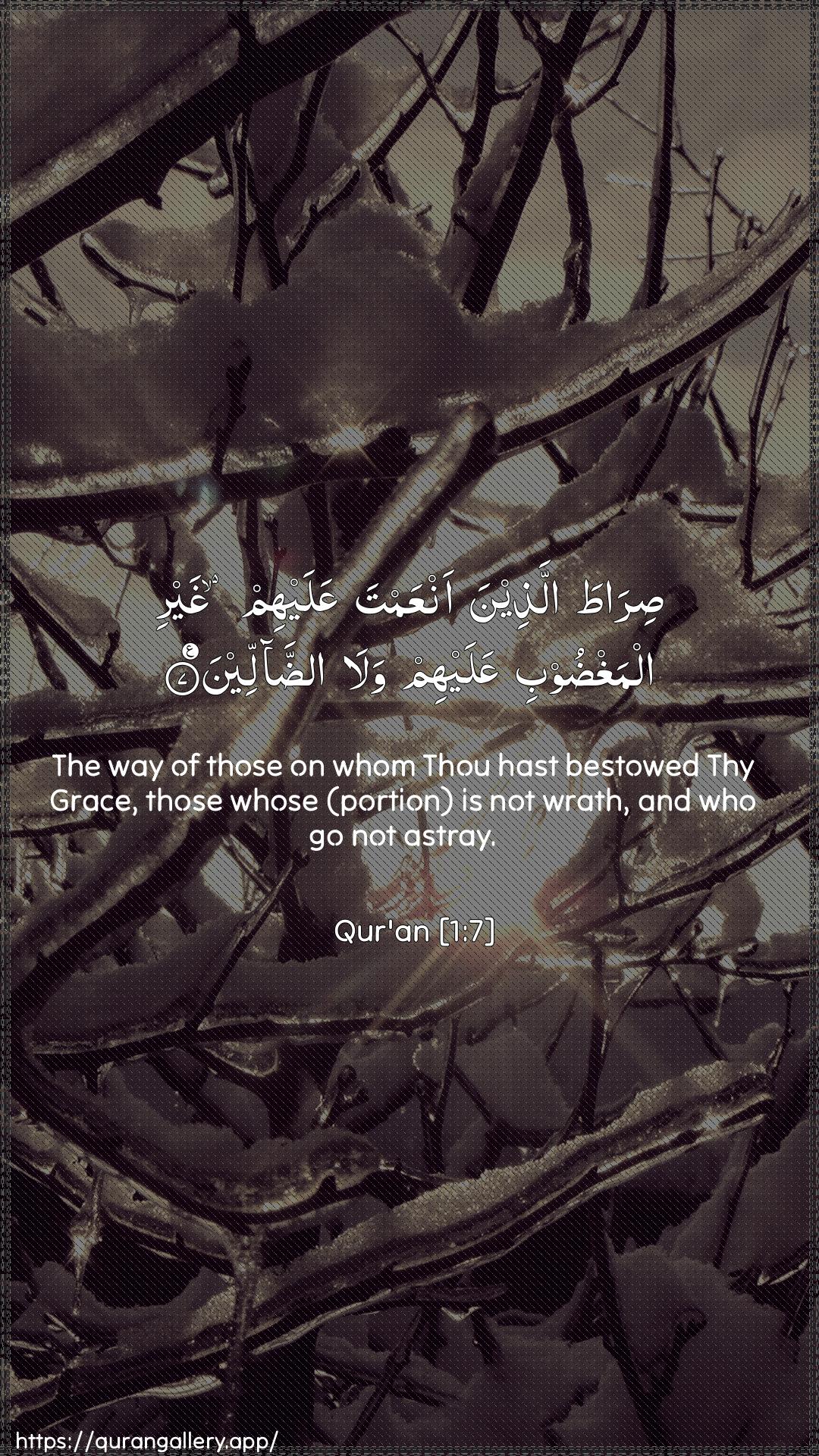
Arabic + English
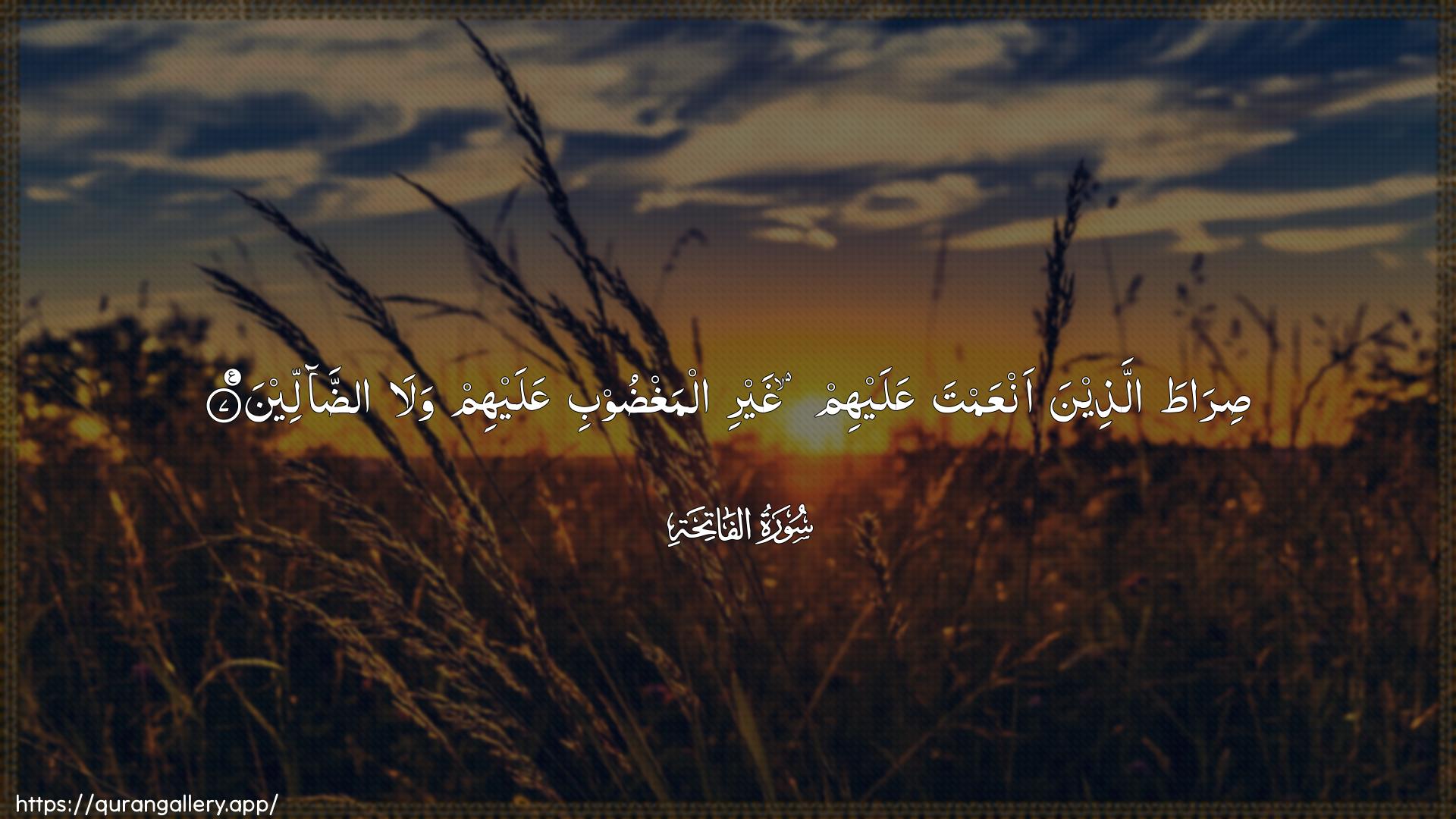
Arabic (Wide)
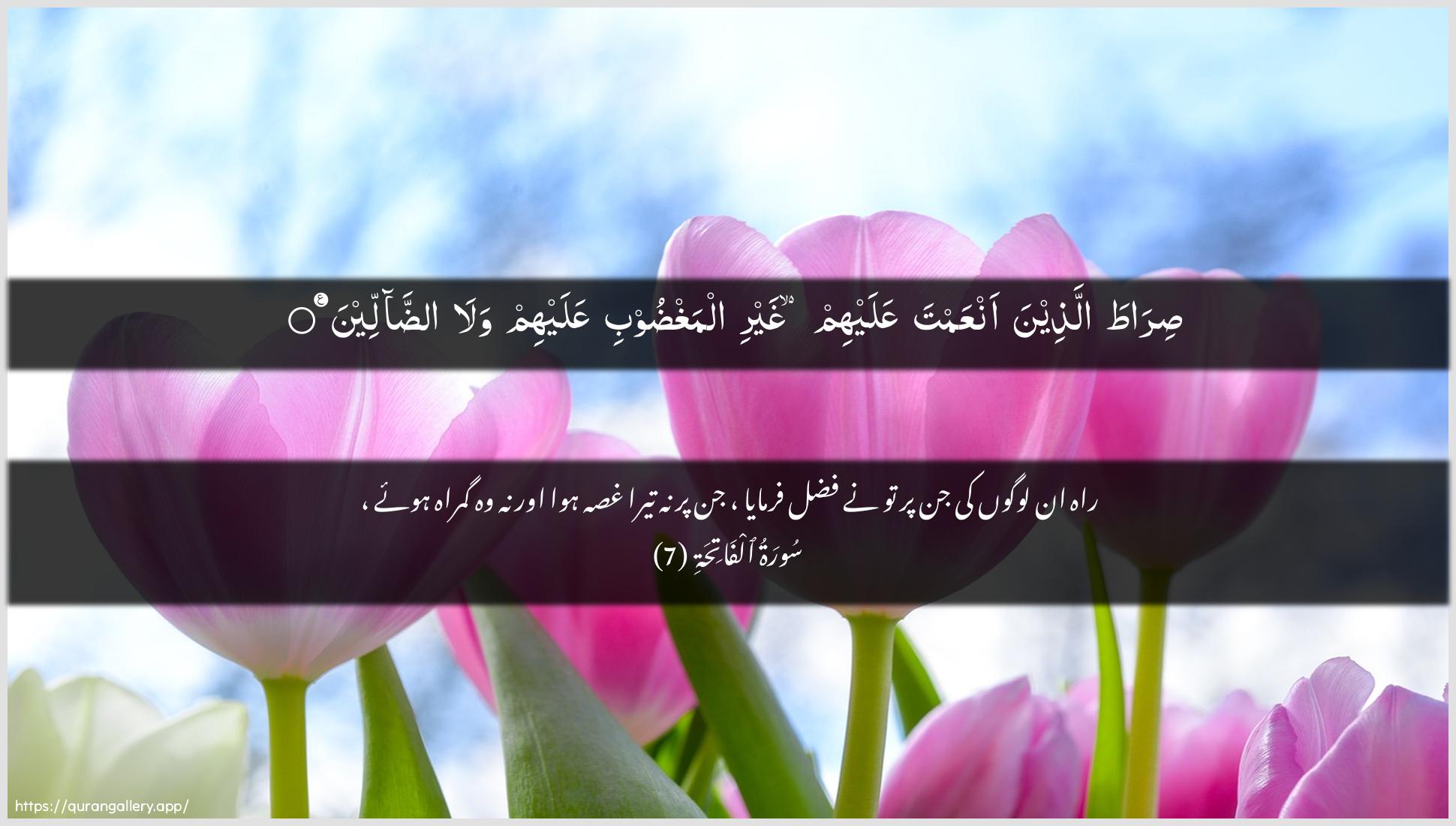
Arabic + Urdu
Free for personal & educational use with attribution
Quick Facts about this Verse
Surah
Al-Faatiha
Revealed
Makki
Position
Juz 0
Explore this Verse
Verse Meaning
According to the consensus of classical scholars like Ibn Kathir, this final verse of Al-Fatihah defines the Straight Path by presenting three distinct groups of humanity. It is a supplication to be guided to the path of the first group, and away from the paths of the other two. The first group, 'those upon whom You have bestowed Your grace,' is explained by Al-Tabari as the Prophets, the truthful, the martyrs, and the righteous, who received the ultimate grace of guidance and acted upon it. The second group, 'those who have incurred Your wrath' (Al-Maghdub 'alayhim), is identified by scholarly consensus, supported by hadith, as the Jews. As Al-Qurtubi clarifies, their archetype is one of knowing the truth but deliberately abandoning or distorting it. The third group, 'those who are astray' (Ad-Dallin), is identified as the Christians, whose archetype is one of deviating from the truth due to ignorance and excess (ghuluww), particularly in their reverence for their prophets. This verse, therefore, is not merely a historical reference but a profound psychological and spiritual map, asking Allah for guidance based on knowledge and practice, while seeking protection from the misguidance of corrupted knowledge and the misguidance of ignorant devotion.
Questions for Reflection
Personal Contemplation (The Path of Wrath)
Al-Qurtubi defines the 'Maghdub 'alayhim' as those who possess knowledge but fail to act upon it. Reflect honestly on one specific piece of Islamic knowledge you possess (e.g., the virtue of patience, the prohibition of gossip) that you consistently struggle to implement. What is the root cause of this gap between your knowledge and your actions, and what single, small step can you take to bridge it?
Intellectual Contemplation (The Path of Astray)
Ibn Kathir defines the 'Dallin' as those who are sincere in their devotion but lack correct knowledge, leading to excess. Consider your own religious practices and beliefs. Is there an area where your passion and emotion are stronger than your authentic knowledge? How can you seek out the correct knowledge to ensure your sincerity is guided by revelation, not just emotion?
Aspirational Contemplation (The Path of Favor)
Al-Tabari connects 'those You have favored' with the prophets, the truthful, the martyrs, and the righteous (Surah 4:69). Choose one of these four categories. Contemplate a specific quality of that group (e.g., the unwavering truthfulness of Abu Bakr, the patience of a prophet). How can you begin to cultivate a small measure of that specific quality in your character this week?
Practical Applications
Conduct a weekly 'Knowledge-Action Audit' by reviewing one piece of Islamic knowledge you've learned and assessing your practical application of it.
In an age of information overload, this helps Muslims move from consuming Islamic content to embodying Islamic principles in their work, family, and personal conduct.
Before adopting a new spiritual practice or expressing a strong religious opinion, verify its basis in the Quran and authentic Sunnah.
Crucial for navigating online religious discourse, preventing the adoption of innovations (bid'ah) and ensuring one's sincere worship is correctly channeled.
Cultivate the companionship of the righteous by actively seeking out and learning from those who embody the traits of the 'favored' (prophets, truthful, martyrs, صالحين).
This can be done by studying the Seerah, reading biographies of righteous scholars, and joining local study circles or mosque communities focused on authentic learning.
Hidden Gem
The synthesis reveals that the verse is structured as a process of elimination for the heart. By first defining the ideal ('an'amta 'alayhim'), then immediately negating the two primary deviations, the heart is left with no option but the Straight Path. Al-Qurtubi's focus on will and Ibn Kathir's focus on knowledge show that this negation process purifies both our intentions and our understanding, creating a complete spiritual alignment.
Common Questions
2 more questions available in the full page