
Al-Fil - The Elephant
Arabic Name: الْفِيل
Urdu Name: ہاتھی
Type: Makki
Serial Number: 105
Revelation Order: 19
Total Verses: 5
Parah: 30
Rukus: 1
Sajda: None
Share Verse Art
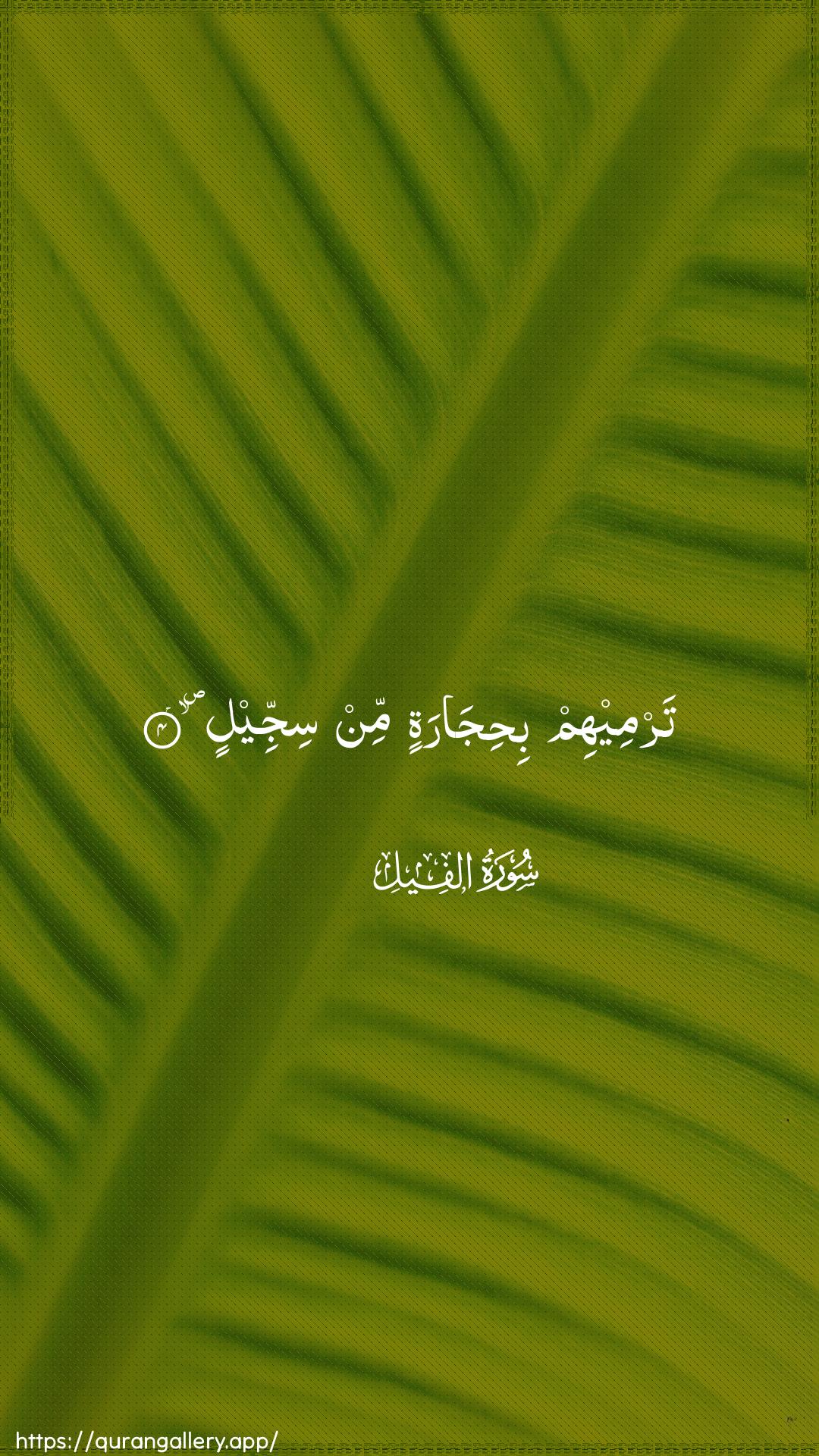
Arabic
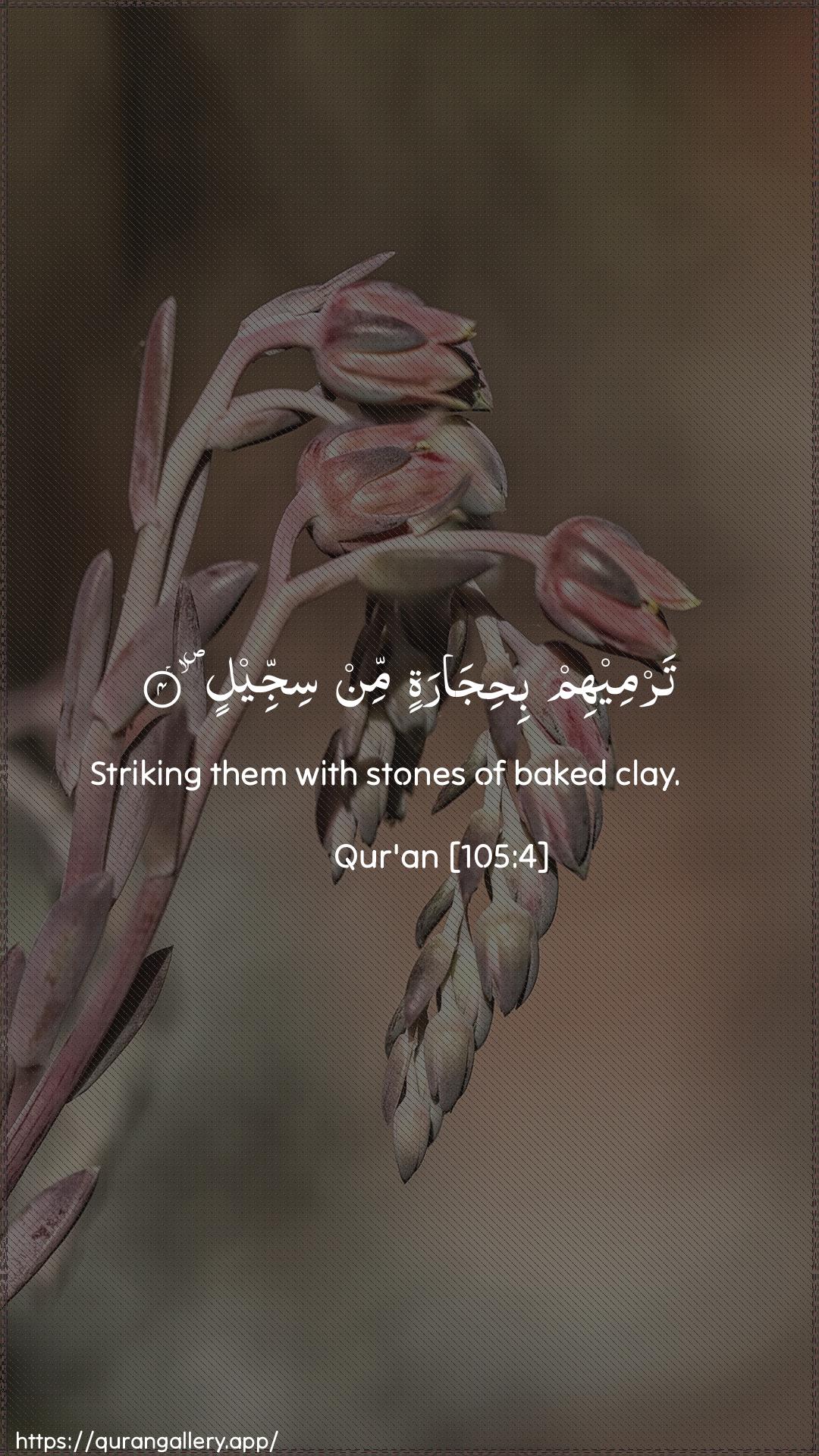
Arabic + English
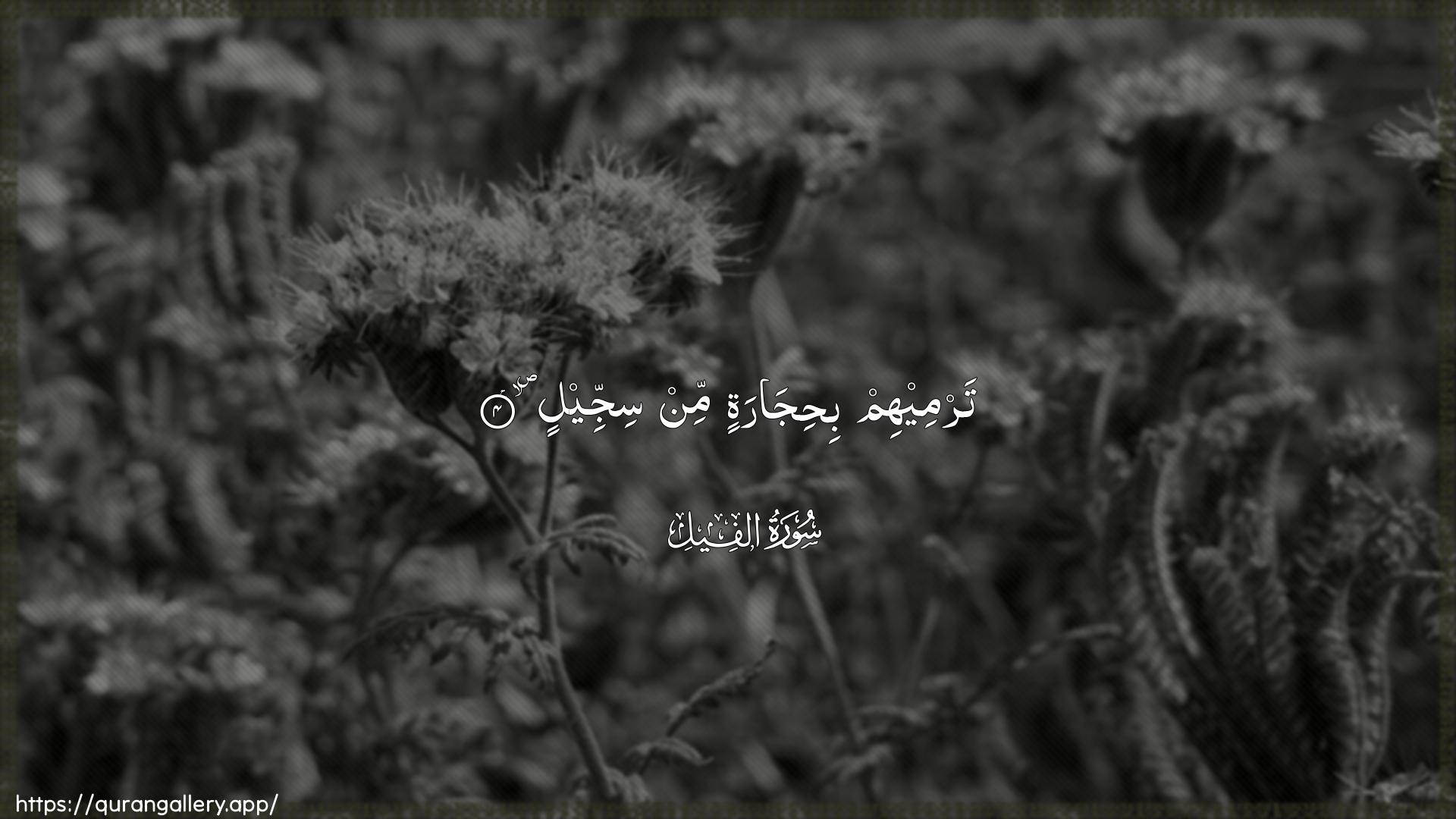
Arabic (Wide)
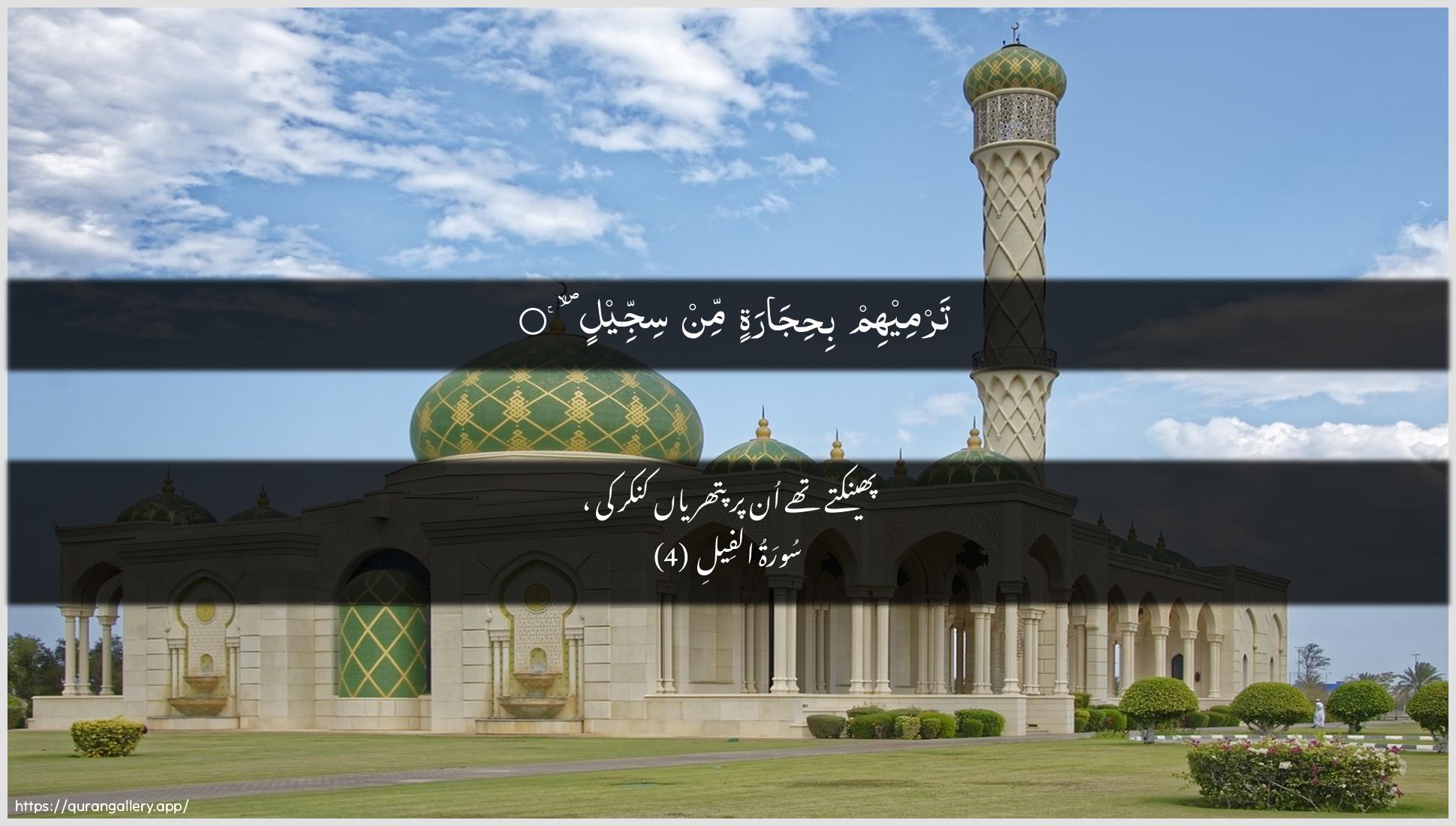
Arabic + Urdu
Free for personal & educational use with attribution
Quick Facts about this Verse
Surah
Al-Fil
Revealed
Makki
Position
Juz 30
Explore this Verse
Verse Meaning
According to the comprehensive analysis of classical scholars like Imam Al-Tabari, Quran 105:4 details the miraculous turning point in the attack on the Kaaba, where flocks of birds began 'pelting them with stones of Sijjil.' The term 'Sijjil' is a subject of rich scholarly discussion. The great exegete Ibn Abbas, as cited by numerous commentators, explained it as being of Persian origin, a compound of 'sang' (stone) and 'jil' (clay), meaning stones of baked clay. This interpretation is reinforced by its usage in other Quranic contexts, such as the punishment of the people of Lot. Ibn Kathir compiles various reports describing these stones as being small, like chickpeas or lentils, yet possessing devastating power. When a stone struck a soldier, it would disintegrate his body, leading to a swift and total annihilation of Abraha's mighty army. Some commentators like Ikrimah even linked this event to the first appearance of smallpox in Arabia, highlighting the supernatural and plague-like effect of this divine intervention.
Questions for Reflection
Textual & Linguistic Contemplation
Al-Tabari and Ibn Abbas discuss 'Sijjil' as 'baked clay'. Contemplate the imagery: something as humble as earth, hardened by fire, becomes a tool of divine judgment. How does this transform your understanding of the 'ordinary' materials and events in your own life as potential vessels of Allah's plan?
Personal Power & Vulnerability
Ibn Kathir describes the stones as no bigger than chickpeas, yet they completely destroyed armored men and elephants. Reflect on your own life: what are your 'elephants' (symbols of power, wealth, status, intelligence) that you rely on? How does this verse challenge your reliance on them and redirect it towards Allah?
Cosmic & Universal Principle
The event of the Elephant was a specific historical moment, yet the principle is timeless. Contemplate how this pattern—the arrogant brought low by the unexpected—repeats in history, nature, and society. Where do you see the 'birds with stones of Sijjil' at work in the world today, challenging powers that seem invincible?
Practical Applications
Cultivate humility by reflecting on how Allah used the smallest of things—birds and pebbles—to obliterate a technologically superior army with elephants.
When feeling overwhelmed by powerful institutions, economic pressures, or seemingly unbeatable challenges, recall this event to re-center your trust in Allah's power over worldly means.
Strengthen your trust in Allah's plan (Tawakkul) by remembering that His help can come from the most unexpected sources, just as it did for the defenseless Quraysh.
In moments of crisis—job loss, health scares, personal conflicts—use this verse as a reminder to pray for and expect help from unexpected sources, reinforcing that Allah is the ultimate planner.
Hidden Gem
A synthesis of the tafsirs reveals a hidden point of contemplation: the stones were not just destructive, but deconstructing. They turned a formidable army into 'chewed-up straw'. This isn't just about defeat; it's about the complete unraveling of false power. Contemplate the difference between being defeated and being utterly deconstructed to your most basic, helpless form. This highlights the absolute nature of divine power versus the fragile composition of worldly might.
Common Questions
1 more question available in the full page