
Al-Baqara - The Cow
Arabic Name: الْبَقَرَة
Urdu Name: گائے
Type: Madani
Serial Number: 2
Revelation Order: 87
Total Verses: 286
Parah: 1,2,3
Rukus: 40
Sajda: None
Share Verse Art
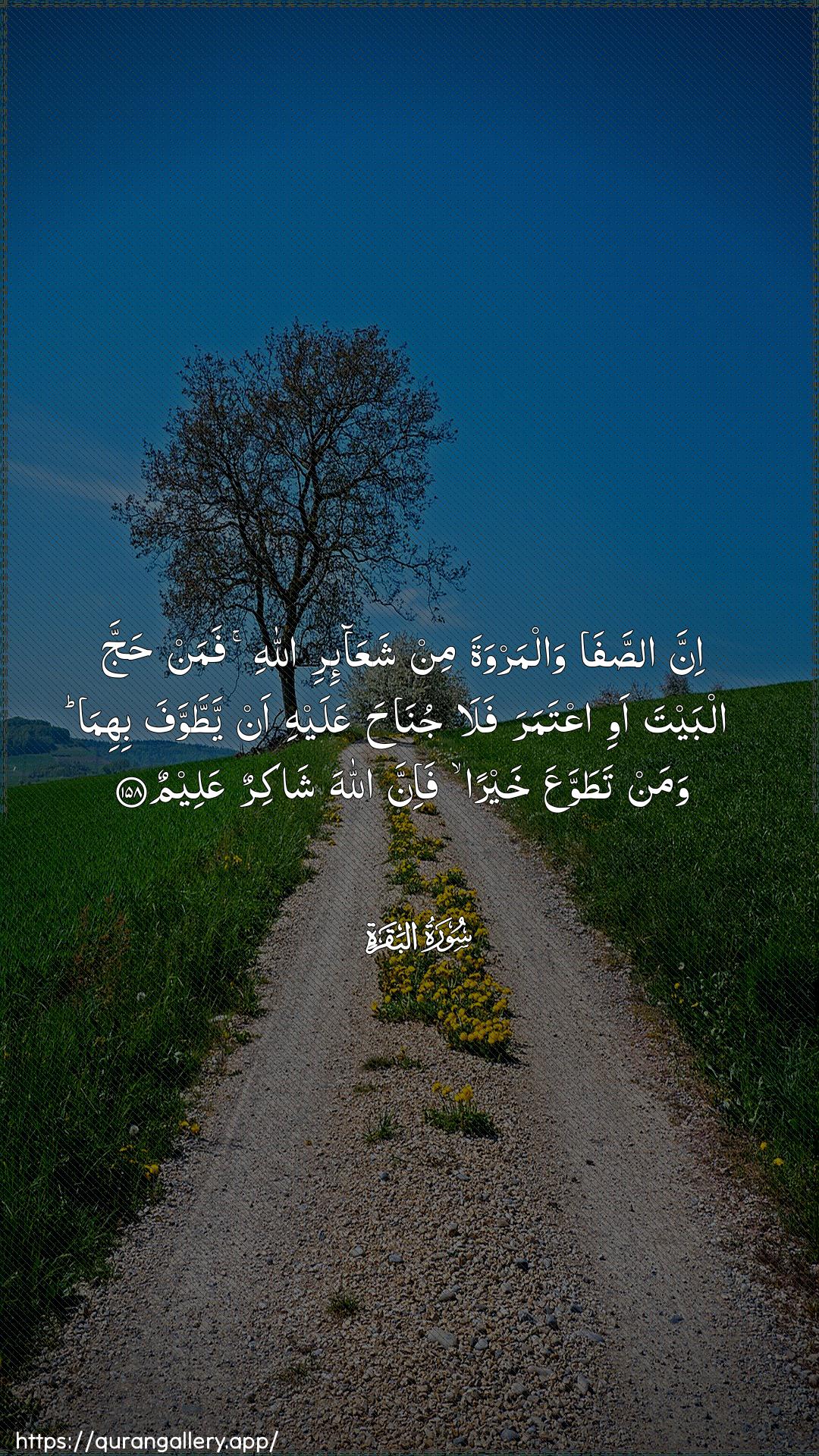
Arabic
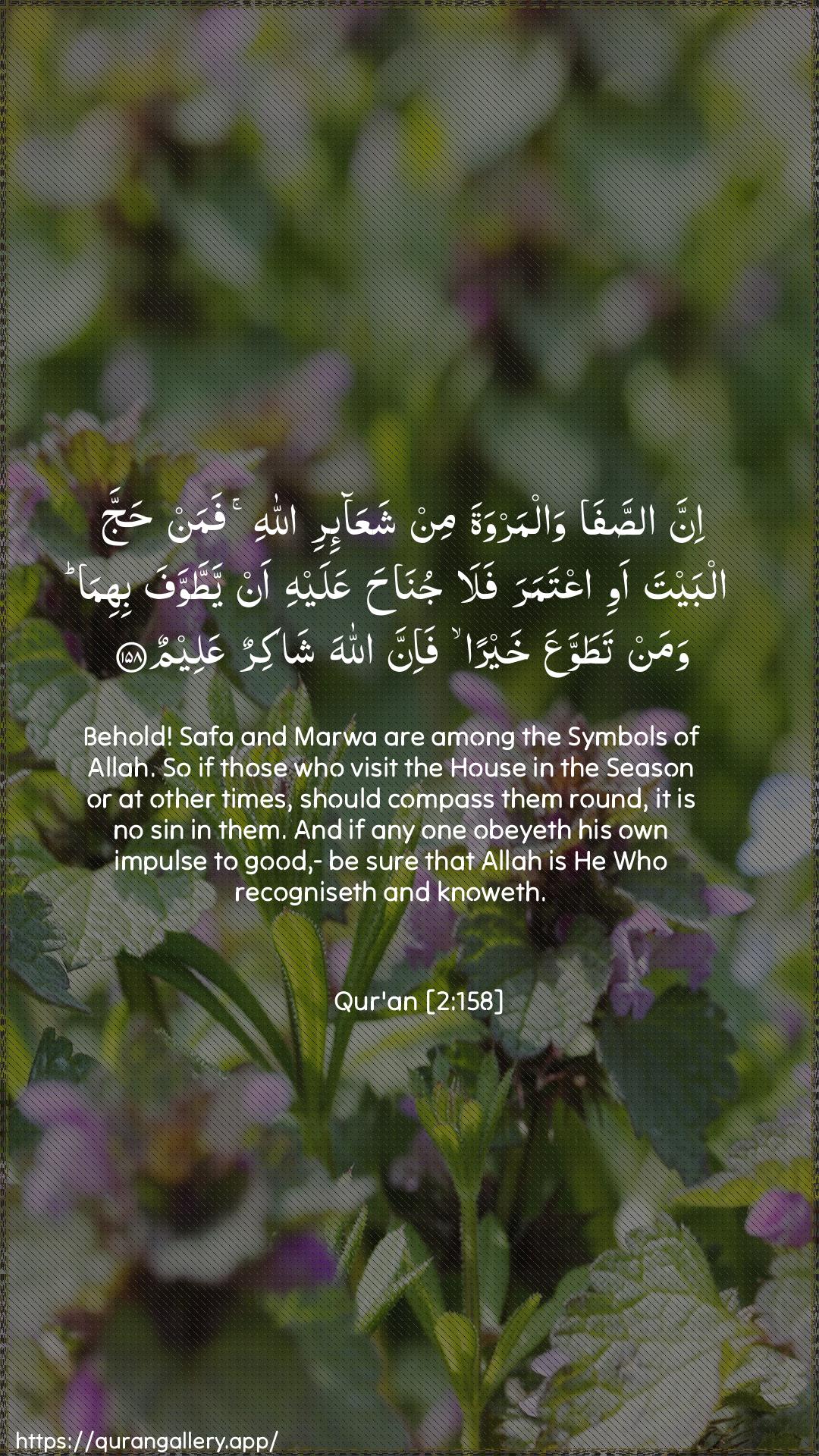
Arabic + English
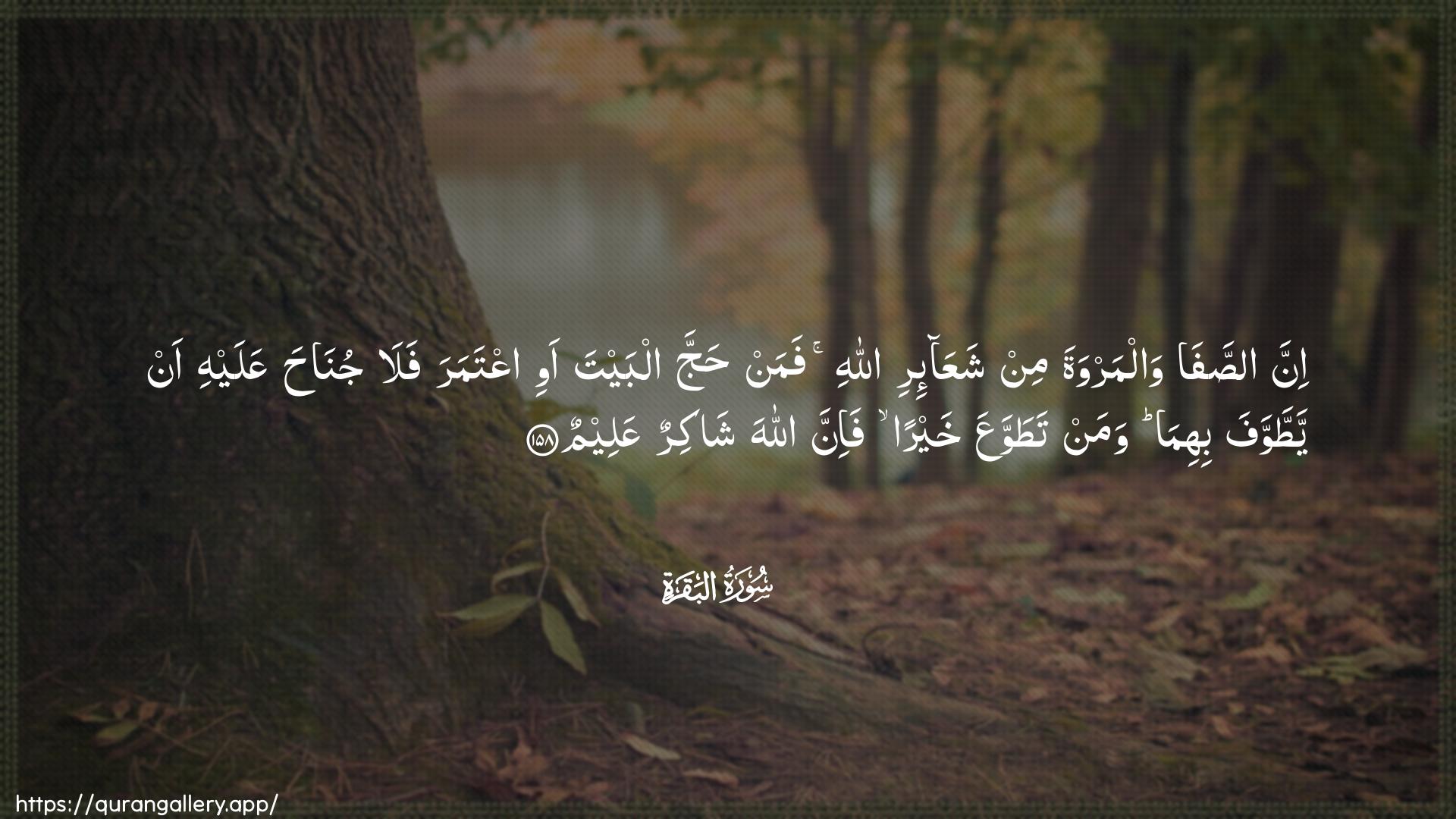
Arabic (Wide)
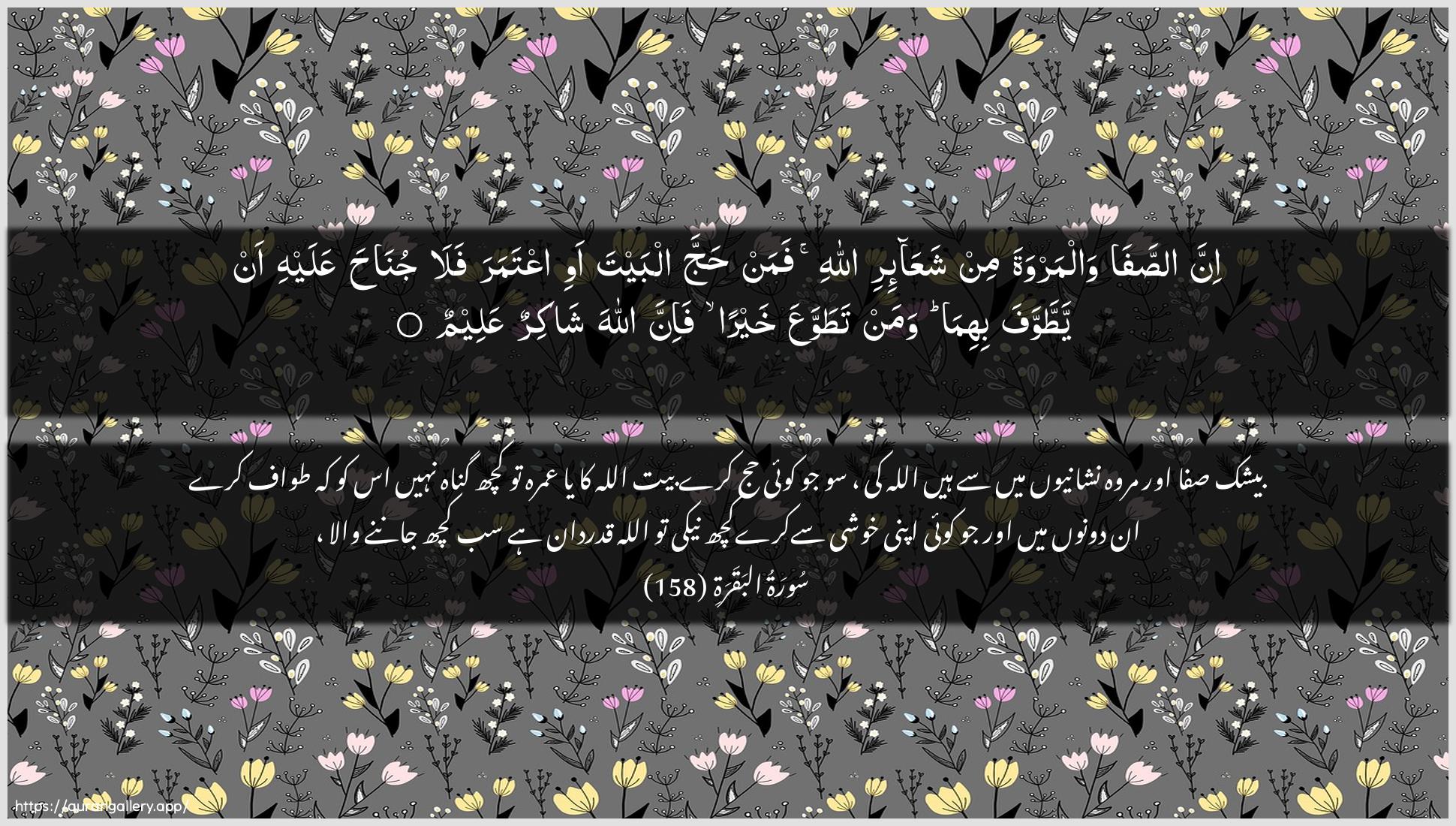
Arabic + Urdu
Free for personal & educational use with attribution
Quick Facts about this Verse
Surah
Al-Baqara
Revealed
Madani
Position
Juz 1,2,3
Explore this Verse
Verse Meaning
According to the classical tafsir of Imam al-Tabari, verse 2:158 addresses a critical hesitation among the early Muslims, particularly the Ansar, regarding the ritual of Sa'i (walking) between the hills of As-Safa and Al-Marwah. This practice was associated with pre-Islamic (Jahiliyyah) rites, where idols named Isaf and Na'ila were placed on these hills. The phrase 'fala junaha alayhi' (there is no sin upon him) was not to suggest the ritual is optional, but, as Aisha (RA) clarified in a narration recorded by al-Bukhari, to remove the specific sin they *felt* by performing a rite once corrupted by idolatry. Ibn Kathir adds that the verse reclaims and purifies this act, declaring Safa and Marwah to be 'among the Symbols of Allah' (min sha'a'ir Allah), rooted in the pure monotheistic struggle of Hajar, the wife of Ibrahim (AS), as she desperately sought water for her son, Ismail. This synthesis reveals a profound principle: Islam purifies, not abolishes, ancient rites that originate in sincere devotion to Allah, transforming them into foundational pillars of faith.
Questions for Reflection
textual
Aisha (RA) argued that if the act were optional, the verse would say 'no sin in *not* doing it.' Contemplate the precision of the Quranic language. How does the phrase 'no sin... to go around them' function as a form of divine reassurance to a specific community at a specific time, and what does this teach you about the mercy and psychological awareness embedded in Allah's guidance?
personal
Ibn Kathir roots the Sa'i in Hajar's desperate, solitary striving between these two hills, combining her own physical effort with an unshakable trust in Allah. Identify an area in your life where you feel you are running between 'Safa' (hope) and 'Marwah' (anxiety). How does this ritual model the perfect balance between doing your part (the running) and having ultimate faith in the outcome (the eventual gushing of Zamzam)?
communal
The Ansar were hesitant to perform Sa'i because of its association with pre-Islamic idolatry. Contemplate a modern cultural practice or tradition in your community that is widespread but has questionable origins. How does this verse guide the community in distinguishing between a purified, God-centric ritual and a blameworthy innovation, and what is your role in that clarification?
Practical Applications
Reframe the Sa'i from a mere physical walk into a deep meditation on Hajar's absolute trust in Allah's provision amidst utter desperation.
When facing personal crises—financial, health, or family—recall this ritual as a model for combining effort with faith.
Purify your intentions when engaging in cultural practices that may have non-Islamic roots, focusing on the act's potential for worship.
Applicable when navigating cultural celebrations, community traditions, or personal habits that are not explicitly Islamic but can be sanctified with proper intention.
Embrace voluntary good deeds with the certainty that Allah is 'Shakir' (Appreciative), recognizing every extra effort beyond the obligatory.
This applies to performing extra Umrahs, voluntary fasts, or giving charity beyond the required Zakah.
Hidden Gem
The synthesis of tafsirs reveals that Safa and Marwah are not just places, but symbols of the divine promise that sincere, desperate effort for the sake of Allah will never be in vain. Hajar's running produced nothing *between the hills*, but her obedience and striving were the catalyst for the miracle of Zamzam appearing *elsewhere* (by her child). This teaches a profound spiritual lesson: our sincere efforts are the prerequisite for Allah's blessings, but His blessings may come from directions we least expect.
Scroll to see more verses or use the dropdown in the breadcrumb to jump to any verse