
Yunus - Jonas
Arabic Name: يُوْنـُس
Urdu Name: یونس
Type: Makki
Serial Number: 10
Revelation Order: 51
Total Verses: 109
Parah: 11
Rukus: 11
Sajda: None
Share Verse Art
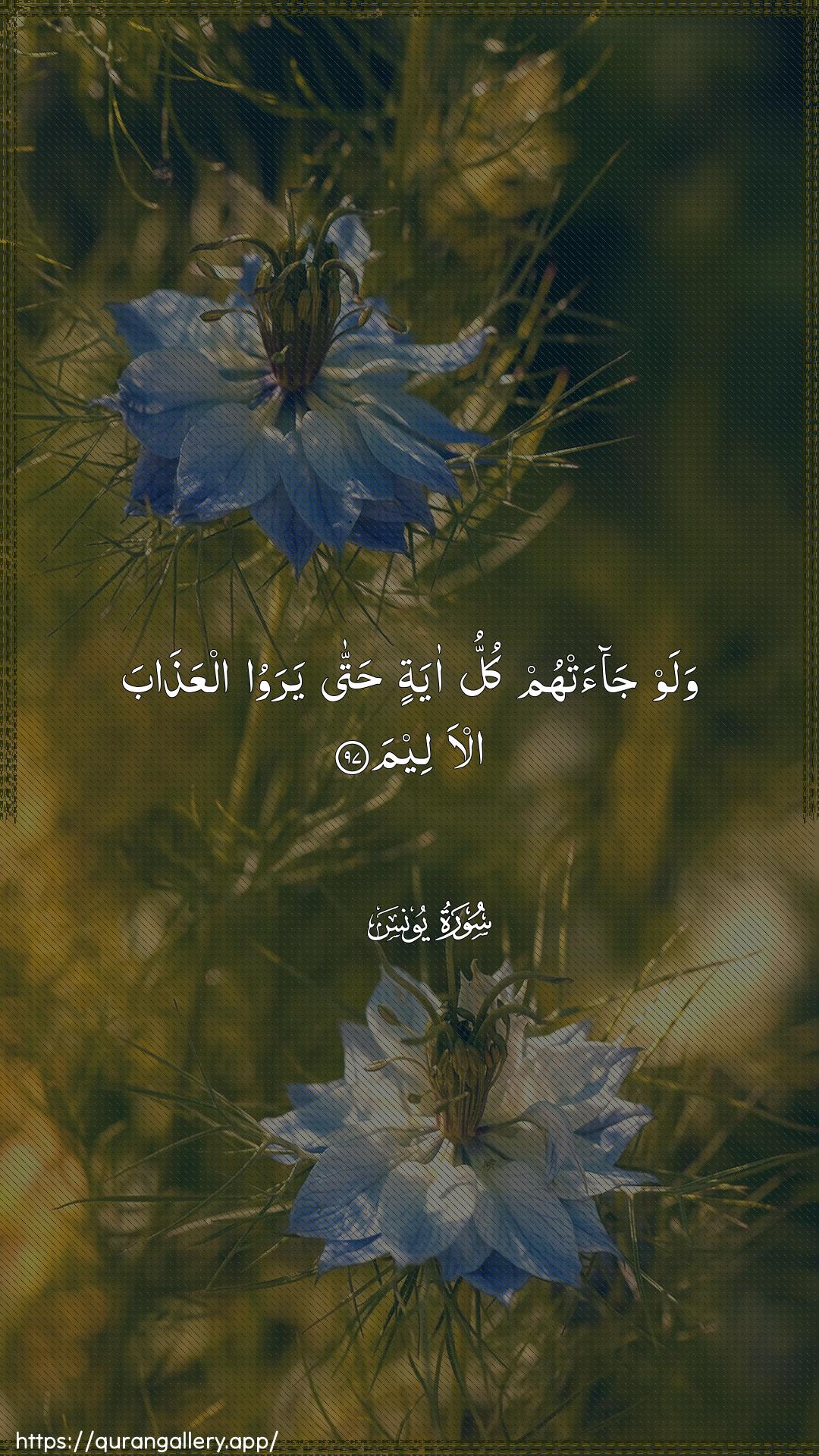
Arabic
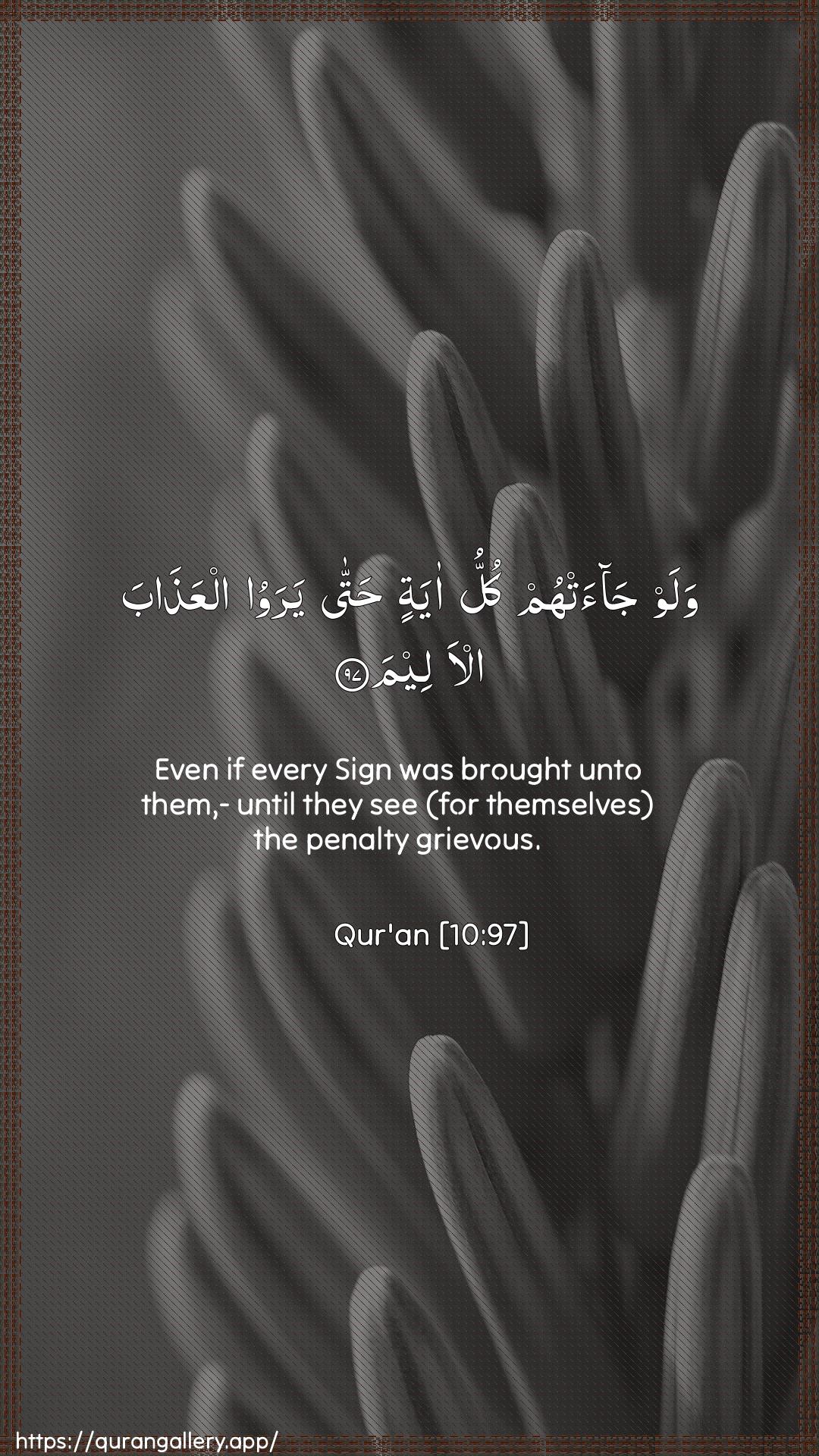
Arabic + English
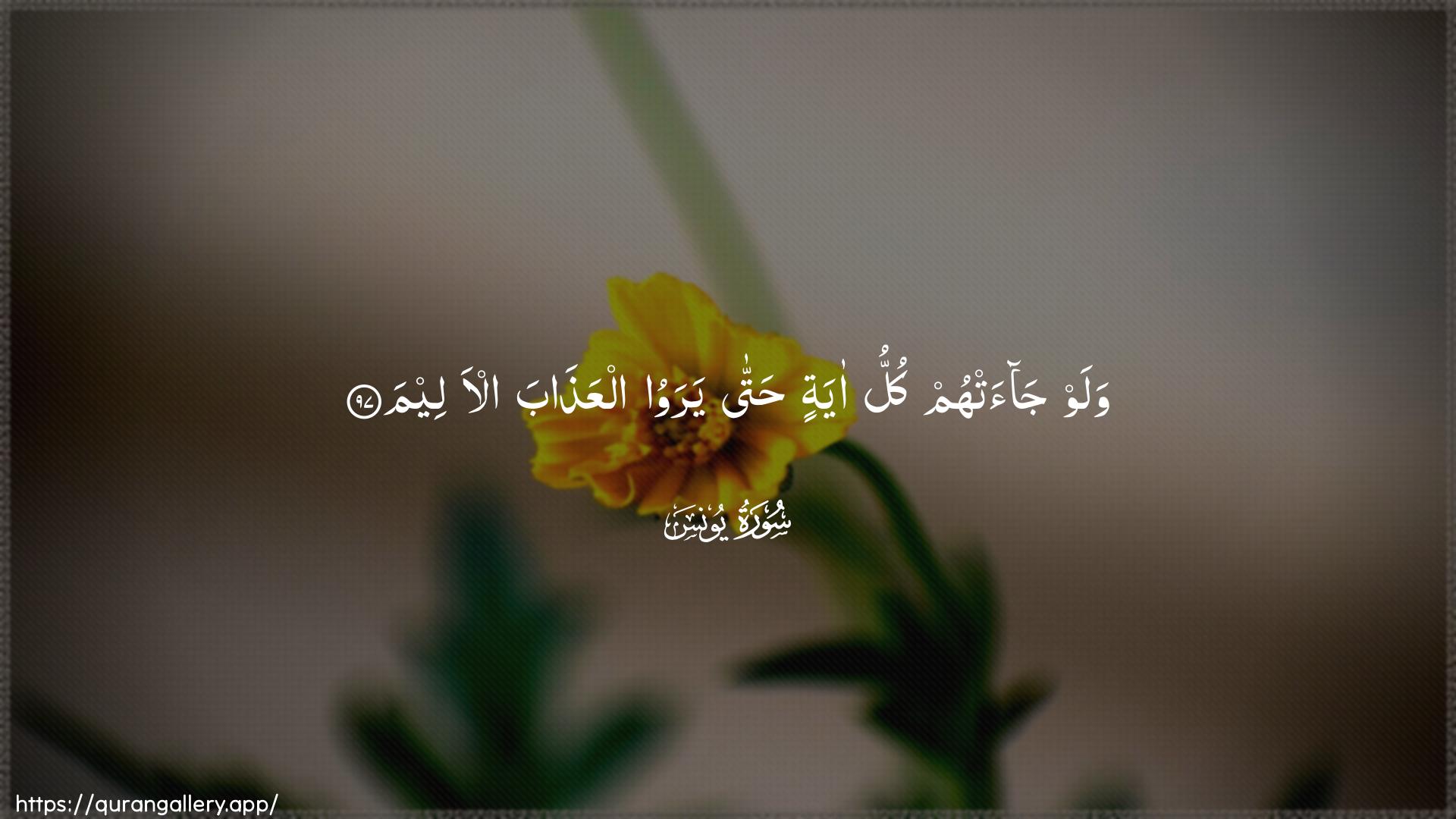
Arabic (Wide)
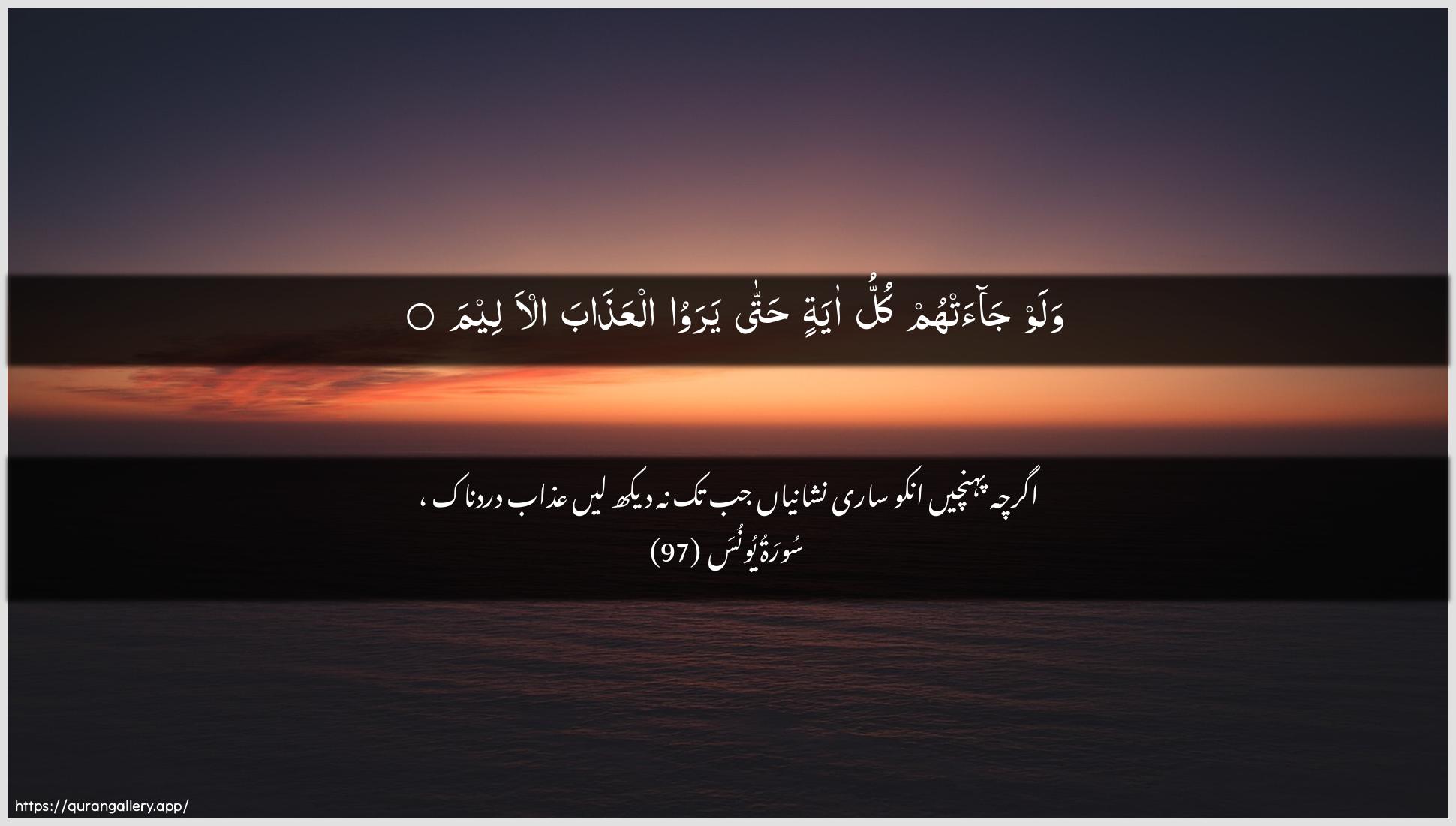
Arabic + Urdu
Free for personal & educational use with attribution
Quick Facts about this Verse
Surah
Yunus
Revealed
Makki
Position
Juz 11
Explore this Verse
Verse Meaning
According to the classical exegete Al-Tabari, Surah Yunus 10:97 describes the state of those upon whom Allah's word of punishment has been sealed due to their persistent disobedience. This verse clarifies that such individuals will not attain beneficial faith, even if every possible sign and proof were presented to them. Ibn Kathir powerfully connects this to the example of Pharaoh, who only believed at the moment of drowning, a point where faith is no longer of any use. The consensus among scholars, including Al-Sa'di, is that this state is not arbitrary; it is a consequence of people rejecting the truth when it first came, leading Allah to seal their hearts as a just recompense. Their eyes are opened only when they witness the painful torment, but by then, the opportunity for salvation has passed. The 'kalimah' (word or decree) of Allah, as explained by Mujahid and Qatadah, is His righteous anger (`sakhat`) which becomes justified against them for their continuous rebellion.
Questions for Reflection
Personal Spiritual State
Reflecting on Al-Sa'di's point that hearts are sealed for rejecting truth 'the first time it comes,' when have I felt a spiritual reminder or a call to do good and delayed or ignored it? How does this verse motivate me to respond differently next time?
The Nature of Evidence
This verse says 'even if every sign' came to them. What signs, both subtle and obvious, has Allah placed in my life to guide me? Am I truly seeing them, or have I become desensitized like the people described?
Understanding Divine Justice
Considering Al-Tabari's citation that Allah's word is justified against them 'because of their disobedience,' how does this verse change my perception of divine decree (qadr)? How does it affirm both human free will and God's ultimate justice?
Practical Applications
Cultivate a soft and receptive heart by responding to reminders of truth immediately, rather than procrastinating.
In an age of constant distraction, consciously pause and reflect on spiritual truths encountered daily, whether in reading, a lecture, or advice.
Regularly self-assess for arrogance and intellectual pride, which act as barriers to accepting truth, regardless of the evidence.
When encountering a compelling argument that challenges your views, practice saying 'I might be wrong, let me consider this' instead of immediately forming a rebuttal.
Use the story of Pharaoh, referenced by the scholars, as a powerful reminder that repentance has a deadline and should not be delayed.
If you recognize a sin or shortcoming in your life, make a firm intention to seek forgiveness and change today, not 'someday'.
Hidden Gem
A profound insight from the synthesis of tafsirs is that the 'painful punishment' is not only in the Hereafter. The state of having a sealed heart, unable to benefit from truth, beauty, or guidance, is itself a painful torment in this life. The ultimate tragedy described is a spiritual death that precedes physical death.
Scroll to see more verses or use the dropdown in the breadcrumb to jump to any verse
Common Questions
1 more question available in the full page