
Al-Baqara - The Cow
Arabic Name: الْبَقَرَة
Urdu Name: گائے
Type: Madani
Serial Number: 2
Revelation Order: 87
Total Verses: 286
Parah: 1,2,3
Rukus: 40
Sajda: None
Share Verse Art

Arabic
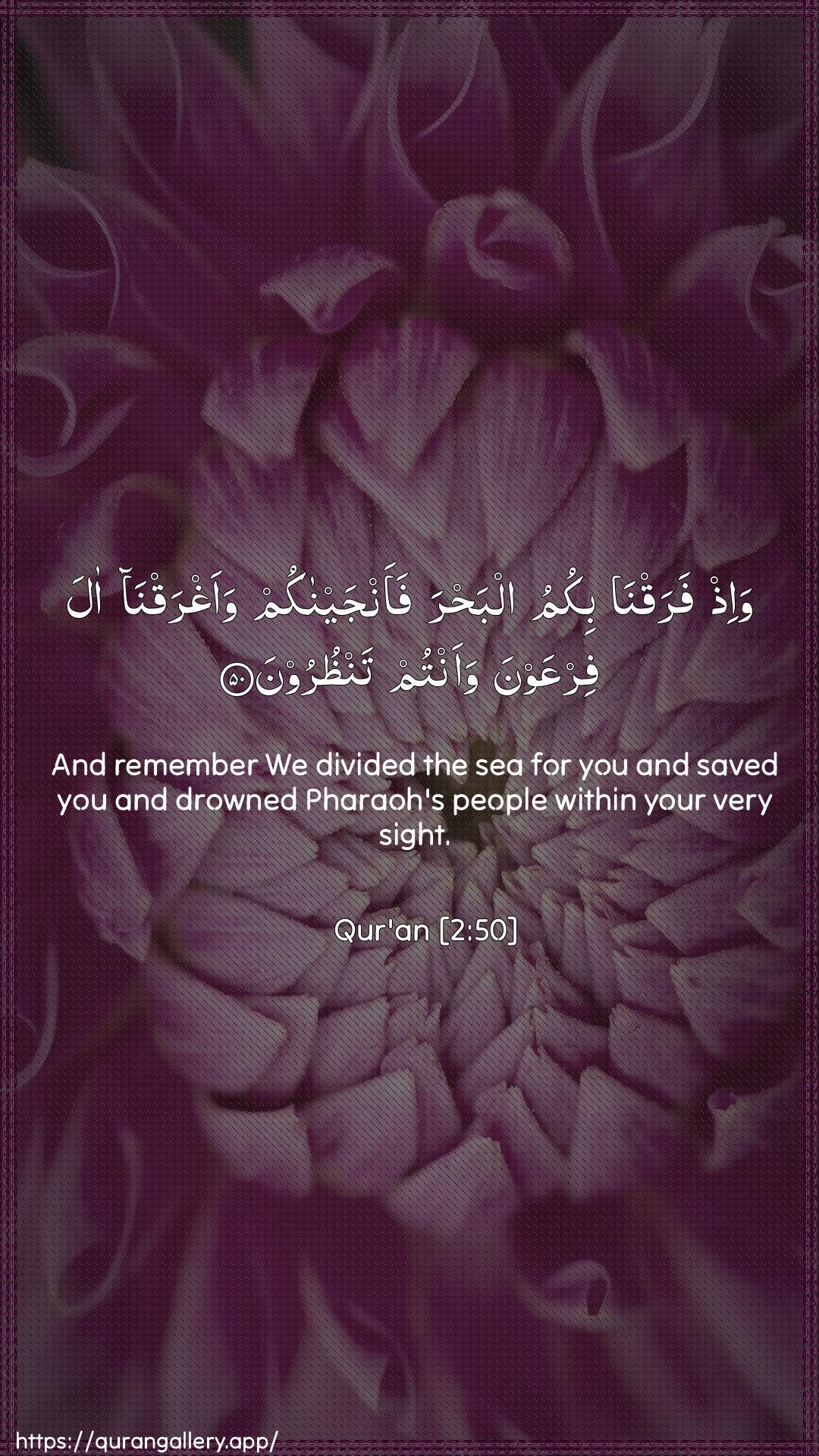
Arabic + English
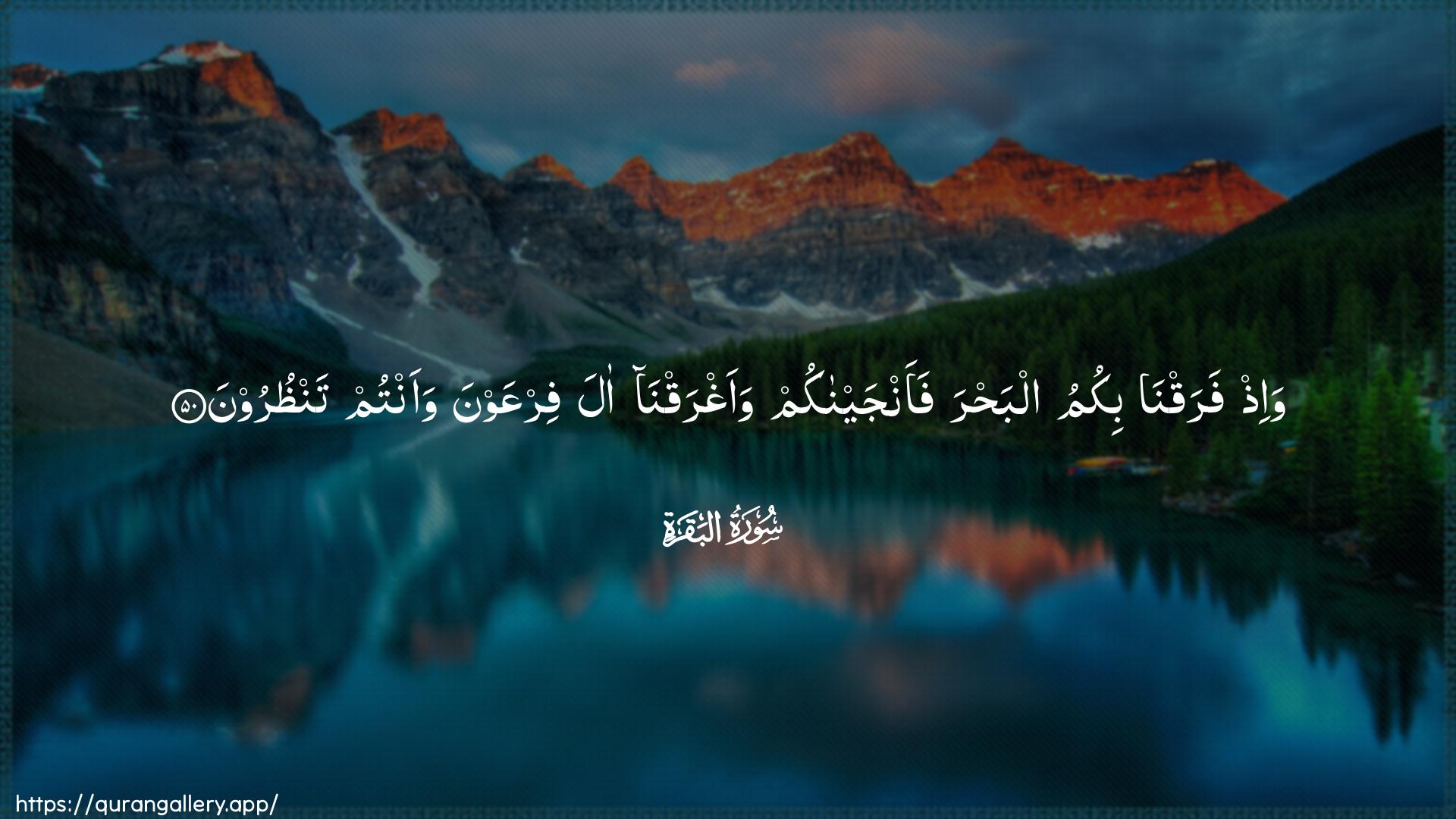
Arabic (Wide)
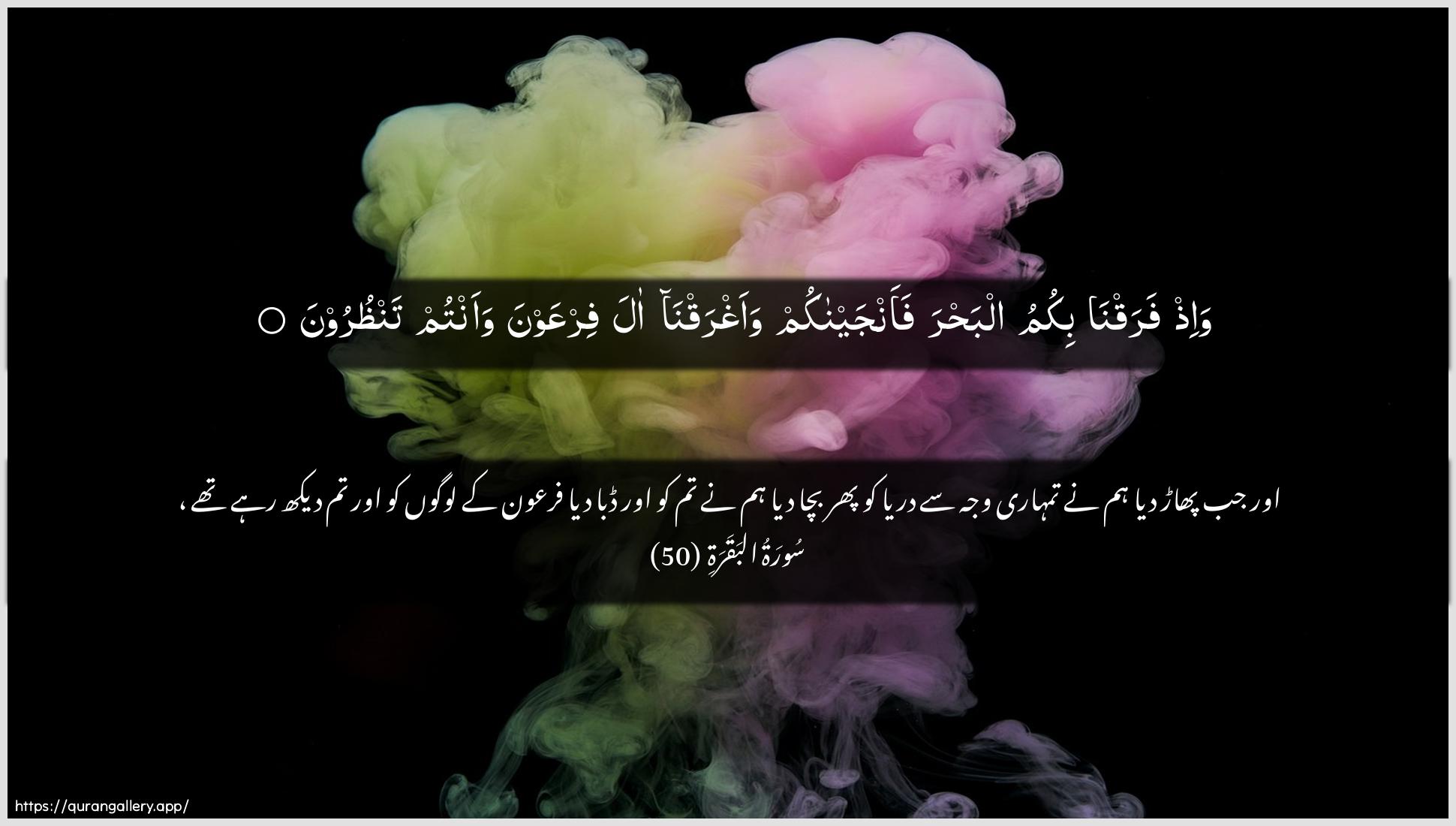
Arabic + Urdu
Free for personal & educational use with attribution
Quick Facts about this Verse
Surah
Al-Baqara
Revealed
Madani
Position
Juz 1,2,3
Explore this Verse
Verse Meaning
According to the classical exegete Al-Tabari, Quran 2:50 encapsulates the climax of divine intervention in the Exodus narrative, a multi-faceted miracle of salvation and retribution. A comprehensive review of tafsirs reveals this event as more than just a physical escape. While Ibn Kathir highlights the hadith connecting this deliverance to the Day of Ashura, Al-Qurtubi emphasizes the profound psychological impact of the Israelites witnessing their tormentors drown. This synthesis shows that Allah's plan provided not only a path to safety through the parted sea but also a path to healing and closure, making the oppressed direct witnesses to divine justice. The hidden gem in the scholarly discourse is the linguistic depth of 'faraqna bikum' ('We parted the sea *with* you'), implying, as Al-Tabari notes, that the Israelites themselves were the cause and instrument of the miracle, their presence splitting the waters. This transforms the narrative from a passive rescue into an active partnership with the divine will, a powerful testament to the potential of faith in the face of insurmountable odds.
Questions for Reflection
textual
The verse states Allah parted the sea 'bikum' ('with you' or 'for you'). Al-Tabari discusses this nuance. Contemplate the difference: was the sea parted merely for your benefit, or was your presence and faith an active part of the miracle itself? How does seeing yourself as an instrument, rather than a passive recipient, of divine help change your approach to challenges?
personal
Allah says, 'and you were looking on.' Ibn Kathir and Al-Qurtubi stress this was to bring 'relief to your hearts'. Reflect on a time a major source of your anxiety was definitively removed. Did witnessing its end bring you peace or a different set of challenges? Contemplate the spiritual state of the Israelites: what does one feel in the immediate aftermath of such a profound miracle and the total destruction of one's enemy?
Practical Applications
In moments of crisis, when you feel trapped between an 'ocean' of problems and a 'pharaoh' of threats, actively recall this verse to shift your focus from the impossibilities of the situation to the limitless power of Allah.
Applicable during financial crises, severe health diagnoses, or when facing seemingly insurmountable institutional injustice.
Cultivate the practice of 'witnessing gratitude' by not only thanking Allah for your own successes but also reflecting on the just outcomes for those who cause harm, reinforcing your belief in divine justice.
Helps maintain emotional and spiritual balance when observing current events and the consequences of tyranny or corruption.
Hidden Gem
The synthesis of narrations reveals that the Israelites hesitated, and it was Yusha ibn Nun who first charged his horse into the sea, demonstrating ultimate trust before the miracle fully manifested. This detail, cited in narrations by Al-Tabari, reveals a hidden layer: great miracles often require a champion of faith to take the first step into the impossible, acting on trust alone. This transforms the event from a purely top-down miracle into a responsive one, triggered by an act of supreme human faith.
Scroll to see more verses or use the dropdown in the breadcrumb to jump to any verse