
Al-Baqara - The Cow
Arabic Name: الْبَقَرَة
Urdu Name: گائے
Type: Madani
Serial Number: 2
Revelation Order: 87
Total Verses: 286
Parah: 1,2,3
Rukus: 40
Sajda: None
Related Hadith
"A narration attributed to Ibn Mas'ud and other companions explains this verse in the context of people in Madinah who accepted Islam upon the Prophet's arrival but then turned to hypocrisy."
Provides the direct historical and social context for the revelation of the parable.
Share Verse Art
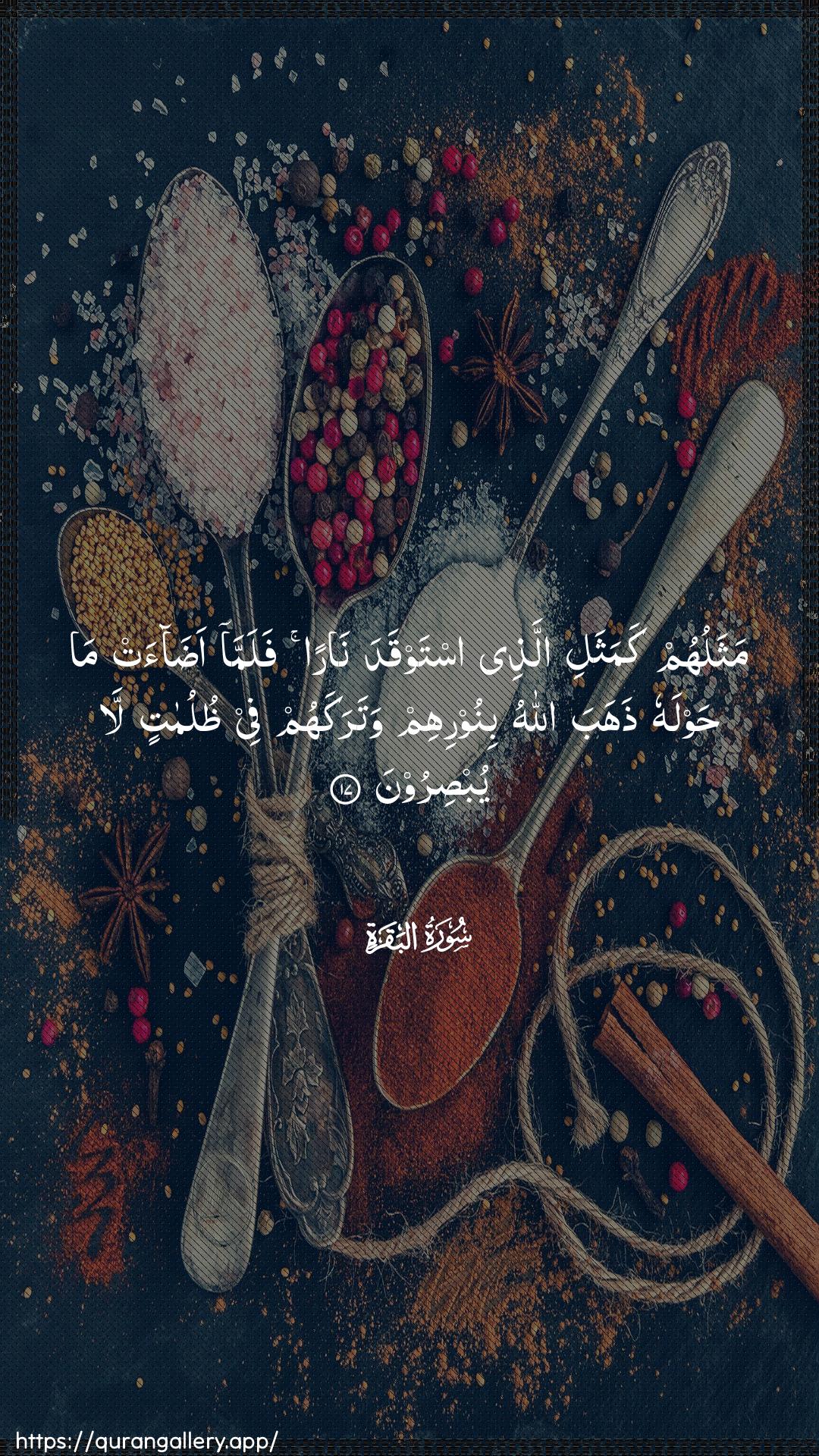
Arabic
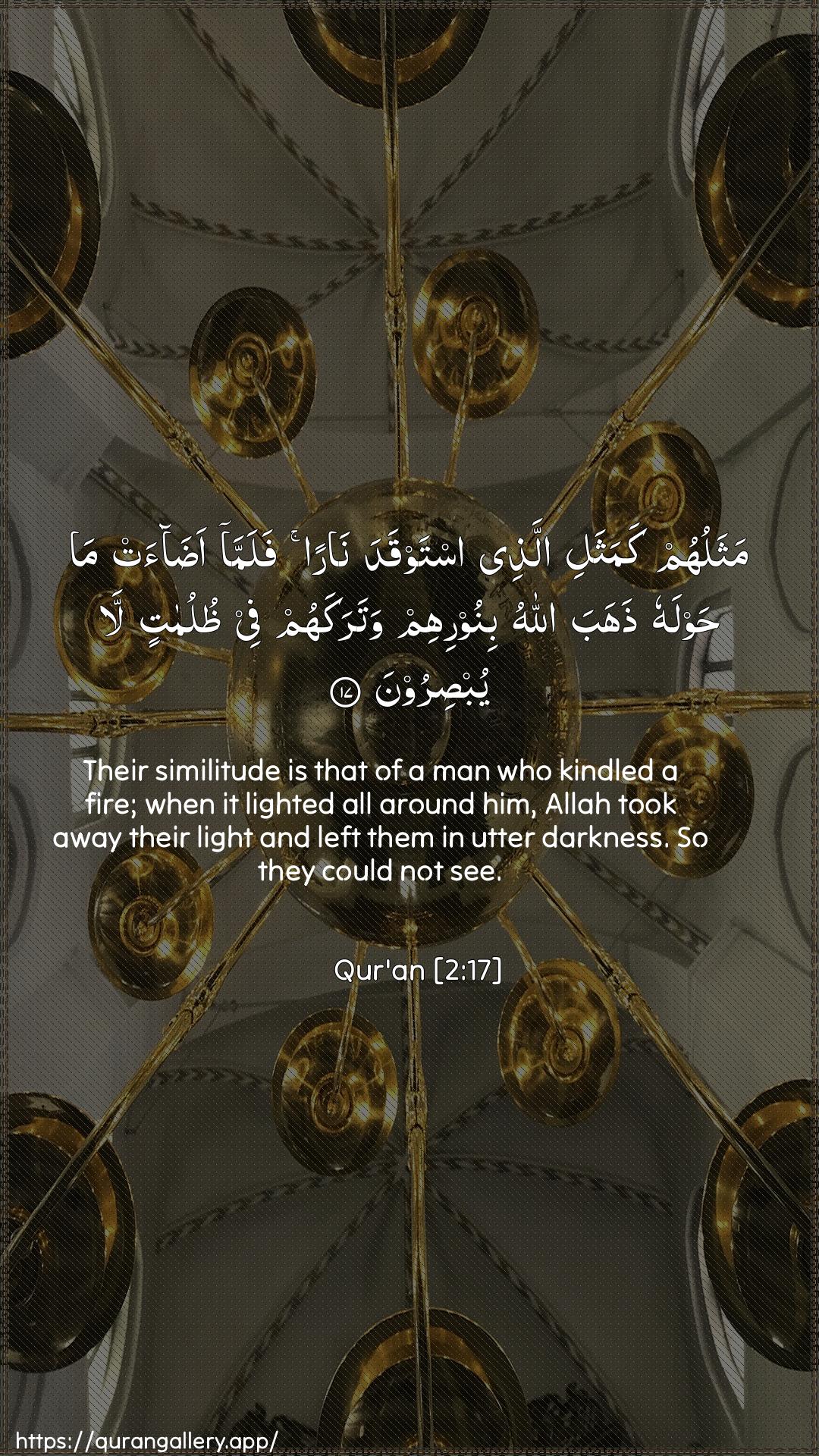
Arabic + English
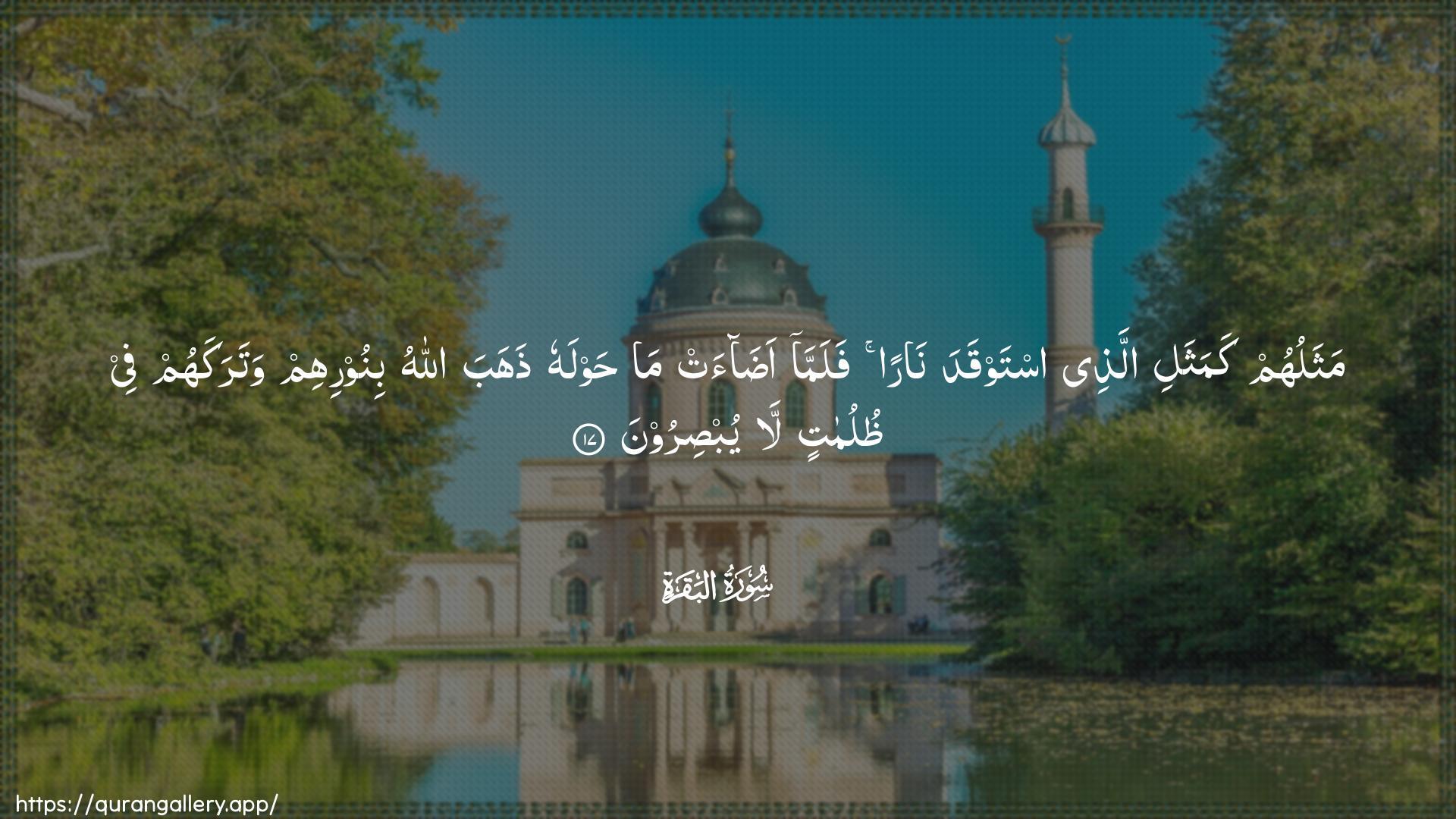
Arabic (Wide)
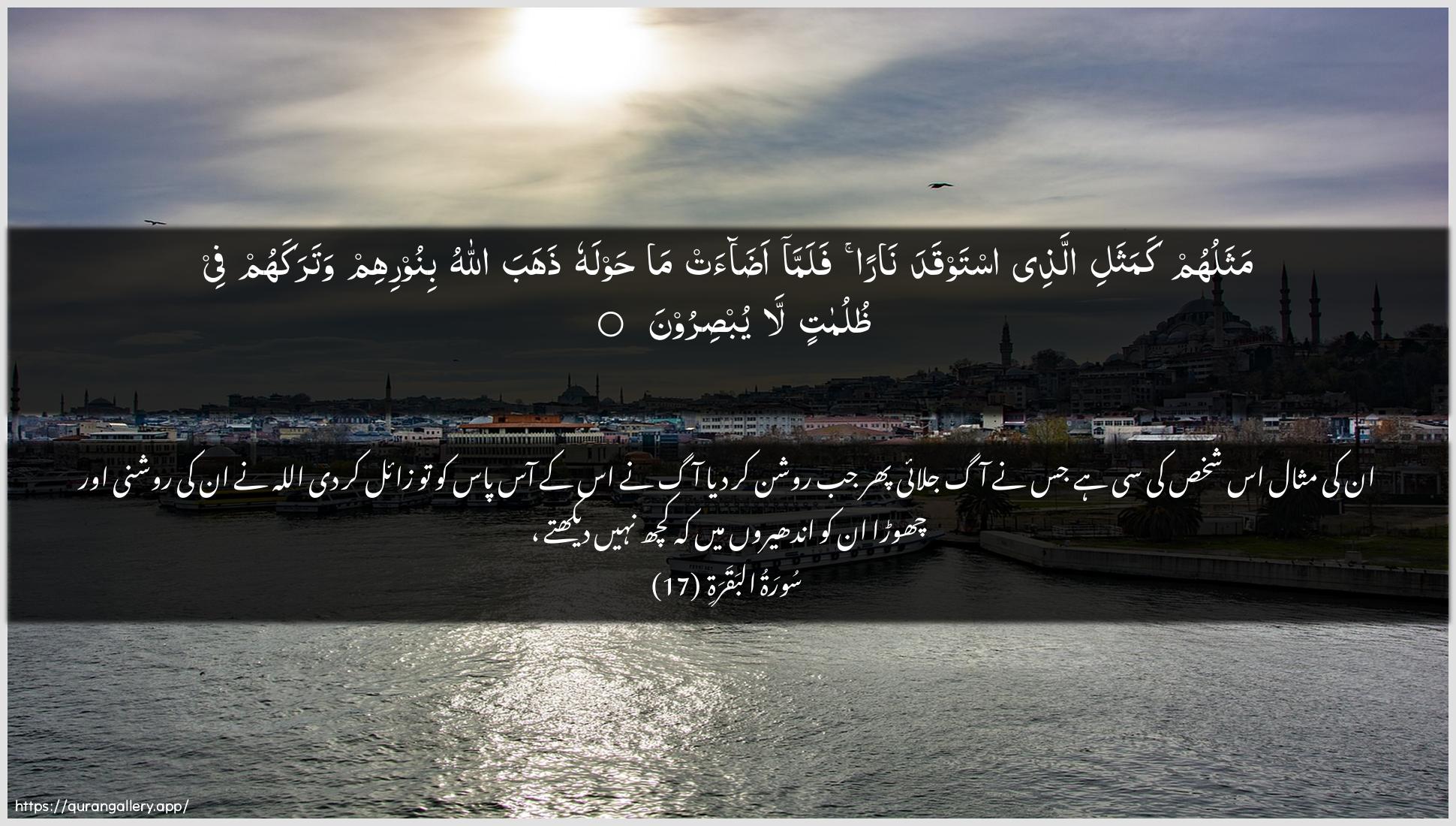
Arabic + Urdu
Free for personal & educational use with attribution
Quick Facts about this Verse
Surah
Al-Baqara
Revealed
Madani
Position
Juz 1,2,3
Explore this Verse
Verse Meaning
According to the classical scholar Ibn Kathir, Quran 2:17 presents a powerful parable likening the hypocrites to a person who kindles a fire. This fire, representing the light of Islam they outwardly profess, grants them temporary benefits in this world—safety, community, and clarity. However, as Al-Tabari elaborates, this light is external and not rooted in sincere faith. The synthesis of classical tafsirs, including Al-Qurtubi's analysis, reveals a profound truth: the hypocrites mistake the temporary illumination of their professed faith for true guidance. The 'wow factor' emerges when Allah 'takes away *their* light' (not the fire itself), signifying that the potential for genuine inner guidance is removed, leaving them with only the destructive, smokey aspect of the fire. They are plunged into multiple layers of darkness—the darkness of their hypocrisy, their doubt, and their ultimate misguidance—rendering them spiritually blind and unable to find the path to truth. This comprehensive understanding shows the parable is not just about a loss of light, but a divine act of removing the beneficial aspect of faith while leaving the harmful consequences of their insincerity.
Questions for Reflection
Textual Contemplation
Ibn Kathir notes Allah 'took away their light (nur)' but not their 'fire (nar)'. Contemplate the difference between the illuminating, beneficial 'light' of guidance and the burning, consuming 'fire' of insincere actions. How does this distinction change your understanding of righteous deeds?
Personal Transformation
Al-Tabari explains the singular 'who kindled a fire' represents a collective group's shared state. Reflect on your own circles—family, friends, community. Is the 'fire' of your collective religiosity one that illuminates for everyone, or does it cast shadows of exclusion and judgment, leaving some in darkness?
Relational Wisdom
Al-Qurtubi connects this parable to the hypocrites' interactions with believers. Contemplate the 'light' you borrow from righteous people. Are you internalizing it to kindle your own sincere faith, or are you merely using its reflection for social benefit, risking being plunged into darkness when you are alone?
Practical Applications
Conduct a 'Spiritual Light Audit' by examining the 'why' behind your religious actions, distinguishing between acts done for Allah and those for worldly gain.
Apply this to social media posts about charity, public acts of worship, or seeking leadership in religious communities.
Practice 'Gratitude for Guidance' to counteract the arrogance that leads to spiritual blindness, consciously thanking Allah for the light of clarity and understanding.
Implement during daily prayers or reflection, specifically thanking Allah for understanding a concept or feeling spiritual clarity.
Hidden Gem
The synthesis reveals a profound spiritual mechanic: the hypocrite *actively* 'kindles (istawqada)' the fire, an act of effort. Yet, the true 'light (nur)' is a passive gift from Allah that is taken away. This contrast, born from combining Al-Tabari's linguistic analysis with Ibn Kathir's theology, shows that human effort can generate outward religious displays, but only sincerity can maintain the divine light of guidance.
Scroll to see more verses or use the dropdown in the breadcrumb to jump to any verse
Common Questions
4 more questions available in the full page