
Yusuf - Joseph
Arabic Name: يُوْسُف
Urdu Name: یوسف
Type: Makki
Serial Number: 12
Revelation Order: 53
Total Verses: 111
Parah: 12,13
Rukus: 12
Sajda: None
Related Hadith
"The account of the Prophet Muhammad ﷺ addressing the Quraysh after the Conquest of Makkah and quoting this verse."
Provides the primary practical application and historical context for this verse by the final Prophet.
Share Verse Art

Arabic
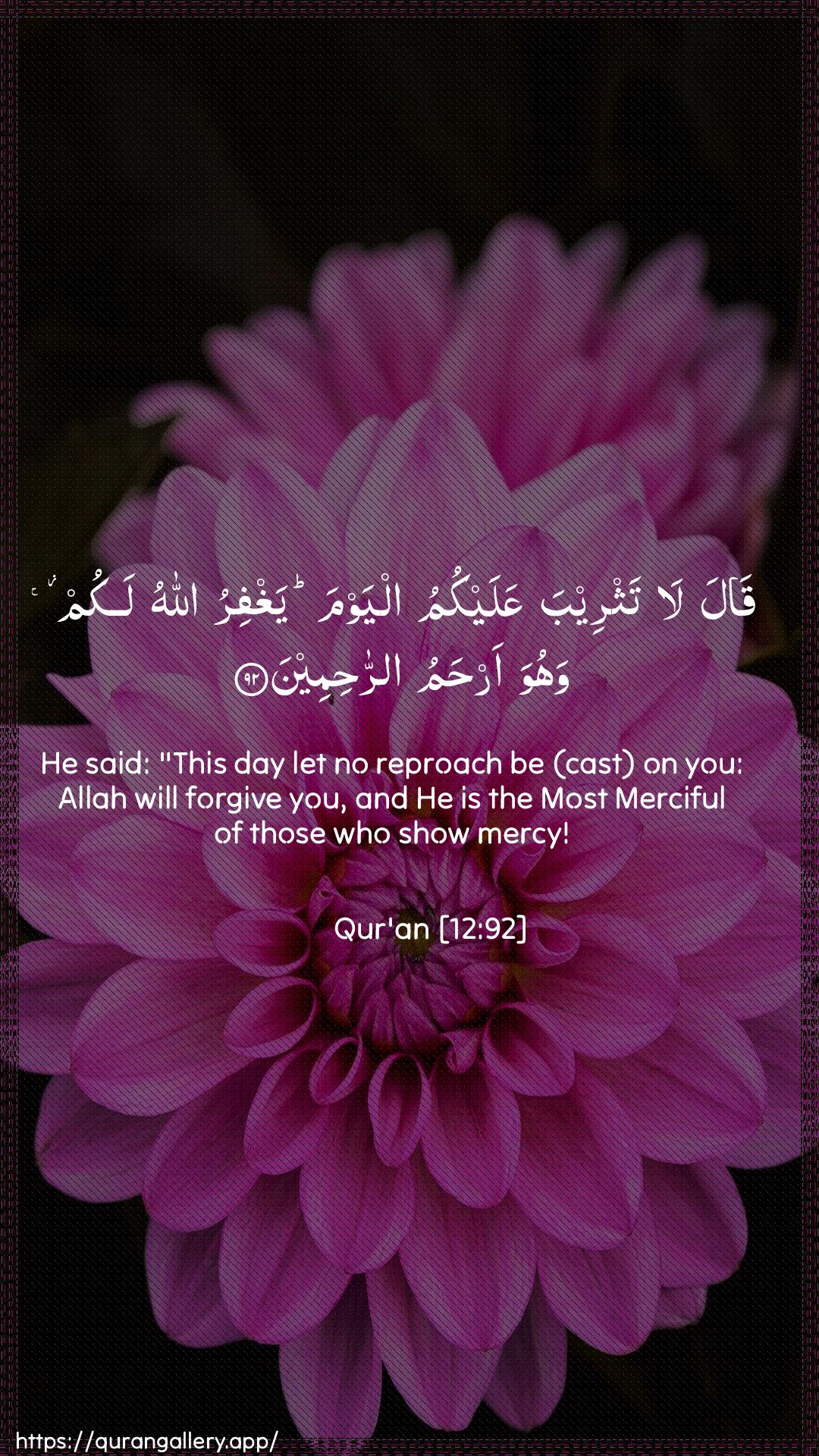
Arabic + English
Arabic (Wide)
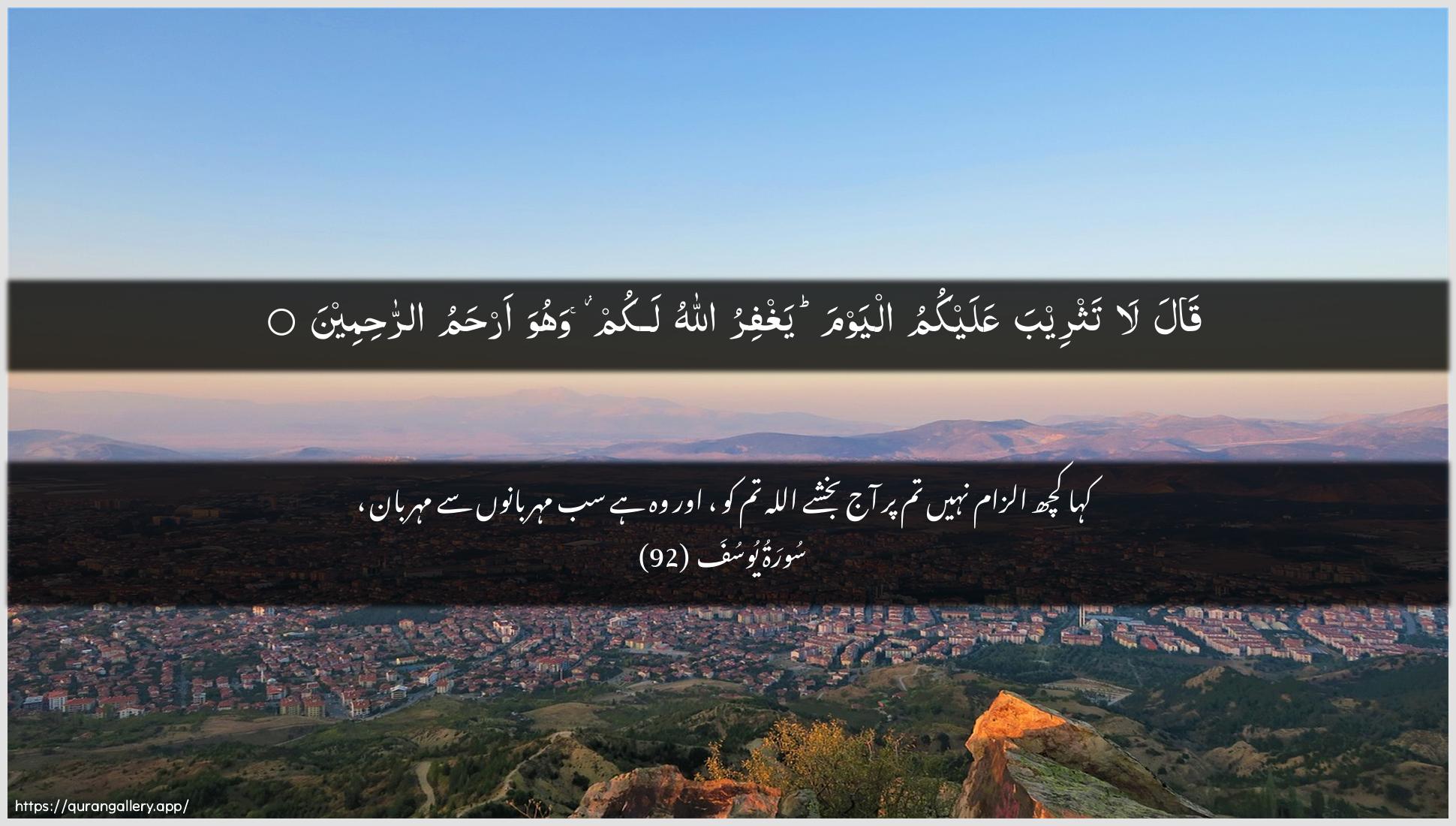
Arabic + Urdu
Free for personal & educational use with attribution
Quick Facts about this Verse
Surah
Yusuf
Revealed
Makki
Position
Juz 12,13
Explore this Verse
Verse Meaning
According to the classical tafsir of Imam At-Tabari, the phrase 'Lā tathrība ʿalaykumu-l-yawm' signifies a complete and absolute pardon from Prophet Yusuf (عليه السلام) to his brothers. It means there is no reproach, no blame, and no mention of their past sins that could spoil the reconciliation. Imam As-Sa'di describes this act as the 'peak of benevolence' (nihayat al-ihsan), as Yusuf not only forgave them but also prayed for them, saying 'Yaghfiru-llāhu lakum' (May Allah forgive you). The most profound insight, documented by Imam Al-Qurtubi, is the direct historical parallel between this moment and the actions of Prophet Muhammad (ﷺ) upon the Conquest of Makkah. When the defeated leaders of Quraysh stood before him, the Prophet ﷺ quoted these very words from Surah Yusuf, extending the same unconditional mercy. This synthesis reveals a consistent prophetic character of forgiveness that transcends time. The verse concludes with 'wa Huwa Arḥamu-r-Rāḥimīn' (and He is the Most Merciful of the merciful), a declaration that all human mercy is but a reflection of Allah's ultimate attribute, framing Yusuf's act not as a personal strength, but as a manifestation of divine character.
Questions for Reflection
Personal Transformation
Yusuf (عليه السلام) had the power to punish but chose to pardon. Reflect on a time you held power over someone (in an argument, a decision, etc.). As-Sa'di describes this as the 'peak of benevolence.' What prevents you from reaching this peak, and what internal attachments must be released to do so?
Relational Healing
The words 'Lā tathrīb' mean not just 'no blame' but 'no spoiling' of the relationship, as explained by At-Tabari. Contemplate a fractured relationship in your life. What 'spoiling' words or actions (sarcasm, reminders of the past) do you engage in? How would implementing Yusuf's complete pardon change the dynamic?
Communal Mercy
Al-Qurtubi connects this verse to the Prophet Muhammad's ﷺ forgiveness of an entire city that had persecuted him. Reflect on a group or community you feel wronged by. What does this prophetic example teach about the power of collective forgiveness to build a new future? How can one person's magnanimity heal an entire society?
Practical Applications
Implement the 'No Tathreeb' Principle: When forgiving someone, commit to not bringing up the past transgression again in future disagreements.
Apply in family disputes, marital conflicts, or when reconciling with friends to ensure a genuine fresh start.
Elevate Forgiveness to Supplication: Instead of just saying 'I forgive you,' make a sincere dua for the person's forgiveness from Allah.
After a difficult conversation or apology, privately make this dua to complete the process of letting go and seeking a higher good.
Emulate Prophetic Mercy in Moments of Victory: When you have the upper hand in an argument or situation, choose magnanimity over proving your point.
Applicable in professional settings when a competitor fails, in resolving arguments where you are proven right, or in leadership roles.
Hidden Gem
The synthesis reveals a profound spiritual sequence: acknowledgment of sin by the brothers (12:91) is met not with a simple pardon, but with Yusuf's prayer for divine pardon (12:92). This transforms the act from a horizontal (human-to-human) transaction to a vertical (human-to-divine) one. Contemplate how true forgiveness is not about our own capacity to absolve, but our willingness to become a conduit for Allah's, the 'Most Merciful of the merciful.'
Scroll to see more verses or use the dropdown in the breadcrumb to jump to any verse
Common Questions
2 more questions available in the full page