
Al-Humaza - The Traducer
Arabic Name: الْهُمَزَة
Urdu Name: عیب لگانے والا
Type: Makki
Serial Number: 104
Revelation Order: 32
Total Verses: 9
Parah: 30
Rukus: 1
Sajda: None
Share Verse Art

Arabic
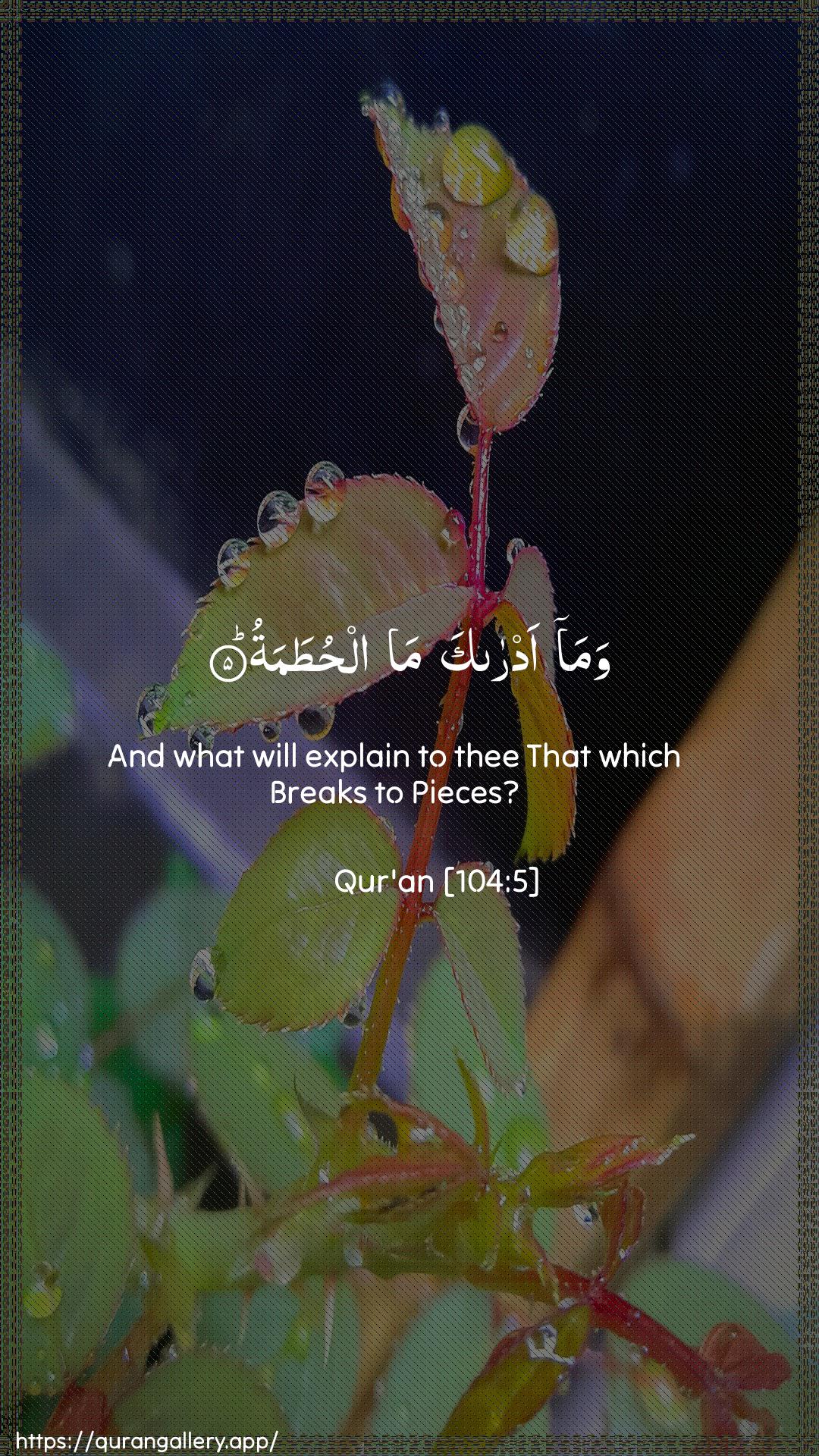
Arabic + English
Arabic (Wide)
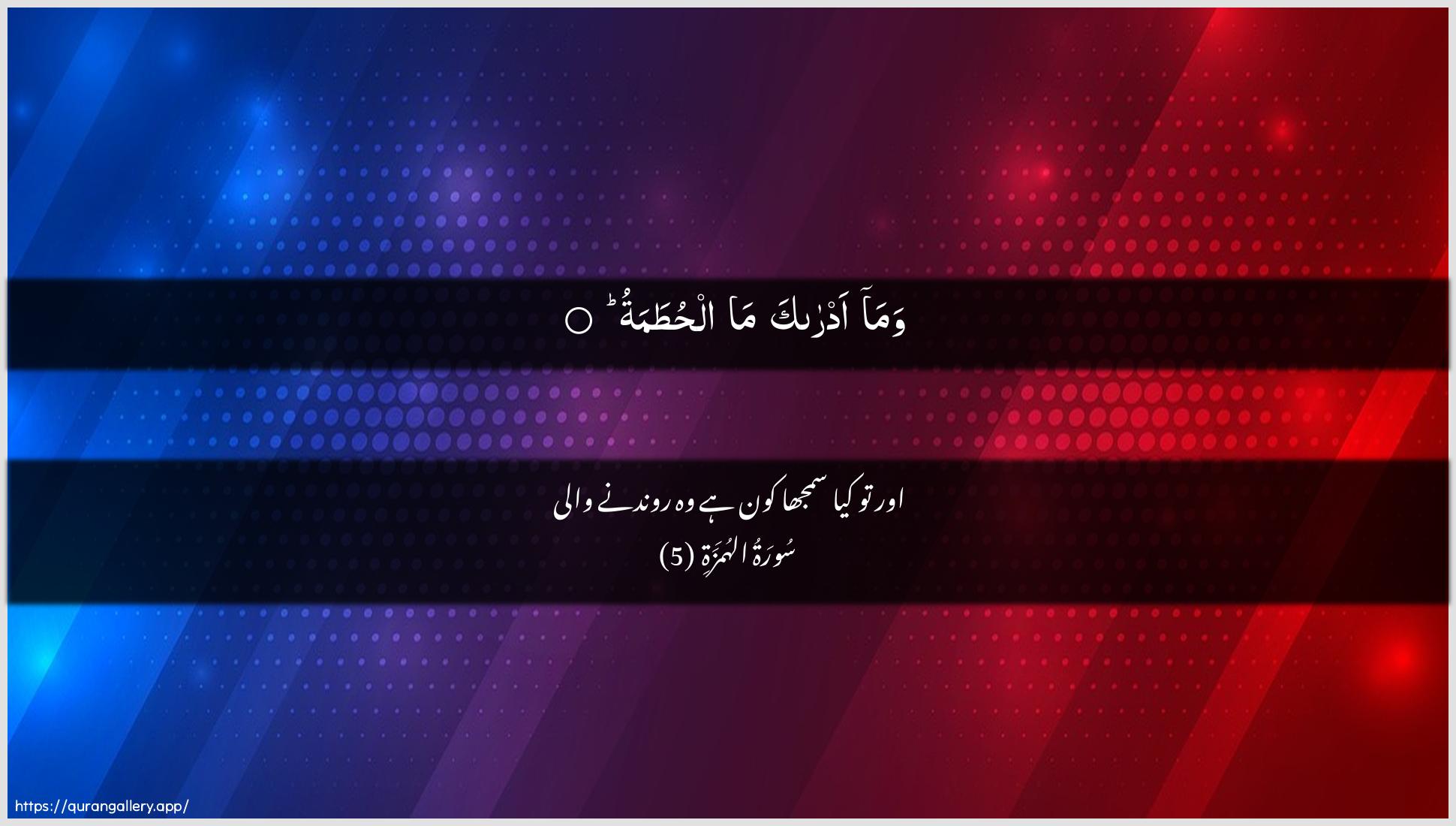
Arabic + Urdu
Free for personal & educational use with attribution
Quick Facts about this Verse
Surah
Al-Humaza
Revealed
Makki
Position
Juz 30
Explore this Verse
Verse Meaning
According to classical commentators like Imam Al-Tabari and Al-Qurtubi, the verse 'And what will make you know what The Crusher is?' is a profound rhetorical question designed not to seek an answer, but to instill a sense of awe and terror regarding the reality of 'Al-Hutamah.' This divine query serves to magnify and amplify the horror of the punishment, indicating, as Imam Sa'di explains, that its true nature is beyond the grasp of human intellect. The very name 'Al-Hutamah,' as linguistic analysis shows, is derived from the Arabic root meaning 'to shatter' or 'crush into pieces,' vividly depicting a fire that obliterates everything cast into it. Ibn Kathir connects this question directly to the subsequent verses, which describe it as the 'Fire of Allah, kindled, which mounts up to the hearts,' suggesting the question's purpose is to prepare the reader for this terrifying description. This verse, therefore, acts as a powerful pause, forcing contemplation on the sheer gravity of the fate awaiting those who engage in slander and mockery.
Questions for Reflection
The Limits of Human Comprehension
Imam Al-Tabari and Al-Wasit highlight that the phrase 'What will make you know?' emphasizes that the reality of Al-Hutamah is beyond your perception. Contemplate this. How does realizing the absolute limit of your imagination regarding divine consequences affect your 'risk assessment' for sins you consider small, like a sarcastic comment or a scornful look?
The Psychology of Slander
This terrifying question is the consequence for the 'humazah lumazah' (slanderer and backbiter). Why does Allah use such an infinitely terrifying concept to warn against sins of the tongue? Reflect on the deep spiritual damage that mockery and slander inflict on both the victim and the perpetrator, and why it merits a punishment that 'crushes' and 'shatters.'
Personal Accountability
The question is posed directly to the reader ('What will make *you* know?'). How does this personal address shift the concept of Hellfire from a distant, abstract idea to an immediate and personal warning? Contemplate what aspects of your own speech, thoughts, or internal feelings of superiority might place you in the category being warned.
Practical Applications
Implement a 'Speech Checkpoint' before speaking about others, asking if your words are true, kind, and necessary, to avoid the path leading to Al-Hutamah.
Especially crucial in social media interactions, workplace gossip, and private conversations where casual slander has become normalized.
Contemplate the unimaginable nature of Al-Hutamah to cultivate humility and dismantle the arrogance that fuels mockery and slander.
A powerful antidote to the culture of public shaming and online trolling, reminding one of the severe spiritual consequences.
Hidden Gem
The synthesis of scholarly thought reveals a profound point: the question isn't just about the severity of the fire, but about its *nature*. 'Al-Hutamah' crushes. The slanderer 'crushes' others' dignity and honor with their words. This contemplation transforms the verse from a simple warning into a reflection on the divine principle of 'jaza' (recompense), where the nature of the punishment perfectly mirrors the nature of the sin.
Common Questions
2 more questions available in the full page