
Hud - Hud
Arabic Name: هُوْد
Urdu Name: حود
Type: Makki
Serial Number: 11
Revelation Order: 52
Total Verses: 123
Parah: 12,11
Rukus: 10
Sajda: None
Share Verse Art

Arabic
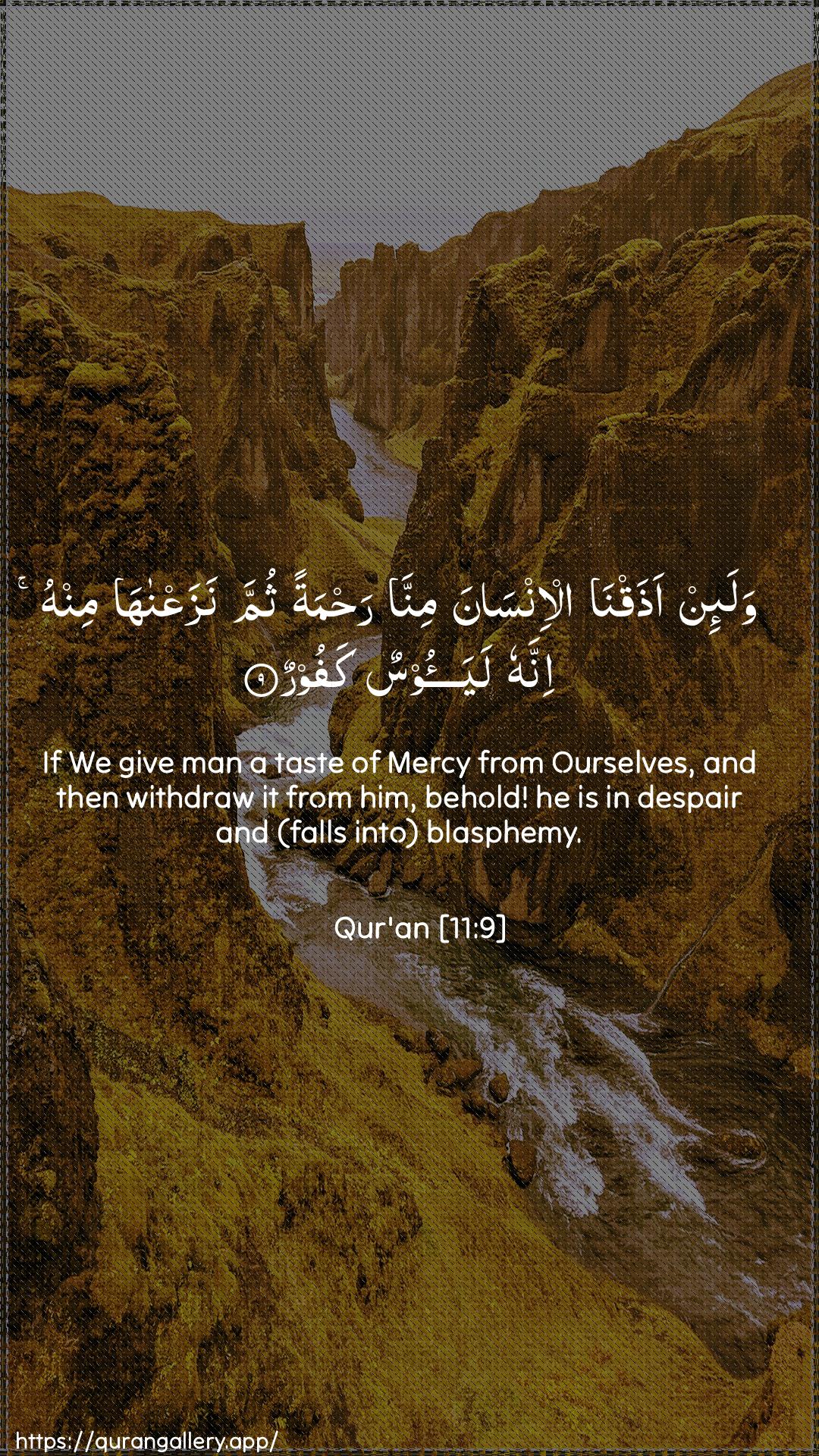
Arabic + English
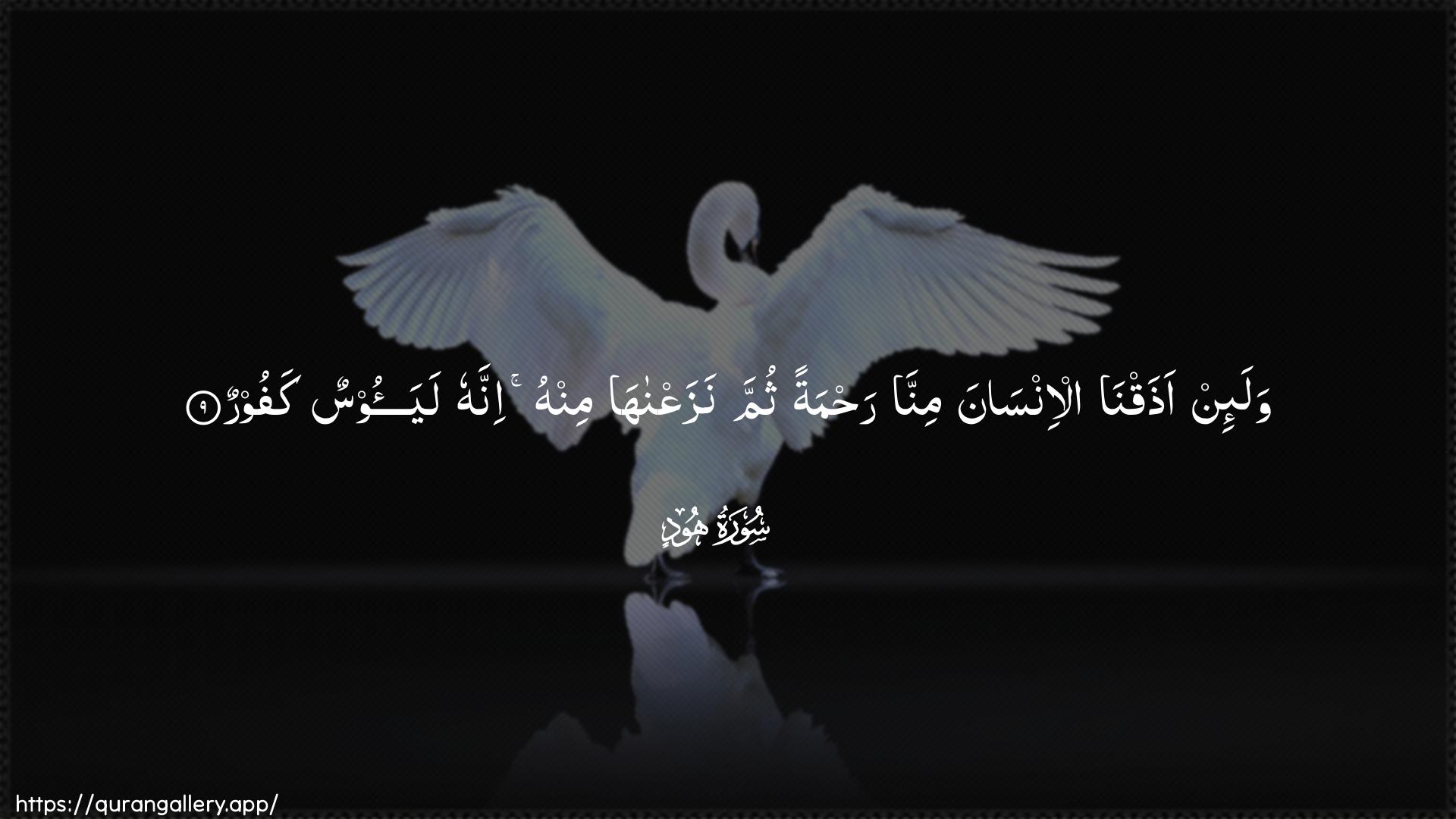
Arabic (Wide)
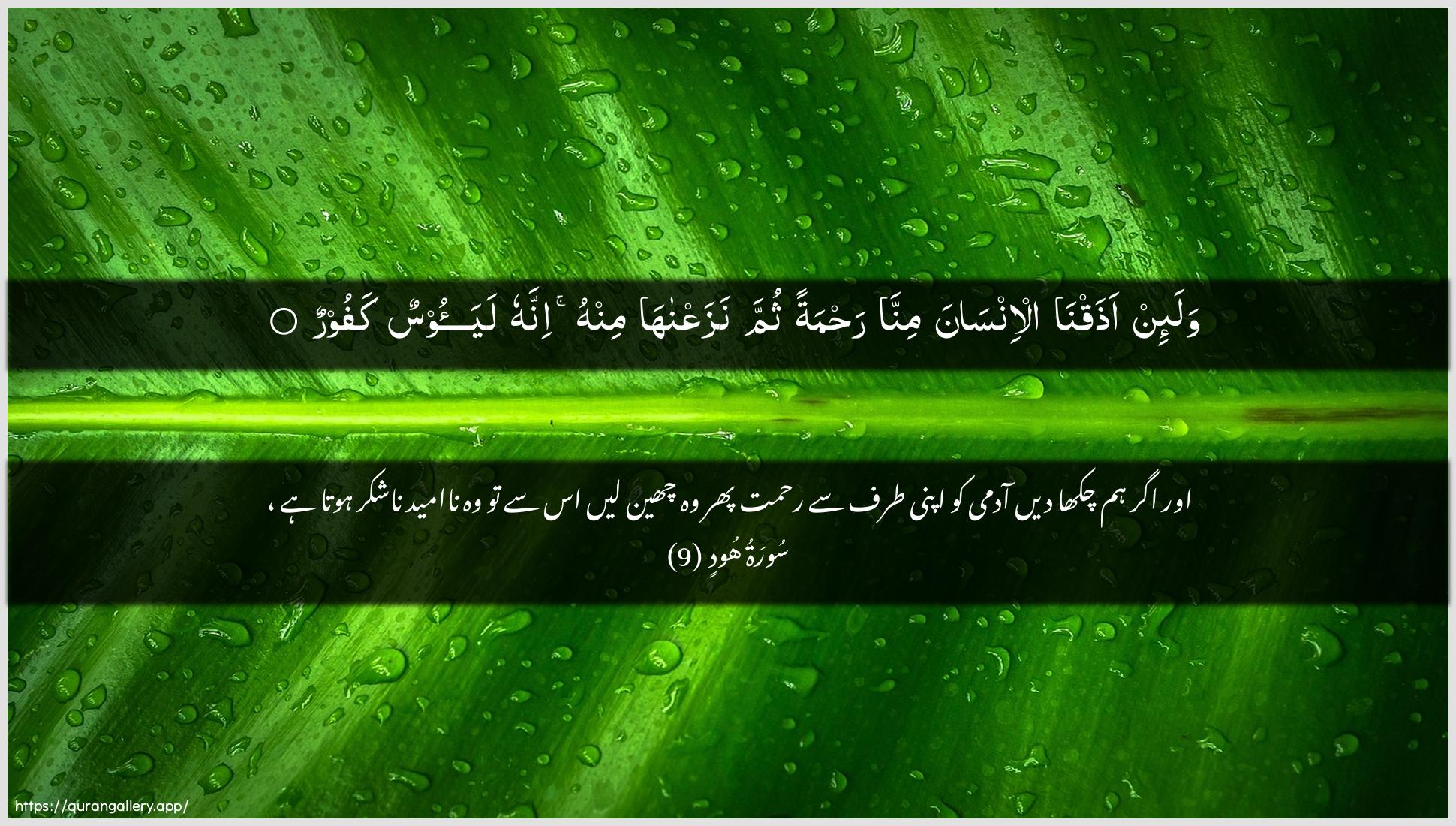
Arabic + Urdu
Free for personal & educational use with attribution
Quick Facts about this Verse
Surah
Hud
Revealed
Makki
Position
Juz 12,11
Explore this Verse
Verse Meaning
A comprehensive review of classical tafsirs, including those by Al-Tabari and Ibn Kathir, reveals Quran 11:9 as a profound diagnosis of a default human condition: extreme despair ('ya'oos') and profound ingratitude ('kafoor') when a divine blessing is removed. Imam Al-Waseet highlights the term 'adhaqna' (We let him taste), indicating this reaction occurs even when the smallest mercy is withdrawn. The synthesis of scholarly thought shows this isn't merely a condemnation but a description of an un-remedied spiritual state. Al-Qurtubi analyzes the exaggerated forms of the Arabic words to denote an all-consuming despair and a deep-seated denial of past favors. This verse, therefore, sets the stage for the Quranic remedy presented in subsequent verses: patience and righteous action as the cure for this spiritual vulnerability.
Questions for Reflection
Personal State Examination
As-Saadi describes the human in this state as 'ignorant and unjust.' Reflect on a recent experience of loss. In what ways did your internal response demonstrate a temporary 'ignorance' of Allah's wisdom and an 'injustice' to your own soul by allowing despair to dominate?
The Nature of Blessings
Al-Tabari defines 'rahmah' (mercy) here as worldly ease and prosperity. Contemplate the temporary nature of these blessings. How does internalizing the reality that all blessings are a temporary 'taste' from Allah, not a permanent possession, change your attachment to them and your reaction when they are withdrawn?
The Divine Test
Maulana Wahid Uddin Khan explains that both giving and taking are forms of divine testing. How does viewing the removal of a blessing as an 'exam question' from Allah, rather than a deprivation, transform the experience from a moment of loss into a moment of purpose and opportunity for growth?
Practical Applications
Conduct a 'Blessing Inventory' when faced with loss to counteract the tendency towards ingratitude ('kafoor').
When facing a job loss, financial difficulty, or health issue, immediately write down or mentally list five other areas where Allah's blessings are still present.
Reframe loss not as a punishment, but as a test of faith designed to elevate your spiritual station.
During any setback, ask 'What is Allah teaching me through this test?' instead of 'Why is this happening to me?'.
Verbally express trust in Allah's plan immediately upon feeling despair, saying 'Alhamdulillah 'ala kulli hal' (Praise be to Allah in every circumstance).
The moment you receive bad news or feel a sense of loss, make this your first verbal utterance to set a spiritual precedent for your response.
Hidden Gem
The synthesis of Al-Waseet's linguistic insight on 'adhaqna' (We let him taste) and As-Saadi's description of man as 'ignorant' reveals a profound spiritual secret: despair is not just a reaction to loss, but a form of spiritual amnesia. The fleeting 'taste' of a blessing makes us forget the eternal Giver. The moment of withdrawal is thus a divine mercy in disguise—a sharp, necessary reminder to shift our dependence from the gift to the Giver, curing our spiritual forgetfulness.
Scroll to see more verses or use the dropdown in the breadcrumb to jump to any verse
Common Questions
2 more questions available in the full page