
Al-Maa"un - Almsgiving
Arabic Name: الْمَاعُوْن
Urdu Name: تھوڑی سی چیز
Type: Makki
Serial Number: 107
Revelation Order: 17
Total Verses: 7
Parah: 30
Rukus: 1
Sajda: None
Related Hadith
"The Prophet (ﷺ) described the hypocrite's Asr prayer: 'He watches the sun until it is between the two horns of Satan, then he stands and pecks four (rak'ahs), in which he does not remember Allah except a little.'"
Provides a practical, visual example of the heedless prayer condemned in the verse.
Share Verse Art

Arabic

Arabic + English
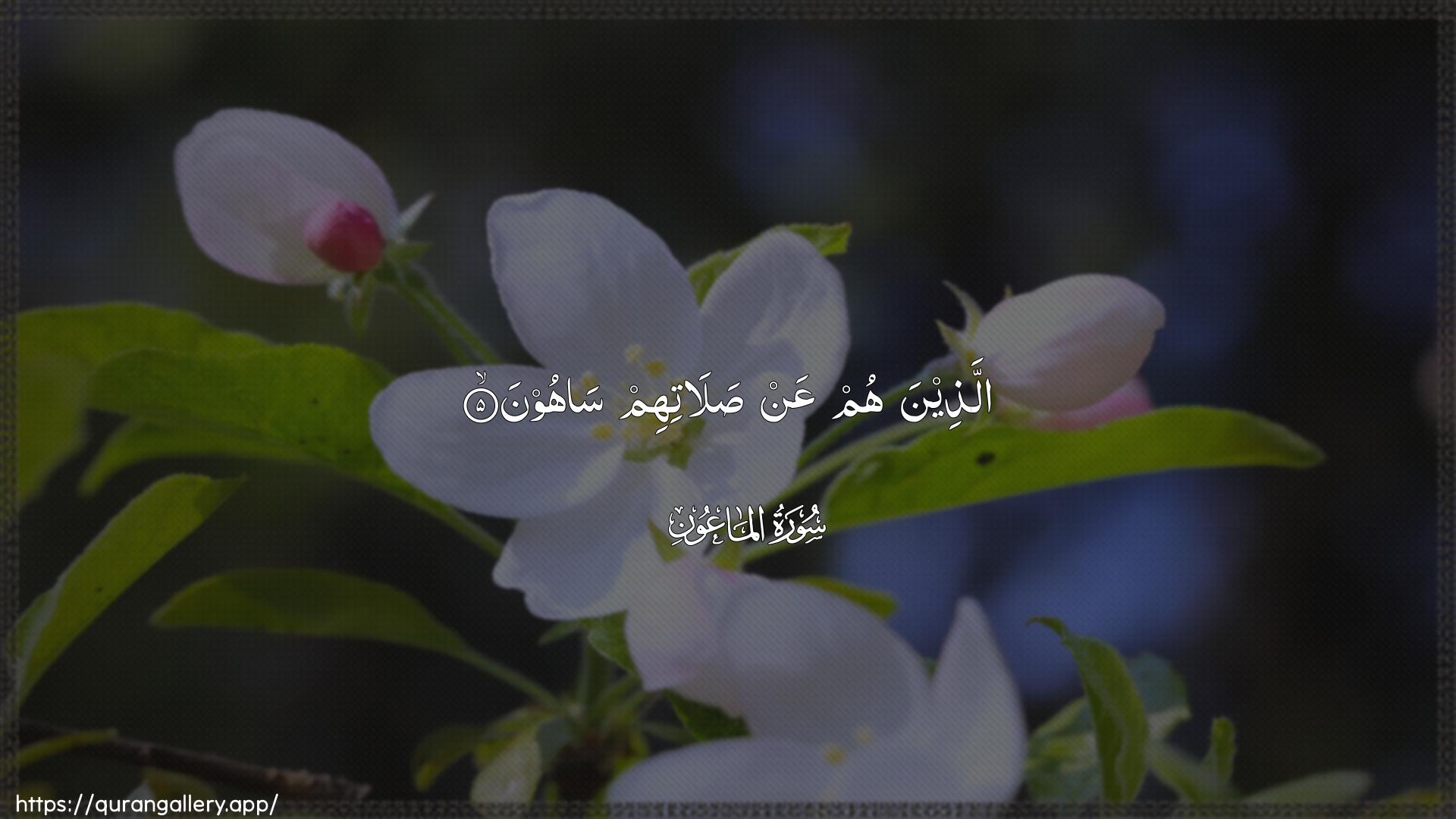
Arabic (Wide)
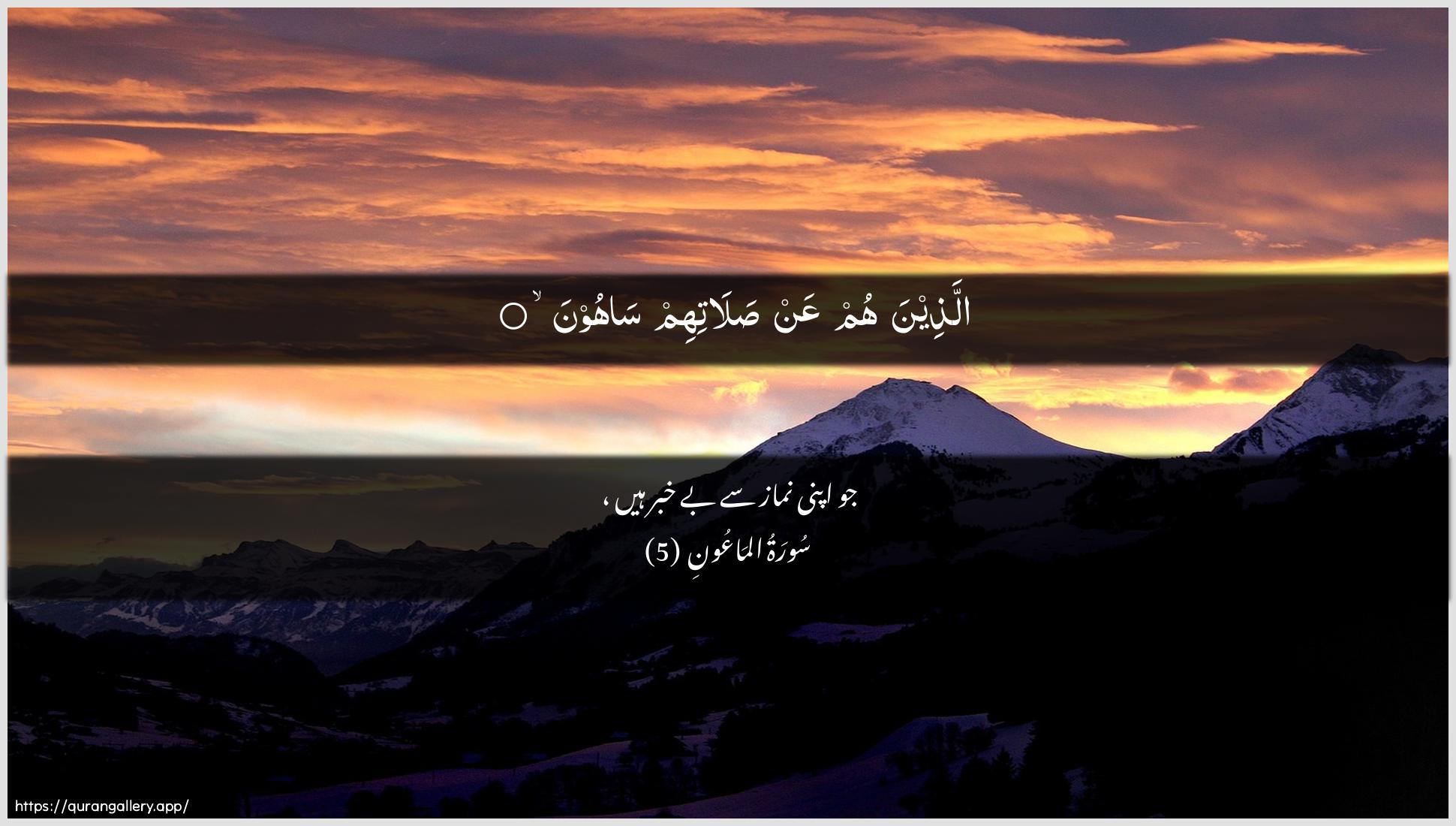
Arabic + Urdu
Free for personal & educational use with attribution
Quick Facts about this Verse
Surah
Al-Maa"un
Revealed
Makki
Position
Juz 30
Explore this Verse
Verse Meaning
According to a consensus of classical scholars, Quran 107:5 delivers a severe warning to those who are 'sahun' regarding their prayer. A comprehensive review of tafsirs by masters like Al-Tabari and Ibn Kathir reveals that 'sahun' is not mere forgetfulness but a profound heedlessness. This includes delaying the prayer beyond its proper time, performing it carelessly without fulfilling its pillars, lacking humility (khushu'), or praying only to be seen by others. The most critical insight, highlighted by scholars like `Ata` bin Dinar and Al-Qurtubi, is the use of the Arabic preposition 'an (عَن), meaning 'about' or 'from' their prayer, rather than 'fi' (فِي), meaning 'in' their prayer. [1, 6, 7] This distinction is paramount: being distracted *in* prayer is a common human failing for which there are remedies, but being heedless *about* the prayer itself—its timing, its importance, its very purpose—is a characteristic of hypocrisy and a denial of the Day of Judgment. As Ibn Kathir explains, this is the prayer of the hypocrite, who, if he prays at all, does so as a public performance, devoid of sincere remembrance of Allah.
Questions for Reflection
Linguistic Contemplation
Al-Qurtubi and others celebrate that Allah said 'an salatihim' (about their prayers) and not 'fi salatihim' (in their prayers). Reflect deeply on this distinction. Contemplate a time you were distracted *in* prayer versus a time you were neglectful *about* prayer. What does the feeling in your heart tell you about the difference between these two states?
Personal Transformation
Ibn Kathir cites the Hadith of the hypocrite's prayer: 'he...pecks four times, in which he remembers Allah but little.' Observe your own Asr prayer. Without judgment, simply notice: is it a conversation with your Creator, or is it a task to be completed? What single, small change could you make to move from 'pecking' to 'presence'?
Relational Wisdom
The Surah begins by linking denial of the Day of Judgment to mistreating orphans and the poor. Now it links heedless prayer to the same root cause. Contemplate this connection: How does a profound, heartfelt conviction in the Day of Accountability naturally rectify one's relationship with both Allah (in prayer) and His creation (in charity)?
Practical Applications
Implement the 'On-Time Litmus Test' for spiritual self-assessment, consciously observing any tendency to delay prayer.
In a world of constant notifications and distractions, actively pausing for prayer at its earliest time becomes a powerful act of prioritizing the divine over the worldly.
Conduct a self-audit using the 'An vs. Fi' principle to differentiate between human imperfection and spiritual neglect.
Instead of feeling guilty for a wandering mind in Salah, focus on the larger picture: Do you value the prayer? Is it a priority in your schedule? This shifts the focus from unattainable perfection to sincere effort.
Activate the 'Anti-Riya' Protocol' by focusing on one hidden good deed for every public one, countering the desire to pray for show.
In an age of social media where public performance is amplified, this private act of worship becomes a crucial anchor for sincerity.
Hidden Gem
The synthesis of classical tafsir reveals a profound spiritual equation: the quality of your prayer is a direct reflection of the certainty of your faith in the Hereafter. Heedlessness ('sahw') is not the cause, but the symptom. To cure the heedlessness in your prayer, the scholars guide us to contemplate and strengthen our conviction ('yaqeen') in the Day of Judgment, and the prayer will naturally correct itself.
Common Questions
1 more question available in the full page