
Hud - Hud
Arabic Name: هُوْد
Urdu Name: حود
Type: Makki
Serial Number: 11
Revelation Order: 52
Total Verses: 123
Parah: 12,11
Rukus: 10
Sajda: None
Share Verse Art
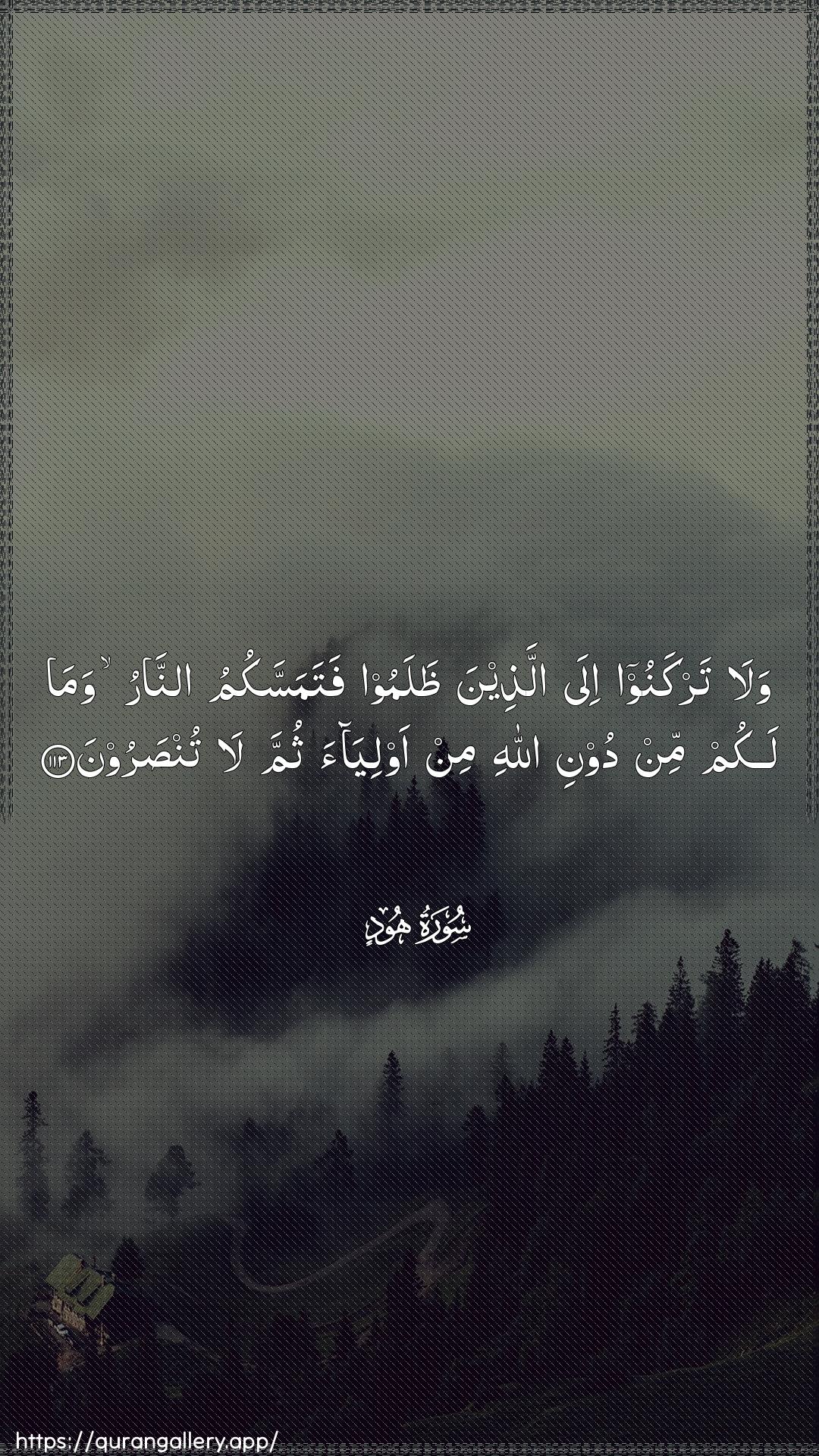
Arabic
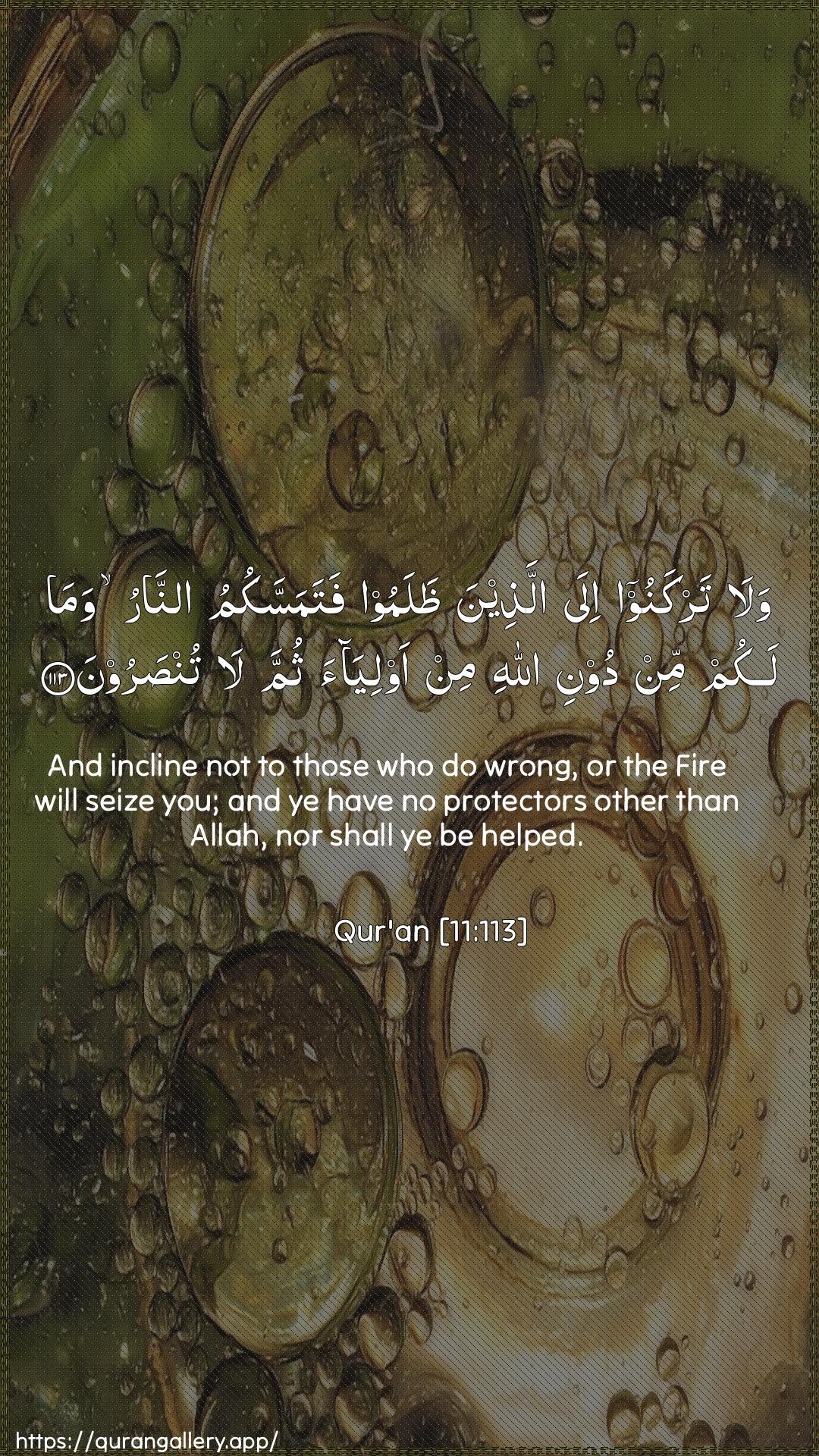
Arabic + English
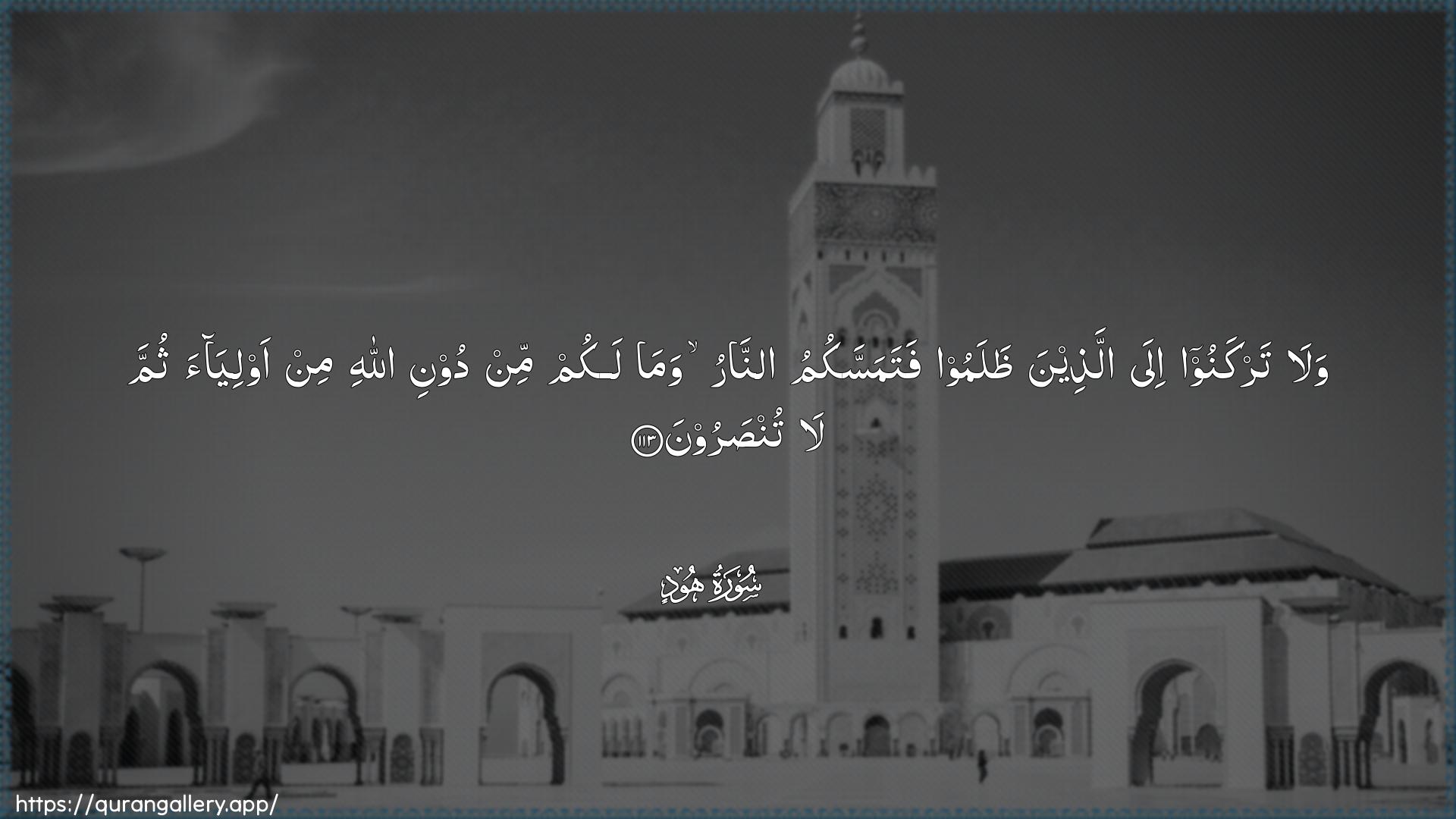
Arabic (Wide)
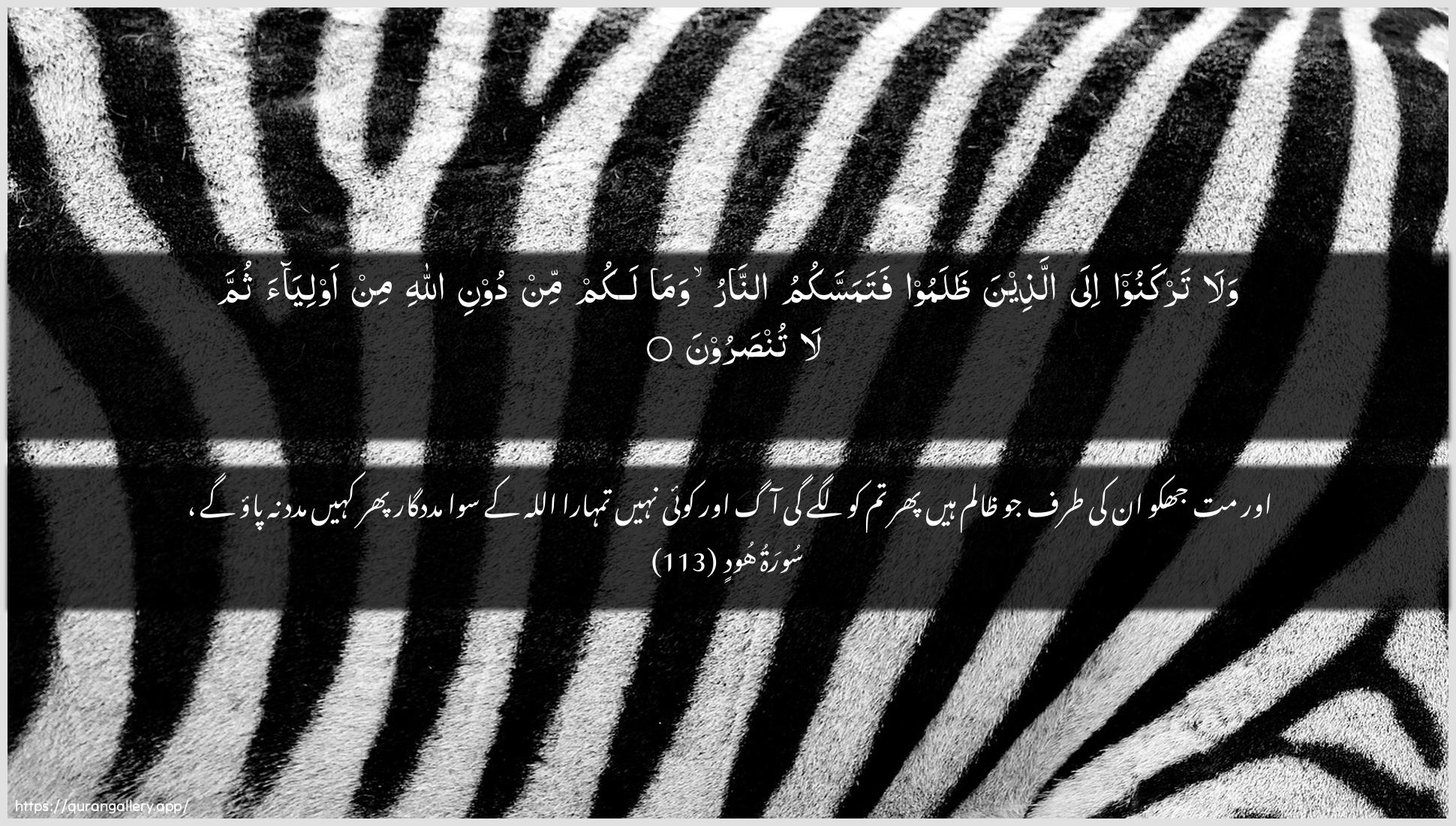
Arabic + Urdu
Free for personal & educational use with attribution
Quick Facts about this Verse
Surah
Hud
Revealed
Makki
Position
Juz 12,11
Explore this Verse
Verse Meaning
According to a synthesis of classical Islamic scholarship, Quran 11:113, 'And do not incline toward those who do wrong, lest the Fire should touch you,' serves as a foundational principle of ethical and spiritual integrity for believers. The key term 'tarkanu' (incline) is explained by authorities like Ibn Kathir and Al-Tabari, citing early scholars such as Ibn Abbas, to mean more than active participation in sin; it includes any form of leaning, showing affection, being lenient, or approving of their actions. Abu Al-Aliyah specified it as 'not being pleased with their deeds.' This prohibition is not limited to polytheists alone. Imam Al-Qurtubi clarifies that the term 'those who do wrong' is general, encompassing disbelievers, open sinners, and religious innovators, making the verse a comprehensive guide for maintaining righteous company. The severe consequence—'the Fire will touch you'—is directly linked to this inclination, followed by a complete withdrawal of Divine aid and protection ('you have no protectors other than Allah, nor would you be helped'). This highlights that compromising one's principles by associating with injustice severs the bond of divine support. As Imam As-Saadi noted, if this is the warning for merely leaning towards wrongdoers, the state of the wrongdoers themselves is far more severe. This verse, therefore, establishes a critical boundary, demanding that faith be accompanied by a clear and principled stance against all forms of oppression and wrongdoing.
Questions for Reflection
Personal Inclination
Reflecting on the view of Ibn Abbas that 'rukun' means to 'not be lenient,' in what areas of my life—my work, my entertainment, my speech—have I become lenient towards things that displease Allah for the sake of comfort or acceptance?
Social and Systemic Injustice
Al-Qurtubi states the prohibition is general, applying to all wrongdoers. How do I benefit from or passively support systemic injustices in my society, and what small, principled step can I take to begin distancing my heart and actions from them?
Reliance and Divine Support
The verse ends with a stark warning: '...then you will not be helped.' Contemplate a current challenge in your life. Is there any part of me that is seeking a solution by 'inclining' towards a person or method that is unjust, thereby blocking Allah's help?
Practical Applications
Conduct a conscious audit of your social and professional circles to identify any 'inclination' towards unjust practices or ethics.
Evaluate your business partners, social media follows, and close friendships for their ethical alignment with Islamic principles.
Practice 'ethical distancing' by refusing to be lenient or offer silent approval when witnessing injustice, however minor.
Applicable in workplaces where unethical shortcuts are normalized, or in social settings where gossip and backbiting occur.
Refuse to seek help or validation from those known for their oppression or corruption, relying solely on Allah for support.
Relevant when seeking career advancement, political favors, or financial gain through unjust channels or individuals.
Hidden Gem
The synthesis of scholarly opinions reveals that 'rukun' (inclination) is the opposite of 'istiqamah' (steadfastness) commanded in the previous verse (11:112). True steadfastness is not just about standing firm in isolation; it is defined by what you refuse to lean on. Contemplating this verse shows that our spiritual stability is directly proportional to our distance from injustice.
Scroll to see more verses or use the dropdown in the breadcrumb to jump to any verse
Common Questions
2 more questions available in the full page