
Al-Baqara - The Cow
Arabic Name: الْبَقَرَة
Urdu Name: گائے
Type: Madani
Serial Number: 2
Revelation Order: 87
Total Verses: 286
Parah: 1,2,3
Rukus: 40
Sajda: None
Share Verse Art

Arabic
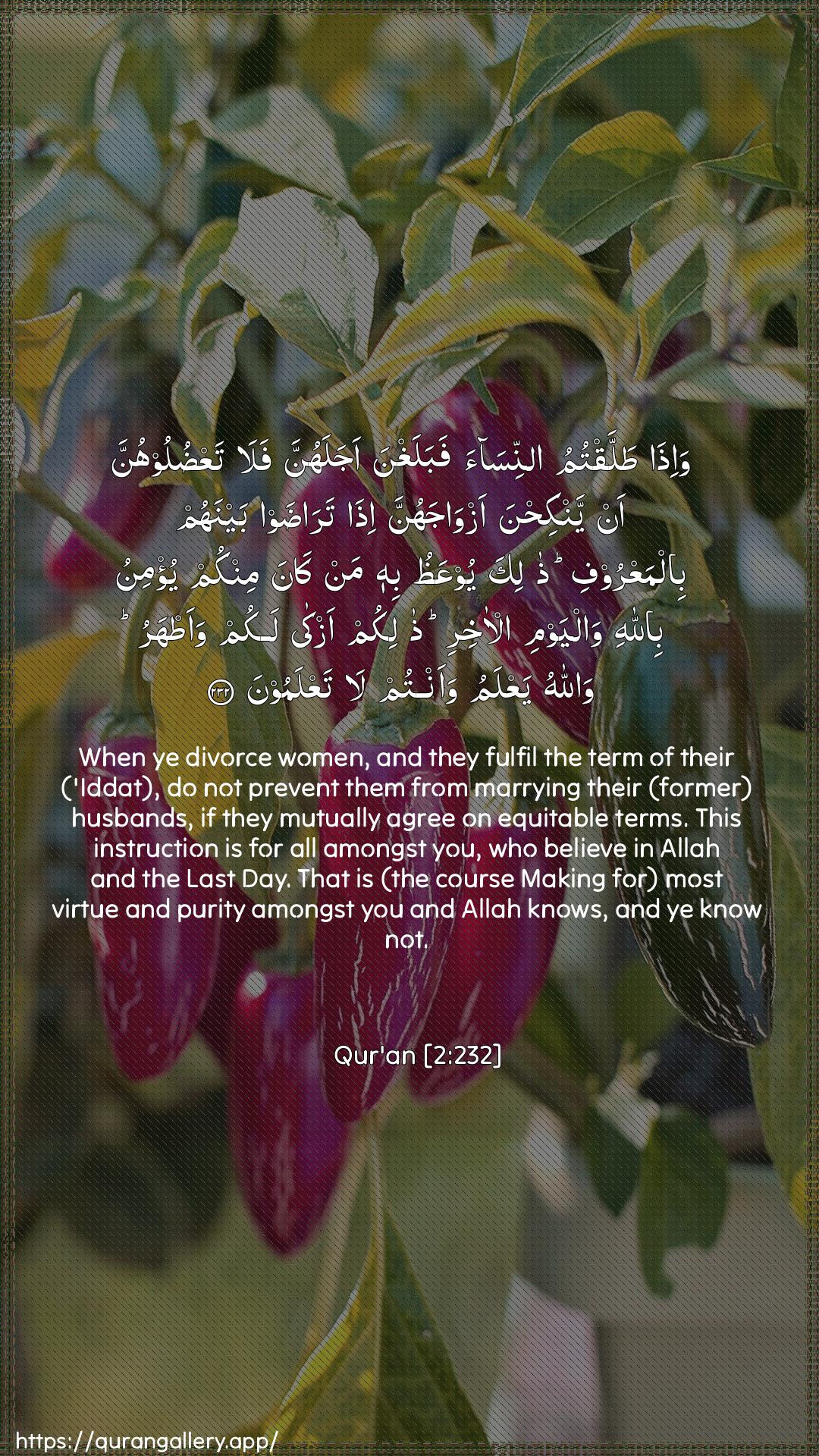
Arabic + English
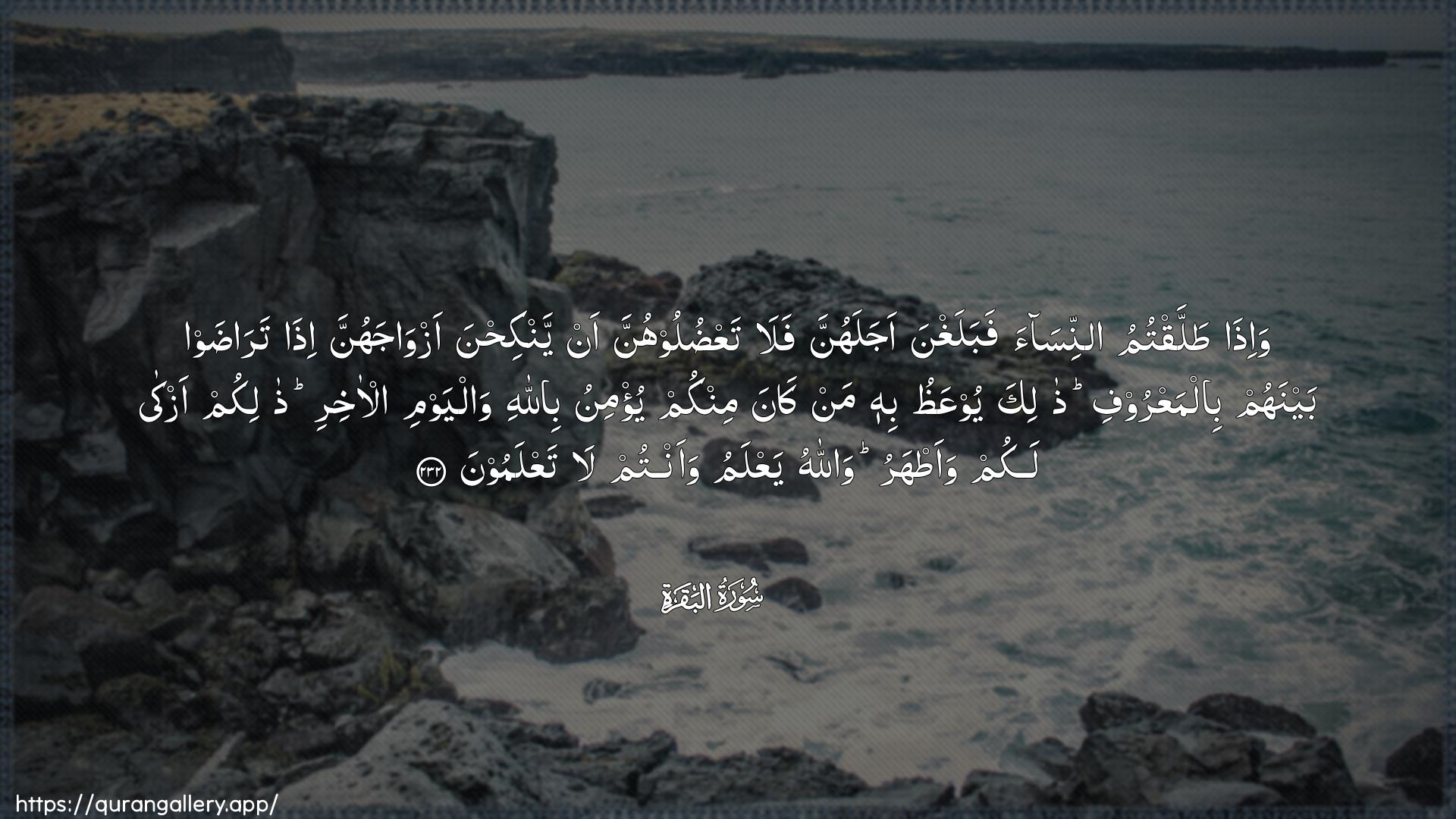
Arabic (Wide)
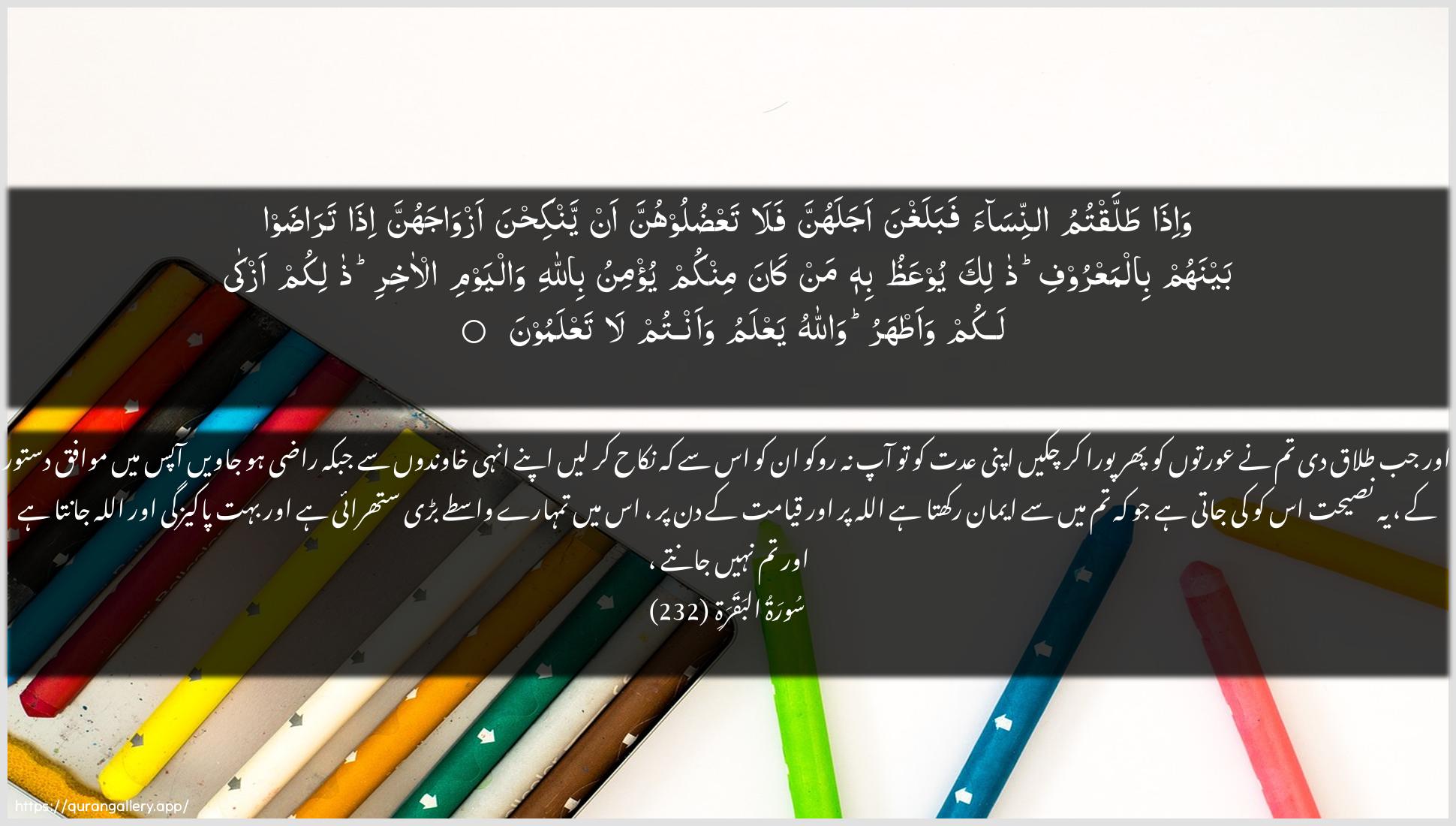
Arabic + Urdu
Free for personal & educational use with attribution
Quick Facts about this Verse
Surah
Al-Baqara
Revealed
Madani
Position
Juz 1,2,3
Explore this Verse
Verse Meaning
According to classical commentators, including Al-Tabari and Ibn Kathir, verse 2:232 of Surah Al-Baqarah was revealed regarding a specific, poignant event involving the companion Ma'qal ibn Yasar. [4] He had prevented his sister from remarrying her ex-husband, who had divorced her and let the waiting period (`iddah) expire. Despite both individuals wishing to reconcile through a new marriage contract, Ma'qal's sense of honor led him to refuse. This verse directly intervened, commanding guardians not to obstruct such unions when they are based on mutual consent and conducted honorably. The term 'ta'ḍulūhunna' (preventing them) is linguistically powerful, signifying unjust constraint. Al-Qurtubi notes that this divine prohibition serves as a cornerstone for establishing the legal role of the guardian (wali) in marriage; for if a woman could marry herself, a command forbidding the guardian from obstructing her would be meaningless. This verse champions the woman's right to choose while affirming the guardian's role as a facilitator, not an obstacle. The admonition concludes with a profound reminder: allowing such unions is 'purer and cleaner' (`azkā lakum wa aṭhar`), purifying hearts from lingering desires that could lead to sin and cleansing the community of resentment. It is a powerful lesson in trusting Allah's infinite wisdom over human emotion, encapsulated in the closing words: 'Allah knows, and you know not.'
Questions for Reflection
Personal Contemplation
Ma'qal ibn Yasar's initial reaction was driven by 'hamiyyah'—a sense of honor and zealous anger. Reflect on a time when your own pride or anger prevented you from accepting a solution that was ultimately better or purer. How does this verse's admonition, 'That is an admonition for him among you who believeth in Allah and the Last Day,' challenge you to prioritize faith over feeling in your personal conflicts?
Relational Contemplation
This verse addresses guardians directly, defining their authority by placing limits on it. Contemplate the balance between protection and control in your relationships (as a parent, spouse, or leader). How does the principle of 'idha tarāḍaw baynahum bil-ma`rūf' (if they mutually agree on equitable terms) redefine your understanding of a guardian's responsibility—shifting it from enforcement to the facilitation of what is good and honorable?
Theological Contemplation
The verse concludes with the powerful statement, 'Allah knows, and you know not.' As-Sa'di highlights this as the ultimate reason for submission. Contemplate an area of your life where you are struggling to understand 'why' something is happening. How can meditating on this phrase shift your perspective from needing to understand everything to finding peace in trusting the One who does?
Practical Applications
For guardians: Prioritize the couple's righteous consent over personal feelings of resentment or dishonor.
Applicable in family meetings where a daughter expresses a desire to remarry a man who previously wronged the family, urging the father or brother to facilitate rather than forbid.
For divorced couples: Recognize that sincere reconciliation through a new, honorable contract is a path to spiritual growth and purity.
Encourages divorced couples who have grown and matured to reconsider reconciliation as a positive, spiritually rewarding option, rather than viewing it as a failure.
For the community: Uphold the principle that mutual, honorable agreement between a man and a woman is the foundation of marriage, and should not be unjustly obstructed.
Serves as a powerful tool against cultural practices where parents or guardians refuse suitable spouses for reasons of pride, status, or past grievances.
Hidden Gem
Through a synthesis of the tafsirs, a hidden gem emerges: obedience to Allah's command is the very mechanism of purification. Ma'qal's act of overcoming his pride and obeying Allah was what made the situation 'purer and cleaner.' The purity wasn't just in the couple remarrying, but in the guardian's heart being cleansed of pride ('hamiyyah') through submission to divine wisdom. The external action purifies the internal state.
Scroll to see more verses or use the dropdown in the breadcrumb to jump to any verse
Common Questions
1 more question available in the full page