
Al-Baqara - The Cow
Arabic Name: الْبَقَرَة
Urdu Name: گائے
Type: Madani
Serial Number: 2
Revelation Order: 87
Total Verses: 286
Parah: 1,2,3
Rukus: 40
Sajda: None
Share Verse Art
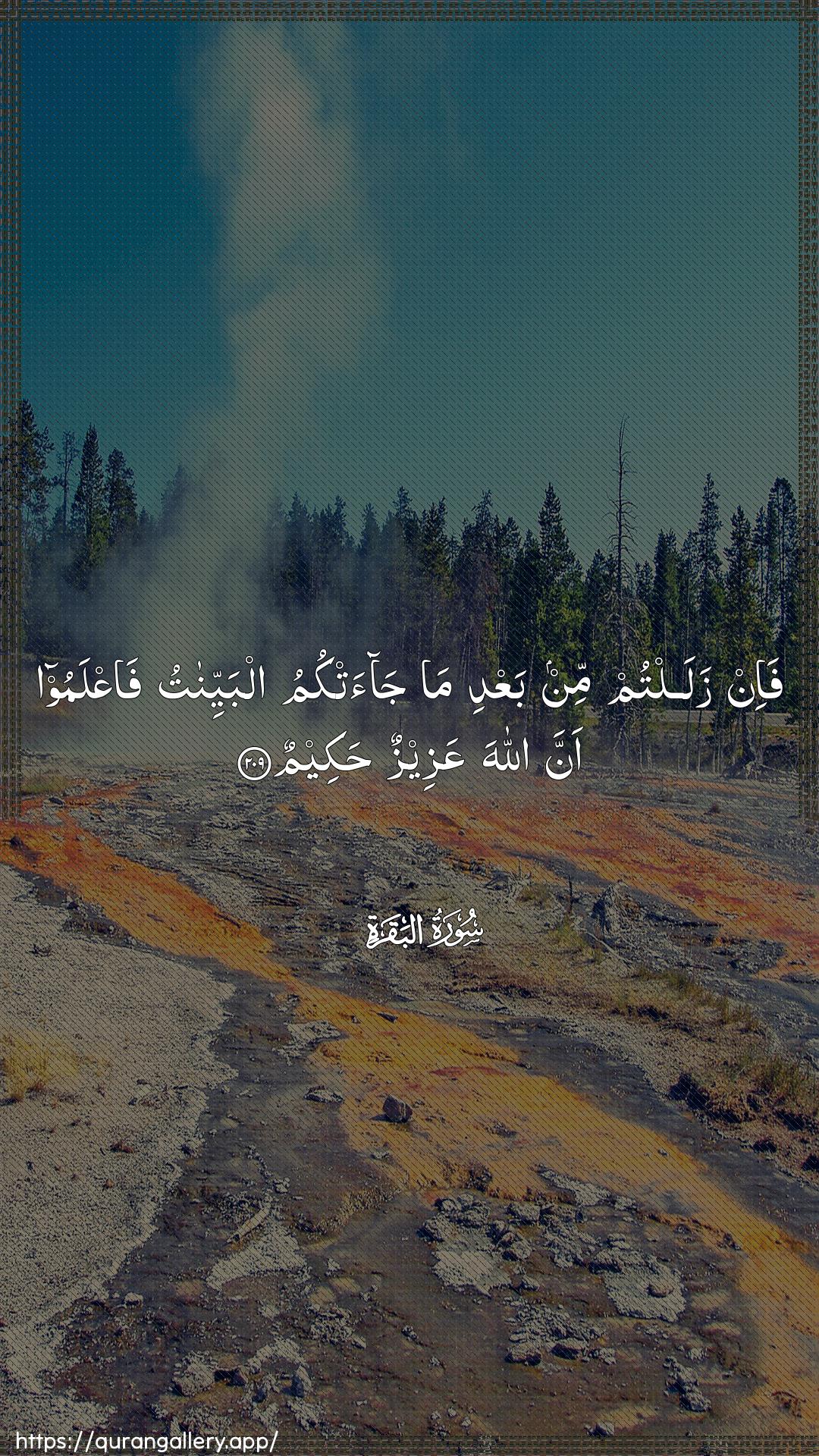
Arabic

Arabic + English

Arabic (Wide)
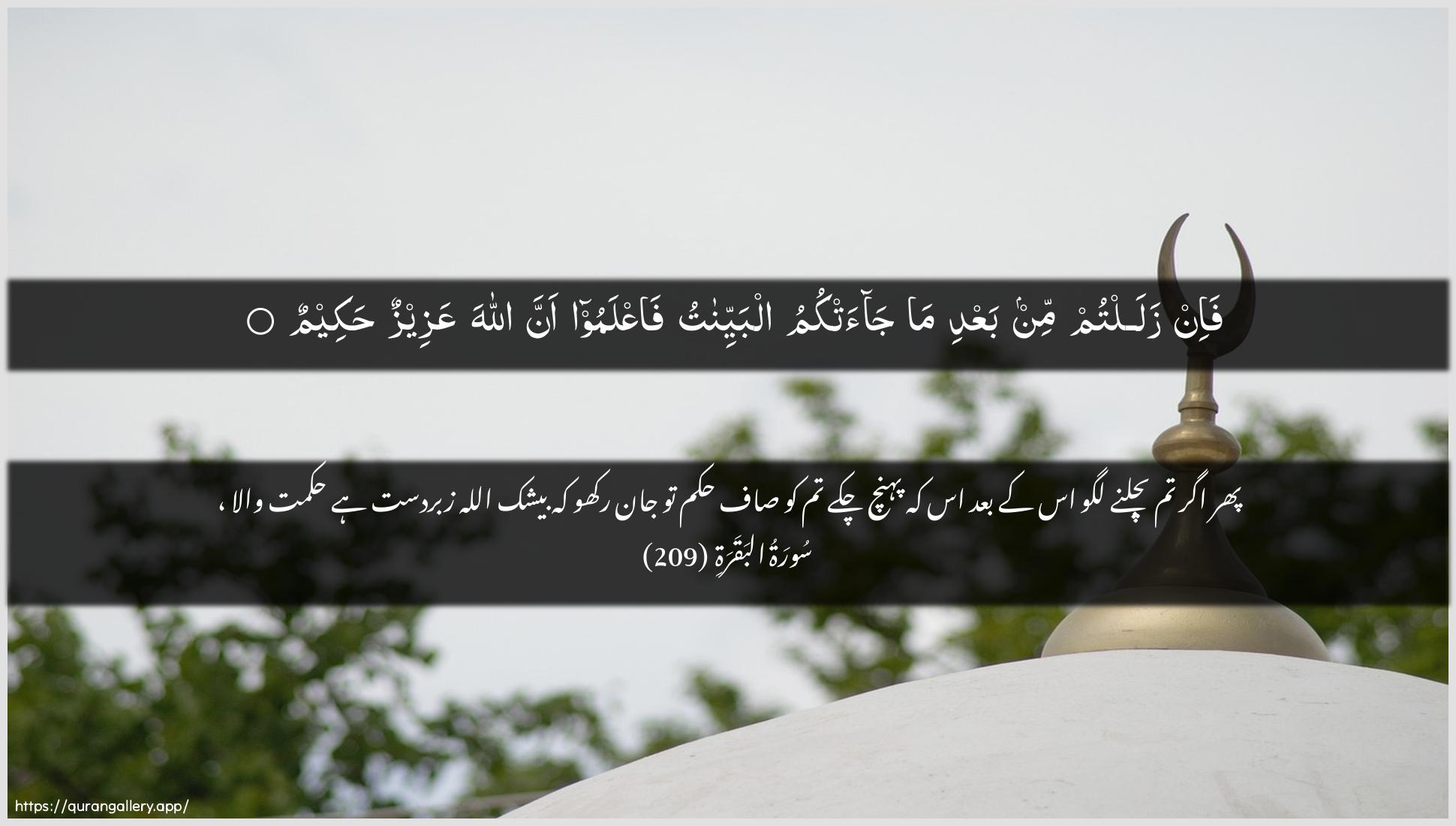
Arabic + Urdu
Free for personal & educational use with attribution
Quick Facts about this Verse
Surah
Al-Baqara
Revealed
Madani
Position
Juz 1,2,3
Explore this Verse
Verse Meaning
According to the classical scholar Al-Tabari, Quran 2:209 serves as a profound warning to believers: 'if you slip... after clear proofs have come to you, then know that Allah is Mighty, Wise.' This verse addresses the heightened accountability of those who deviate from the truth after receiving divine guidance. Ibn Kathir explains that 'slipping' (zalaltum) here means turning away from the right path after the proofs—the Quran and the teachings of the Prophet Muhammad ﷺ—have been unequivocally established. The synthesis of scholarly thought, from Al-Qurtubi to As-Sa'di, reveals a critical principle: knowledge increases responsibility. The verse concludes not with a direct threat of Hellfire, but with two of Allah's attributes, 'Aziz (The Almighty) and Hakeem (The All-Wise). This is a far more potent warning; as Al-Fakhr al-Razi noted, it implies a punishment that is both inescapable due to His might and perfectly just due to His wisdom. The hidden gem in this synthesis is that Allah's response to such deviation is not arbitrary but a function of His perfect nature, ensuring that the consequence is precisely what wisdom dictates, making the straying of a knowledgeable person a matter of profound gravity.
Questions for Reflection
personal
Reflect on one 'clear proof' (a Quranic verse or authentic Hadith) you have learned recently. How has your behavior changed since acquiring this knowledge? As-Sa'di notes the verse applies 'after clear proofs have come to you.' Contemplate the moments you have lived up to this proof and the moments you have 'slipped.' What does this reveal about the state of your heart and the sincerity of your knowledge-seeking?
theological
Allah concludes with 'Azizun Hakeem' (Mighty, Wise), not 'Ghafurun Rahim' (Forgiving, Merciful). According to Al-Qurtubi, this choice highlights the gravity of the sin. Contemplate why deviation *after* knowledge demands a response of might and wisdom rather than immediate mercy. How does this understanding redefine your perception of divine justice and the seriousness of knowingly disobeying Allah?
communal
The 'clear proofs' came to a community of believers. Reflect on the collective knowledge our ummah possesses today. Ibn Kathir identifies the 'Bينات' as the Quran and Sunnah. Where do we as a community 'slip' despite having these clear proofs? How does the knowledge of Allah's might and wisdom inspire a sense of collective responsibility for upholding the truth we have been given?
Practical Applications
Conduct a weekly 'faith check-in' to assess if your actions align with the 'clear proofs' you've learned, preventing gradual deviation.
In an age of information overload, this practice helps filter Islamic knowledge into meaningful action rather than passive consumption.
When studying Islam, consciously couple every piece of new knowledge with the thought: 'This increases my responsibility to Allah.'
This is crucial for online students of knowledge who may accumulate information without a corresponding sense of accountability.
Contemplate Allah's names 'Al-Aziz' and 'Al-Hakeem' when feeling tempted to transgress, recognizing His inescapable power and perfect justice.
In a world that normalizes sin, this contemplation re-establishes the seriousness of divine boundaries.
Hidden Gem
The synthesis of scholarly thought reveals a profound insight: the verse is a safeguard against the arrogance of knowledge. The warning is not for the ignorant, but for the learned. Contemplate how knowledge, without humility, can become the very 'clear proof' that condemns a person, turning a blessing into a burden. This is the spiritual paradox this verse forces us to confront.
Scroll to see more verses or use the dropdown in the breadcrumb to jump to any verse