
Yunus - Jonas
Arabic Name: يُوْنـُس
Urdu Name: یونس
Type: Makki
Serial Number: 10
Revelation Order: 51
Total Verses: 109
Parah: 11
Rukus: 11
Sajda: None
Share Verse Art

Arabic
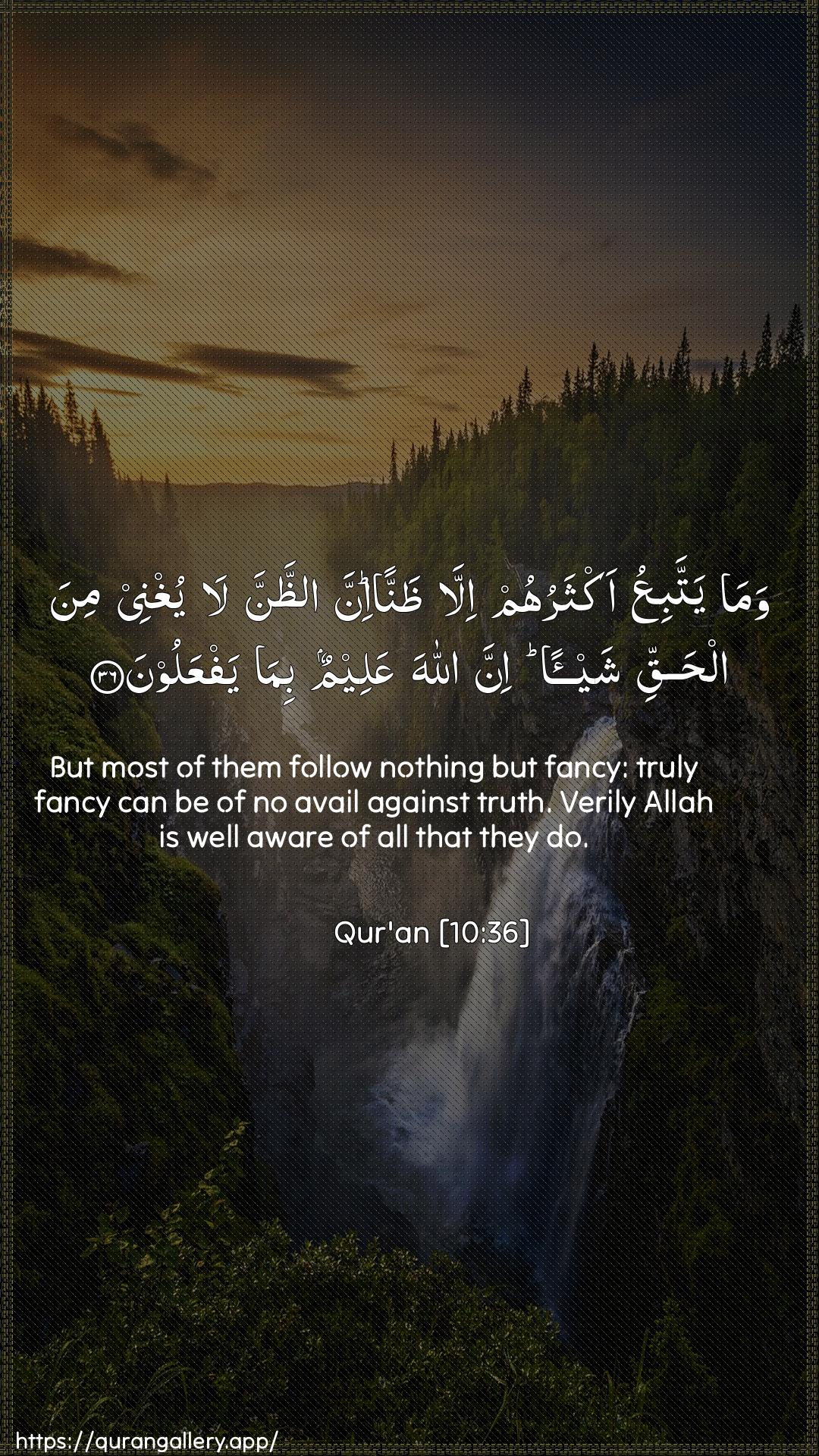
Arabic + English
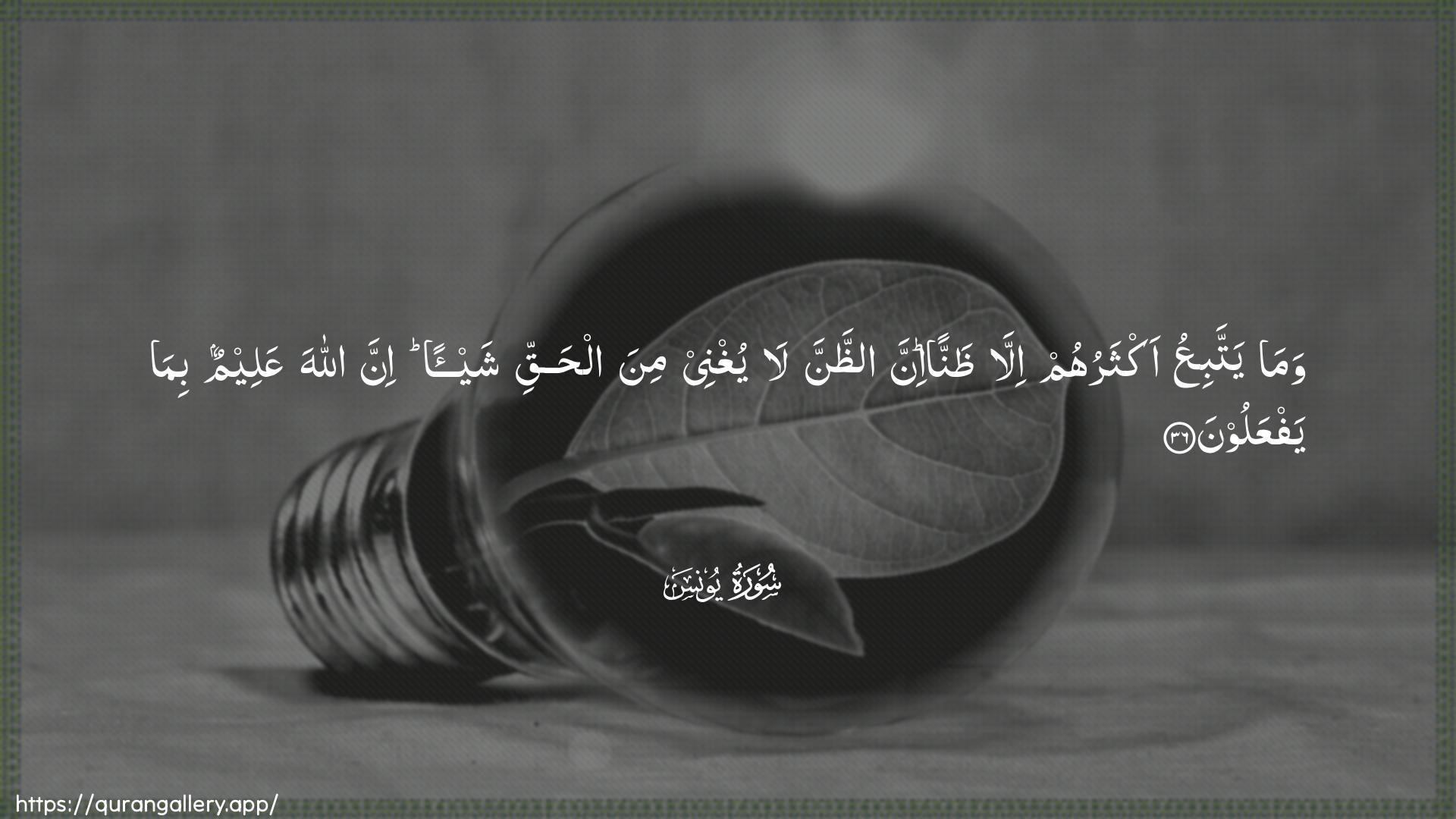
Arabic (Wide)
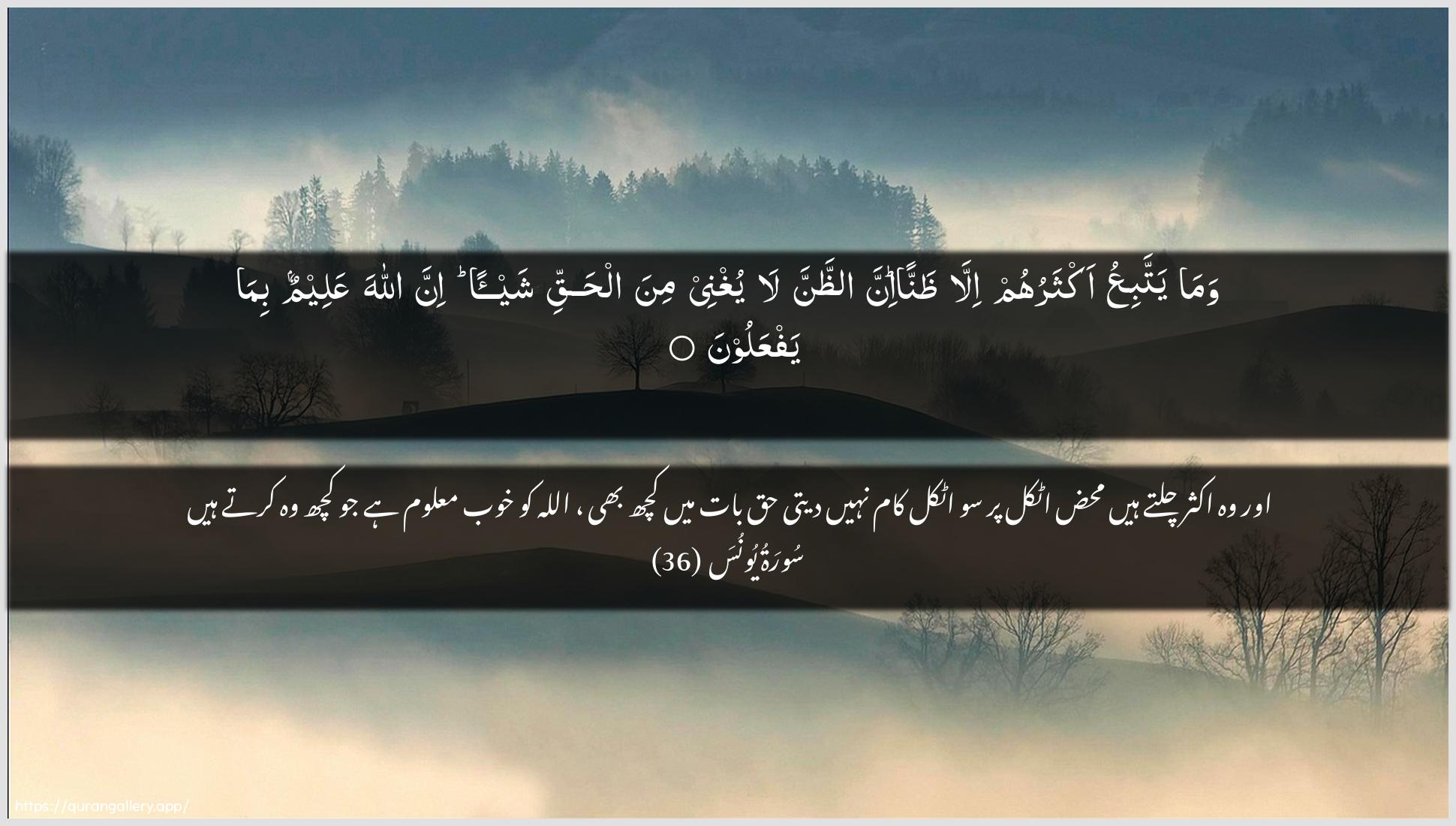
Arabic + Urdu
Free for personal & educational use with attribution
Quick Facts about this Verse
Surah
Yunus
Revealed
Makki
Position
Juz 11
Explore this Verse
Verse Meaning
According to the classical exegete Imam Al-Tabari, Quran 10:36 delivers a foundational critique of belief systems built on uncertainty, stating that the majority of polytheists follow nothing but conjecture (`zann`). He defines this as doubt and speculation for which they have no real knowledge. Ibn Kathir adds that this verse is a severe threat and warning, highlighting that their actions are based on inherited imitation rather than proof. Synthesizing these views, Al-Qurtubi clarifies a critical principle: while some level of assumption might be permissible in worldly affairs, in matters of core creed (ʿaqāʾid), conjecture is utterly insufficient and certainty (`al-haqq`) is required. The profound insight emerging from this comprehensive analysis is that Islam establishes a clear epistemological standard for faith. It is not a religion of blind acceptance but one that demands its foundational truths be based on certainty, not guesswork. The verse masterfully contrasts the instability of human conjecture with the solid reality of divine truth. The final statement, 'Indeed, Allah is Knowing of what they do,' serves, as Ibn Kathir notes, as a powerful warning that accountability is based on conscious choices, and choosing to follow conjecture over clear truth is a culpable action for which they will be judged.
Questions for Reflection
Textual Contemplation
Al-Tabari defines 'zann' as 'what one has no knowledge of its reality or correctness.' Reflect on the subtle difference between a calculated risk and a baseless assumption in your own life. How does the verse's absolute statement—that conjecture 'avails nothing' against the truth—recalibrate your standard for what you accept as true?
Personal Transformation
Al-Qurtubi emphasizes this verse applies most critically to matters of creed (ʿaqāʾid). Identify one core belief you hold. Can you trace its origin to a direct statement from the Quran or Sunnah, or is it based on tradition, culture, or what you've heard from others? How does this verse challenge you to strengthen the foundation of your faith?
Relational Wisdom
The verse says 'most of them follow' conjecture, often through imitation of their forefathers, as noted by Tafsir Al-Jalalayn. Reflect on your relationships. Where might you be following the assumptions of your family, friends, or society without question? How can you lovingly and respectfully prioritize 'Al-Haqq' while maintaining good relationships?
Practical Applications
Conduct a 'Belief Audit' by asking 'What is the divine proof (daleel)?' for your core spiritual practices and beliefs, distinguishing them from cultural habits.
Apply this when evaluating family traditions, online religious advice, or cultural norms that may not have a solid Islamic basis.
In decision-making, differentiate between areas where educated assumption is necessary (e.g., business, worldly matters) and where divine law is clear, consciously submitting to 'Al-Haqq' in the latter.
Use this framework when making career choices, financial plans, or personal life decisions, ensuring they don't contradict established divine truths.
Hidden Gem
The synthesis reveals a profound spiritual dynamic: 'Al-Haqq' is a name of Allah, while 'zann' is a product of the human mind and whims. Therefore, the verse is not just an epistemological statement but a call to shift reliance from the created (our own thoughts and guesses) to the Creator (The Ultimate Truth). Contemplating this transforms the verse from a mental exercise into an act of Tawheed (affirming Divine Unity).
Scroll to see more verses or use the dropdown in the breadcrumb to jump to any verse
Common Questions
1 more question available in the full page