
Al-Faatiha - The Opening
Arabic Name: الْفَاتِحَة
Urdu Name: کھولنے والی
Type: Makki
Serial Number: 1
Revelation Order: 5
Total Verses: 7
Parah: 0
Rukus: 1
Sajda: None
Related Hadith
"The Prophet (ﷺ) said, 'Any important matter that does not begin with Bismillah is deficient.'"
Establishes the universal Islamic principle of beginning all actions with Allah's name to seek blessings.
Share Verse Art

Arabic

Arabic + English

Arabic (Wide)
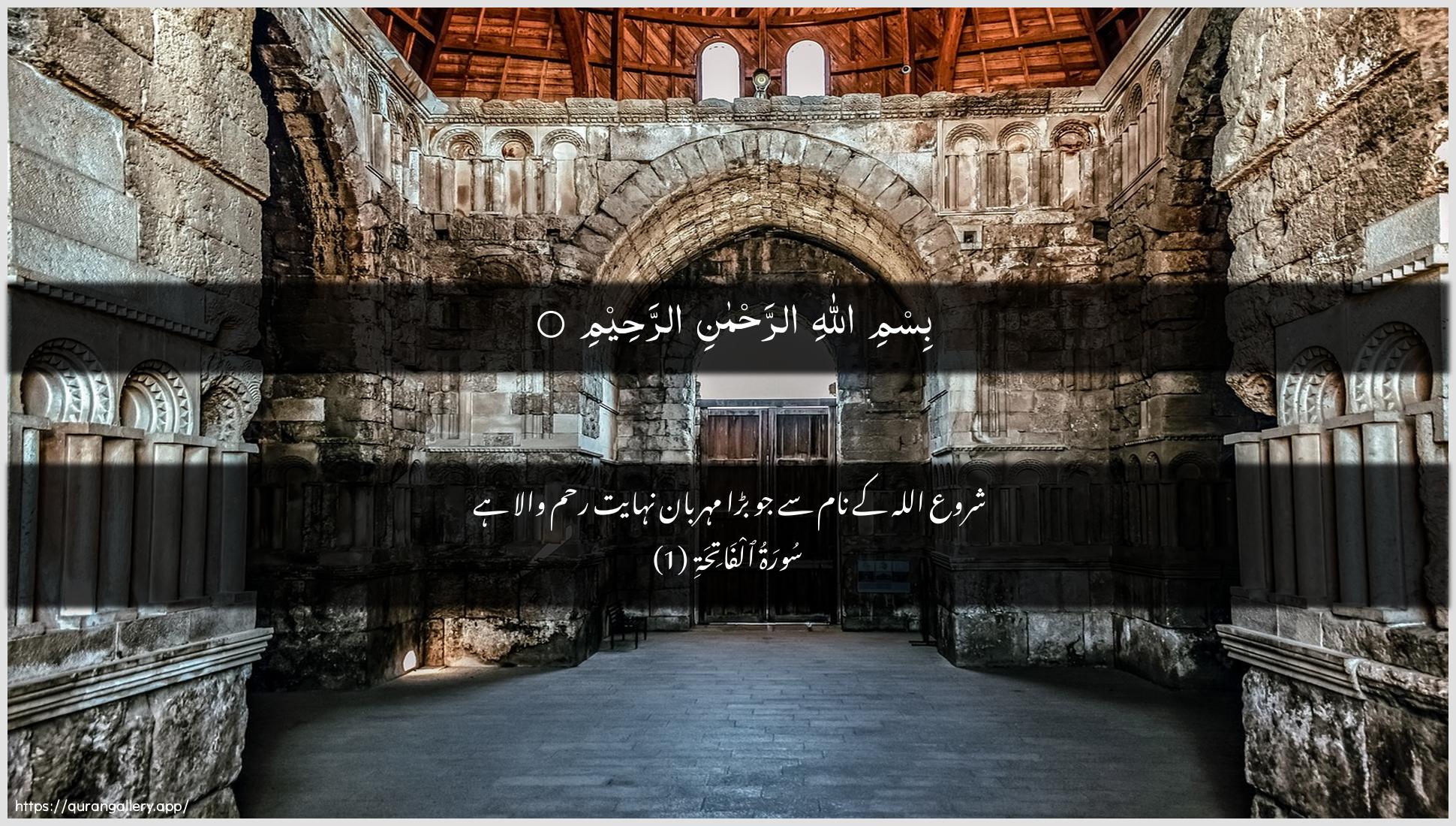
Arabic + Urdu
Free for personal & educational use with attribution
Quick Facts about this Verse
Surah
Al-Faatiha
Revealed
Makki
Position
Juz 0
Explore this Verse
Verse Meaning
According to a comprehensive synthesis of classical tafsirs, the Bismillah (Quran 1:1) is not merely an introductory phrase but a complete spiritual methodology. Ibn Kathir's analysis emphasizes its function as a shield, invoking divine protection and blessing in every act. Al-Qurtubi's juridical perspective establishes it as a foundational principle that sanctifies actions, transforming them from mundane to sacred. Meanwhile, Al-Tabari's linguistic examination reveals its perfection as a declaration of dependence on the Creator, whose mercy is all-encompassing (Ar-Rahman) and specifically directed towards the believers (Ar-Raheem). What emerges from this cross-scholar analysis is a revolutionary insight: the Bismillah operates as Islam's universal spiritual technology. It's a single, powerful phrase that simultaneously activates divine protection, establishes legal and spiritual purity for an action, and attunes the believer's consciousness to the foundational reality of divine mercy. This multi-layered function, only visible through a synthesis of classical scholarship, explains its position as the gateway to the Quran and its constant repetition in a Muslim's life, turning every moment into an act of worship.
Questions for Reflection
Textual Contemplation
Ibn Kathir notes the Arabic root ر-ح-م appears twice. Contemplate how this linguistic relationship in Rahman-Raheem reveals layers of divine mercy, transforming your understanding of Allah's nature from an abstract concept to a lived spiritual reality experienced in each breath.
Personal Transformation
As Al-Qurtubi explains, beginning with divine mercy establishes spiritual precedence. Reflect on how this verse's opening position transforms every subsequent action into mercy-conscious behavior, examining where your daily choices reflect Rahman-Raheem attributes versus ego-driven motivations.
Relational Wisdom
The scholars explain that invoking divine mercy creates a bridge between human limitation and divine perfection. Contemplate how this verse teaches the proper relationship with both Allah and creation, transforming how you approach every interaction through a mercy-centered consciousness.
Practical Applications
Activate ethical decision-making protocols by invoking the Rahman-Raheem sequence before choices affecting others' welfare.
Business negotiations, family conflicts, social media responses, community leadership decisions.
Establish sacred consciousness boundaries in mundane activities through the deliberate Arabic articulation methodology.
Work sessions, exercise routines, creative projects, meal preparations.
Develop protective spiritual reflexes through automatic divine help-seeking before challenging situations.
Medical appointments, difficult conversations, financial decisions, relationship challenges.
Hidden Gem
The synthesis reveals that Bismillah functions as Islam's complete spiritual calibration system. Ibn Kathir's linguistic analysis shows Rahman-Raheem creates divine mercy consciousness, while classical methodology demonstrates how invocation develops embodied compassion. This convergence transforms Bismillah from recitation into active spiritual technology that calibrates the heart to the divine frequency before every action.
Ayah 1 of 7
Common Questions
3 more questions available in the full page