
Al-Baqara - The Cow
Arabic Name: الْبَقَرَة
Urdu Name: گائے
Type: Madani
Serial Number: 2
Revelation Order: 87
Total Verses: 286
Parah: 1,2,3
Rukus: 40
Sajda: None
Share Verse Art

Arabic
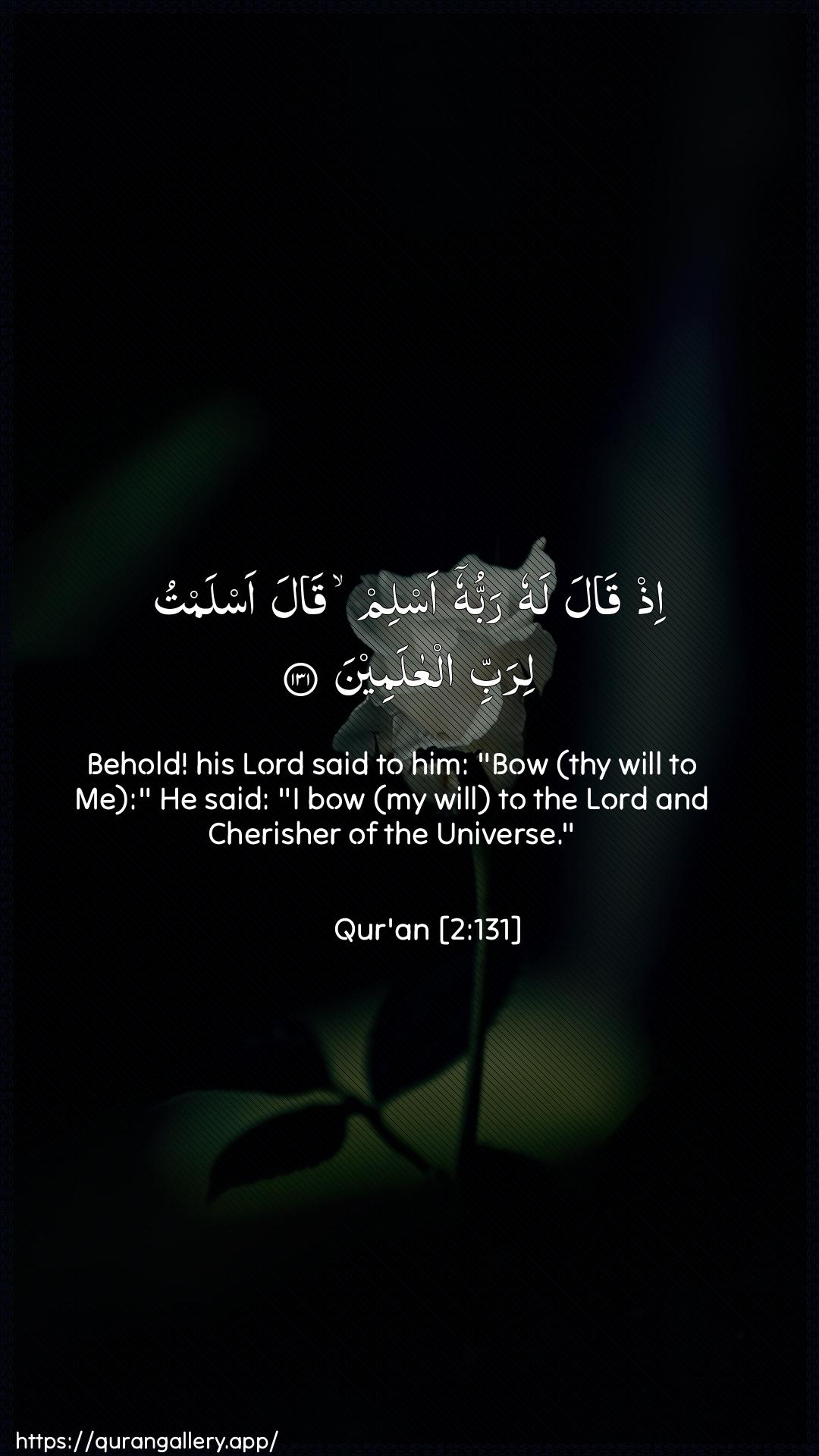
Arabic + English
Arabic (Wide)
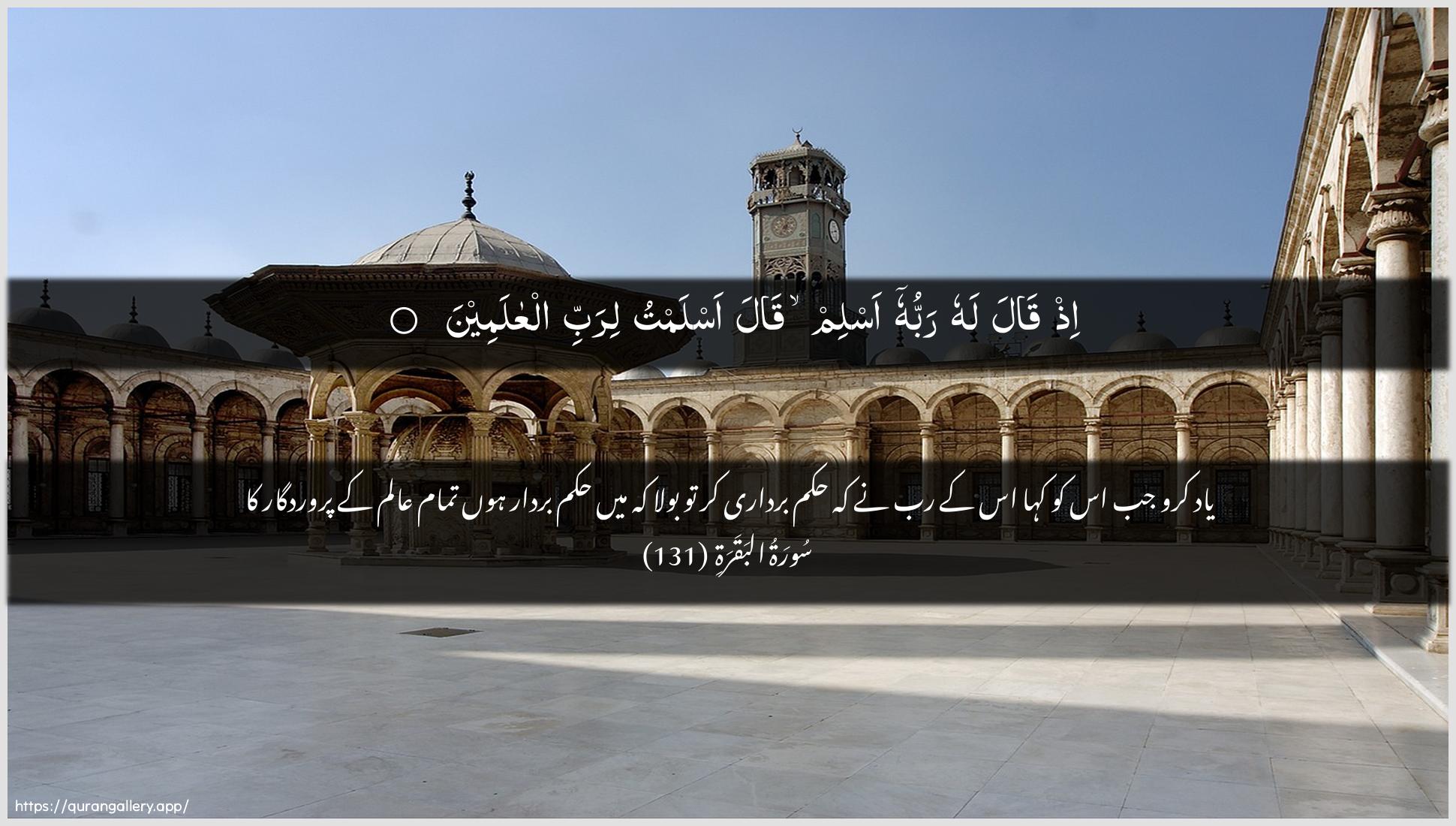
Arabic + Urdu
Free for personal & educational use with attribution
Quick Facts about this Verse
Surah
Al-Baqara
Revealed
Madani
Position
Juz 1,2,3
Explore this Verse
Verse Meaning
According to the classical exegete Ibn Kathir, Quran 2:131 encapsulates the essence of Islam through the defining moment of Prophet Ibrahim's faith. When Allah commanded him, "Aslim" (Submit), Ibrahim's response was not one of hesitation or questioning, but an immediate and complete declaration: "Aslamtu li Rabbil 'Alamin" (I have submitted to the Lord of the Worlds). This exchange reveals the core of submission: a fusion of sincerity (Ikhlas), compliance, and total entrustment. Al-Tabari connects this command to the moment Ibrahim rejected idolatry, while scholars like Al-Baghawi note it was a call to remain steadfast on the faith he already possessed. The synthesis of scholarly views shows this verse is not merely a historical account but the foundational definition of faith—an active, willing, and all-encompassing surrender to the sole Creator of all existence, establishing the model for every believer to follow.
Questions for Reflection
personal
Allah's command 'Aslim' (Submit!) was direct and personal. In what specific area of your life—your habits, your wealth, your relationships, your ego—do you feel the most resistance to this command? Contemplate the root of this resistance and what it would take to say, 'Aslamtu' with sincerity.
theological
Ibrahim didn't just say 'I submit to God,' but specifically 'to the Lord of the Worlds ('Alamin).' Reflect on the vastness of this phrase—it includes worlds we know and don't know, the physical and spiritual, the past and future. How does submitting to the Lord of *everything* change the nature of your trust and obedience compared to submitting to a localized or limited deity?
relational
The verse is a dialogue: a command and an immediate response. Contemplate your daily 'dialogue' with Allah. When guidance comes to you through the Quran or Sunnah, is your inner response immediate like Ibrahim's, or is it filled with delay, negotiation, or justification? How can you cultivate a relationship where your soul's first instinct is 'I hear and I obey'?
Practical Applications
Cultivate 'Reflexive Obedience' by immediately acting on Islamic obligations (like salah) the moment you are reminded, mirroring Ibrahim's instant response.
In a world of constant notifications and distractions, this trains the mind to respond to the call of prayer with the same immediacy as a text message.
Expand your submission beyond personal piety to include your professional and communal life, consciously affirming 'I submit this aspect of my life to the Lord of the Worlds.'
This applies to making ethical business choices, upholding justice in community roles, and maintaining integrity in academic pursuits.
Hidden Gem
A subtle insight from Al-Tabari is that this submission was the definitive conclusion after Ibrahim's intellectual struggle with the worship of stars, moon, and sun. This teaches that the highest form of submission is not blind, but is a decisive, rational conclusion after seeking the truth. It is the peace that comes after the exhaustive search for reality.
Scroll to see more verses or use the dropdown in the breadcrumb to jump to any verse