
Al-Baqara - The Cow
Arabic Name: الْبَقَرَة
Urdu Name: گائے
Type: Madani
Serial Number: 2
Revelation Order: 87
Total Verses: 286
Parah: 1,2,3
Rukus: 40
Sajda: None
Share Verse Art
Arabic
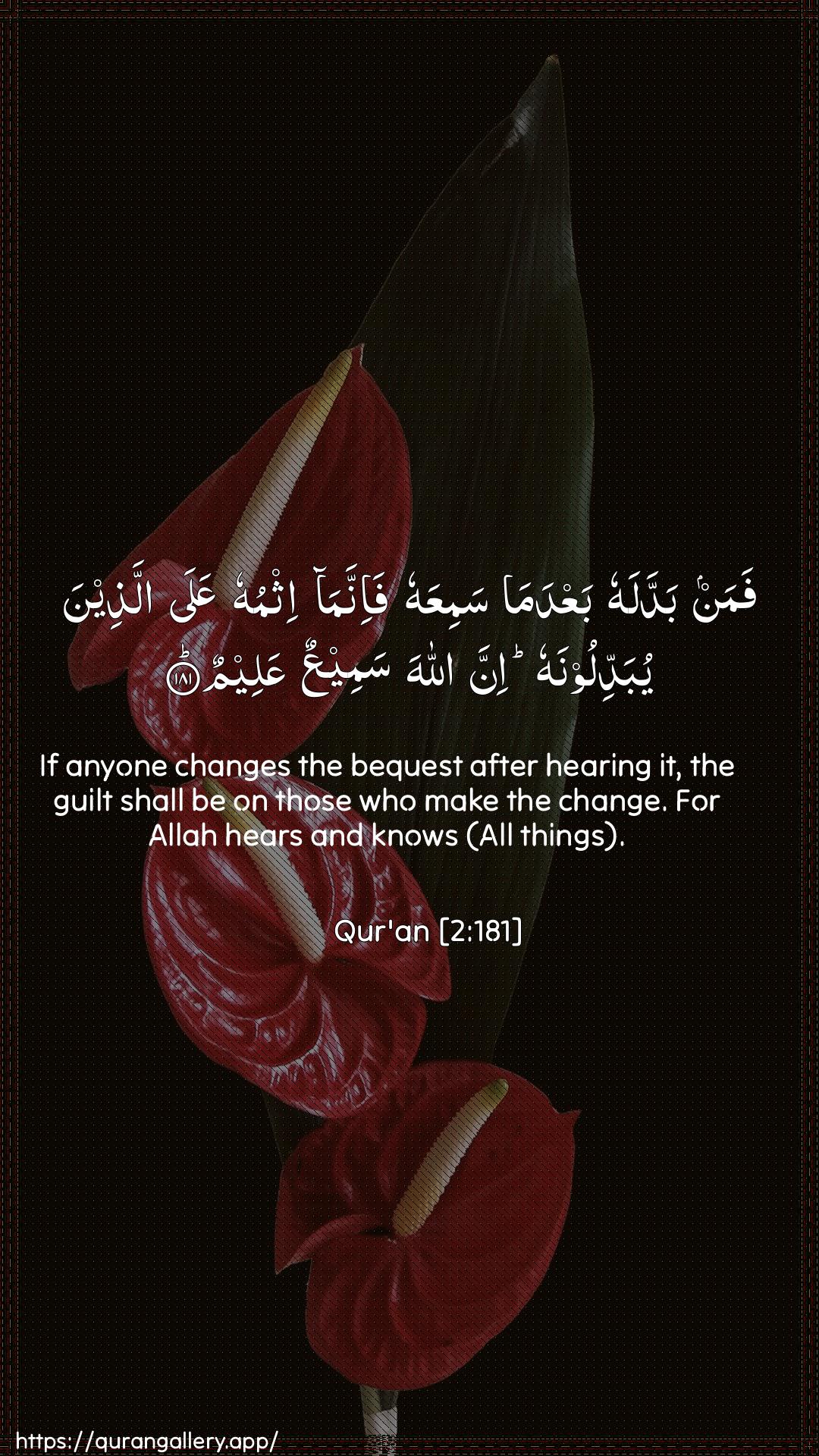
Arabic + English
Arabic (Wide)
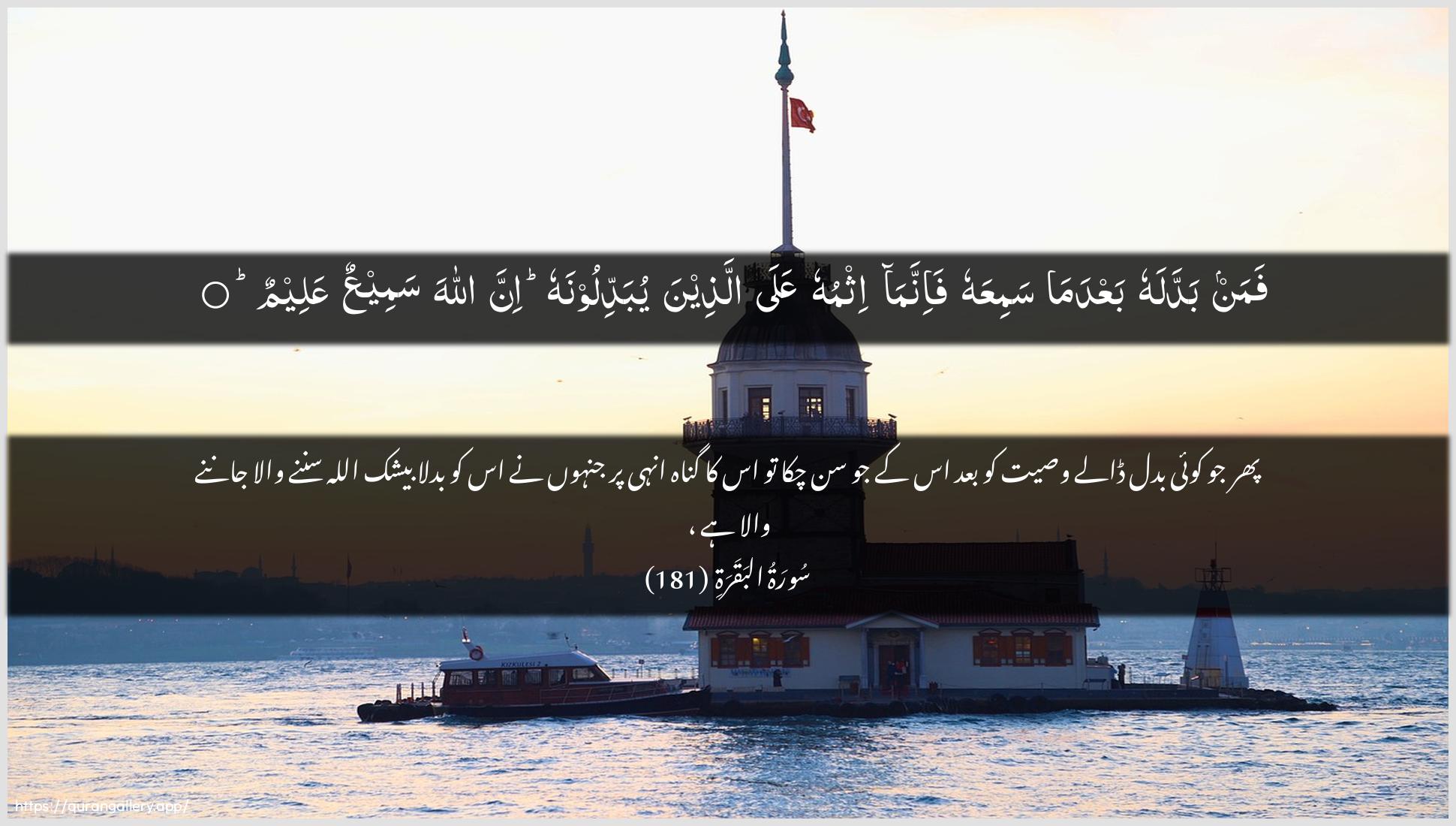
Arabic + Urdu
Free for personal & educational use with attribution
Quick Facts about this Verse
Surah
Al-Baqara
Revealed
Madani
Position
Juz 1,2,3
Explore this Verse
Verse Meaning
According to the great exegete Ibn Kathir, Quran 2:181 serves as a severe warning against altering or concealing a person's last will and testament. The verse explicitly places the entire burden of sin (ithm) squarely upon those who make the change, exonerating the deceased who made the will in good faith. Al-Tabari clarifies that this applies to any modification—be it addition, subtraction, or outright concealment—of what was heard from the person making the bequest. The synthesis of scholarly opinion, including that of Al-Qurtubi, reveals a foundational principle of Islamic law: the sanctity of a person's final wishes, provided they are just and within Islamic bounds. This verse establishes a sacred trust (amanah) upon the witnesses and executors. The concluding statement, 'Indeed, Allah is All-Hearing, All-Knowing,' is a powerful psychological deterrent, reminding the entrusted parties that even the most secret alteration is witnessed by God, who hears the original will and knows the hidden intentions of the one who changes it.
Questions for Reflection
personal
The verse states the sin is 'only upon those who change it.' Reflect on a time you were entrusted with something (a secret, a responsibility, a possession). How did the weight of that trust affect your actions? How does knowing Allah holds the trustee solely accountable change your perspective on personal responsibility?
relational
A just will is a final act of kindness and fairness to one's family. Contemplate how altering it is a betrayal not only of the deceased but of the entire family structure. In what ways does upholding a will, as this verse commands, preserve harmony and justice among relatives after a death?
theological
The verse concludes with 'Indeed, Allah is All-Hearing, All-Knowing.' Meditate on these two attributes. He is 'Sami' (All-Hearing) of the original, spoken will. He is 'Alim' (All-Knowing) of the secret intention to change it and the act of changing it. How does this complete and inescapable divine knowledge impact your understanding of accountability?
Practical Applications
Act with absolute integrity when appointed as an executor of a will, ensuring every directive is followed precisely as stated.
When dealing with family inheritance, resist pressure from heirs to deviate from the will, citing this verse as your guiding principle.
As a witness to a will, ensure you remember and can convey the testator's wishes accurately, without omission or addition.
When asked to witness a legal document or verbal agreement, recognize the Islamic gravity of your role as a preserver of truth.
Hidden Gem
A deeper contemplation drawn from Al-Tabari's linguistic analysis is that the act of 'hearing' the will is what establishes the covenant of trust. The sin is not just in the changing, but in betraying what one has personally heard and accepted as a responsibility. The ear becomes the organ of the contract, and the tongue or hand that changes it is the instrument of betrayal.
Scroll to see more verses or use the dropdown in the breadcrumb to jump to any verse
Common Questions
1 more question available in the full page