
Al-Baqara - The Cow
Arabic Name: الْبَقَرَة
Urdu Name: گائے
Type: Madani
Serial Number: 2
Revelation Order: 87
Total Verses: 286
Parah: 1,2,3
Rukus: 40
Sajda: None
Share Verse Art

Arabic
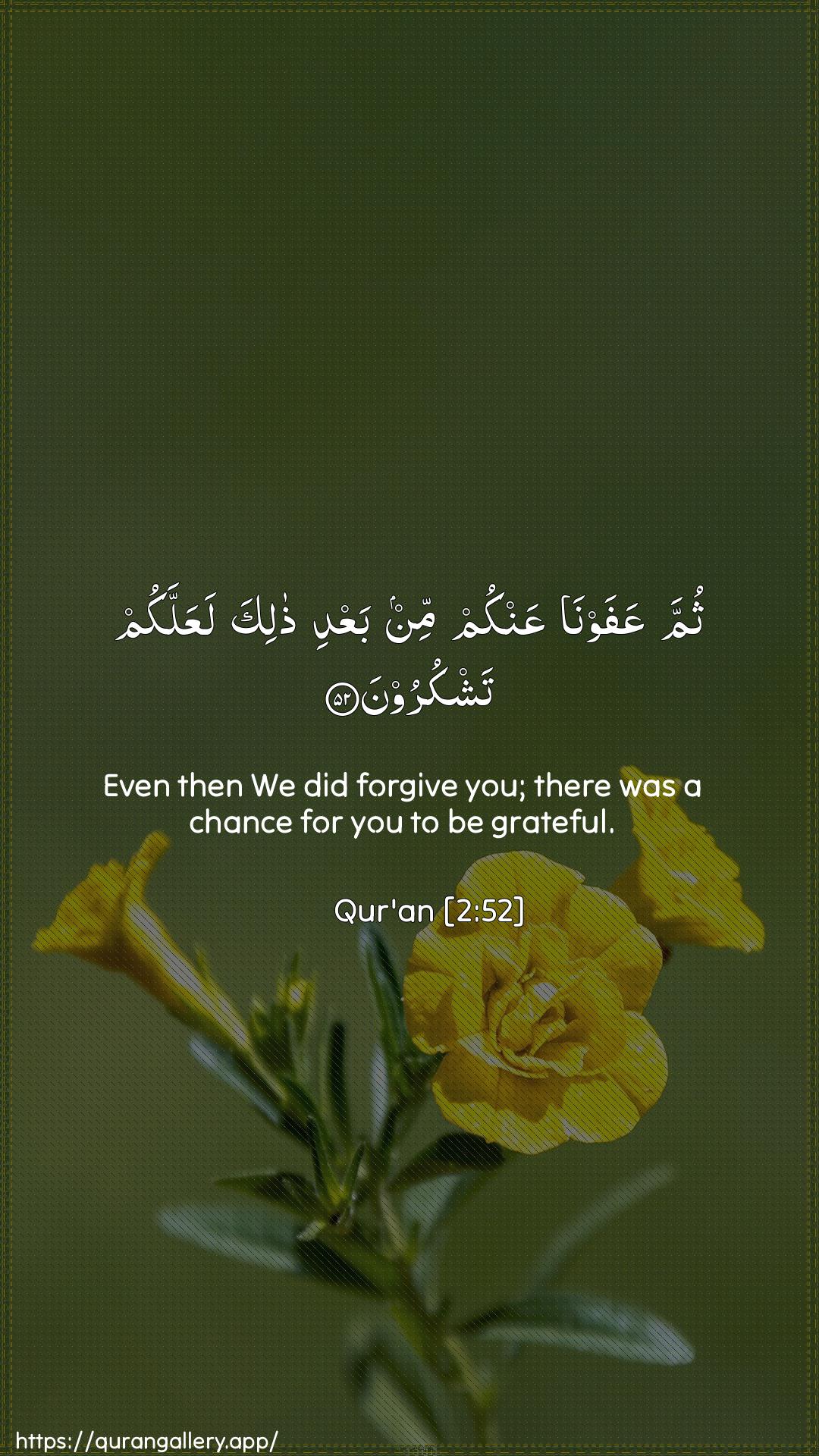
Arabic + English
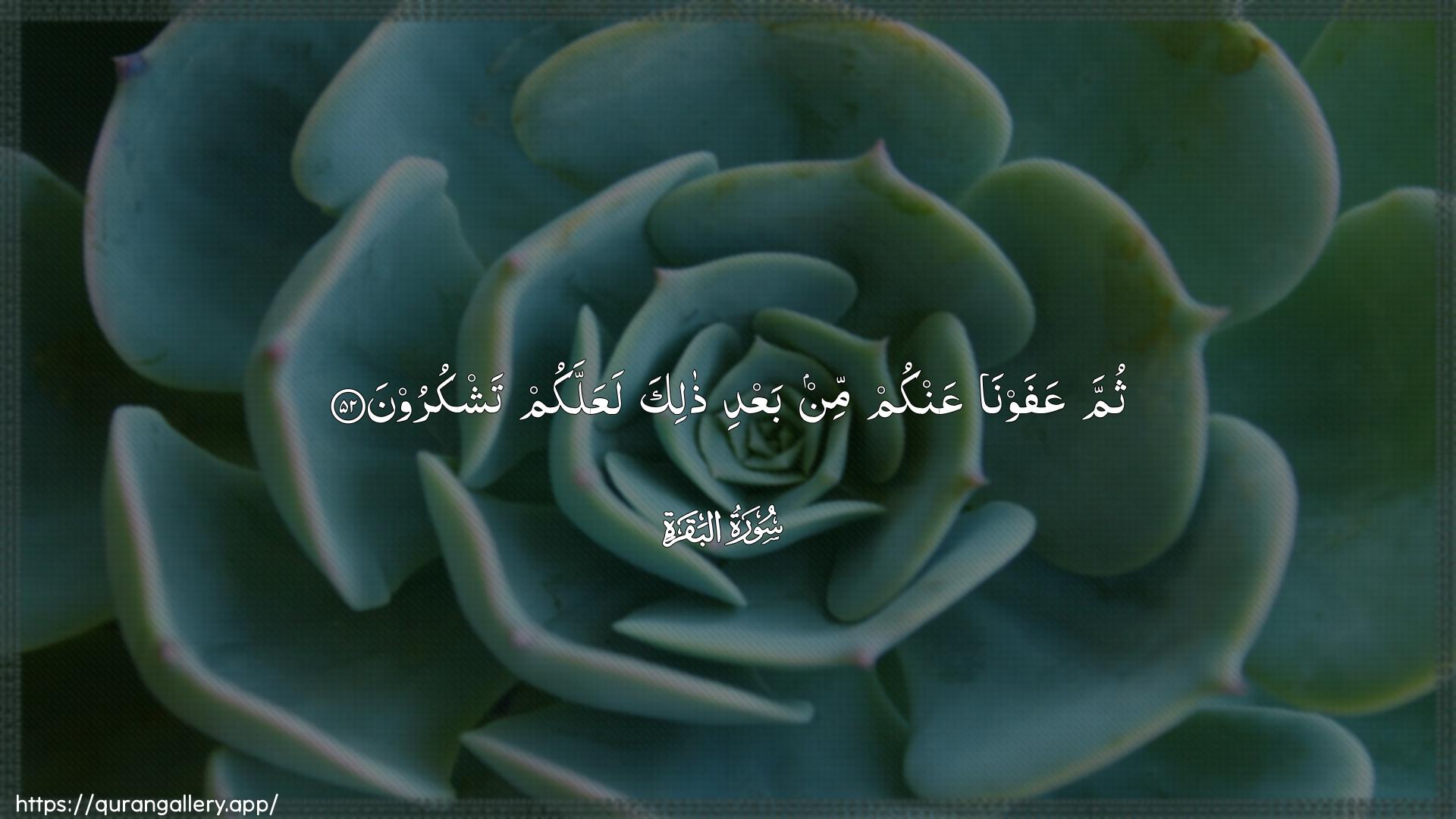
Arabic (Wide)
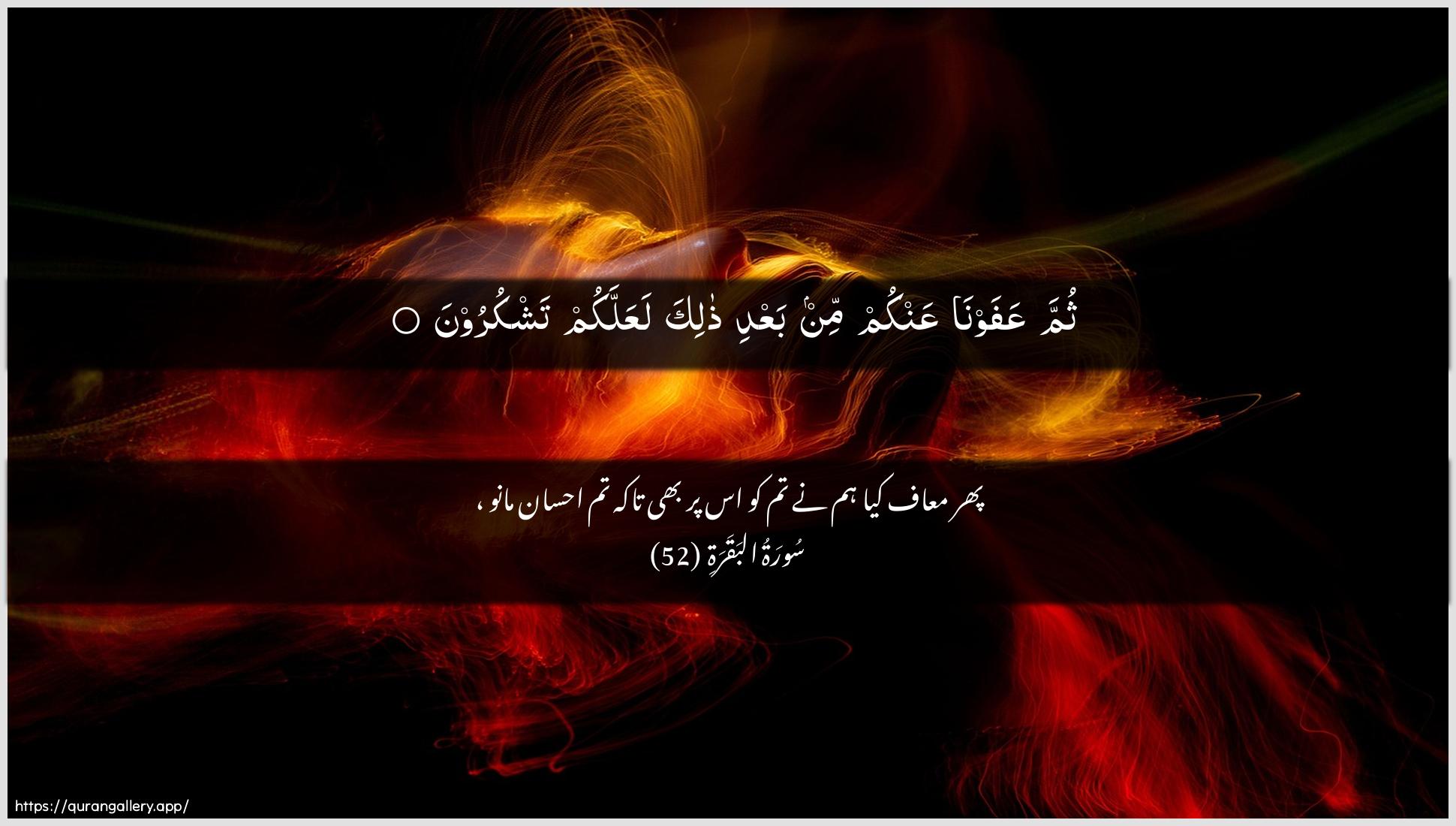
Arabic + Urdu
Free for personal & educational use with attribution
Quick Facts about this Verse
Surah
Al-Baqara
Revealed
Madani
Position
Juz 1,2,3
Explore this Verse
Verse Meaning
According to Ibn Kathir, Quran 2:52 is a profound declaration of divine mercy, revealing Allah's pardon for the Children of Israel after they committed the grave sin of worshipping the golden calf. This act occurred while Moses was away for his appointment with his Lord. Classical commentators like Al-Tabari explain that the term 'afawna' (We pardoned) signifies a complete removal of the sin and a withholding of the immediate, deserved punishment. The phrase 'min ba'di dhalika' (after that) emphasizes the magnitude of the transgression, making the subsequent forgiveness even more significant. The verse culminates with the purpose of this pardon: 'la'allakum tashkurun' (so that you might be grateful). Al-Qurtubi and other scholars highlight that gratitude (shukr) is not merely a feeling but an obligation that arises from receiving divine grace. It involves acknowledging the favor, expressing thanks, and demonstrating this thankfulness through renewed obedience. This verse establishes a core principle: Allah's forgiveness, even for the greatest of sins like idolatry, is a gateway to a deeper, more conscious state of gratitude, transforming a moment of profound failure into an opportunity for spiritual renewal.
Questions for Reflection
Personal Transformation
Reflect on a significant mistake in your past for which you sought forgiveness. Did the experience leave you with a lingering sense of guilt, or did it blossom into a deeper sense of gratitude for the second chance? How can this verse's lesson transform your memory of that event into a powerful, ongoing source of shukr?
Theological Depth
Al-Qurtubi defines 'afw' as the complete erasure of a sin. Contemplate the difference between a debt being 'cancelled' versus a debt being 'paid off'. How does viewing Allah's pardon as a complete erasure, a gift of grace, alter the nature of your gratitude compared to feeling you have 'earned' forgiveness through your repentance?
Communal Responsibility
Ibn Kathir reminds us this was a collective sin followed by a collective pardon. In your own community or family, where has a collective mistake occurred? How can the lesson of this verse—turning a shared failure into shared gratitude—be a model for healing and strengthening communal bonds today?
Practical Applications
When you are forgiven for a mistake, consciously shift your focus from mere relief to active gratitude. Dedicate a specific act of worship as a 'shukr' for the second chance.
After a major personal or professional failure, instead of dwelling on guilt, channel the energy into acts of charity or service as a thank you to Allah.
Recognize that Allah's forgiveness is itself a profound blessing that deserves thanks, separate from the original blessing you may have misused.
In therapy or self-reflection, this encourages moving beyond self-blame by focusing on the blessing of being able to start anew, fostering mental and spiritual well-being.
Hidden Gem
The synthesis of tafsirs reveals a profound spiritual sequence: a great sin led to a great repentance, which was met with a great pardon, which in turn demanded a great form of gratitude. This suggests that the depth of one's potential for gratitude is directly related to the depth of one's awareness of the forgiveness they have received.
Scroll to see more verses or use the dropdown in the breadcrumb to jump to any verse
Common Questions
1 more question available in the full page