
Al-Baqara - The Cow
Arabic Name: الْبَقَرَة
Urdu Name: گائے
Type: Madani
Serial Number: 2
Revelation Order: 87
Total Verses: 286
Parah: 1,2,3
Rukus: 40
Sajda: None
Share Verse Art
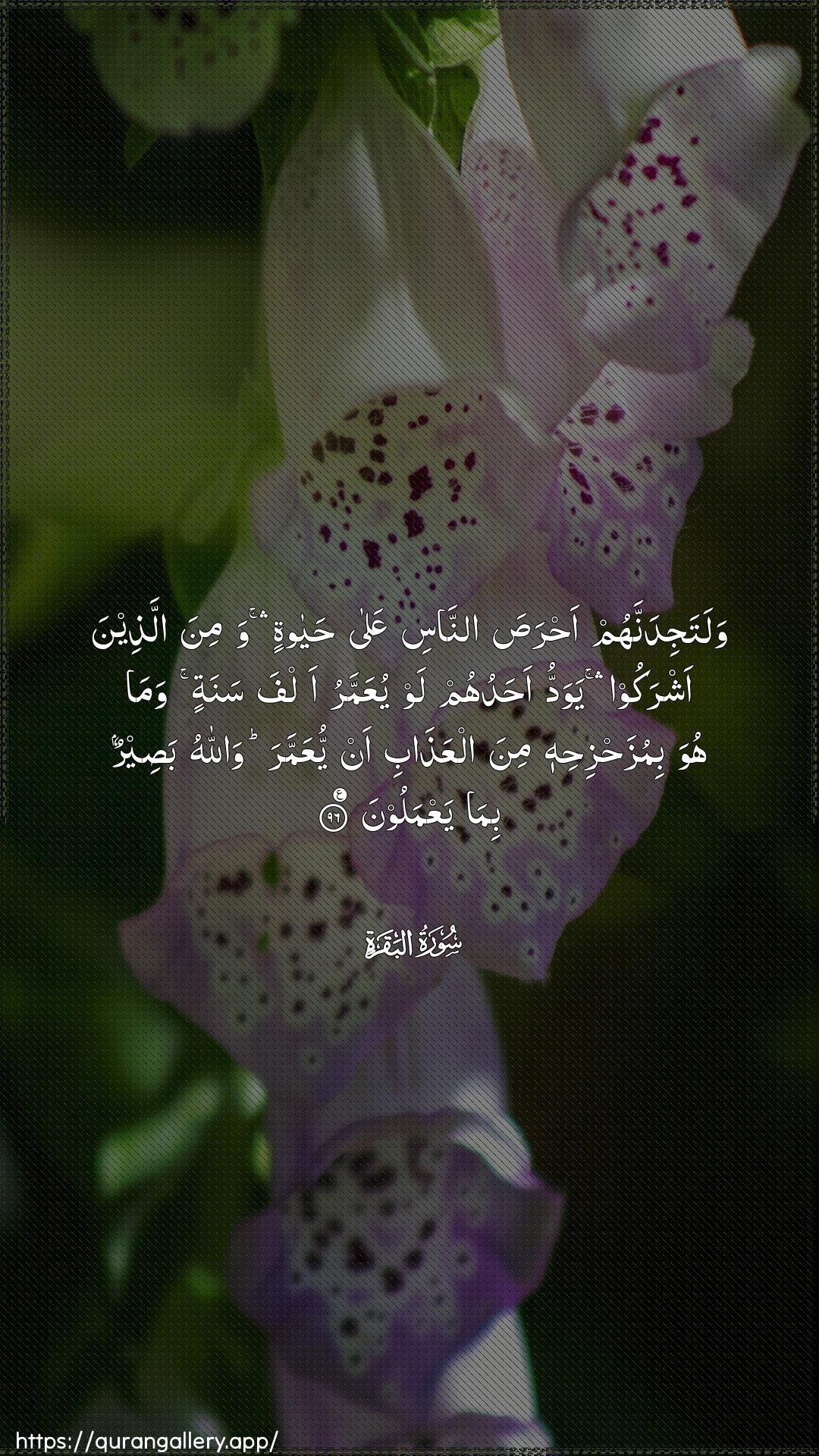
Arabic
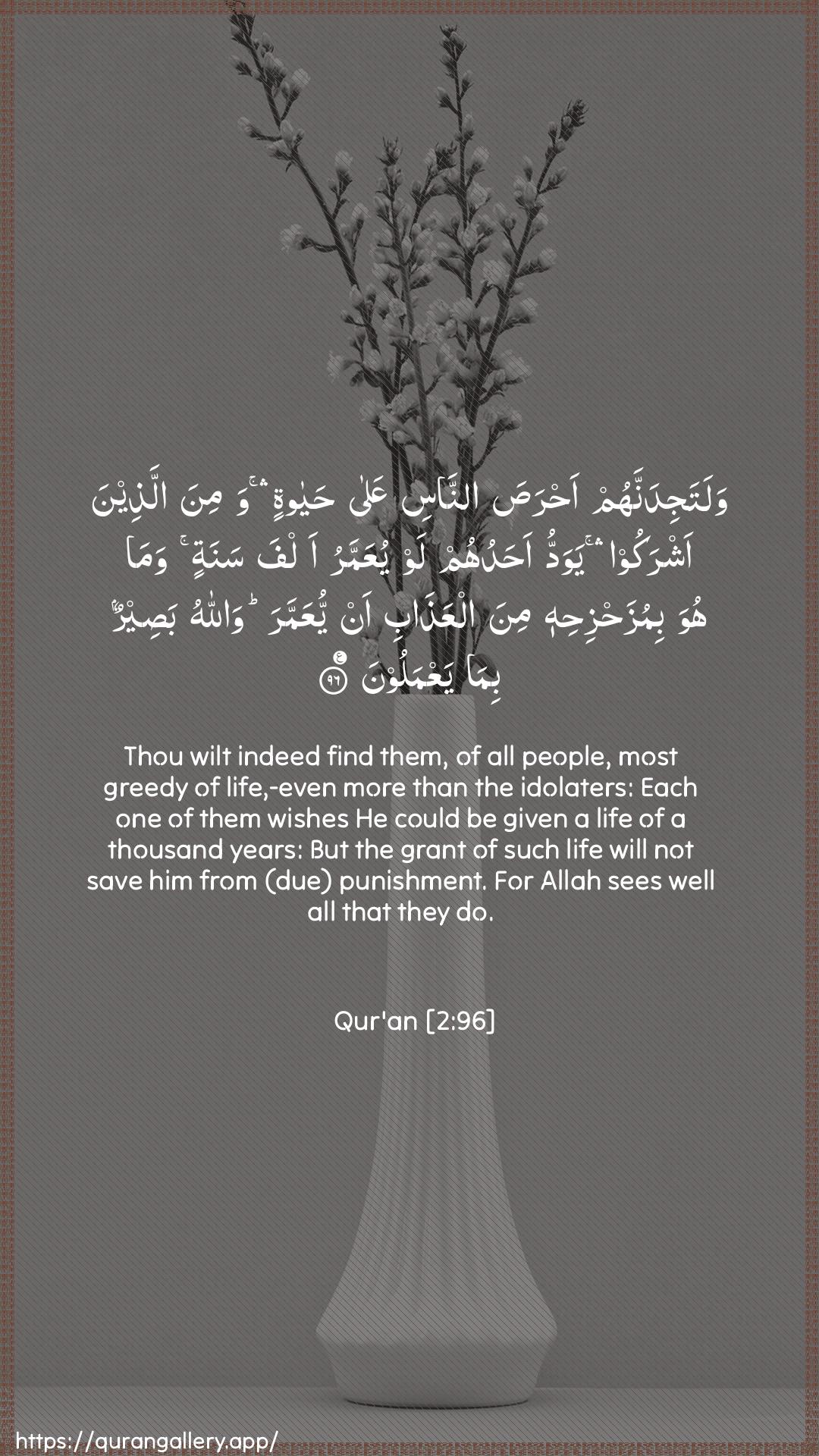
Arabic + English
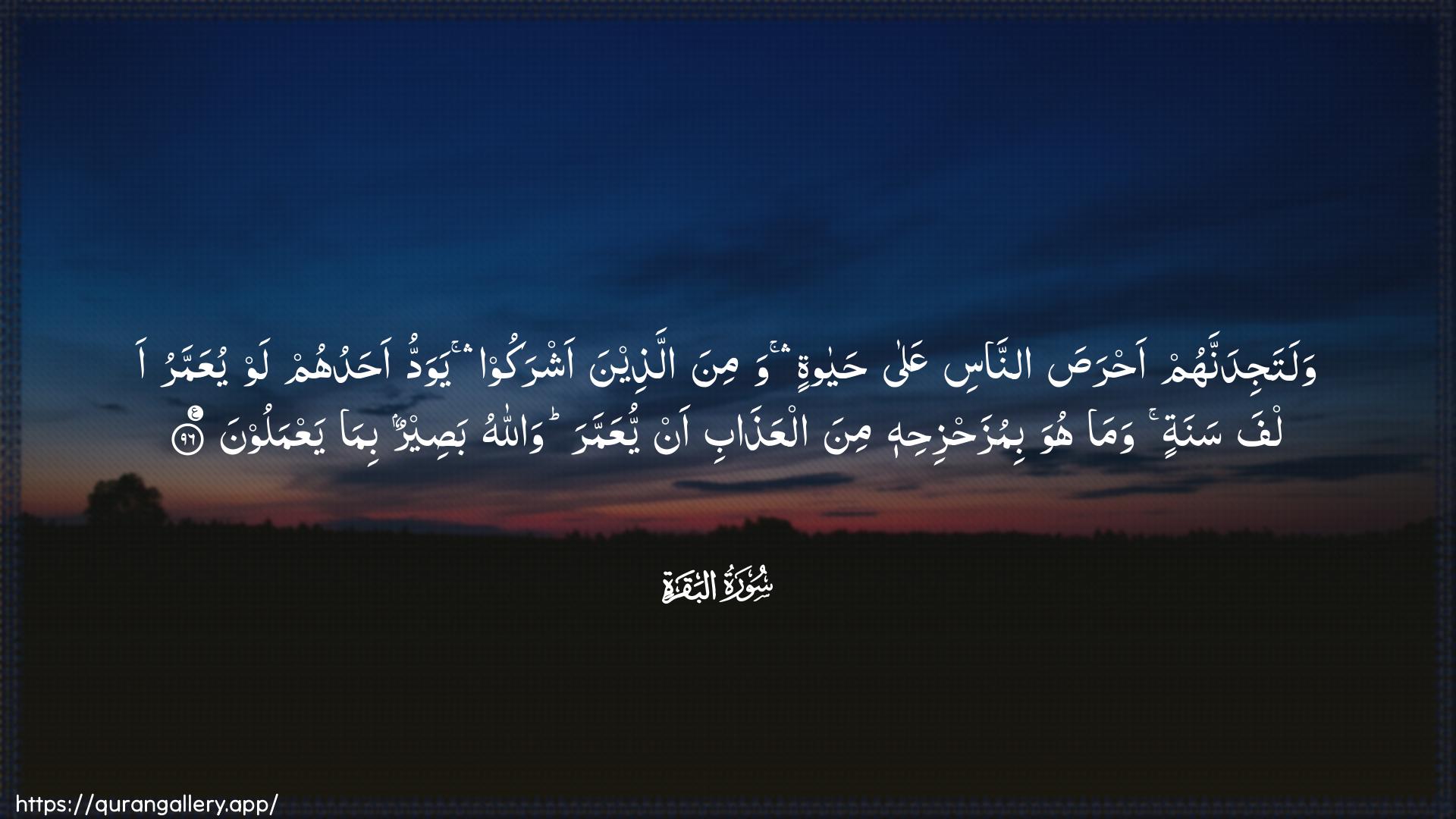
Arabic (Wide)
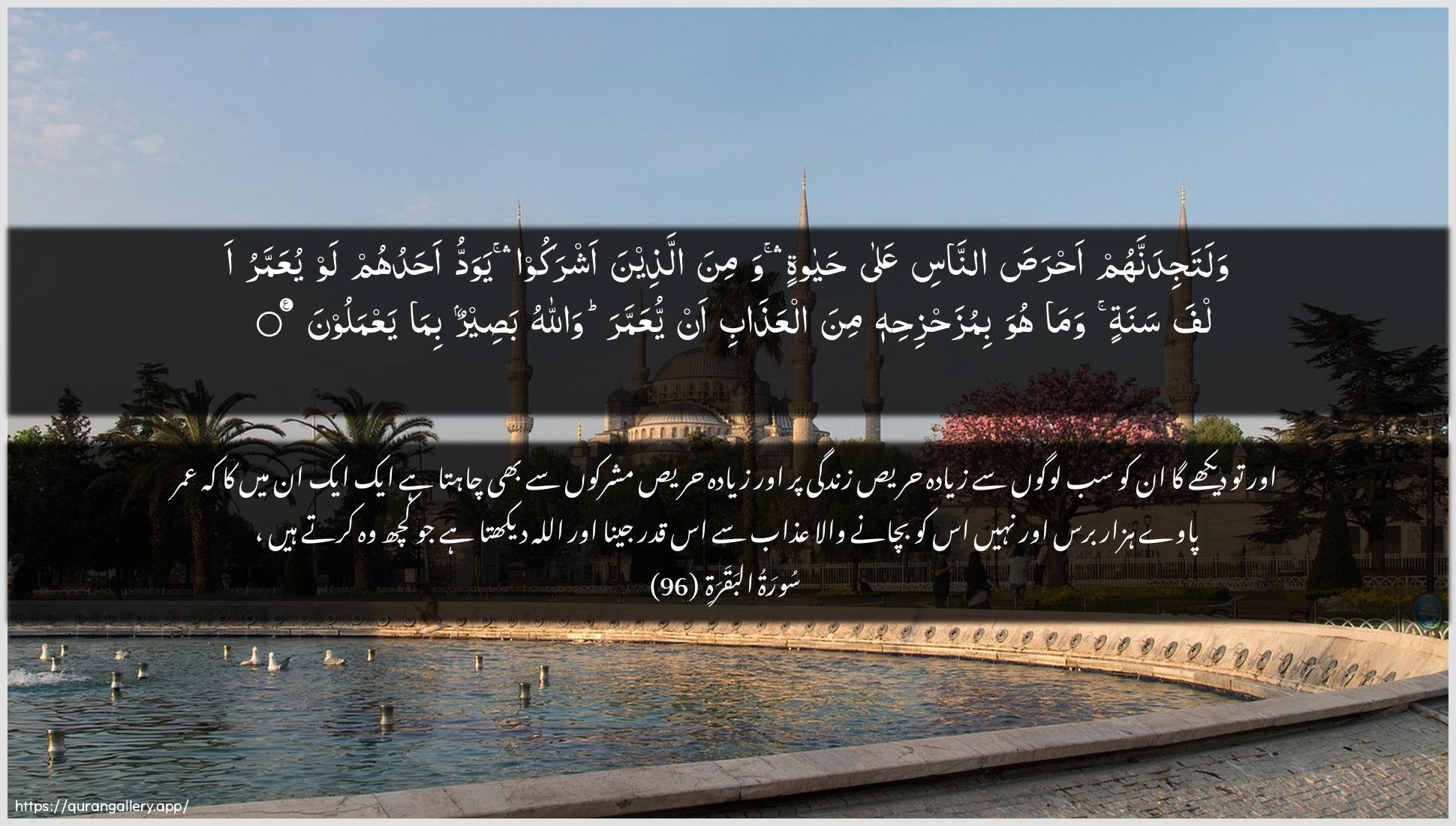
Arabic + Urdu
Free for personal & educational use with attribution
Quick Facts about this Verse
Surah
Al-Baqara
Revealed
Madani
Position
Juz 1,2,3
Explore this Verse
Verse Meaning
According to the classical exegete Ibn Kathir, Quran 2:96 delivers a powerful indictment of the Jews of Madinah, exposing their profound attachment to worldly life as the ultimate proof of their disbelief in their own claims of divine favor. A comprehensive review of classical tafsirs reveals this verse uncovers a deep psychological truth: their greed for life is pathologically more intense than even that of the polytheists. Al-Tabari clarifies that while a polytheist who denies the afterlife clings to this world as their only reality, the Jews knew with certainty that a terrible punishment awaited them, making their desire for life a desperate, futile attempt to delay the inevitable. The wish for 'a thousand years,' as noted by scholars like Mujahid, symbolizes an impossible desire for permanence driven by the terror of what comes after. This synthesis across tafsirs shows that the verse is not merely about a love of life, but about a specific type of greed born from the horror of knowing one's own hypocrisy and impending doom. The final declaration, 'Allah is All-Seeing of what they do,' serves as the divine seal on their fate, affirming that no amount of prolonged life could ever conceal their deeds or avert the consequences.
Questions for Reflection
Personal
The verse describes them as 'greediest of mankind for a life' (أَحْرَصَ النَّاسِ عَلَىٰ حَيَاةٍ). Al-Tabari notes the indefinite 'a life' implies a desire for any form of existence, no matter how debased. Contemplate your own life: Are there compromises in your deen you make for the sake of worldly gain, position, or comfort? Does your attachment to life have conditions of dignity and faith, or is it an unconditional greed for mere existence?
Theological
Reflect on the terrifying state of having knowledge of the Hereafter but being certain of a bad outcome. Ibn Kathir explains this is why their greed exceeded that of the polytheists. How does this principle redefine the responsibility of knowledge? Contemplate the idea that knowledge, without the action and sincerity that makes one hopeful of Allah's mercy, becomes a source of terror that chains one to the dunya.
Comparative
The verse makes a direct comparison: they are greedier for life 'than the polytheists.' Why is the state of a knowledgeable but disobedient person considered more spiritually corrupt than that of an ignorant one? Contemplate the layers of rebellion. The polytheist disobeys from a place of ignorance, but the person described here disobeys despite their knowledge, making their crime one of deliberate, conscious rejection of known truth. How does this shape your view on the importance of acting on what you know?
Practical Applications
Conduct a 'Fear of Death' Audit: Honestly assess if your fear of death stems from leaving worldly comforts or from unpreparedness to meet Allah.
Useful when facing life milestones, illness, or moments of deep reflection on one's legacy and spiritual state.
Reframe 'Long Life' Dua: When praying for a long life, explicitly add 'in Your obedience and worship,' transforming the prayer from a desire for dunya to a desire for more opportunities for 'ibadah.
Especially relevant on birthdays, anniversaries, or when praying for the health and longevity of loved ones.
Practice 'Certainty of Meeting Allah': Daily, remind yourself of the verse's finality, 'Allah is All-Seeing of what they do,' to cultivate a sense of accountability and divine presence (muraqabah).
A powerful antidote to the temptations of the digital age, where privacy is an illusion and divine oversight is the ultimate reality.
Hidden Gem
The synthesis of tafsirs reveals a profound spiritual insight: the desire for 'a thousand years' is not a sign of love for life, but a symptom of the soul's attachment to the act of 'delaying.' Their knowledge of their fate made them masters of procrastination. Contemplate how your own procrastination on repentance, good deeds, or spiritual obligations is a smaller echo of this same desire to 'live a little longer' before facing accountability.
Scroll to see more verses or use the dropdown in the breadcrumb to jump to any verse
Common Questions
1 more question available in the full page