
Al-Baqara - The Cow
Arabic Name: الْبَقَرَة
Urdu Name: گائے
Type: Madani
Serial Number: 2
Revelation Order: 87
Total Verses: 286
Parah: 1,2,3
Rukus: 40
Sajda: None
Share Verse Art
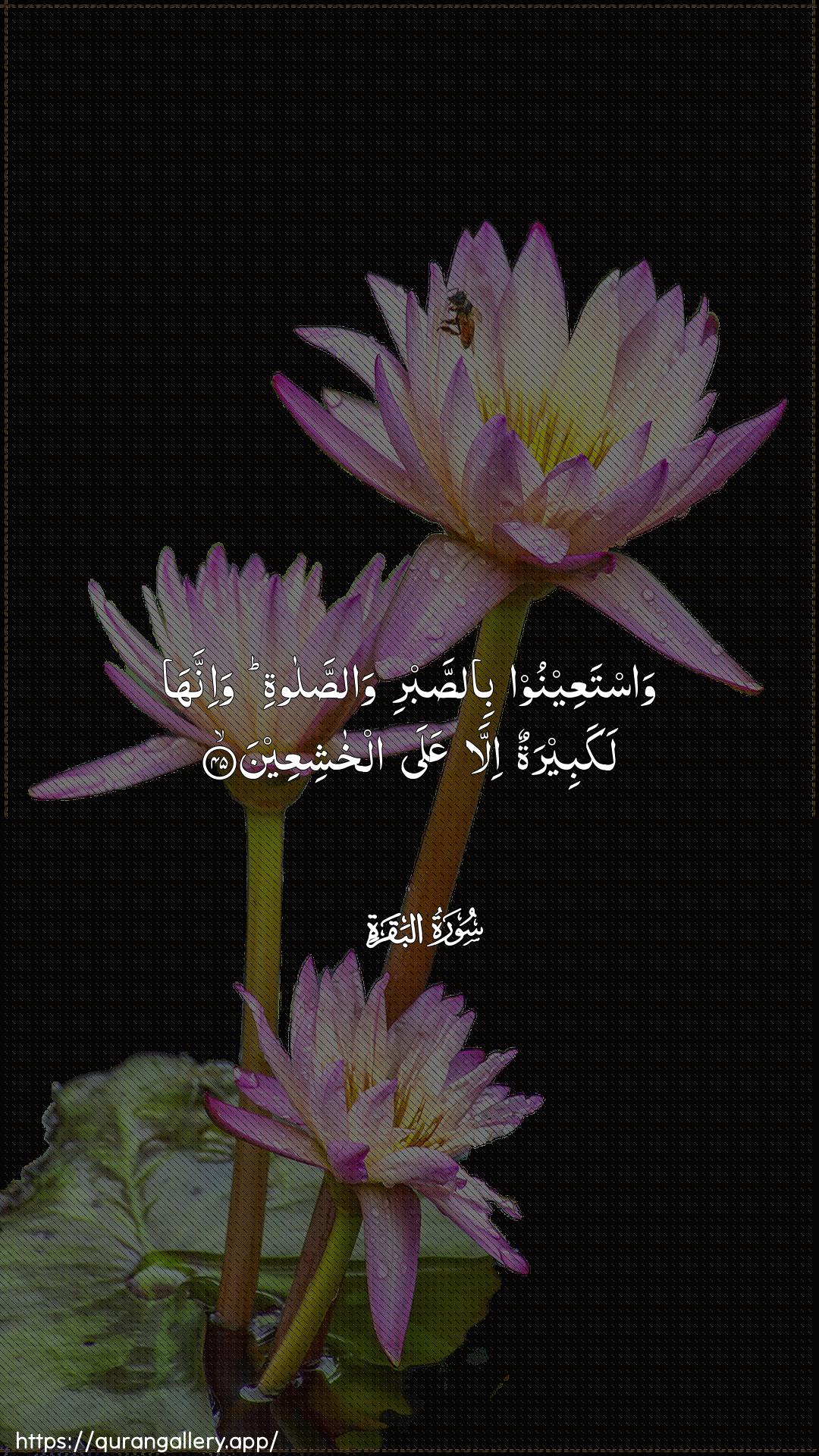
Arabic
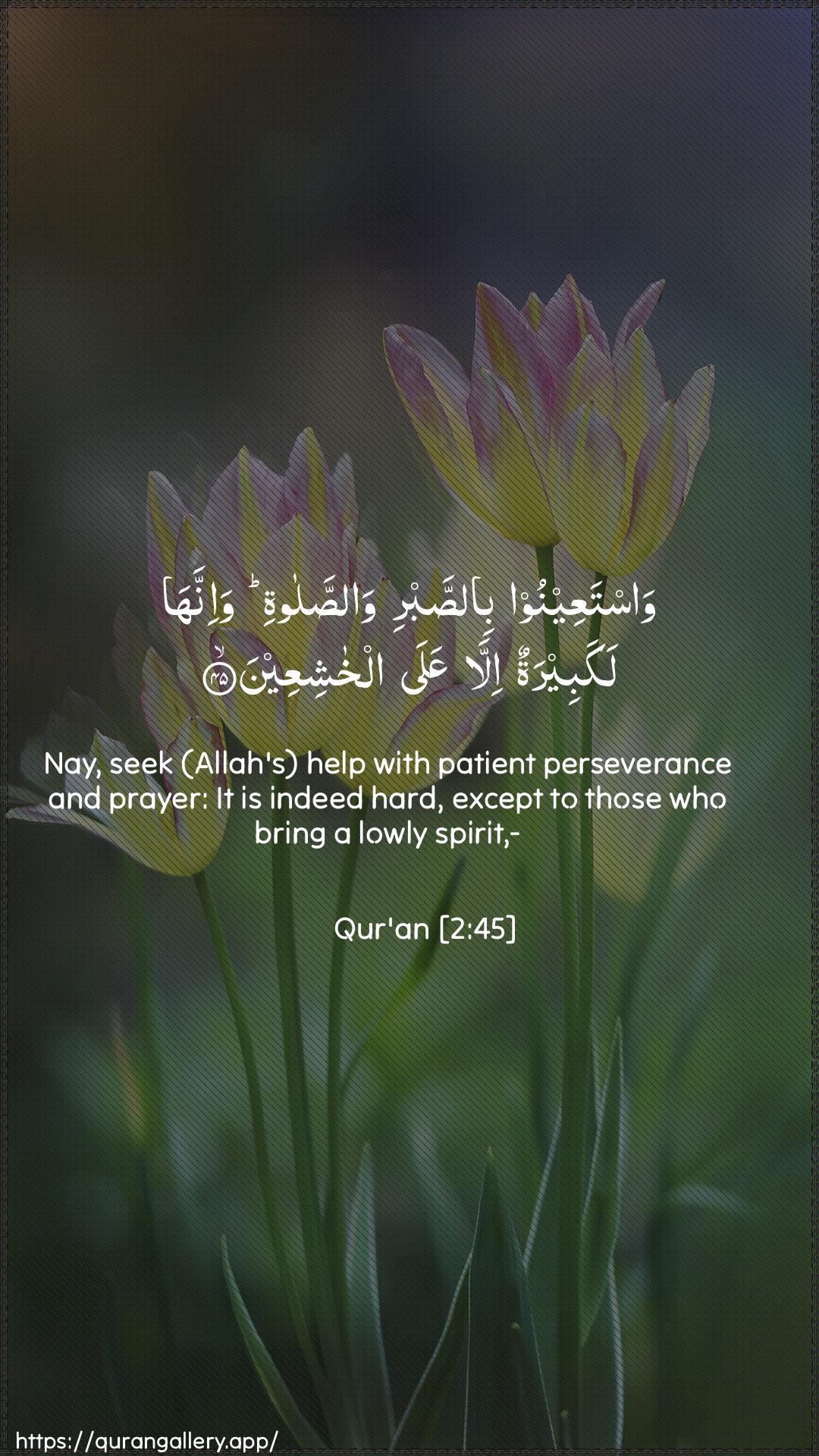
Arabic + English

Arabic (Wide)
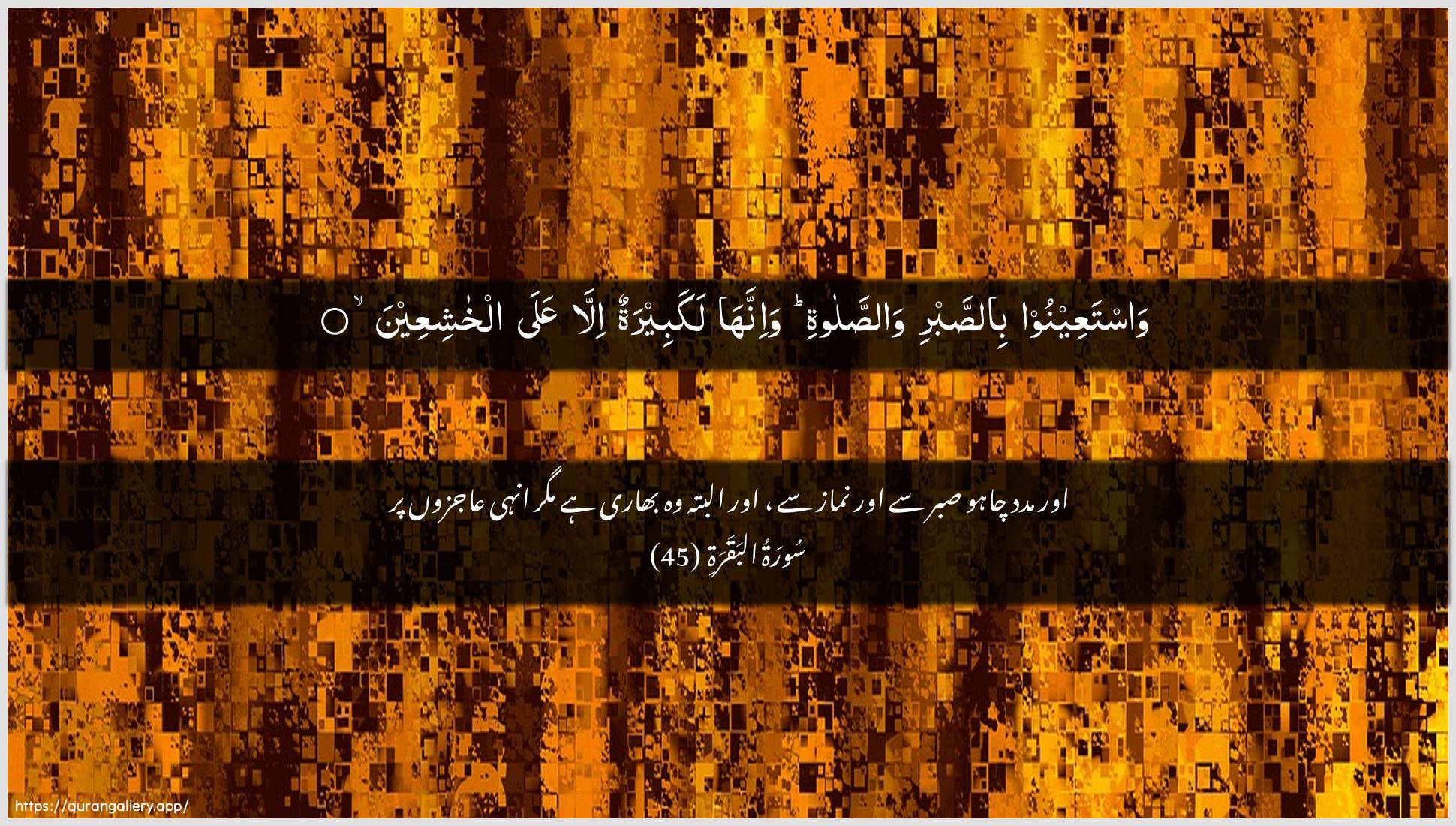
Arabic + Urdu
Free for personal & educational use with attribution
Quick Facts about this Verse
Surah
Al-Baqara
Revealed
Madani
Position
Juz 1,2,3
Explore this Verse
Verse Meaning
According to Imam al-Tabari, this verse commands believers, particularly the Children of Israel in its original context, to seek Allah's assistance in fulfilling their covenant through two powerful means: Patience (As-Sabr) and Prayer (As-Salah). A comprehensive analysis of classical tafsirs reveals that 'Sabr' is interpreted with profound depth; Mujahid and others suggested it specifically means fasting, as Ramadan is called the 'month of patience,' while a narration from Umar ibn al-Khattab, cited by Ibn Kathir, distinguishes between 'patience in adversity' and the 'better patience' of refraining from what Allah has forbidden. The verse then highlights a critical spiritual reality: that this path, especially prayer, is indeed heavy and burdensome (lakabeerah), except for 'al-Khashi'in'—the humble and submissive. As-Sa'di explains these are the ones whose hearts are tranquil, who fear Allah and are certain of meeting Him. This synthesis reveals that Sabr and Salah are not mere rituals but a complete system for spiritual fortitude, made accessible only through Khushu' (humility), which transforms a difficult duty into a source of strength and comfort.
Questions for Reflection
Textual Contemplation
Allah pairs Sabr (patience) and Salah (prayer). Contemplate the symbiotic relationship between them. How does the self-restraint of Sabr prepare the heart for Salah? And how does the connection in Salah provide the spiritual fuel required for Sabr in the world? Reflect on why one without the other is incomplete.
Personal Contemplation
The verse describes prayer as 'lakabeerah' (indeed heavy/burdensome). Be honest with your own soul: does Salah feel heavy or light to you? Contemplate the moments it feels like a chore versus the moments it feels like a relief. According to As-Sa'di, the difference is Khushu'. What specific worldly attachments or lack of certainty in the Hereafter contributes to this feeling of heaviness in your life?
Relational Contemplation
The verse is a command from the Creator: 'Seek help...' It frames the divine-human relationship as one where Allah actively offers a method for us to receive His aid. Contemplate the divine mercy in not just being available to help, but also in teaching us the precise, most effective way to ask for and receive it. How does this change your perception of hardship from a lonely struggle to a guided opportunity to connect with Him?
Practical Applications
Reframe patience from a passive endurance of hardship to an active, daily practice of abstaining from forbidden actions and speech.
Practice this by consciously refraining from gossip, avoiding doubtful websites, or lowering the gaze, seeing each act as training in Sabr.
When faced with any distressing news or difficult task, make your immediate, reflexive action to perform a two-rak'ah prayer before anything else.
Before a difficult meeting, upon receiving a worrying medical report, or when feeling overwhelmed by work, find a quiet space and pray first.
Cultivate Khushu' (humility) outside of prayer by consciously reflecting on the certainty of meeting Allah and being held accountable for your deeds.
Dedicate a few minutes daily to contemplate the Day of Judgment, read descriptions of Jannah and Jahannam, and internalize the reality of returning to Allah.
Hidden Gem
A subtle insight from the synthesis of tafsirs is that Khushu' is not just about the prayer itself, but about one's entire worldview. The Khashi'in are those who live with the end in mind—the certainty of meeting their Lord. This certainty recalibrates their perception of everything. Worldly problems shrink, and the 'heavy' act of pausing life for prayer becomes a light and logical priority. The verse teaches that prayer isn't made easy by technique, but by perspective.
Scroll to see more verses or use the dropdown in the breadcrumb to jump to any verse