
Al-Baqara - The Cow
Arabic Name: الْبَقَرَة
Urdu Name: گائے
Type: Madani
Serial Number: 2
Revelation Order: 87
Total Verses: 286
Parah: 1,2,3
Rukus: 40
Sajda: None
Share Verse Art
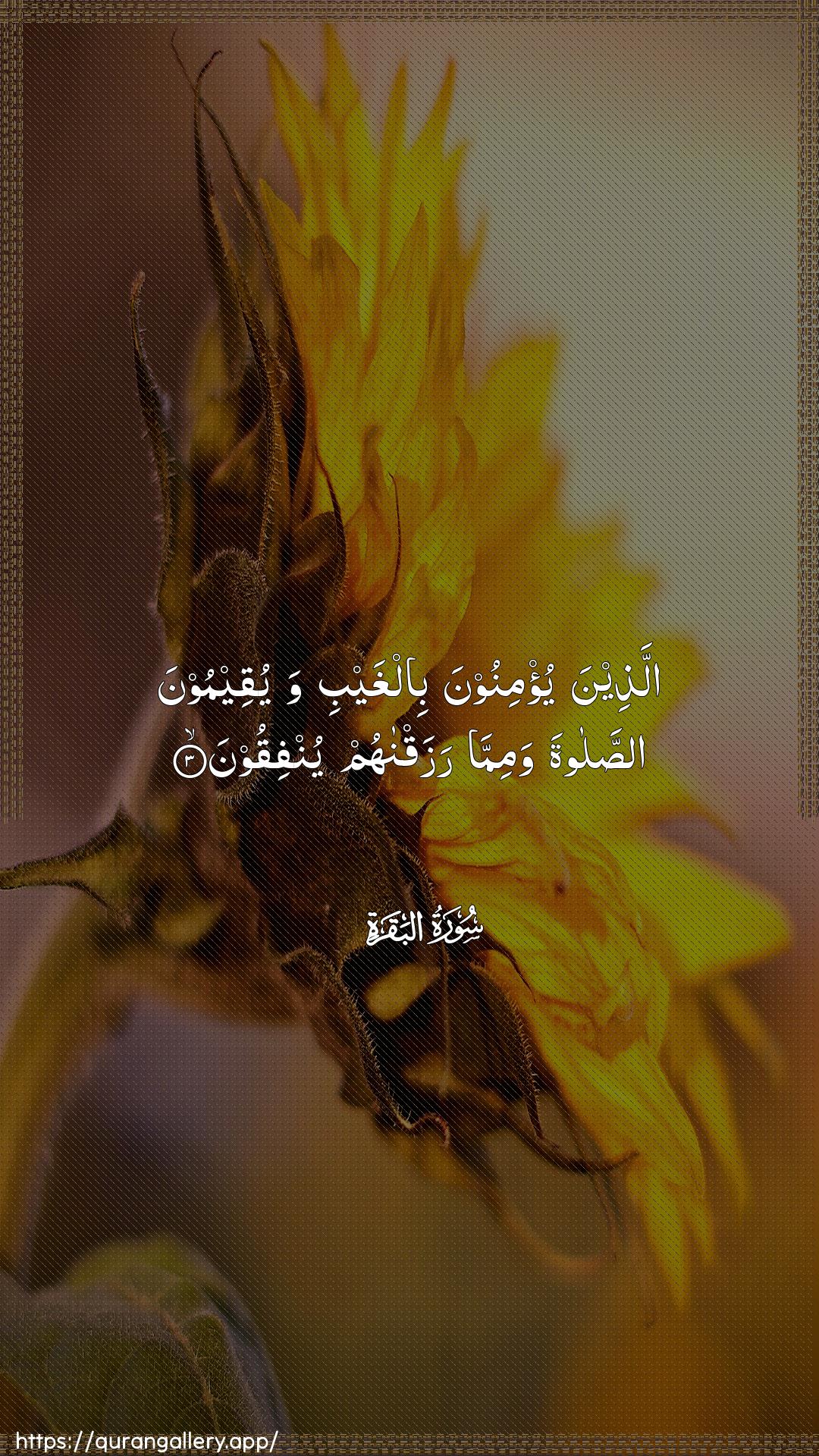
Arabic
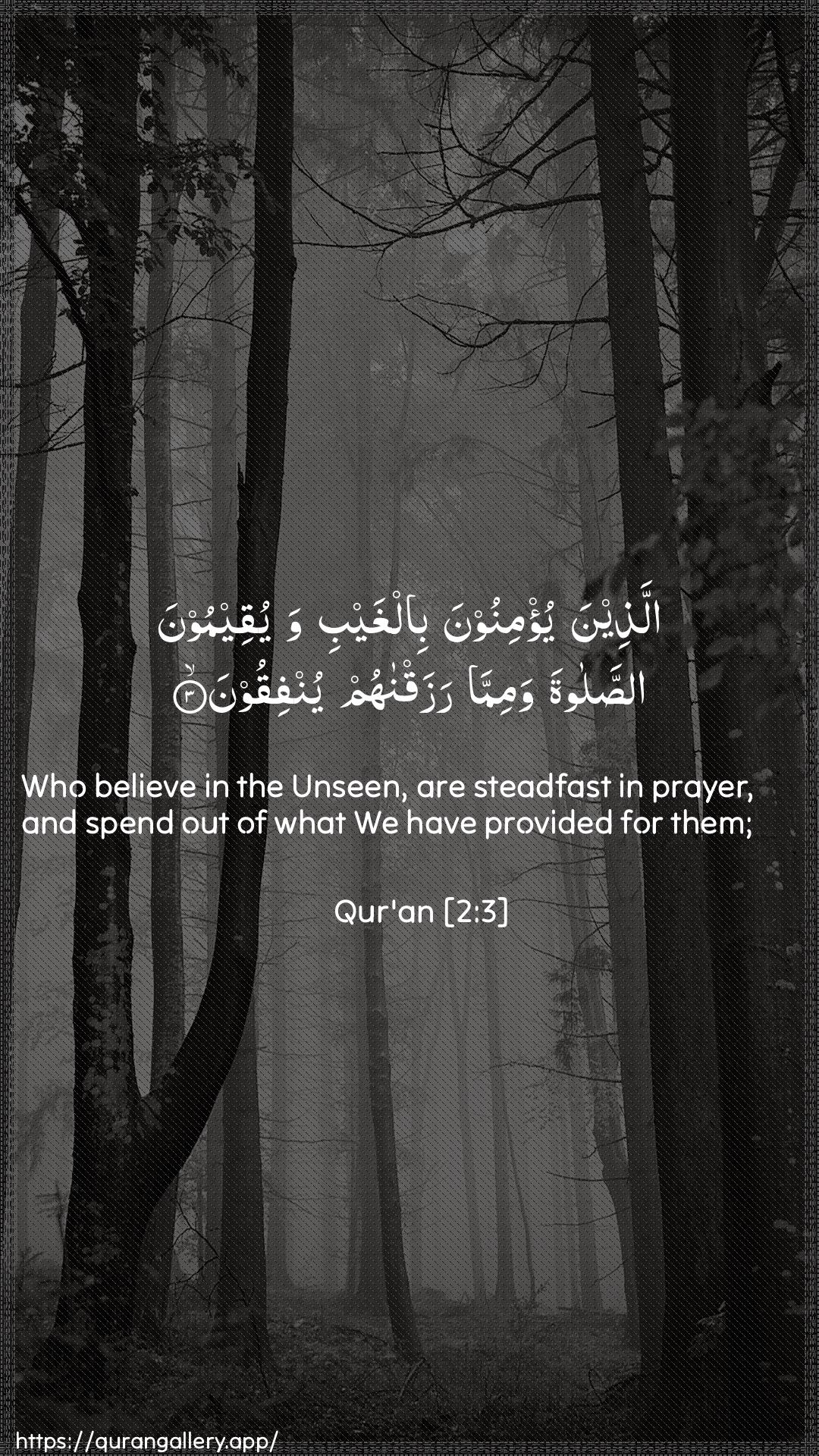
Arabic + English
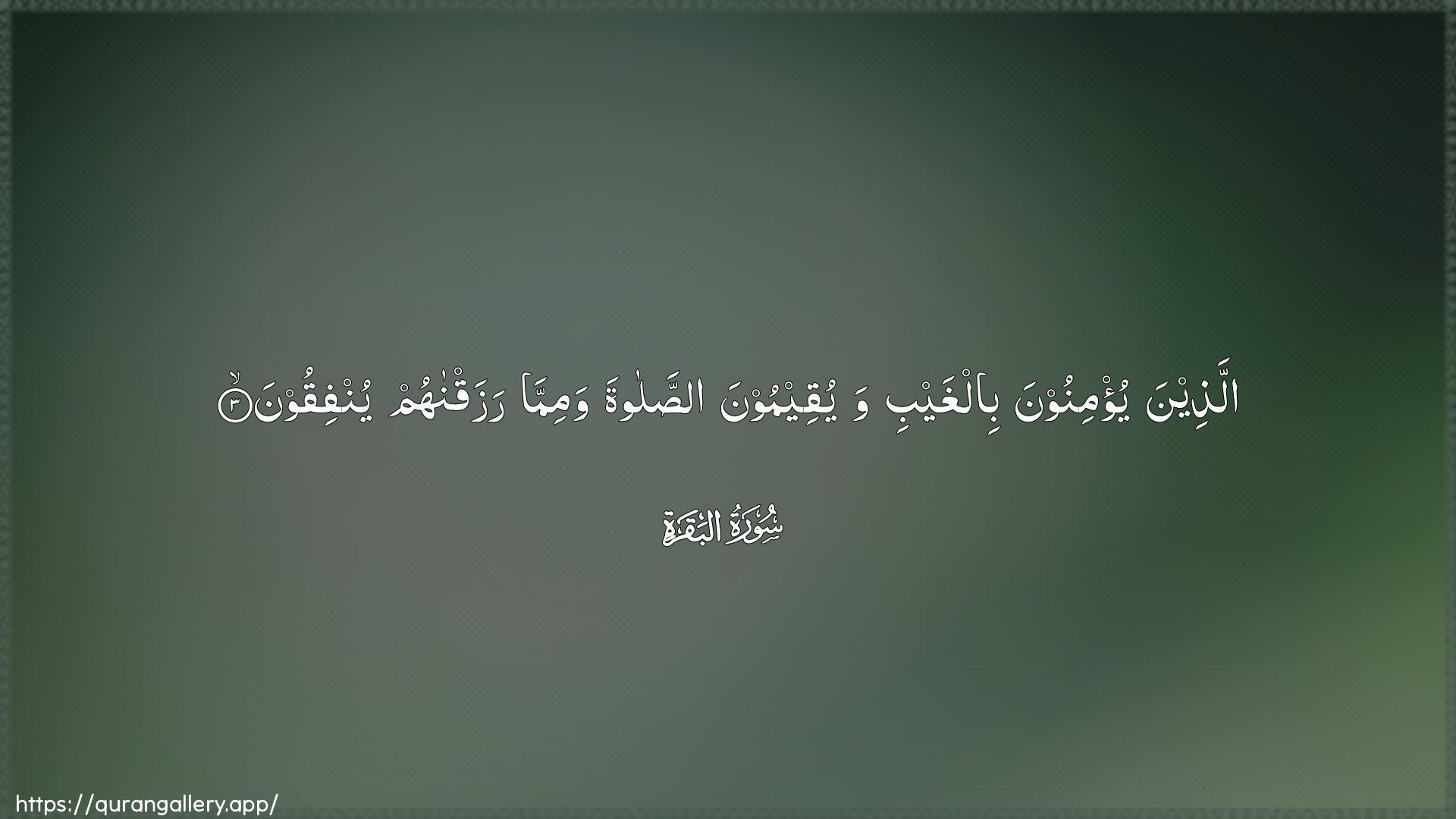
Arabic (Wide)
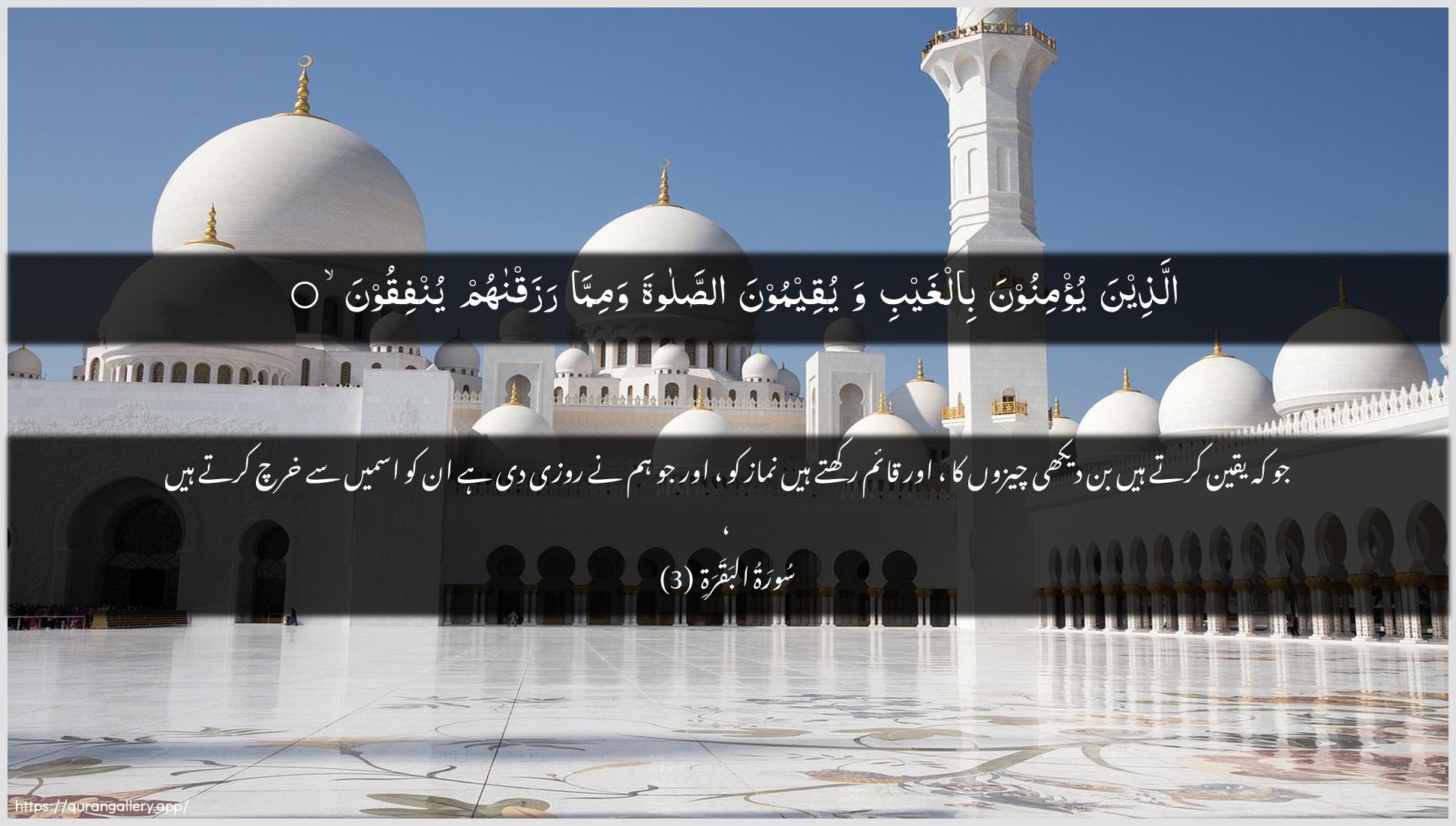
Arabic + Urdu
Free for personal & educational use with attribution
Quick Facts about this Verse
Surah
Al-Baqara
Revealed
Madani
Position
Juz 1,2,3
Explore this Verse
Verse Meaning
According to the classical exegete Imam Al-Tabari, Quran 2:3 outlines the foundational, active qualities of the 'Muttaqin' (the God-conscious) first mentioned in the preceding verse. This is not a passive state but a dynamic engagement with faith's core pillars. The verse masterfully synthesizes the internal, spiritual, and material dimensions of a righteous life. It begins with 'Iman bil-Ghaib' (belief in the Unseen), which, as Ibn Kathir elaborates, is the cornerstone that distinguishes a believer from a non-believer; it is the complete acceptance of realities beyond human perception—like Allah, angels, Jannah, and Jahannam—based solely on divine revelation. This internal conviction immediately translates into physical devotion through 'iqamat as-salah' (establishing the prayer). As scholars like Qatadah and Ibn Abbas explain, this is not merely performing prayer, but doing so perfectly, with all its conditions, timings, and inner humility. The synthesis of scholarly views reveals a profound discovery: this act solidifies the vertical relationship with the Creator. Finally, the verse addresses the horizontal, societal relationship through 'infaq'—spending from what Allah has provided. As-Sa'di notes this includes both obligatory charity (Zakah) and voluntary spending, signifying that a believer sees their wealth not as their own, but as a trust from Allah to be used for the good of others. Thus, the verse presents a holistic blueprint for piety: a heart firm in unseen truths, a body dedicated to worship, and wealth circulated for social well-being.
Questions for Reflection
Personal
Ibn Mas'ud considered 'Iman bil-Ghaib' the most superior form of faith. Contemplate a personal aspect of the Ghaib (e.g., the accountability of the Day of Judgment). How does truly internalizing this unseen reality reshape your priorities, decisions, and actions today, moving your faith from theoretical knowledge to a lived certainty?
Textual
Scholars like Qatadah highlighted that 'yuqimun' means more than just 'they pray'; it means 'they establish'. Reflect on the difference. If you were to 'establish' prayer in your life and family, not just perform it, what would change? How does this single word transform a personal ritual into a foundational pillar of your existence?
Relational
The verse uses the phrase 'mimma razaqnahum' - 'from what We have provided them.' Contemplate your wealth, time, and skills not as personal possessions but as provisions ('rizq') from Allah. How does this shift in perspective change your relationship with your resources and your responsibility towards others who have been given less?
Practical Applications
Cultivate 'Iman bil-Ghaib' by dedicating daily time to reflect on one unseen reality (e.g., an attribute of Allah, the nature of angels).
In a hyper-materialistic world, this builds resilience against doubt and strengthens one's internal spiritual compass.
Elevate Salah from a ritual to an 'establishment' by focusing on one aspect of perfection each week—punctuality, wudu, or khushu' (humility).
Combats the rushed, distracted nature of modern life by creating deliberate moments of profound spiritual connection.
Practice regular 'Infaq' by automating a small, consistent charitable donation, no matter how minor.
In a consumerist culture, this builds a habit of giving and social responsibility, strengthening community bonds.
Hidden Gem
The synthesis of scholarly thought reveals a subtle beauty: the verse is a mirror of the two great commandments in Islam. 'Believing in the Unseen' and 'Establishing Prayer' perfect the relationship with Allah (Haqqullah), while 'Spending from what We have provided' perfects the relationship with His creation (Haqqul-'Ibad). Contemplating this balance reveals the comprehensive nature of true piety.
Scroll to see more verses or use the dropdown in the breadcrumb to jump to any verse