
Al-Baqara - The Cow
Arabic Name: الْبَقَرَة
Urdu Name: گائے
Type: Madani
Serial Number: 2
Revelation Order: 87
Total Verses: 286
Parah: 1,2,3
Rukus: 40
Sajda: None
Share Verse Art
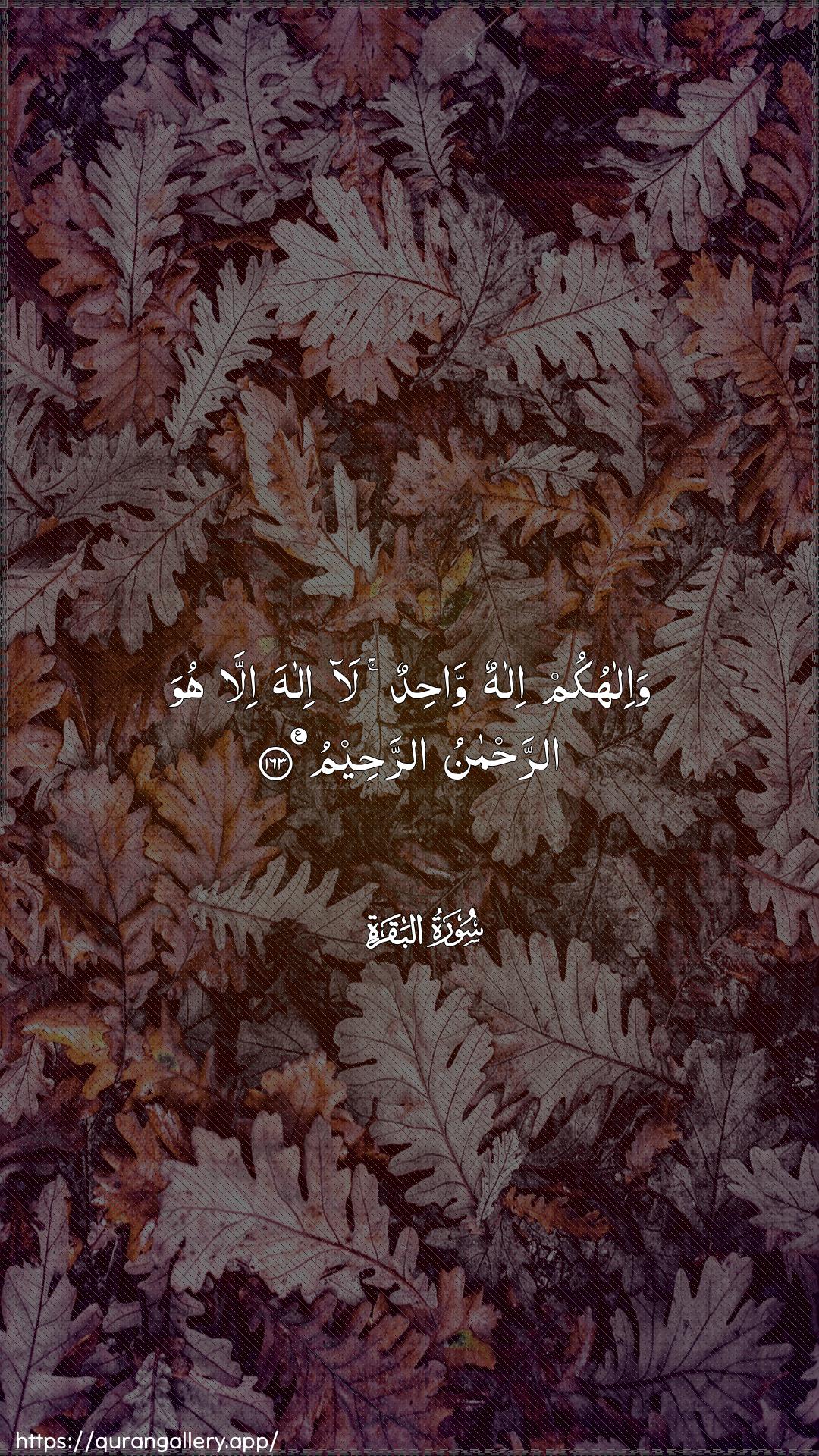
Arabic
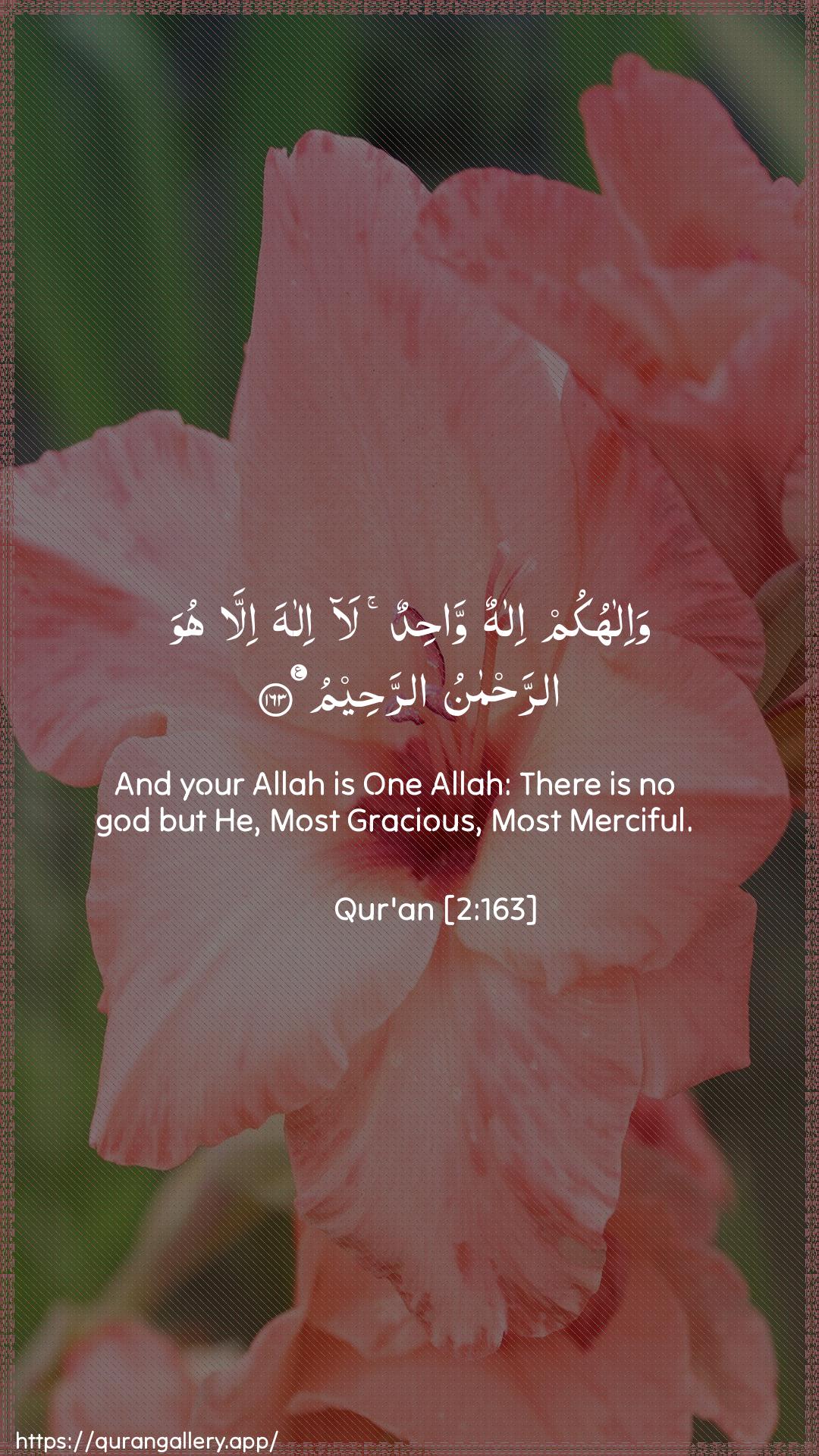
Arabic + English
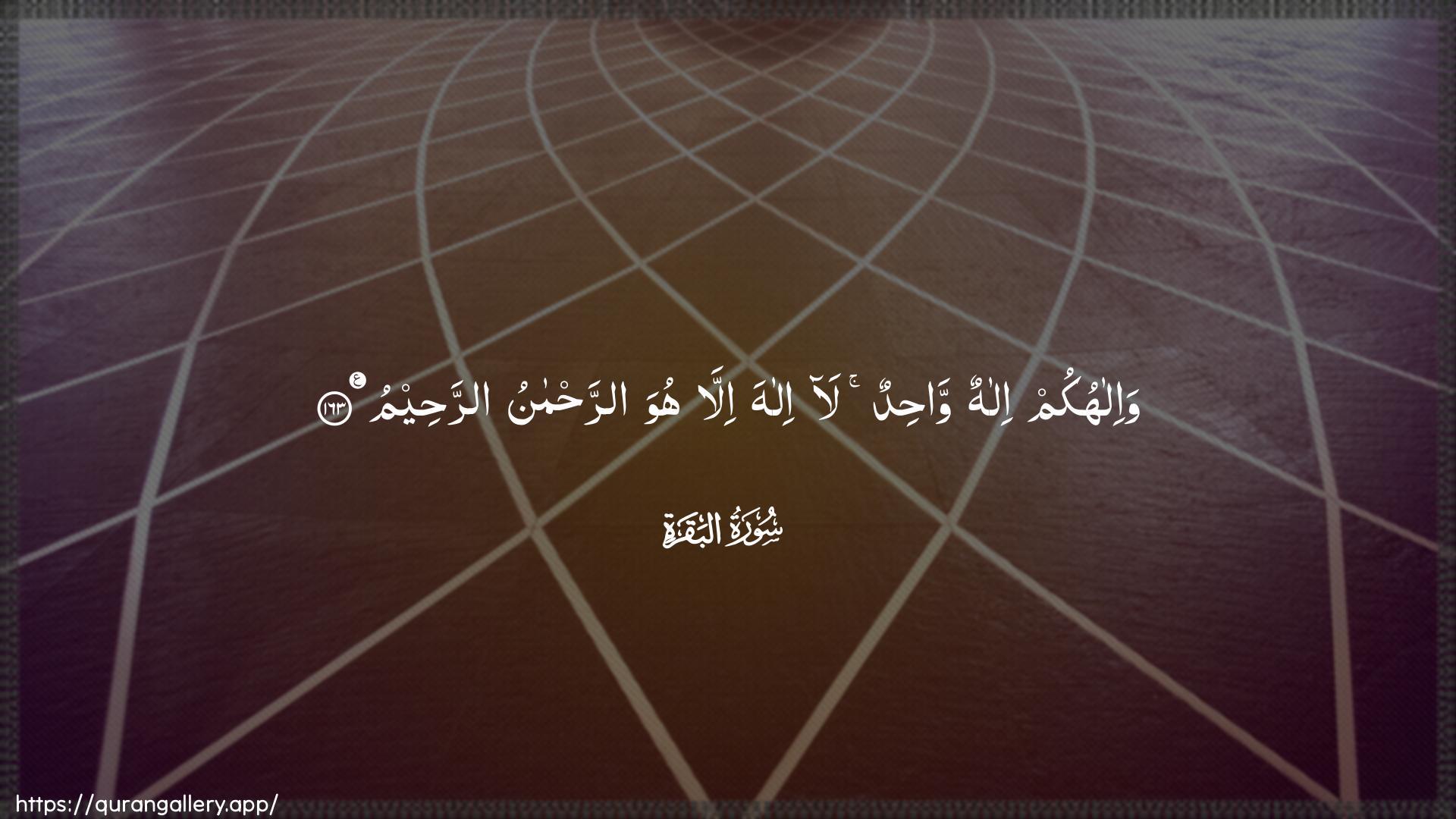
Arabic (Wide)
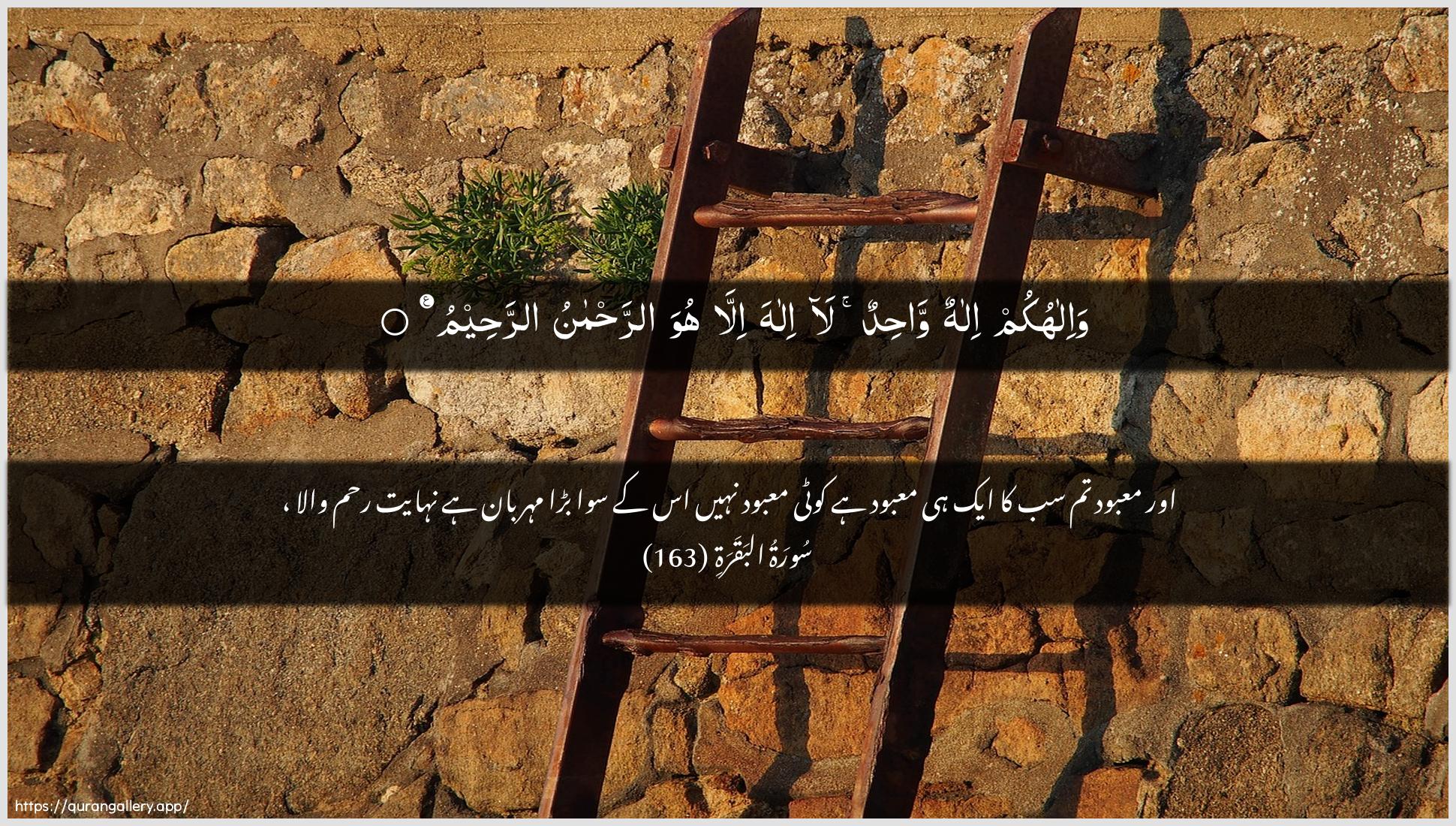
Arabic + Urdu
Free for personal & educational use with attribution
Quick Facts about this Verse
Surah
Al-Baqara
Revealed
Madani
Position
Juz 1,2,3
Explore this Verse
Verse Meaning
According to the classical exegete Imam Al-Tabari, Quran 2:163, 'Wa ilahukum ilahun wahidun' (And your God is one God), serves as the definitive declaration of Tawheed (monotheism), refuting all forms of polytheism. This verse directly addresses the Makkans who, as noted by Al-Qurtubi, were perplexed by the concept of a single deity for all of creation. The verse's power is synthesized by combining this core declaration with the subsequent phrase 'la ilaha illa Huwa' (there is no deity except Him), which both negates false gods and affirms the exclusive right of worship for Allah alone. Ibn Kathir adds a profound spiritual dimension by citing a hadith that suggests Allah's Greatest Name is found within this verse, linking the intellectual truth of Tawheed to the devotional practice of supplication. The synthesis of these scholarly insights reveals the verse not just as a theological statement, but as a complete framework for faith: it establishes the Oneness of God (Wahid), negates all rivals, and immediately defines His primary relationship with creation through His attributes of all-encompassing mercy (Ar-Rahman Ar-Raheem), making the concept of one God accessible not through fear, but through infinite compassion.
Questions for Reflection
Theological Contemplation
Al-Tabari discusses the meaning of 'Wahid' as having no نظير (nazir - نظير), or equivalent. Contemplate your own life and the world around you. Where do you see evidence of a single, unified system at work—in physics, biology, or your own consciousness—that points to a singular, unparalleled source, negating the possibility of competing creators?
Personal Contemplation
This verse presents a powerful sequence: 'One God... The Most Merciful.' As-Sa'di explains that this sequence is intentional to connect majesty with compassion. Reflect on your own heart: which 'gods' (sources of ultimate hope, fear, or validation) do you unknowingly serve? How does recognizing that the *One True God* is also the *Source of All Mercy* liberate you from these lesser, unmerciful attachments?
Relational Contemplation
Ibn Kathir points out that this declaration of Tawheed was revealed to a polytheistic society. It establishes a new foundation for human relationships: if your God and my God are One, then we are all servants of the same Master. Contemplate how a deep conviction in 'ilahun wahidun' should change the way you interact with others, seeing them not as competitors or strangers, but as fellow subjects of the One King.
Practical Applications
Simplify decision-making by using 'Is this for the One God?' as the primary filter for your actions and commitments.
Apply this to career choices, financial decisions, and even social media engagement to ensure actions align with a higher purpose.
When feeling overwhelmed by various worldly fears (financial, social, etc.), actively negate them by reciting 'la ilaha illa Huwa'—'there is no true object of fear except Him.'
Use this as a mantra during moments of stress at work, anxiety about the future, or when facing difficult interpersonal conflicts.
Counteract feelings of despair or unworthiness by focusing on the concluding attributes, 'Ar-Rahman Ar-Raheem,' reminding yourself that the One God's nature is infinite mercy.
Practice this after making a mistake, when feeling regretful, or during periods of sadness to reconnect with divine hope.
Hidden Gem
A synthesis of scholarly thought reveals a profound insight: the verse doesn't just state a fact, it provides the path to internalizing it. You start with the grand, cosmic reality ('One God'), then actively dismantle all mental idols ('no god but Him'), and finally, you are left with the intimate, personal experience of His mercy ('Ar-Rahman Ar-Raheem'). It's a three-step spiritual journey in a single line.
Scroll to see more verses or use the dropdown in the breadcrumb to jump to any verse