
Al-Baqara - The Cow
Arabic Name: الْبَقَرَة
Urdu Name: گائے
Type: Madani
Serial Number: 2
Revelation Order: 87
Total Verses: 286
Parah: 1,2,3
Rukus: 40
Sajda: None
Share Verse Art
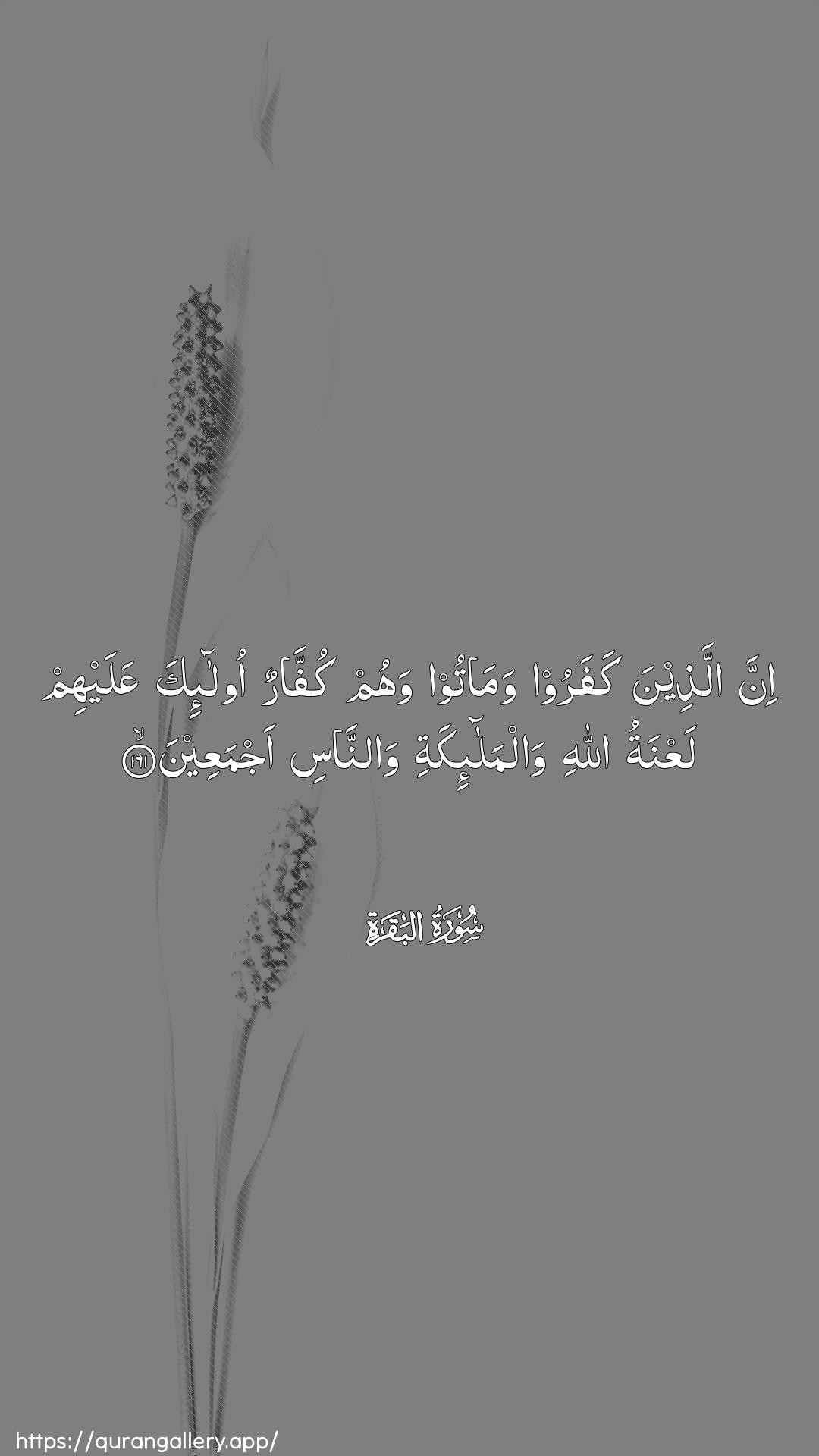
Arabic
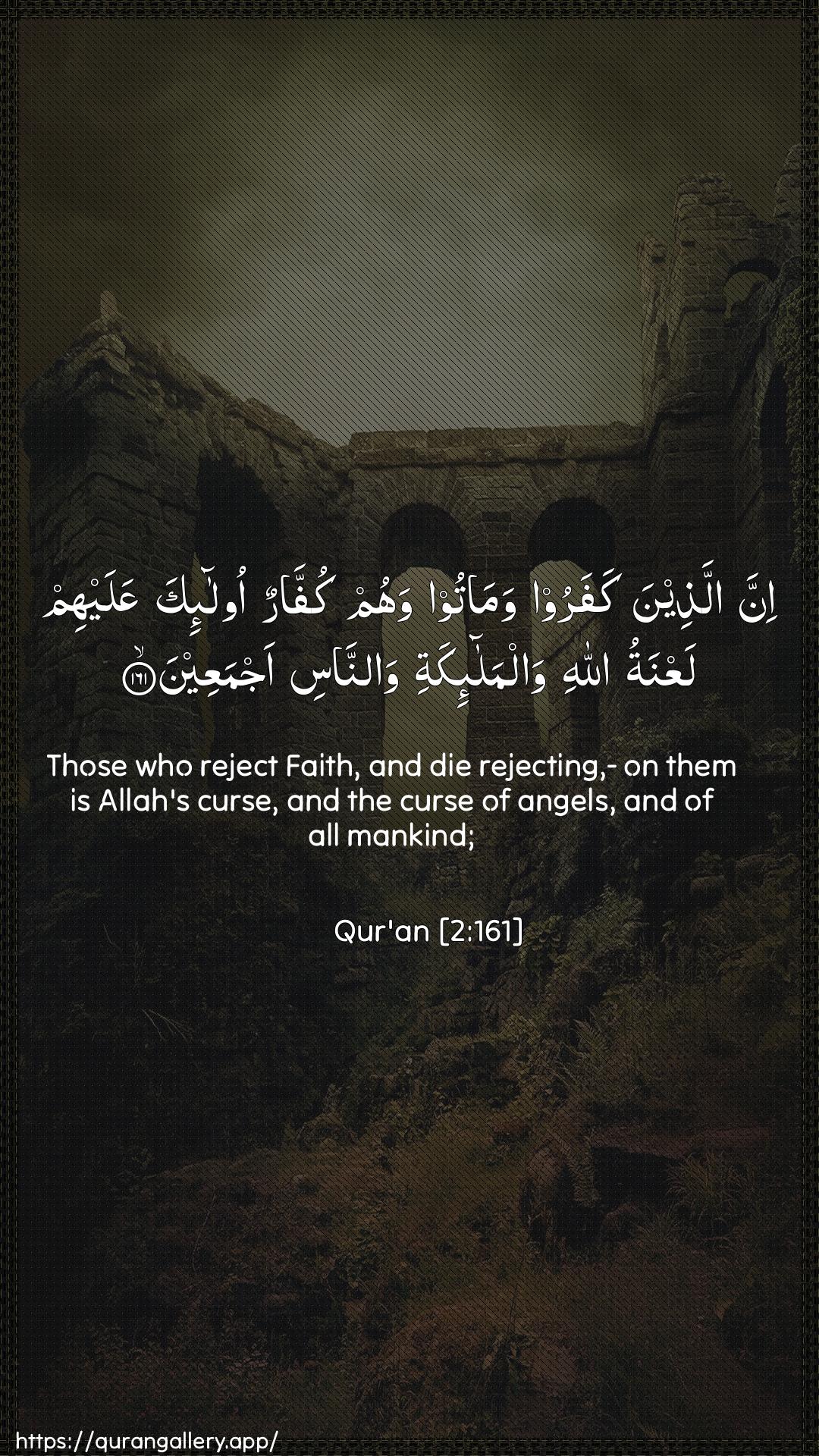
Arabic + English
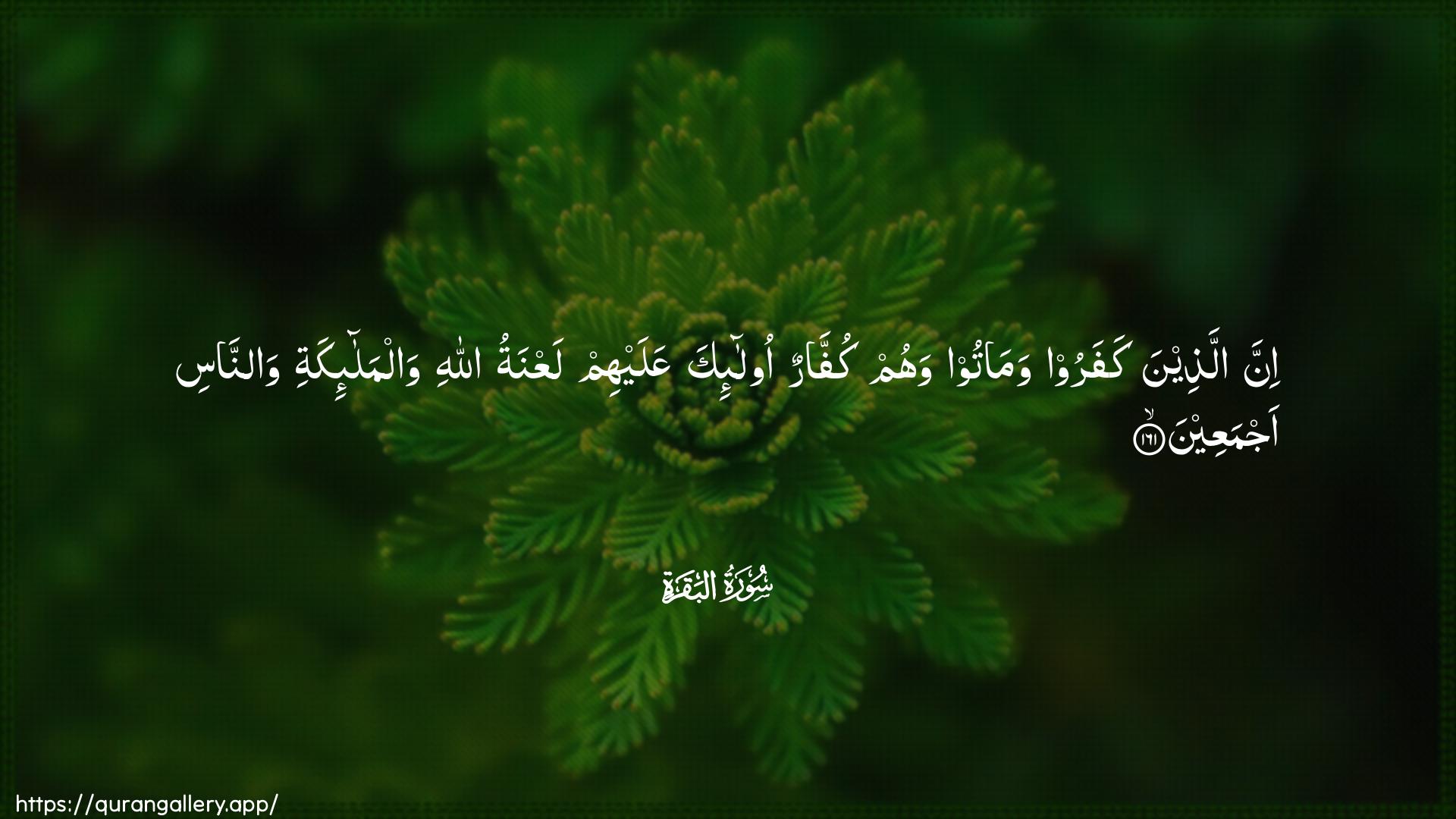
Arabic (Wide)
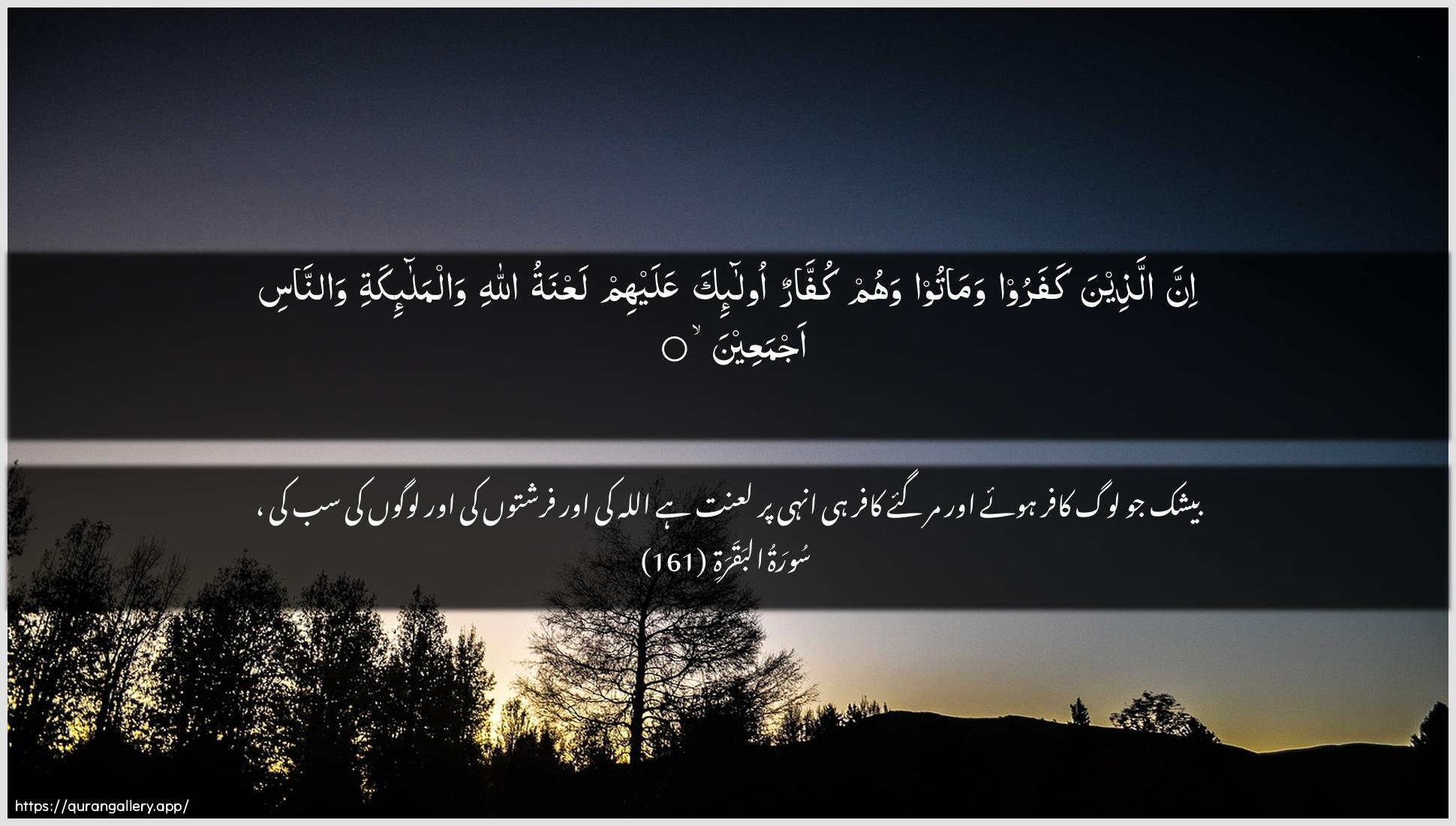
Arabic + Urdu
Free for personal & educational use with attribution
Quick Facts about this Verse
Surah
Al-Baqara
Revealed
Madani
Position
Juz 1,2,3
Explore this Verse
Verse Meaning
According to the classical exegete Al-Tabari, Quran 2:161 delivers a definitive statement on the fate of those who consciously reject faith and die fixed in that state. This verse is not about temporary doubt, but about a persistent, unrepented state of 'kufr' (disbelief) until death. The synthesis of classical tafsirs reveals a profound concept: a complete cosmic rejection. As Ibn Kathir clarifies, the curse ('la'nah') from Allah signifies expulsion from His mercy. The curse from the angels and 'all people' is a universal condemnation. A hidden gem from the analysis of scholars like Abu Al-Aliyah and As-Saddi is that this curse from 'all people' materializes on the Day of Judgment, when even the disbelievers will curse the leaders of falsehood and, by extension, themselves for their injustice. Thus, the verse describes not just a punishment, but a universal, final alignment of all creation—divine, angelic, and human—against willful, persistent disbelief that was sealed by death.
Questions for Reflection
theological
Al-Tabari and Abu Al-Aliyah explain that the curse of 'all people' is a Day of Judgment reality where truth becomes undeniable to everyone. Contemplate the state of that Day, where all illusions fall away and every soul—even those who disbelieved—recognizes and condemns the injustice of rejecting God. What does this universal, final testimony teach you about the innate human recognition of truth (the fitrah)?
personal
The verse specifies the condition 'and die while they are disbelievers'. Contemplate the boundary between life and death as the absolute final point for repentance. How does meditating on the certainty of death and the uncertainty of its timing impact your daily choices and your urgency to rectify your relationship with Allah? How does this condition underscore both Allah's immense patience during life and His perfect justice after it?
communal
Al-Qurtubi discusses the fiqh of cursing. Reflect on why the curse is applied to a group defined by their state at death, not specific living individuals. How does this shape the Muslim's duty of da'wah (inviting to Islam)? Does it foster an attitude of despair for others, or an attitude of urgent, hopeful invitation knowing that their final state is not yet sealed?
Practical Applications
Cultivate an awareness of life's fragility to prioritize repentance and avoid procrastination in matters of faith.
In a world of constant distraction, this serves as a powerful reminder to regularly check one's spiritual health and relationship with God.
Understand the gravity of disbelief not as a single act, but as a persistent state of rejecting clear truth.
This is crucial in an age of information overload, promoting deep reflection over superficial dismissal of religious truths.
Hidden Gem
A subtle point of contemplation emerging from the synthesis is that the curse is a *consequence*, not an arbitrary act. The disbeliever, by rejecting the source of all mercy (Allah), actively chooses to be cut off from it. The curse from Allah, angels, and people is merely the final, universal declaration of a state the person chose for themselves. It is the ultimate manifestation of being in disharmony with the entire cosmos, which is built on submission to the Creator.
Scroll to see more verses or use the dropdown in the breadcrumb to jump to any verse