
Al-Baqara - The Cow
Arabic Name: الْبَقَرَة
Urdu Name: گائے
Type: Madani
Serial Number: 2
Revelation Order: 87
Total Verses: 286
Parah: 1,2,3
Rukus: 40
Sajda: None
Share Verse Art
Arabic
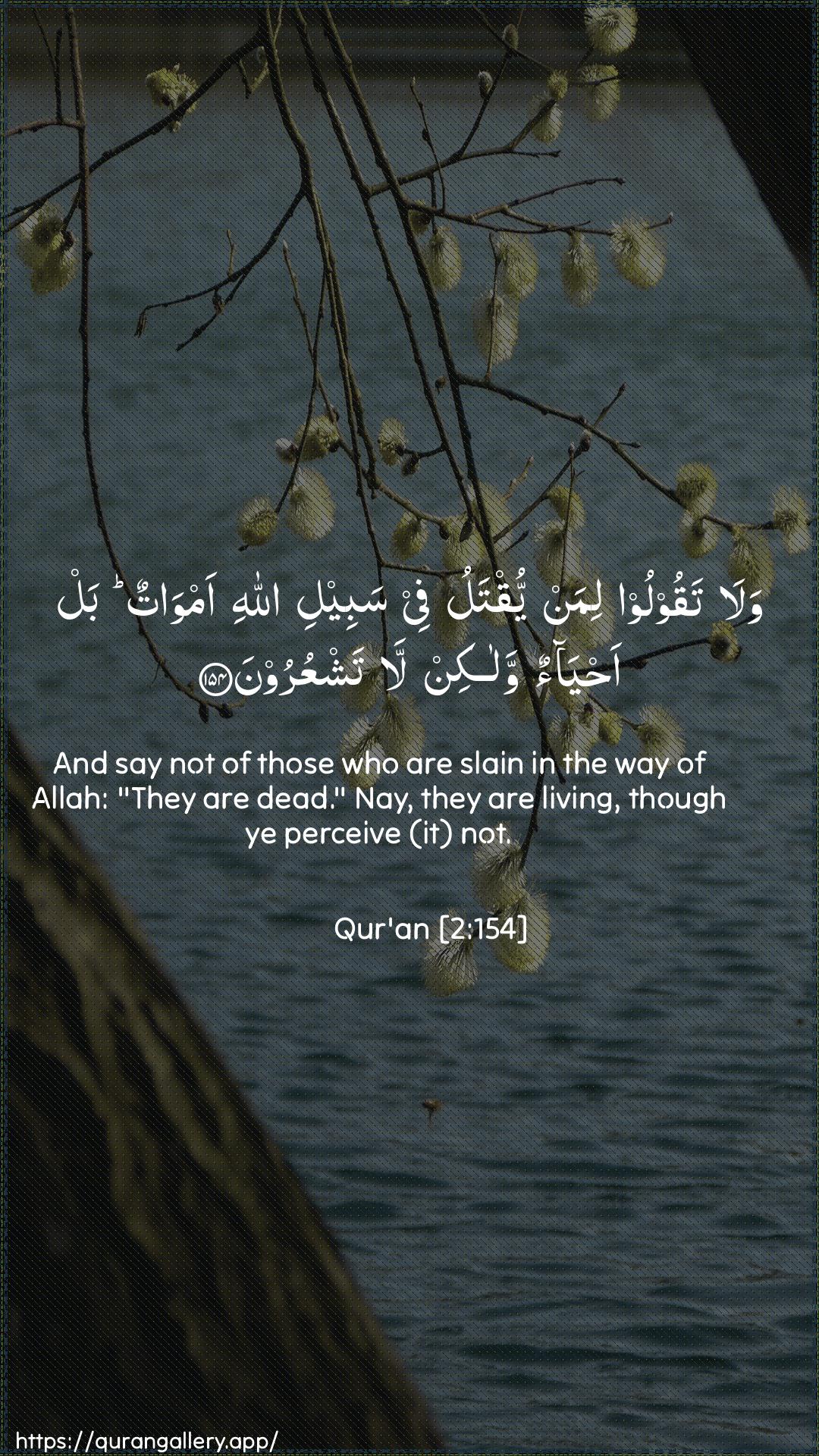
Arabic + English
Arabic (Wide)
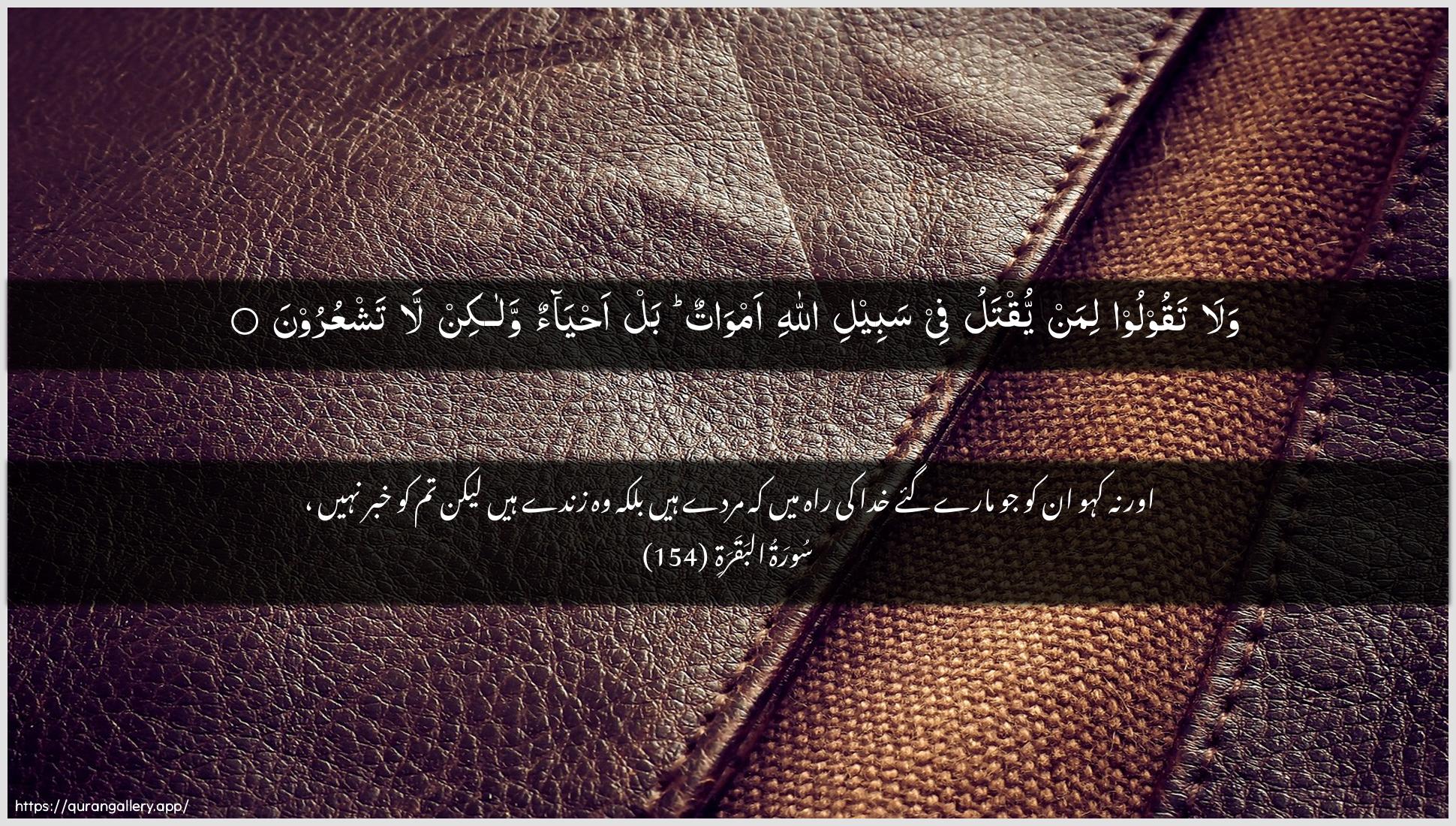
Arabic + Urdu
Free for personal & educational use with attribution
Quick Facts about this Verse
Surah
Al-Baqara
Revealed
Madani
Position
Juz 1,2,3
Explore this Verse
Verse Meaning
According to the classical scholar Ibn Kathir, verse 2:154 of Surah Al-Baqarah commands believers not to refer to those killed in the cause of Allah as 'dead.' This is not a denial of their physical death, but an affirmation of a higher, perpetual existence in a state known as Barzakh. Al-Tabari elaborates that this life is distinct and superior, characterized by receiving sustenance and experiencing bliss. The synthesis of scholarly opinions reveals a profound theological concept: martyrdom is a transition to a more real and vibrant form of life, hidden from our perception. As-Sa'di highlights that this understanding is meant to encourage believers in their striving for God's cause, assuring them that the ultimate sacrifice is not an end but a glorious beginning. This verse corrects a superficial understanding of life and death, establishing that a person's true value and existence are determined by their connection to the Divine, not their physical presence on earth. The hidden gem in this cross-tafsir analysis is that the prohibition on the word 'dead' is an act of honor and a way to reframe the believers' mindset from loss to eternal victory.
Questions for Reflection
textual
Ibn Kathir connects this verse to hadiths describing martyrs' souls in green birds in Paradise. Contemplate the imagery: 'green birds,' 'rivers of Paradise,' 'lamps under the Throne.' Why these specific symbols? What do they teach about the nature of this unseen life, its freedom, its source of light, and its connection to Allah's sovereignty?
personal
As-Sa'di emphasizes that this verse is a powerful encouragement for jihad (striving). Reflect on your own life's 'strivings'. What cause, principle, or belief would you sacrifice your comfort for? How does knowing that sincere effort for Allah is never in vain, even if it leads to worldly loss, change your approach to daily challenges and long-term goals?
cosmic
Al-Tabari explains that the phrase 'but you do not perceive' highlights the limits of our sensory perception. Contemplate the vast realities that exist beyond our five senses. How does this verse serve as a portal to believing in the unseen (Ghaib)? How does it redefine 'reality' not as what we can see, but as what Allah declares to be true?
Practical Applications
Reframe the concept of death by focusing on the continuity of the soul's existence, especially for the righteous.
When facing the loss of a loved one, especially someone who lived righteously, this provides profound comfort and a hopeful perspective.
Cultivate a deep appreciation for sacrifice made for a greater cause, be it in faith, justice, or community welfare.
This can inspire community service, standing for justice, and prioritizing ethical principles over personal comfort.
Strengthen faith in the unseen (Ghaib) and trust in Allah's wisdom beyond human perception.
In a world dominated by materialism, this encourages a spiritual outlook that finds meaning beyond the physical.
Hidden Gem
The synthesis of tafsirs reveals a profound point: this verse does not just honor the dead, it educates the living. The primary audience is not the martyrs themselves, but the community left behind. The verse is a divine tool for psychological and spiritual fortification, teaching believers how to process sacrifice and continue the mission with unwavering resolve. It transforms a moment of potential weakness (grief) into a source of immense strength and conviction.
Scroll to see more verses or use the dropdown in the breadcrumb to jump to any verse