
Al-Baqara - The Cow
Arabic Name: الْبَقَرَة
Urdu Name: گائے
Type: Madani
Serial Number: 2
Revelation Order: 87
Total Verses: 286
Parah: 1,2,3
Rukus: 40
Sajda: None
Share Verse Art
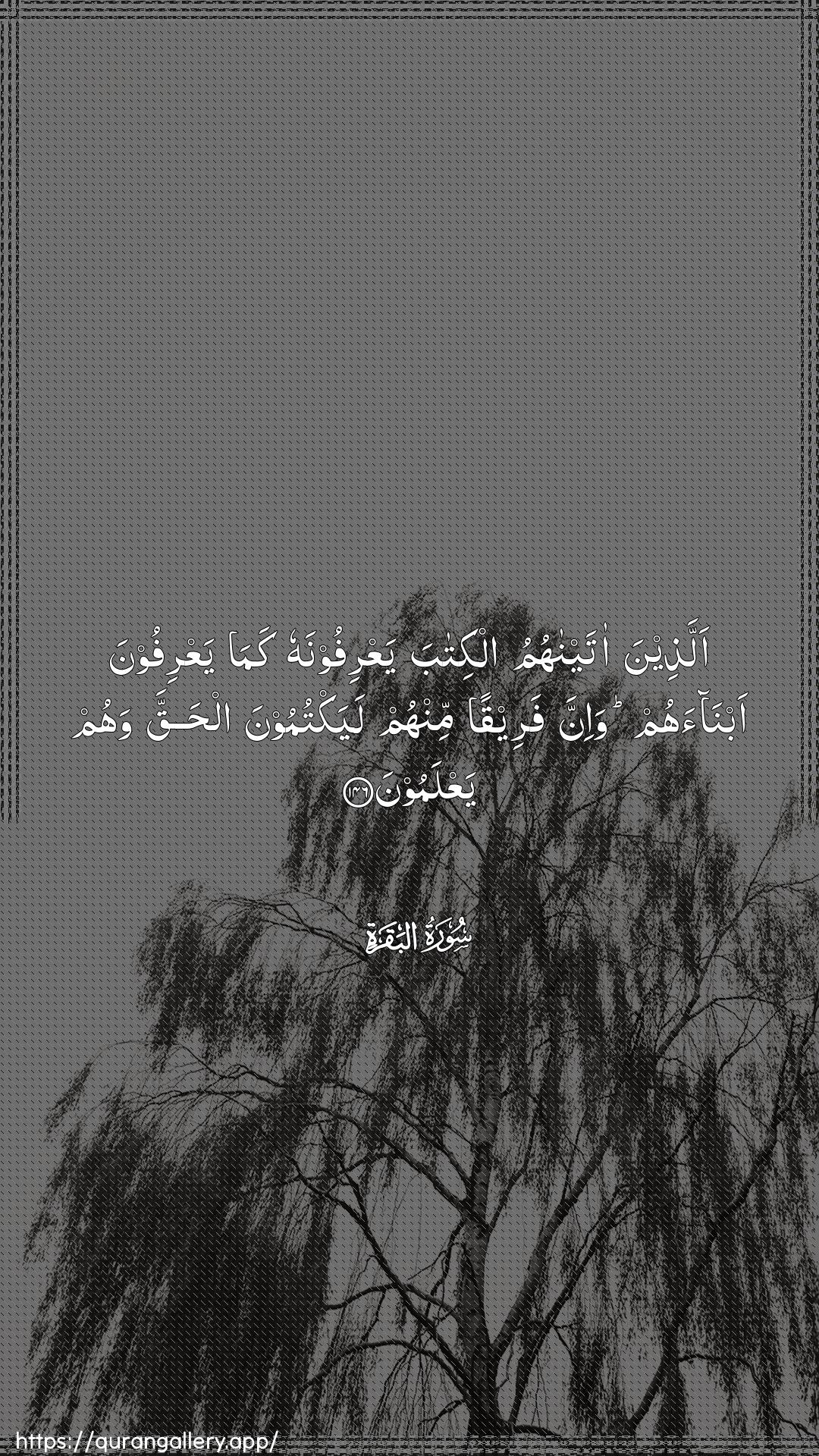
Arabic
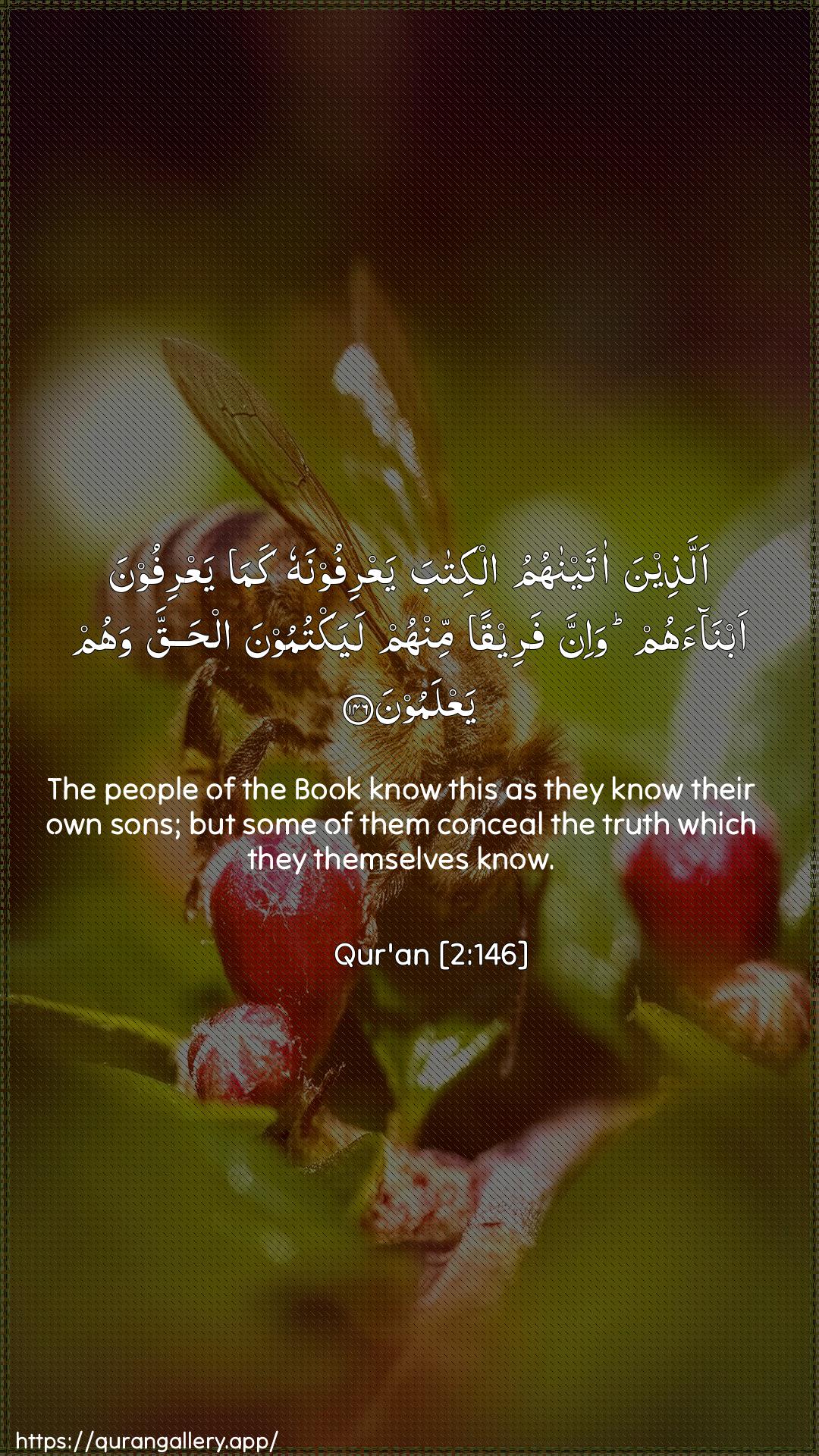
Arabic + English
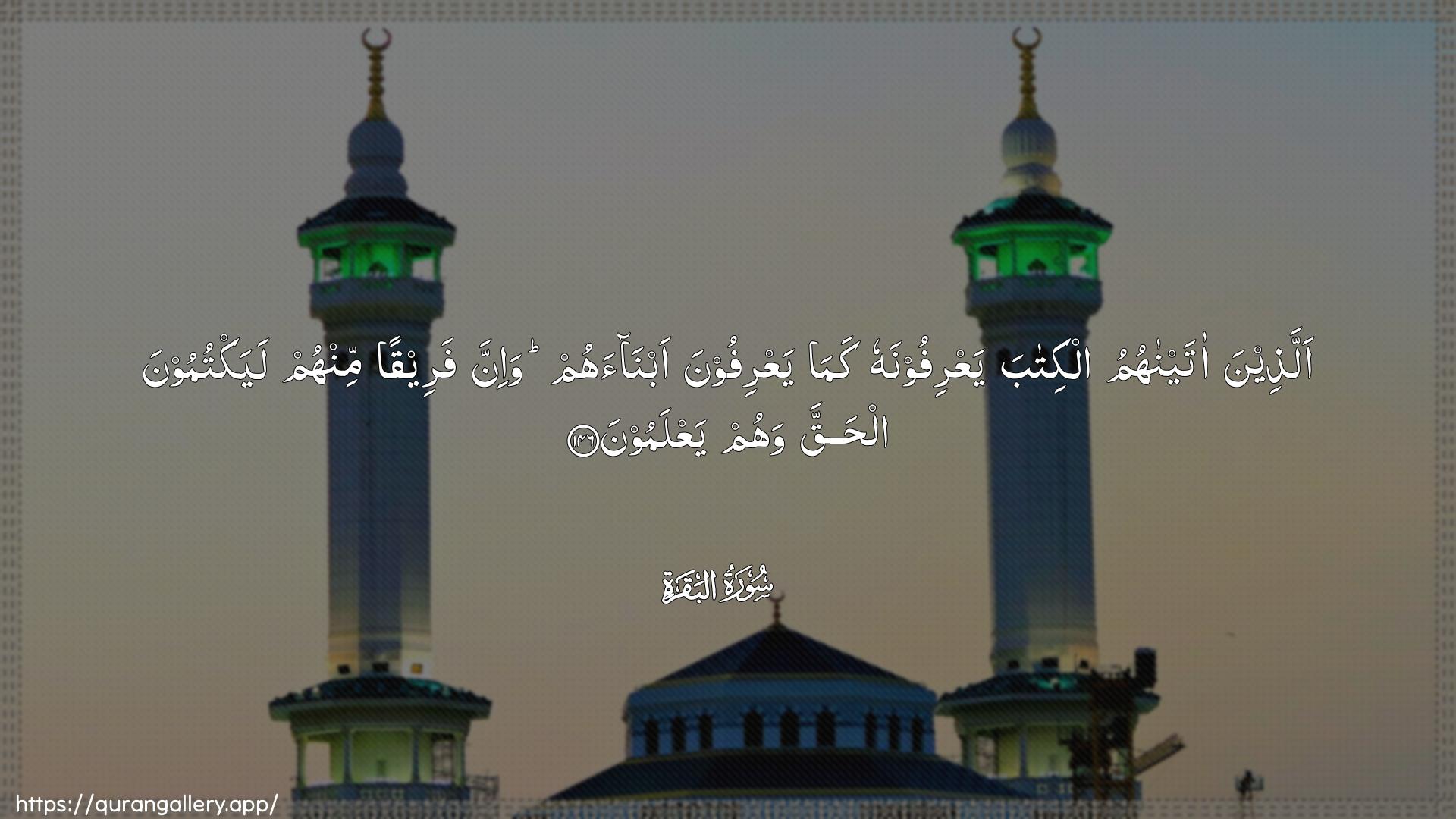
Arabic (Wide)
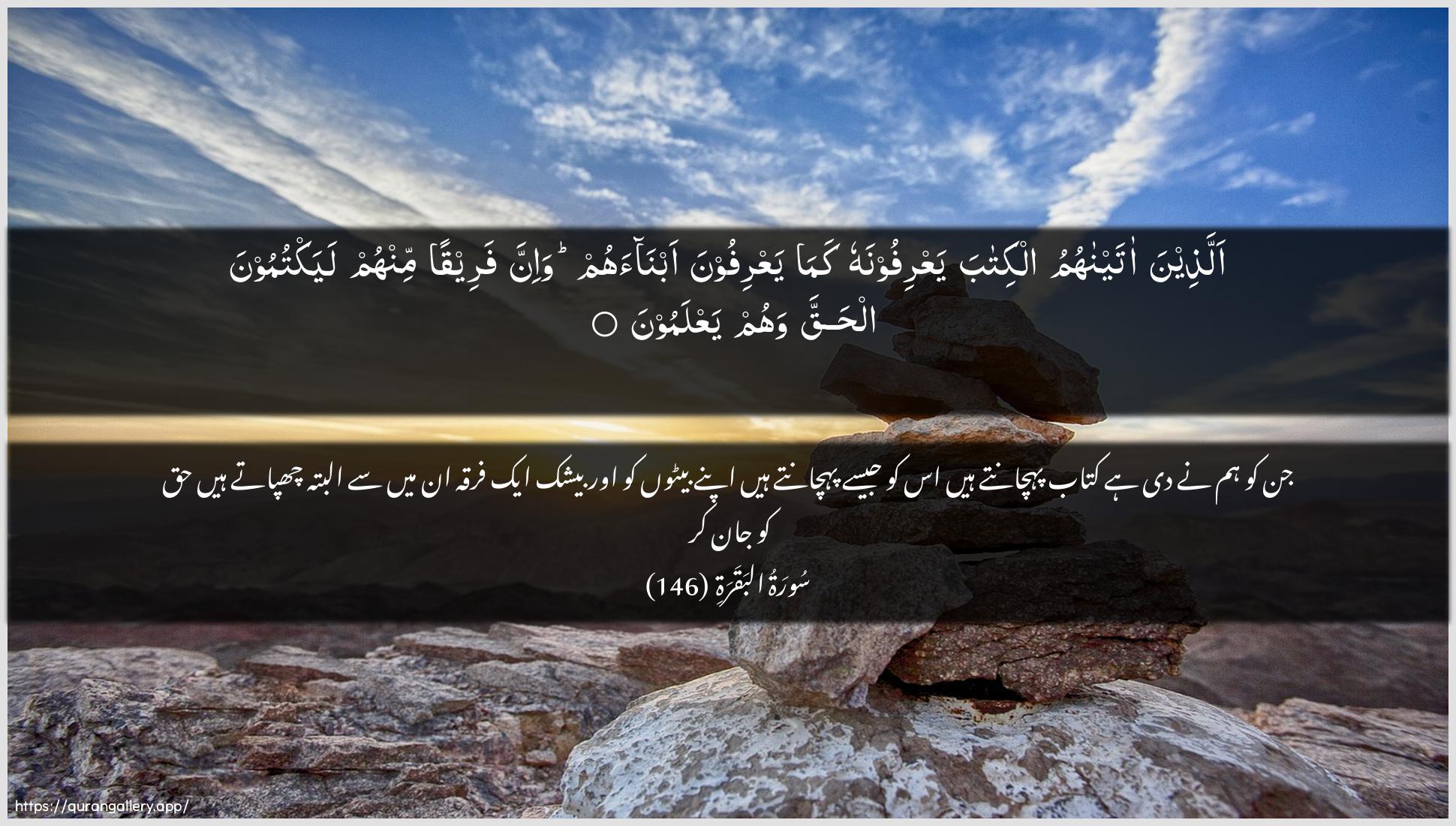
Arabic + Urdu
Free for personal & educational use with attribution
Quick Facts about this Verse
Surah
Al-Baqara
Revealed
Madani
Position
Juz 1,2,3
Explore this Verse
Verse Meaning
According to the classical scholar Ibn Kathir, verse 2:146 of Surah Al-Baqarah delivers a powerful statement about the certainty of knowledge held by the scholars of the People of the Book (Jews and Christians) regarding Prophet Muhammad. The verse employs a profound Arabic simile, stating they 'recognize him as they recognize their own sons,' a metaphor for unmistakable, absolute certainty. Al-Tabari explains this recognition pertains to the truth of the Prophet's mission and the correctness of the Kaaba as the Qibla, details they found in their scriptures. This comprehensive analysis, however, reveals a deeper spiritual tragedy: as Al-Qurtubi notes, despite this profound, God-given knowledge, a faction among them consciously chose to 'conceal the truth while they know it.' The synthesis of these tafsirs uncovers a critical distinction between mere knowledge (ma'rifah) and willing submission (iman), showing that absolute proof does not guarantee acceptance. This verse serves as a timeless warning against the human capacity for self-deception and the moral failure of concealing truth out of envy, tribalism, or fear of losing status.
Questions for Reflection
Personal
The verse uses the most intimate form of recognition: 'as they recognize their own sons.' Reflect on a truth about yourself or your relationship with Allah that you know with this level of certainty. What fears or attachments might cause you to conceal this truth, even from yourself? How does this concealment affect your spiritual heart?
Relational
The scholars of the People of the Book had a responsibility to share the truth with their communities. In your roles—as a parent, friend, or colleague—what truths has Allah entrusted you with for the benefit of others? Contemplate the difference between withholding truth out of wisdom and concealing it out of fear, as Al-Qurtubi notes their concealment was a knowing act.
Communal
According to Al-Tabari, the truths concealed were the identity of the Prophet and the true Qibla. These were community-defining truths. What are the 'community-defining' truths for the Ummah today that are being concealed or ignored by some for the sake of unity, tradition, or power? How can one bear witness to these truths without causing destructive fitnah (trial)?
Practical Applications
Conduct a personal 'truth audit' by identifying areas in your life where you recognize a truth but hesitate to act upon it or speak it.
Applicable in professional settings (whistleblowing), social situations (speaking against injustice), and personal relationships (offering sincere advice).
When sharing knowledge, use clear and undeniable analogies, just as the Quran uses the 'own sons' simile to convey certainty.
Crucial for teachers, parents, public speakers, and anyone aiming to convey important truths effectively and without ambiguity.
Differentiate between knowing a fact and internalizing a truth. Reflect on whether your Islamic knowledge is just information or a force that shapes your character and decisions.
A vital exercise for students of Islamic knowledge to ensure their learning leads to greater humility and submission, not arrogance.
Hidden Gem
The synthesis of tafsirs reveals a profound insight: the simile of knowing one's 'son' is not just about certainty, but about innate love and a natural desire to see them recognized and successful. Their concealment of the Prophet was therefore an act against their own fitrah (natural disposition), a spiritual betrayal akin to denying one's own child, which highlights the immense gravity of their sin.
Scroll to see more verses or use the dropdown in the breadcrumb to jump to any verse