
Al-Baqara - The Cow
Arabic Name: الْبَقَرَة
Urdu Name: گائے
Type: Madani
Serial Number: 2
Revelation Order: 87
Total Verses: 286
Parah: 1,2,3
Rukus: 40
Sajda: None
Share Verse Art
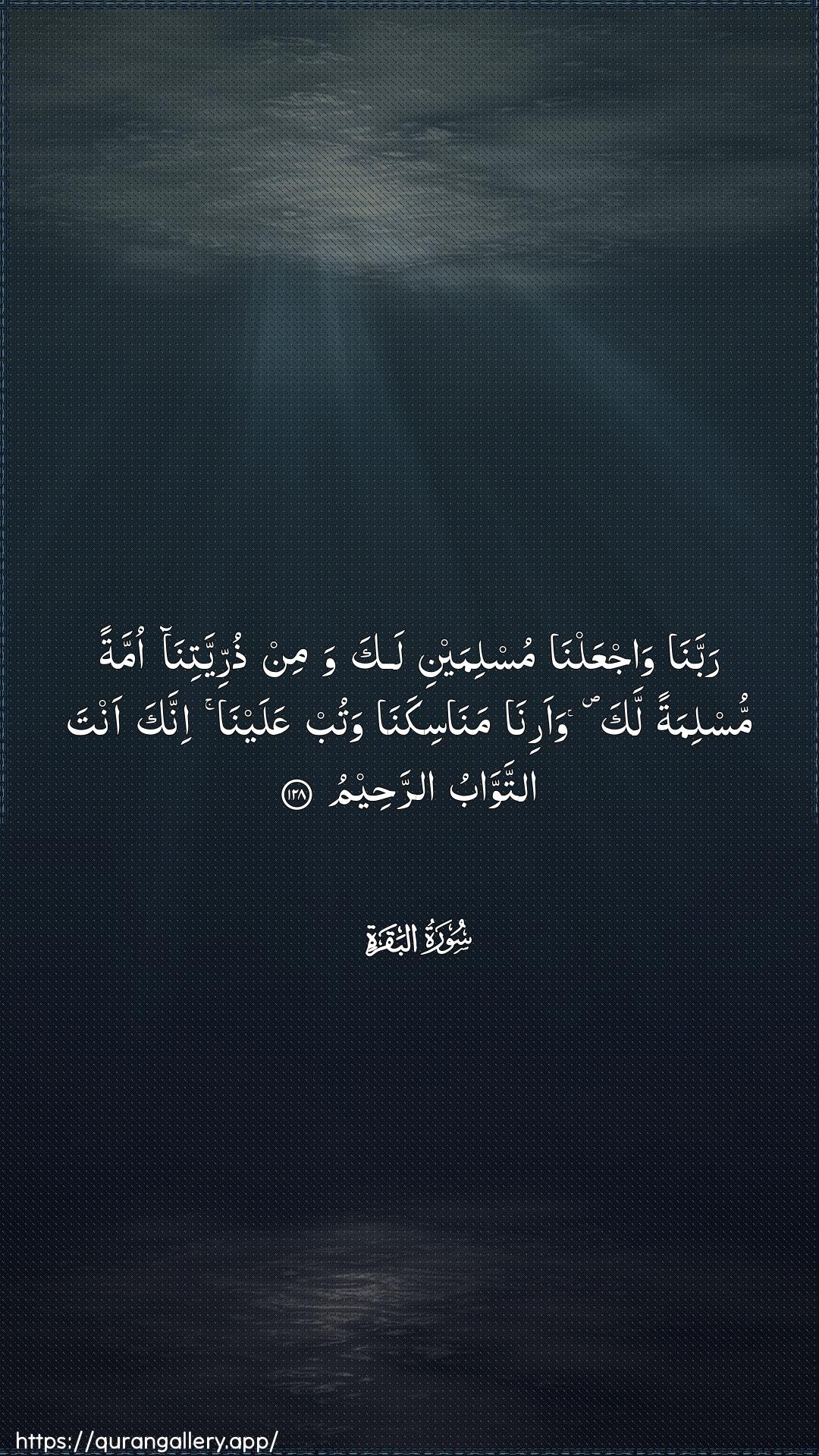
Arabic
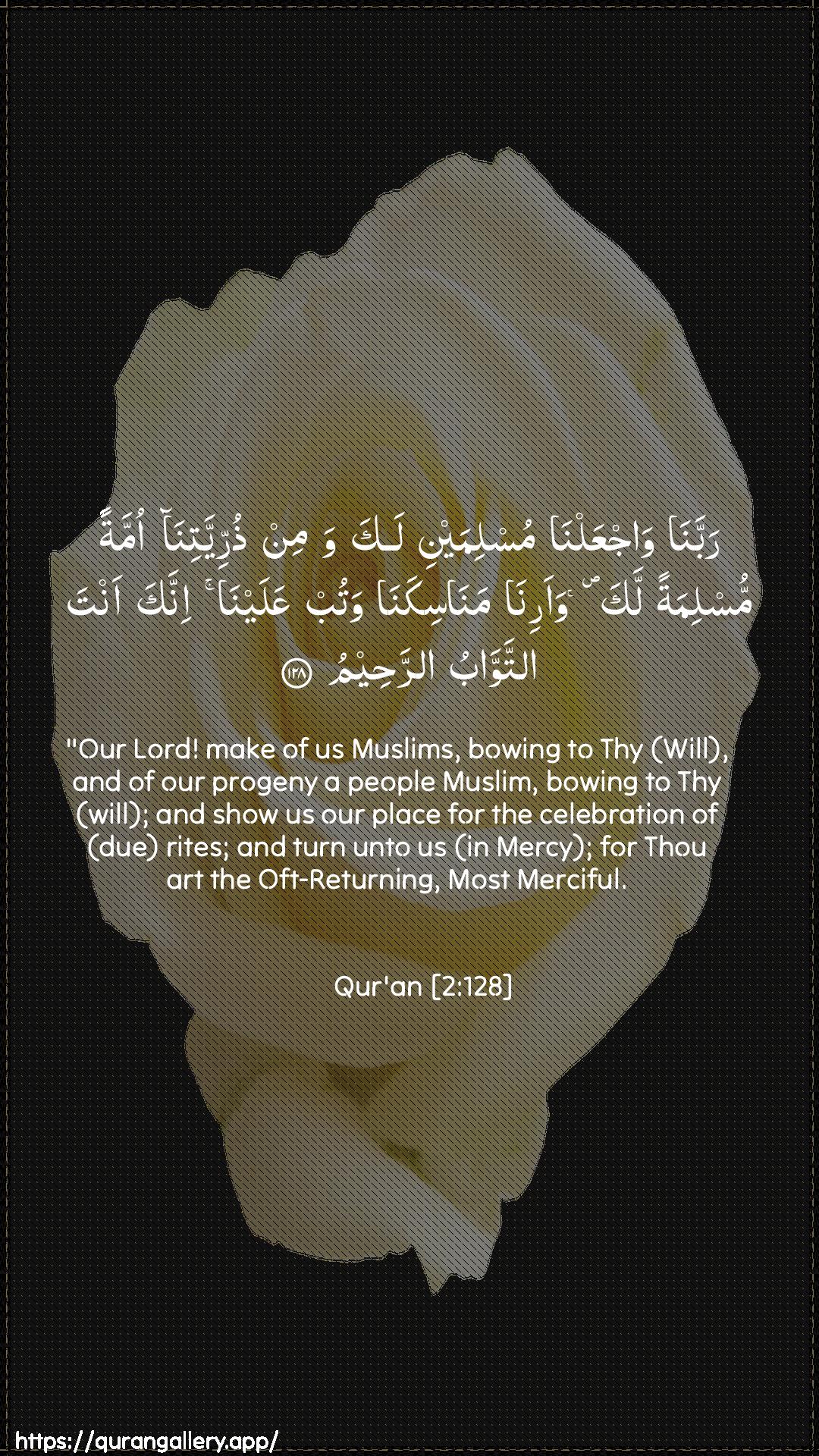
Arabic + English
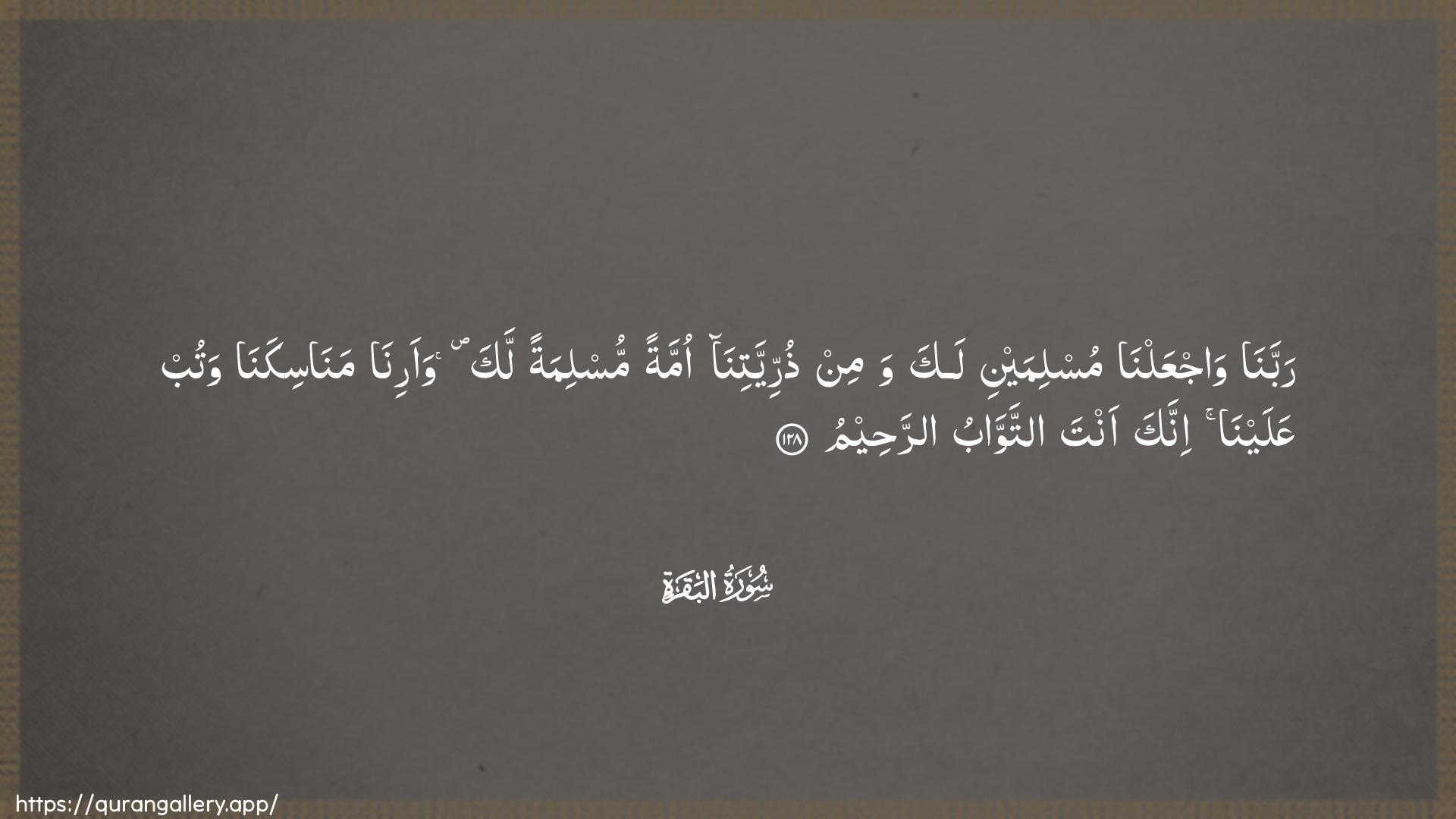
Arabic (Wide)
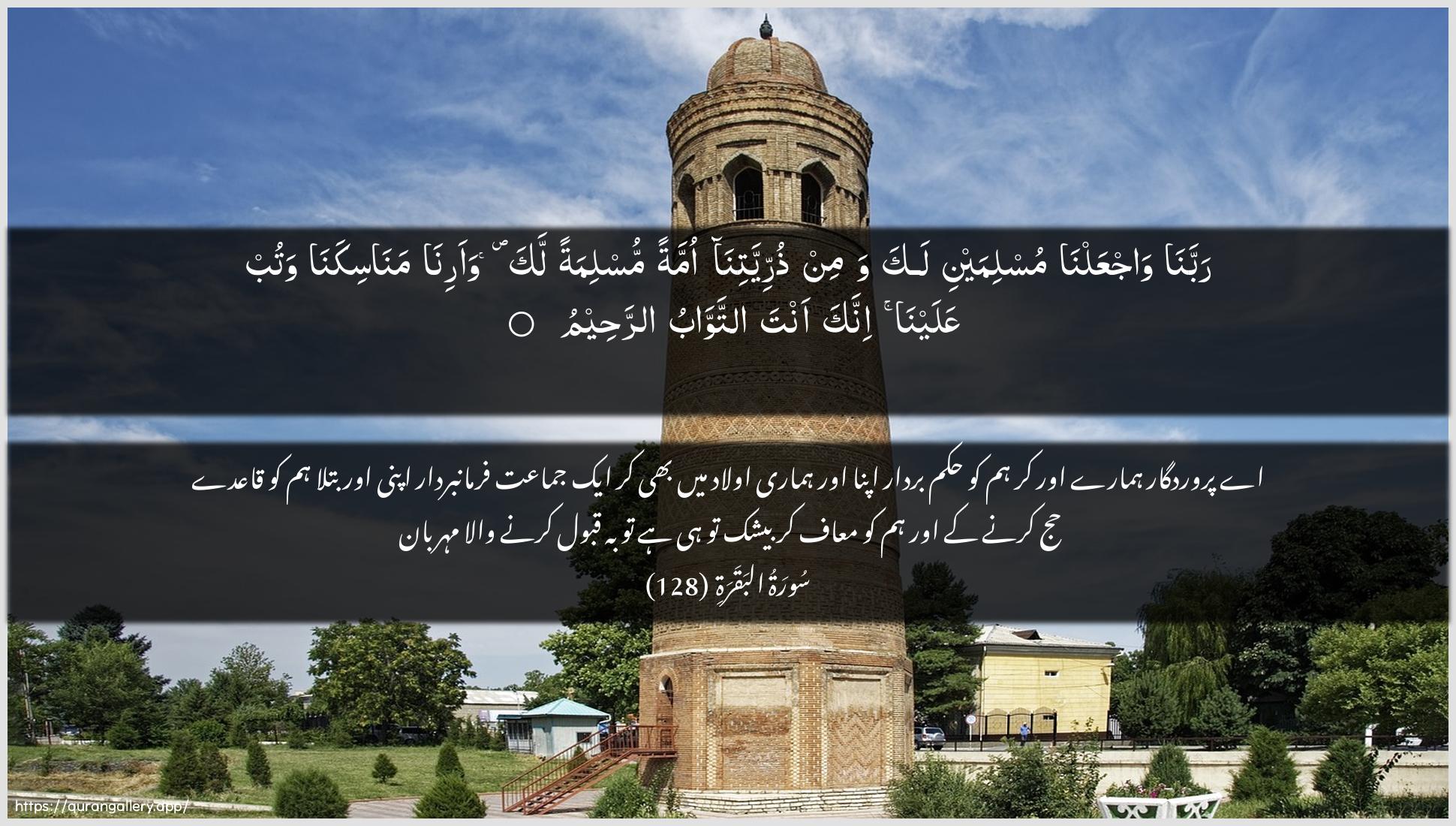
Arabic + Urdu
Free for personal & educational use with attribution
Quick Facts about this Verse
Surah
Al-Baqara
Revealed
Madani
Position
Juz 1,2,3
Explore this Verse
Verse Meaning
According to the classical exegete Ibn Kathir, Quran 2:128 encapsulates the foundational prayer of Prophets Ibrahim and Ismail upon completing the Kaaba, a supplication for themselves and their progeny. This verse is not merely a request but a spiritual charter for a global, multi-generational nation built on 'Islam'—complete submission to Allah. Al-Tabari clarifies that their prayer for an 'ummah muslimah' (a submissive nation) from their descendants was specific, acknowledging that not all progeny would be righteous. The synthesis of scholarly thought reveals a profound lesson: even prophets, engaged in the monumental task of building Allah's House, felt the need to ask for steadfastness in submission and to secure the faith of their future generations. The request, 'And show us our rites of worship' (wa arina manasikana), as detailed in classical tafsirs, was answered by the Angel Jibril himself, who taught them the rituals of Hajj. The hidden gem in this comprehensive analysis is seeing this prayer as the very blueprint for the Muslim ummah: a community centered around a sacred House, guided by divinely taught rituals, and sustained by a legacy of supplication and repentance, all established by its patriarchs.
Questions for Reflection
Personal Submission
Ibrahim and Ismail, while engaged in the ultimate act of service—building the Kaaba—still prayed, 'make us submissive to You.' Contemplate a recent good deed you performed. How can you detach from the pride of the action itself and instead focus on cultivating a state of pure, ongoing submission, recognizing that the ability to do good is from Allah alone?
Generational Legacy
The prophets prayed for an entire 'ummah' from their 'dhurriyyah' (offspring). Reflect on your current prayers for your family. Do they focus solely on worldly success (health, wealth, career), or do you, like Ibrahim, prioritize their collective, long-term submission to Allah? What one practical step can you take to align your legacy goals with this prophetic vision?
Ritual Sincerity
The founders of the Hajj rites pleaded, 'show us our rituals.' They desired divine instruction, not human invention. Contemplate an act of worship you perform regularly (like salah or fasting). How much of it is based on deep, sought-after knowledge versus cultural habit? How can you reignite the spirit of 'show me' in your worship, seeking a more profound and authentic connection?
Practical Applications
Dedicate specific supplications (dua) for the faith and guidance of your children and future descendants by name.
In an age of distraction, this provides a spiritual anchor, making parents proactive stakeholders in their children's long-term faith.
Actively seek authentic knowledge of religious rituals, rather than performing them by rote imitation.
Combats cultural superstition and innovation in worship by grounding practices in authentic, revealed knowledge.
Cultivate a habit of seeking repentance, even after performing major good deeds.
A crucial antidote to performative righteousness, reminding us that every good deed is an opportunity for humility, not self-congratulation.
Hidden Gem
A synthesis of scholarly thought reveals that this prayer is offered in a state of physical labor and spiritual elevation. It teaches that the most profound spiritual insights and legacy-defining prayers are not born in seclusion, but in the midst of active service and contribution to the community's spiritual core.
Scroll to see more verses or use the dropdown in the breadcrumb to jump to any verse
Common Questions
2 more questions available in the full page