
Al-Baqara - The Cow
Arabic Name: الْبَقَرَة
Urdu Name: گائے
Type: Madani
Serial Number: 2
Revelation Order: 87
Total Verses: 286
Parah: 1,2,3
Rukus: 40
Sajda: None
Share Verse Art
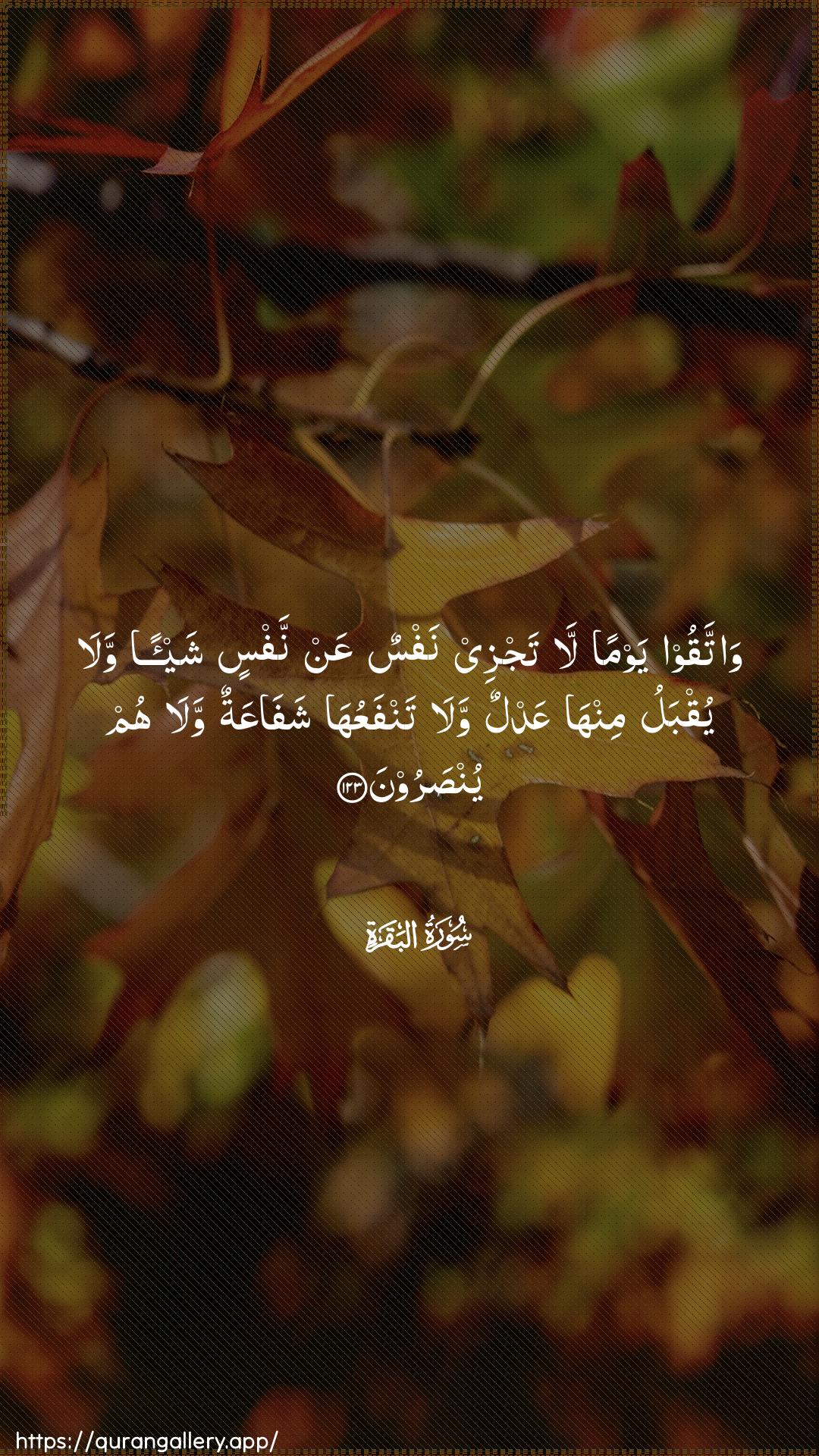
Arabic
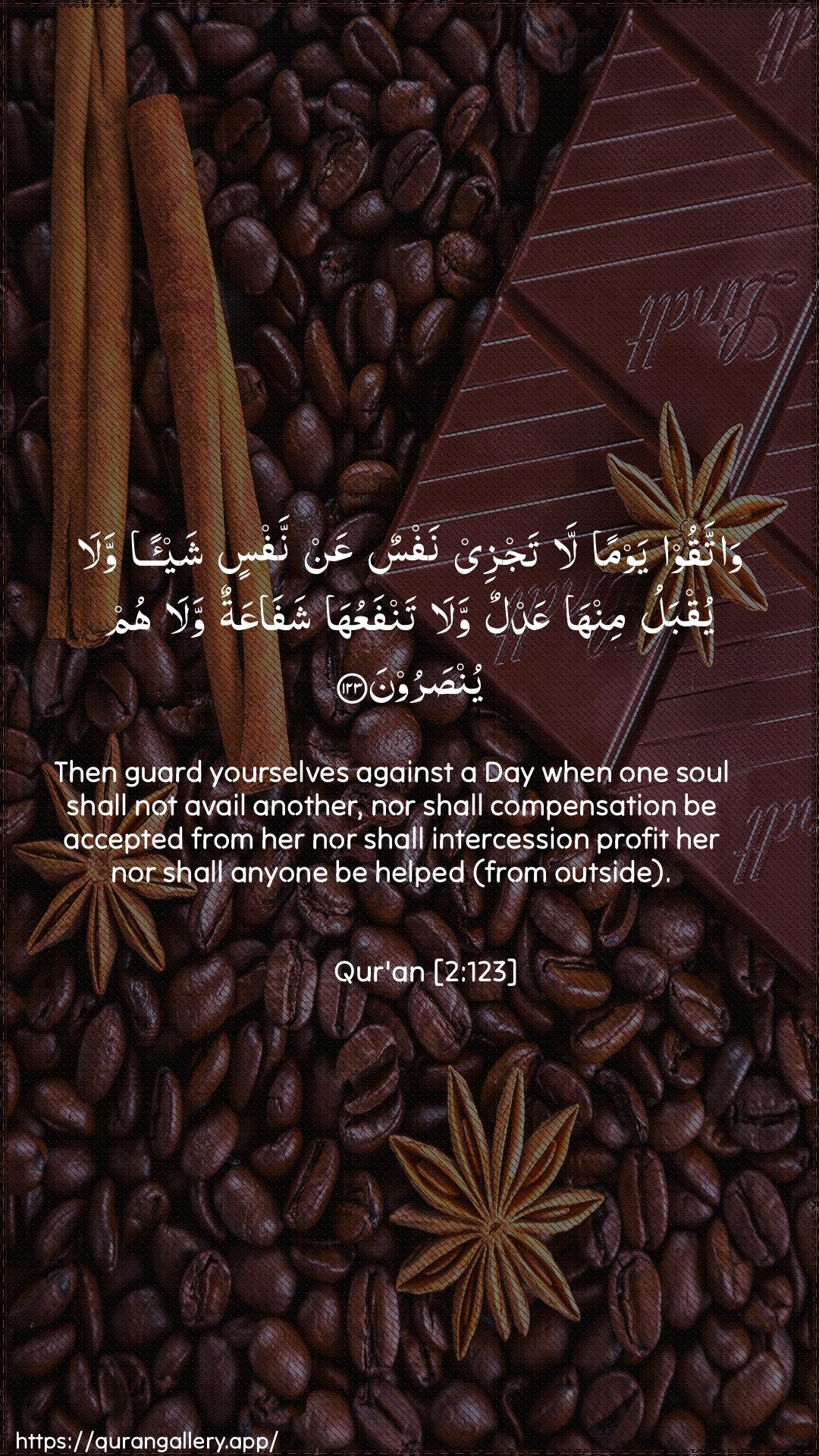
Arabic + English
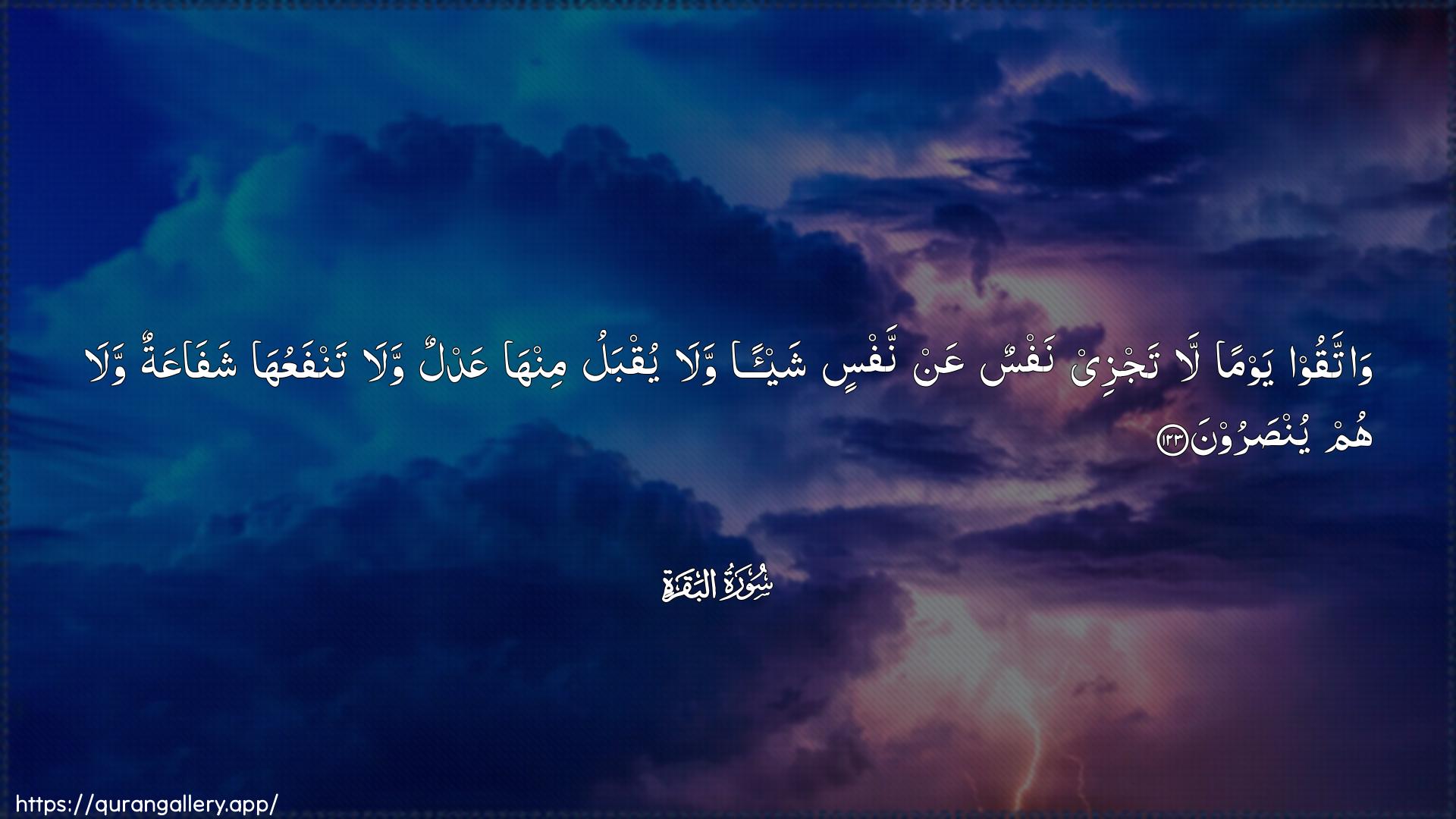
Arabic (Wide)
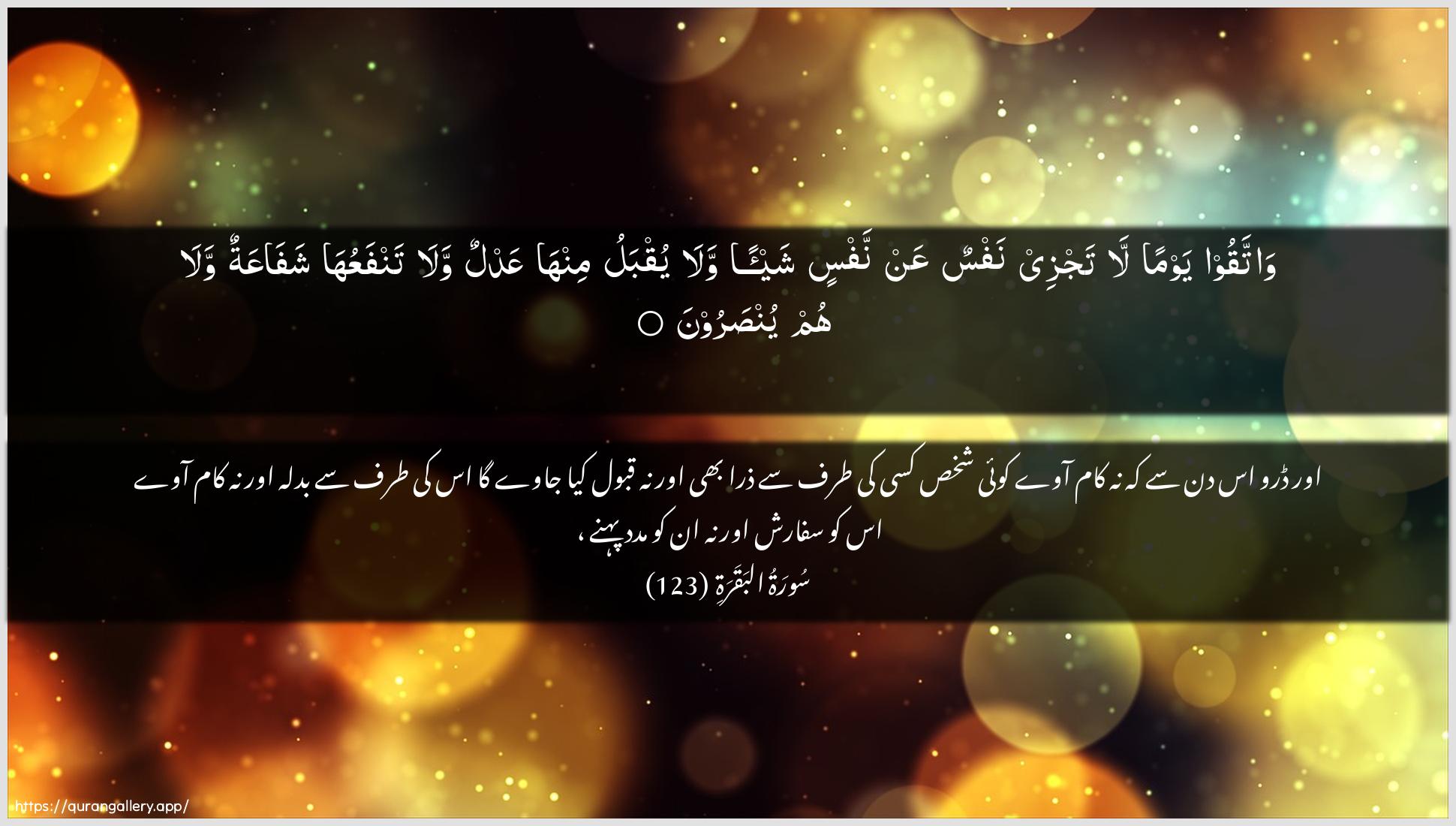
Arabic + Urdu
Free for personal & educational use with attribution
Quick Facts about this Verse
Surah
Al-Baqara
Revealed
Madani
Position
Juz 1,2,3
Explore this Verse
Verse Meaning
According to Hafiz Ibn Kathir, the repetition of this verse, which mirrors verse 2:48, serves as a profound emphasis on the Day of Judgment's unyielding principles. It is a stern warning from Allah, primarily directed towards the Children of Israel, but universal in its message. The verse dismantles any reliance on lineage, wealth, or worldly connections for salvation. It establishes four critical realities of the Day of Judgment: no soul can bear the burden of another, no ransom or compensation (`adl`) can be paid to avert punishment, no intercession (`shafa'ah`) will be of any benefit without Allah's permission, and no external help or support will be available. As Al-Tabari explains, it is a day where every individual is held responsible for their own deeds, rendering all worldly means of influence utterly void. This verse powerfully instills a sense of `taqwa` (God-consciousness), urging every soul to prepare for a day of absolute and individual accountability before God.
Questions for Reflection
personal
If all my worldly connections, wealth, and status were removed, what actions and intentions would I have left to present to Allah? Reflect on the deeds you are preparing for the Day this verse describes.
theological
Why does Allah emphasize so strongly that no intercession ('shafa'ah') will avail? Contemplate the perfection of Allah's justice and mercy, and how un-permitted intercession would contradict these attributes.
Practical Applications
Cultivate personal responsibility by focusing on your own deeds, knowing that no one else can answer for you.
In a culture of group identity, this calls for radical self-ownership of one's spiritual and ethical choices.
Invest in 'charity' that profits the Hereafter—sincere deeds—rather than relying on worldly wealth.
This challenges the materialistic mindset that assumes every problem can be solved with money.
Hidden Gem
The verse ends with 'nor will they be helped' (wa la hum yunṣarūn). This final negation closes every possible door of escape that the human mind can conceive. Contemplate the absolute and total authority of Allah on that Day, and the feeling of complete reliance that this should inspire in a believer today.
Scroll to see more verses or use the dropdown in the breadcrumb to jump to any verse