
Yusuf - Joseph
Arabic Name: يُوْسُف
Urdu Name: یوسف
Type: Makki
Serial Number: 12
Revelation Order: 53
Total Verses: 111
Parah: 12,13
Rukus: 12
Sajda: None
Related Hadith
"The hadith of Prophet Muhammad (ﷺ) clarifying his presence with his wife Safiyyah to two companions to prevent any doubt in their hearts."
Al-Qurtubi cites this hadith as the primary example of the principle established in Quran 12:82 - the virtue of proactively dispelling suspicion.
Share Verse Art

Arabic
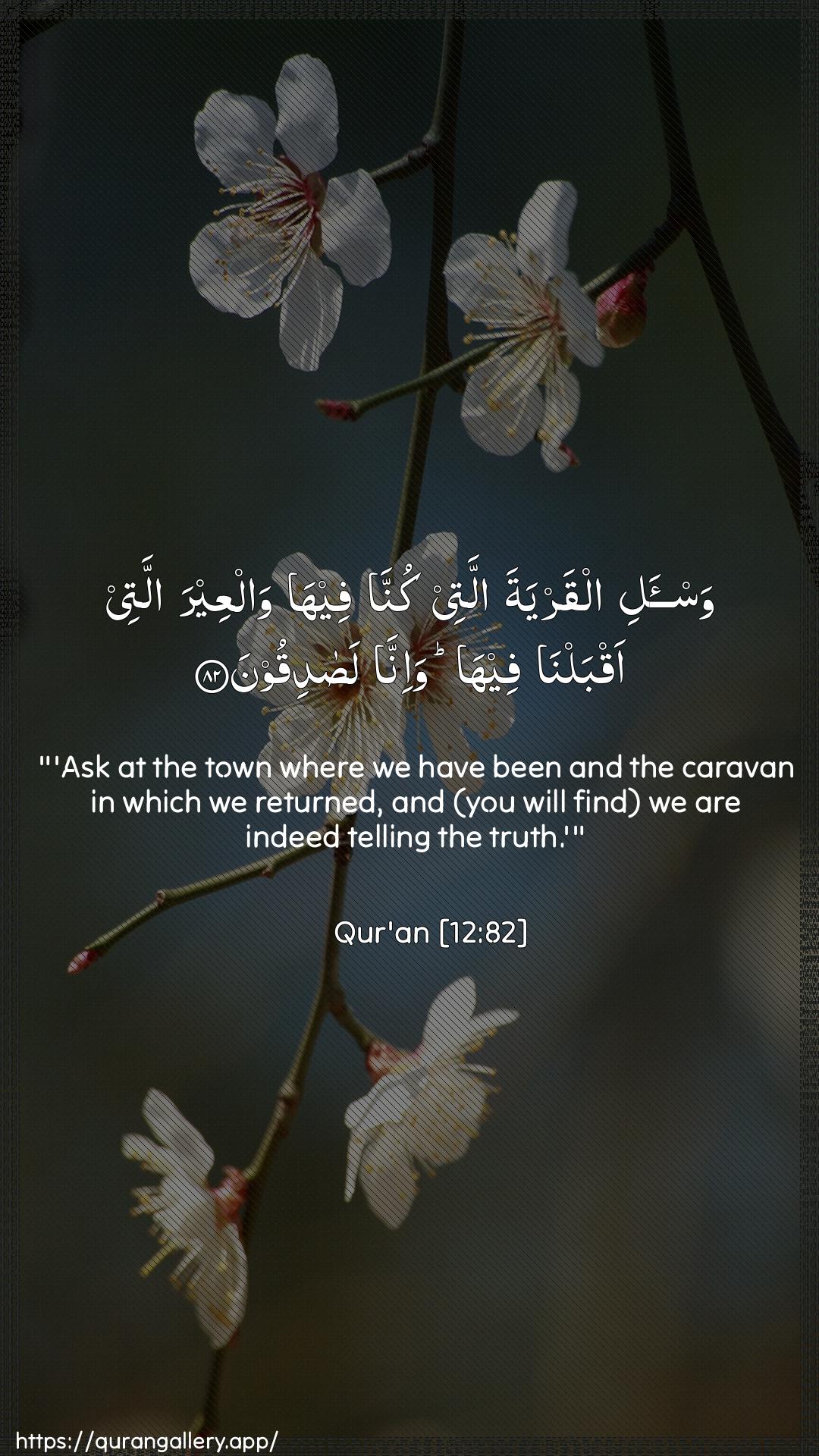
Arabic + English
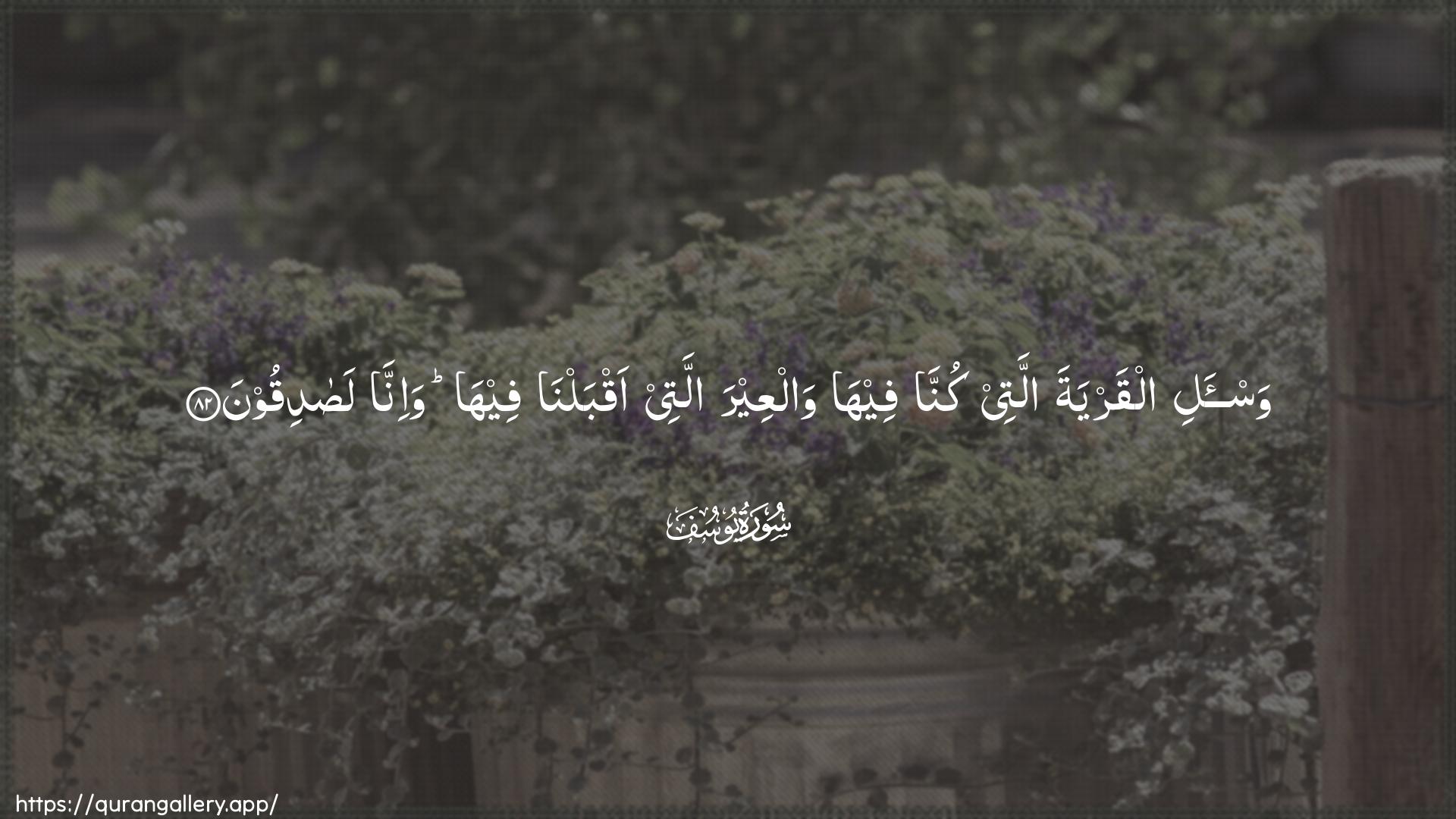
Arabic (Wide)
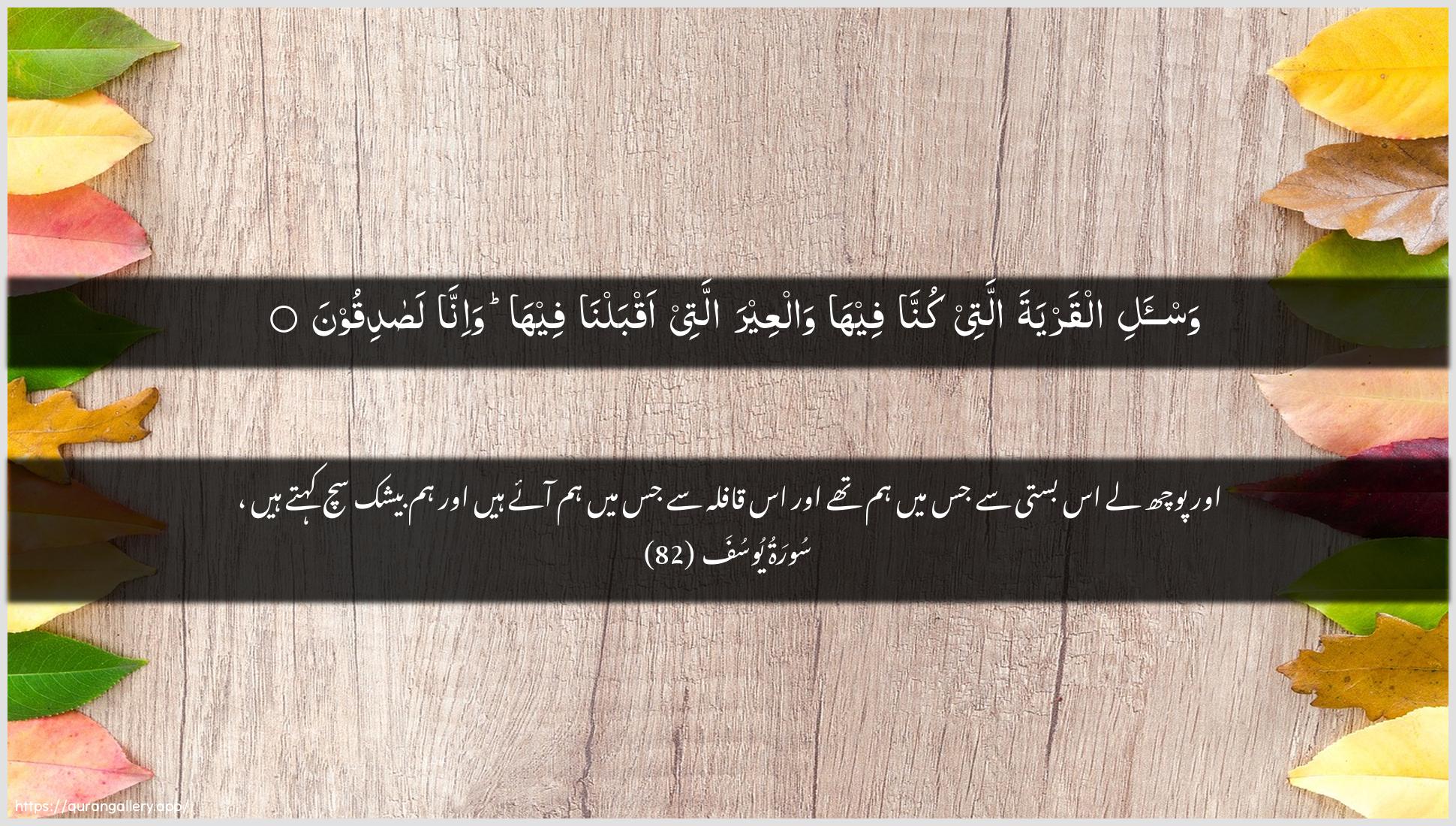
Arabic + Urdu
Free for personal & educational use with attribution
Quick Facts about this Verse
Surah
Yusuf
Revealed
Makki
Position
Juz 12,13
Explore this Verse
Verse Meaning
According to the classical tafsir of Ibn Kathir, Quran 12:82 represents the desperate plea of Prophet Yusuf's brothers to their father, Prophet Yaqub, to verify their claims about Binyamin's detention in Egypt. Knowing their history of deceit regarding Yusuf, they proactively offer two independent sources for confirmation: the people of the town (Egypt) and the caravan they traveled with. This invitation to investigate is a central theme. The great jurist Al-Qurtubi extracts a profound legal and ethical principle from this verse: the importance for a believer to proactively remove any potential suspicion or doubt about their integrity, especially when their past actions warrant caution. This is not merely a statement of defense, but an act of consideration to prevent others from falling into the sin of baseless suspicion. This synthesis, combining the historical context from Al-Tabari and the practical wisdom from Al-Qurtubi, reveals the verse as a powerful lesson in accountability, transparency, and the difficult process of rebuilding trust. The brothers, having learned from their past sins, now understand that truthfulness requires not just speaking the truth, but also providing the means for it to be accepted.
Questions for Reflection
Personal Accountability
Al-Qurtubi links this verse to the Prophet Muhammad (ﷺ) proactively clarifying that the woman he was with was his wife, Safiyyah, to prevent suspicion in the hearts of his companions. Reflect on your own life: where might your silence or lack of clarity be causing suspicion or doubt in others, even if your actions are innocent? What proactive step can you take to protect their hearts from negative assumptions?
The Pain of Mistrust
Contemplate the state of Prophet Yaqub's heart. He is faced with a new, devastating report from sons who have previously betrayed him profoundly. As Ibn Kathir's tafsir implies, the brothers knew their word was not enough. Reflect on a time you were not believed. How does this verse reframe that experience, not as an insult, but as a natural consequence that requires patience and extra effort to provide proof?
The Nature of Proof
The brothers offered two forms of proof: asking the 'people of the town' and the 'people of the caravan'. Al-Tabari confirms these refer to the Egyptians and their fellow travelers. Why two sources? Contemplate the wisdom in providing multiple, independent avenues for verification. How does this apply to establishing truth in our modern world of misinformation?
Practical Applications
Offer Verifiable, External Proof. When your word is not enough due to past mistakes, don't just ask for trust; provide objective, third-party evidence that the other person can check for themselves.
In business, provide documentation. In relationships, suggest talking to a neutral third party who witnessed events. In personal matters, show receipts or records.
Proactively Remove Suspicion. Adopt the principle from Al-Qurtubi's tafsir by anticipating doubts and addressing them before you are asked. Acknowledge why someone might not believe you and offer reassurance.
Voluntarily share your location with a spouse you've deceived, offer to show your work to a manager whose trust you've lost, or be open with your browsing history.
Hidden Gem
The synthesis of tafsirs reveals a hidden layer: the brothers are not just proving a fact (Binyamin was detained for theft), they are trying to prove a character trait ('We are truthful'). This is infinitely harder. Their offer of external proof is an admission that character is demonstrated through actions, not just words. The deepest contemplation here is realizing that true 'sidq' (truthfulness) is not just avoiding lies, but living a life of such transparency that your actions themselves become the proof.
Scroll to see more verses or use the dropdown in the breadcrumb to jump to any verse
Common Questions
2 more questions available in the full page