
Yusuf - Joseph
Arabic Name: يُوْسُف
Urdu Name: یوسف
Type: Makki
Serial Number: 12
Revelation Order: 53
Total Verses: 111
Parah: 12,13
Rukus: 12
Sajda: None
Share Verse Art

Arabic
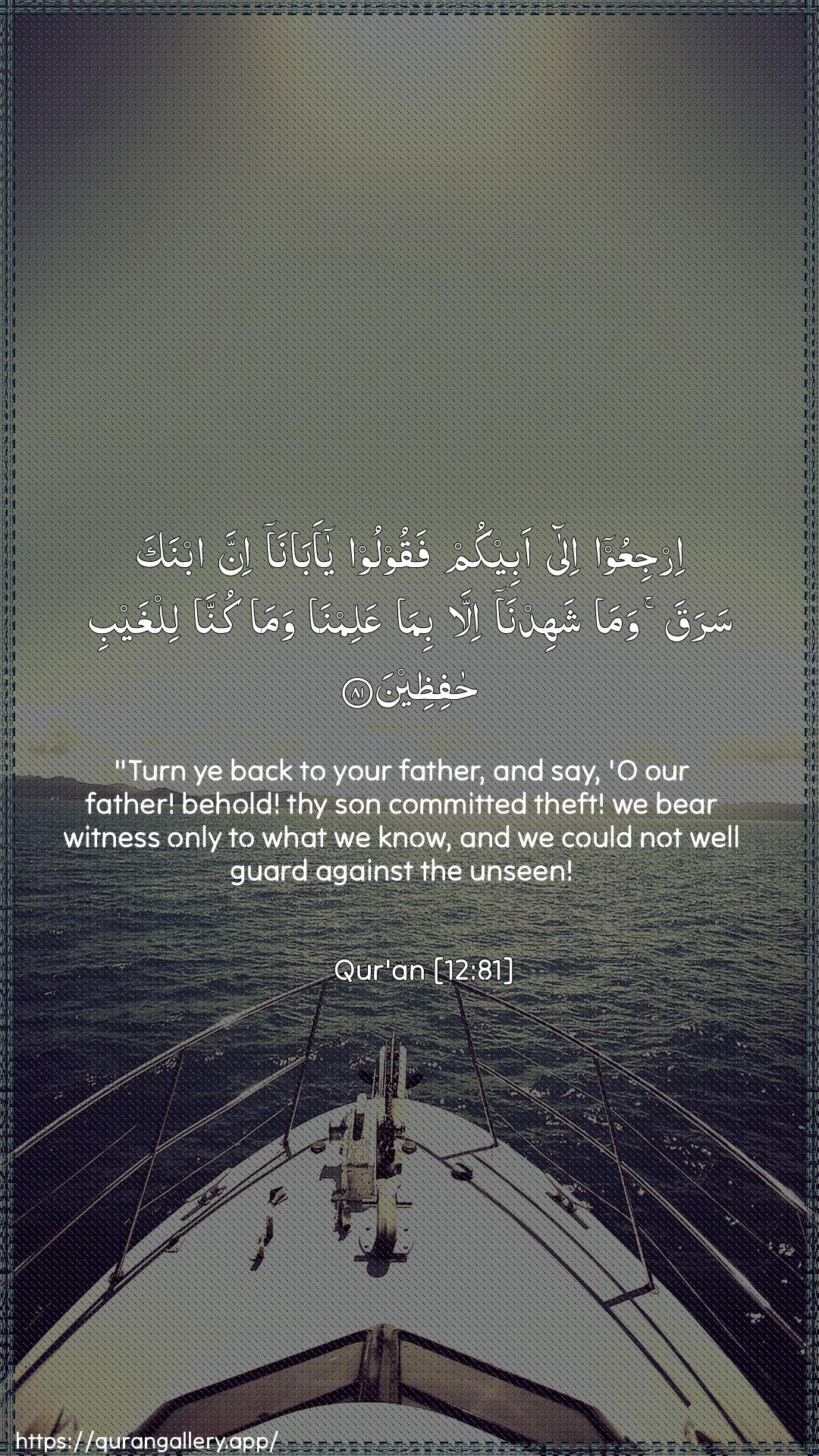
Arabic + English

Arabic (Wide)
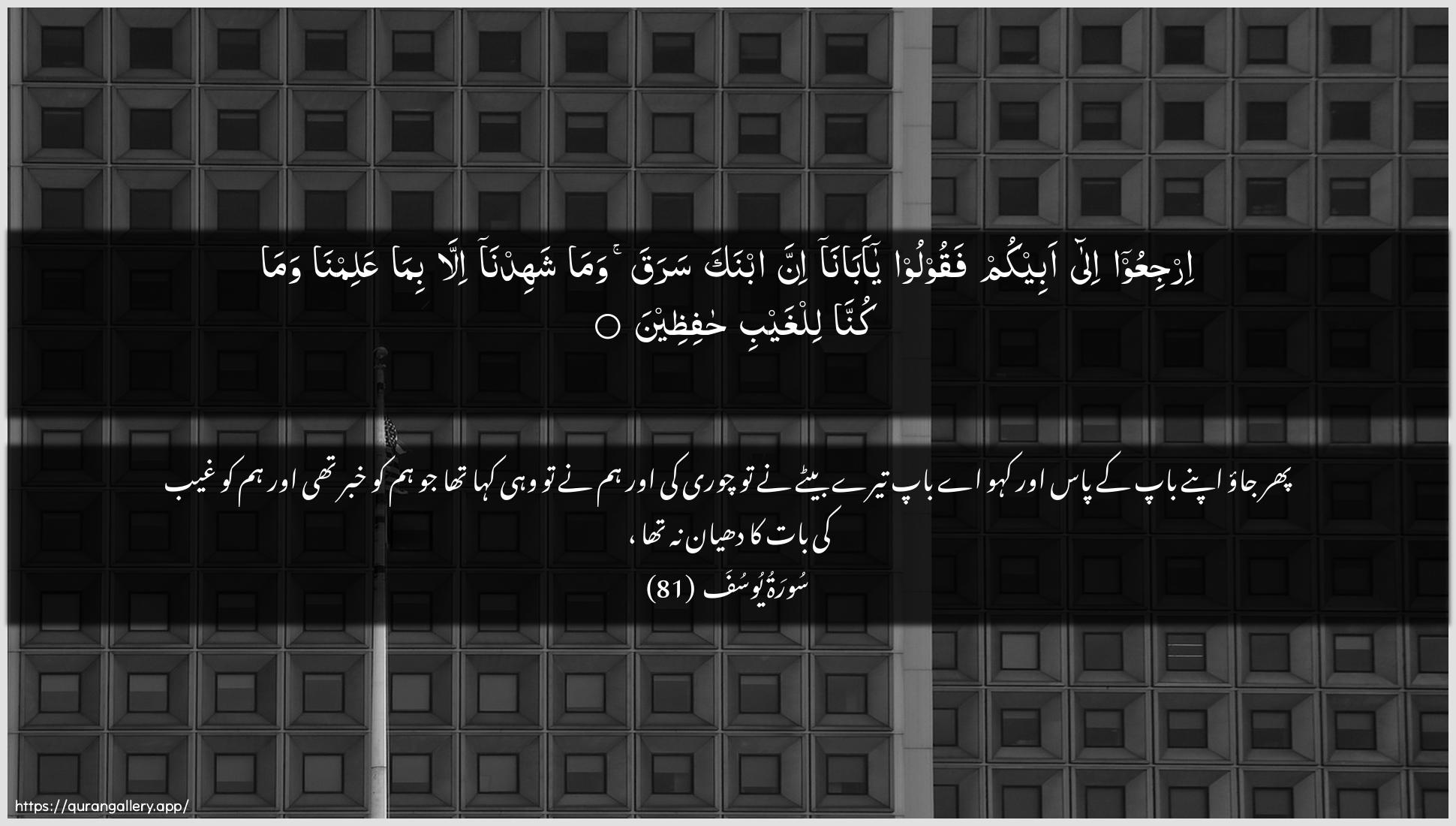
Arabic + Urdu
Free for personal & educational use with attribution
Quick Facts about this Verse
Surah
Yusuf
Revealed
Makki
Position
Juz 12,13
Explore this Verse
Verse Meaning
According to the classical tafsir of Al-Tabari, Quran 12:81 presents the meticulously crafted message the brothers of Yusuf (Joseph) were to deliver to their father, Yaqub (Jacob). This verse encapsulates a profound lesson on the nature of testimony, human limitation, and the reality of the unseen (al-ghayb). Scholars like Ibn Kathir clarify that their statement, 'we did not testify except to what we knew,' refers to the tangible evidence they witnessed: the king's drinking cup being found in Binyamin's sack. It was a testimony based on observation, not speculation. The critical admission, 'we were not guardians of the unseen,' is interpreted by Mujahid and Qatadah as their acknowledgment that when they gave their solemn oath to protect Binyamin, they could never have predicted he would be accused of theft. This synthesis of scholarly opinion reveals the verse as a powerful discourse on integrity in communication—reporting only what is known—and humility in the face of divine will, acknowledging that future events are beyond human knowledge or control.
Questions for Reflection
Textual and Ethical Contemplation
Al-Qurtubi highlights that testimony ('shahada') is tied to direct knowledge. Reflect on your own speech in the last week. How often did you speak from direct knowledge versus assumption, hearsay, or opinion? What would change if you only testified to what you truly 'knew'?
Personal Transformation
The brothers admit, 'we were not guardians of the unseen.' This was their plea for understanding from their father. In what area of your life are you trying to 'guard the unseen'—anxiously trying to control outcomes that are truly in Allah's hands? How can surrendering this role bring you peace?
Relational Wisdom
The brothers had to deliver devastating news that would test their father's trust. Contemplate a difficult conversation you need to have. How can you apply the brothers' three-part structure—state the fact, present your evidence, and acknowledge what was beyond your control—to deliver the message with both truth and humility?
Practical Applications
Practice Principled Testimony: When conveying difficult news or information, strictly limit your account to the observable facts you personally witnessed.
Applicable in professional settings when reporting project failures, in family matters when discussing sensitive issues, and when witnessing community disputes.
Embrace the 'Unseen Clause' in Commitments: When making a promise or taking on a responsibility, internally acknowledge that your ability to fulfill it is contingent on Allah's will and factors beyond your knowledge.
Crucial for managing expectations in contracts, personal oaths, and long-term commitments where the future is uncertain.
Hidden Gem
The synthesis reveals a subtle spiritual insight: the brothers' statement is a form of repentance and a plea for mercy, mirroring the structure of a du'a. They present their case to a figure of authority (their father, a prophet), admit their helplessness ('we couldn't guard the unseen'), and implicitly ask for judgment based on their sincere limitations. This transforms their report into a powerful lesson on how to approach Allah Himself: with facts of our deeds, admission of our human frailty, and hope for merciful understanding.
Scroll to see more verses or use the dropdown in the breadcrumb to jump to any verse
Common Questions
2 more questions available in the full page