
Yusuf - Joseph
Arabic Name: يُوْسُف
Urdu Name: یوسف
Type: Makki
Serial Number: 12
Revelation Order: 53
Total Verses: 111
Parah: 12,13
Rukus: 12
Sajda: None
Related Hadith
"The principle is supported by the hadith of the seven who will be shaded by Allah, particularly the man tempted by a woman of status and beauty who says, 'I fear Allah.'"
Prophet Yusuf's action is the archetypal example of the character described in this hadith.
Share Verse Art

Arabic
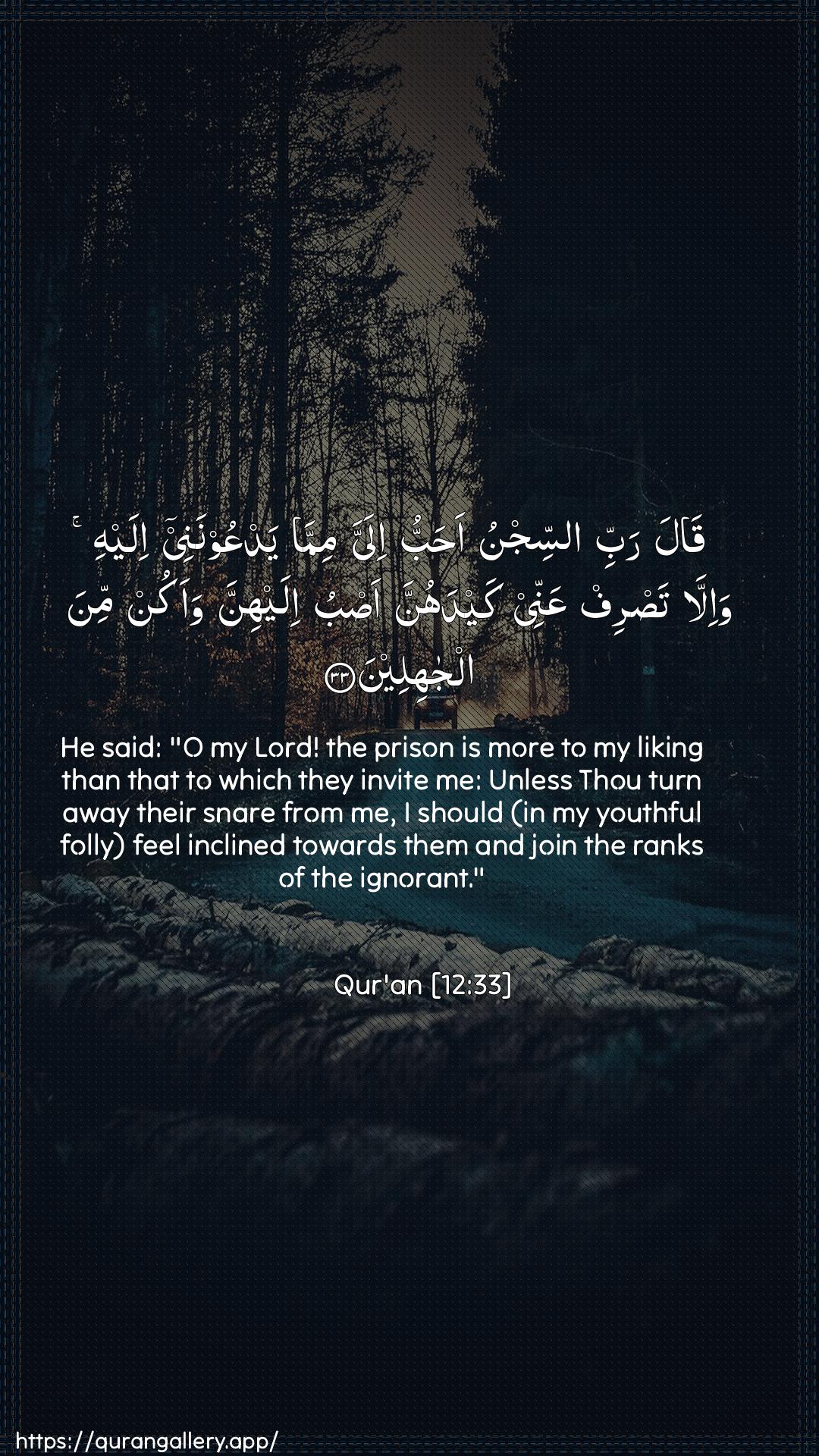
Arabic + English

Arabic (Wide)
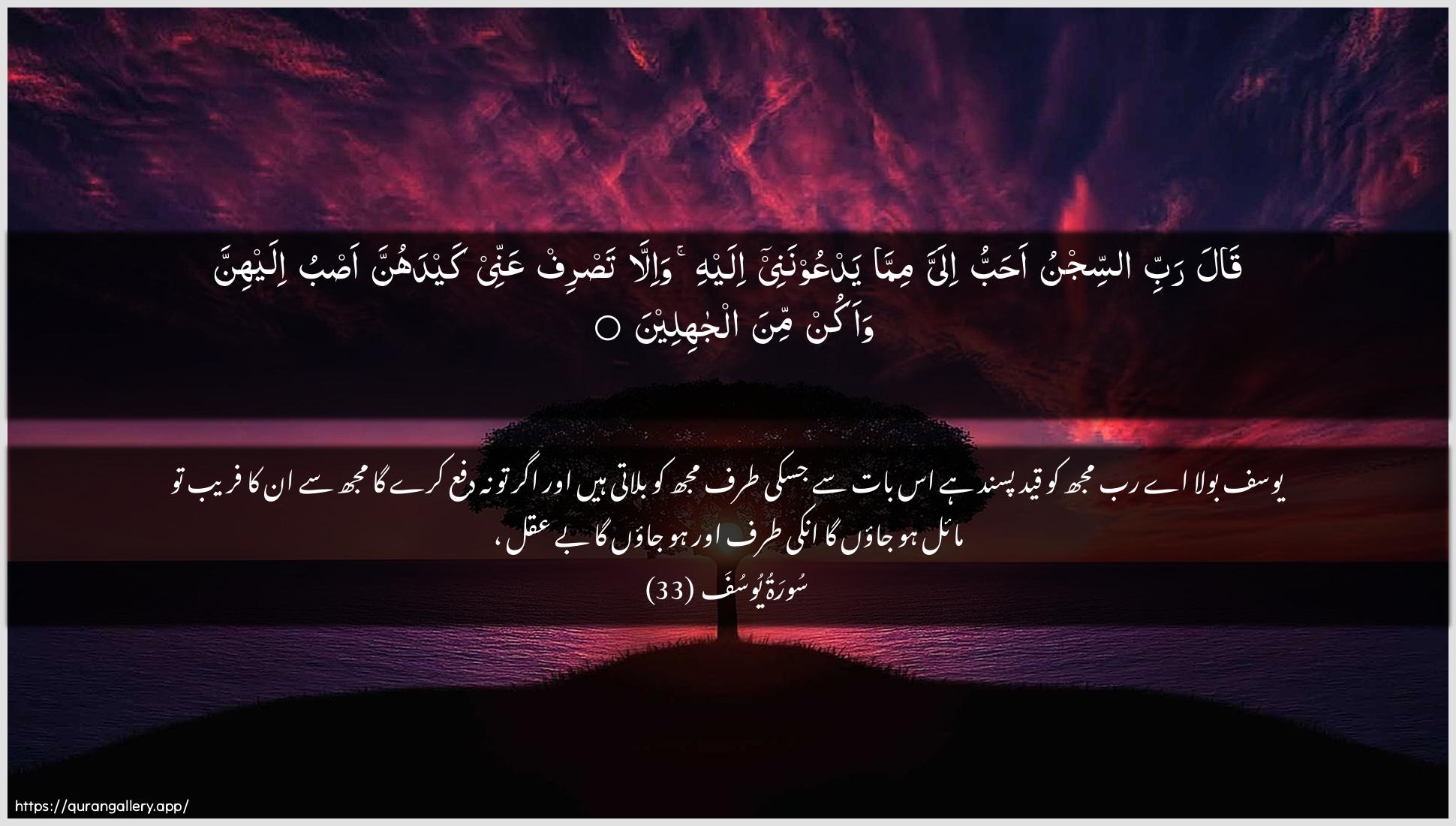
Arabic + Urdu
Free for personal & educational use with attribution
Quick Facts about this Verse
Surah
Yusuf
Revealed
Makki
Position
Juz 12,13
Explore this Verse
Verse Meaning
According to the classical scholar Ibn Kathir, this verse captures the moment of profound spiritual resolve when Prophet Yusuf (as), faced with escalating temptation and threats, turns completely to his Lord. A comprehensive synthesis of tafsirs from authorities like Al-Tabari and Al-Qurtubi reveals this is not merely a choice between two options, but a declaration of spiritual priorities. Yusuf (as) prefers the immediate, physical hardship of prison over the spiritual ruin of succumbing to sin. The hidden gem, as highlighted by Imam al-Sa'di, is Yusuf's profound self-awareness and humility; he recognizes his own human weakness ('I might incline towards them') and understands that only Allah's direct intervention ('Unless You turn away their snare from me') can save him. This dua is a masterclass in seeking refuge, acknowledging that true ignorance ('al-jahilin') is not a lack of knowledge, but the act of choosing a fleeting, sinful pleasure over eternal honor with Allah.
Questions for Reflection
Textual Contemplation
Al-Tabari highlights the word 'asbu' (I incline/yearn). Contemplate the profound honesty in this choice of word. How does Yusuf's (as) acknowledgment of his potential inclination, rather than a boast of invincibility, make his reliance on Allah more complete and sincere?
Personal Transformation
Sa'di defines the 'jahilin' (ignorant) here as those who prefer a fleeting, sinful pleasure over eternal reward. Contemplate an area in your life where you might be making an 'ignorant' choice in this specific sense. How does reframing it as an issue of 'knowledge' vs. 'ignorance' change your perspective on that choice?
Relational Wisdom (with Allah)
Ibn Kathir notes that Yusuf (as) immediately turned to his 'Rabb' (Lord, Sustainer). Contemplate what this teaches about the nature of our relationship with Allah in moments of crisis. He didn't just ask for escape, he chose one form of suffering over another and presented this choice to his Lord. How does this transform dua from a 'wish list' into a deep, trust-based conversation with Allah?
Practical Applications
Reframe Difficult Choices: When faced with a choice between a difficult 'halal' path and an easy 'haram' one, consciously declare the difficult path 'more beloved' to re-align your spiritual priorities.
Applicable in career choices (e.g., refusing a high-paying but unethical job) or social situations that compromise Islamic values.
Practice Proactive Dua: Before entering environments of potential fitnah (temptation), make a specific dua like Yusuf's: 'O Allah, if You do not turn their scheme away from me, I will incline towards them'.
Ideal before using the internet, attending mixed gatherings, or any situation where one fears their resolve might be tested.
Hidden Gem
The synthesis of tafsirs reveals a spiritual paradox: by choosing prison, Yusuf (as) was actually choosing freedom. He recognized, as Al-Qurtubi implies, that the prison of sin is far more confining and eternal than the physical prison. Contemplating this redefines freedom not as the ability to follow any desire, but the strength to choose what is eternally best, even if it comes with temporary hardship.
Scroll to see more verses or use the dropdown in the breadcrumb to jump to any verse
Common Questions
2 more questions available in the full page