
Hud - Hud
Arabic Name: هُوْد
Urdu Name: حود
Type: Makki
Serial Number: 11
Revelation Order: 52
Total Verses: 123
Parah: 12,11
Rukus: 10
Sajda: None
Related Hadith
"The Prophet (ﷺ) was heard reciting the verse as '`innahu 'amila ghayra salih`' (Indeed, he committed unrighteous acts)."
This prophetic recitation reinforces the interpretation that the son's exclusion was a direct result of his personal actions and choices.
Share Verse Art
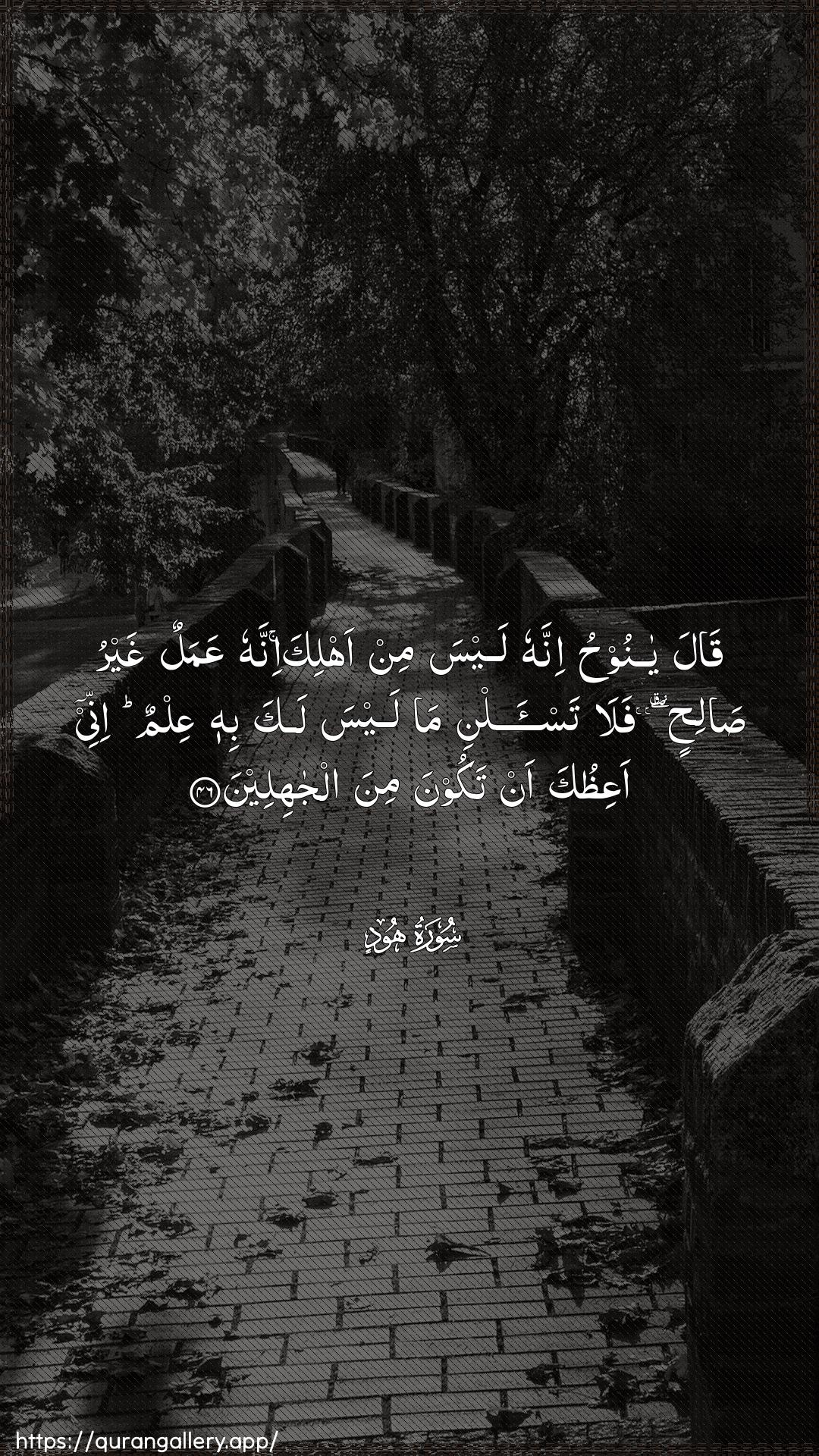
Arabic
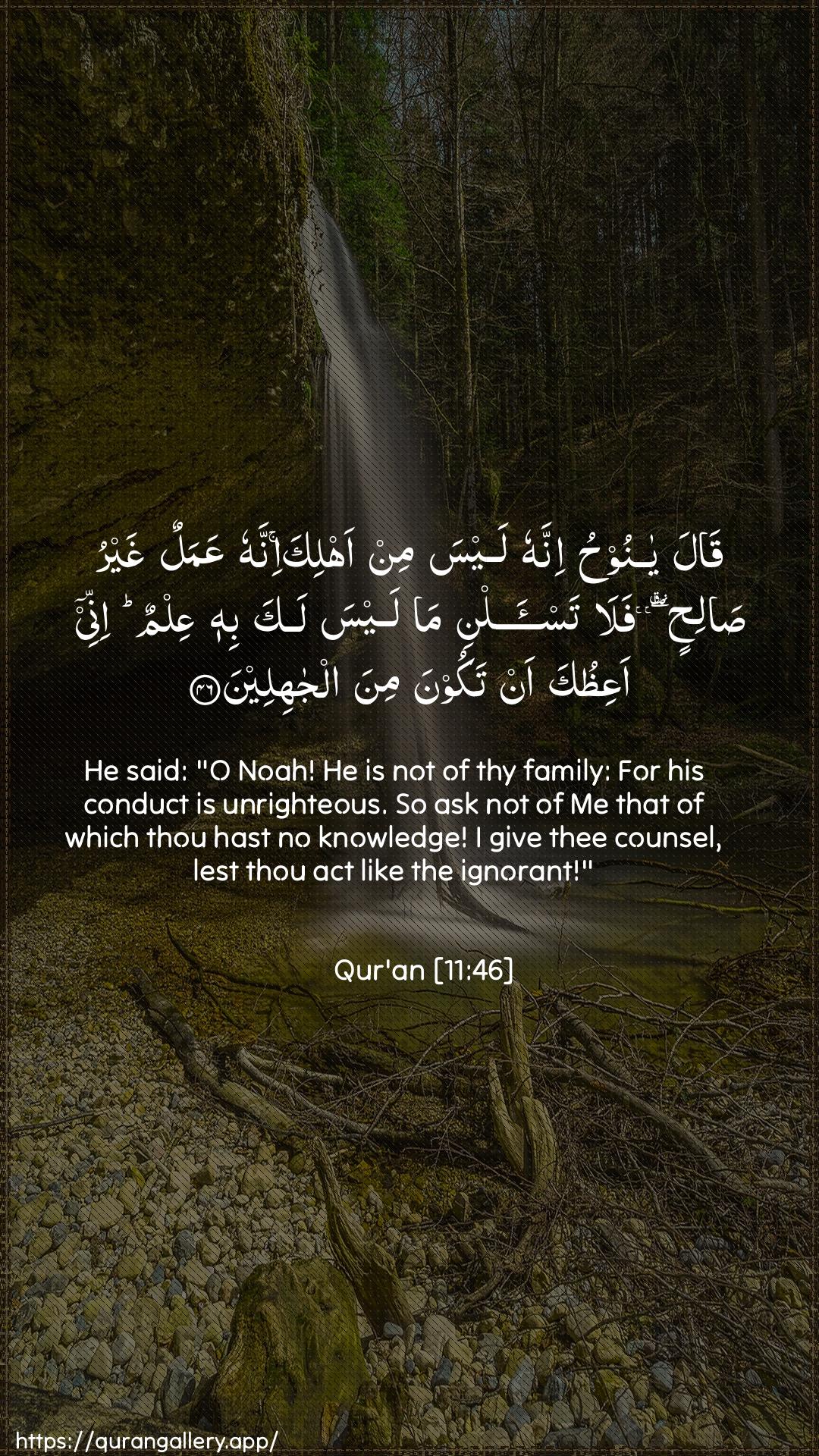
Arabic + English
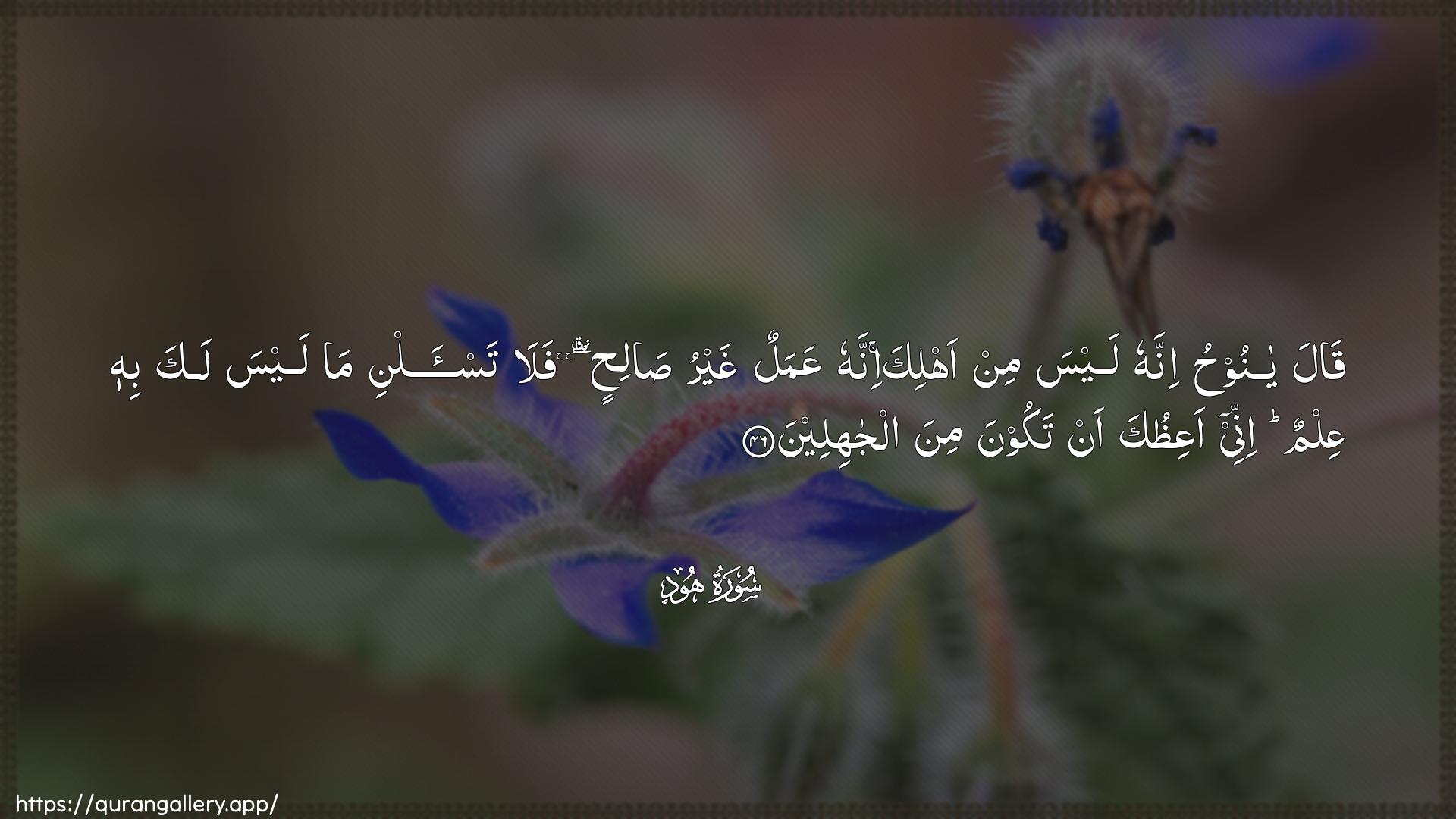
Arabic (Wide)
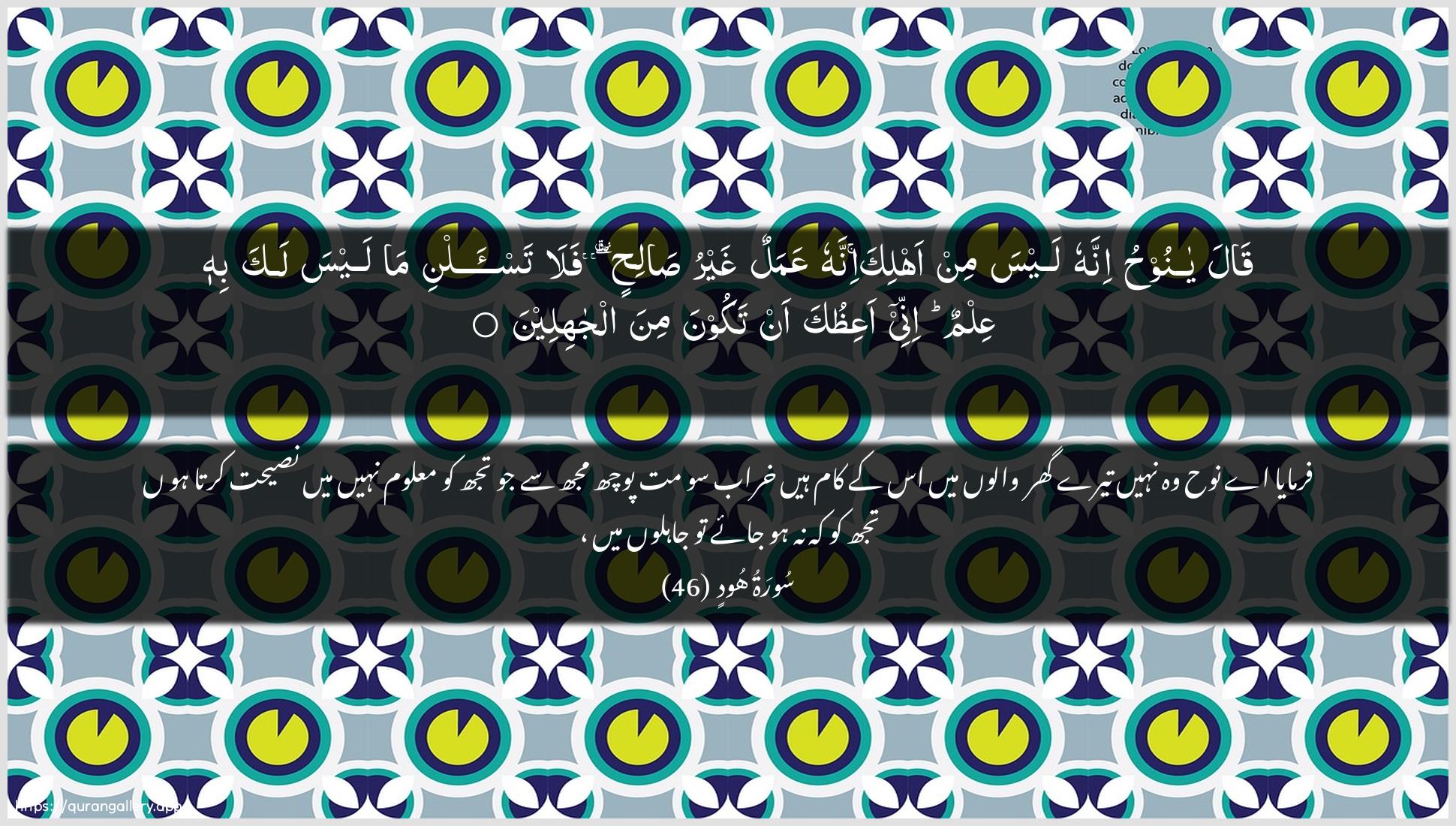
Arabic + Urdu
Free for personal & educational use with attribution
Quick Facts about this Verse
Surah
Hud
Revealed
Makki
Position
Juz 12,11
Explore this Verse
Verse Meaning
According to the comprehensive tafsir of Imam Al-Tabari, Quran 11:46 is a pivotal moment where Allah redefines the concept of 'family' (Ahl) from blood lineage to spiritual allegiance. In response to Prophet Nuh's plea for his drowning son, Allah declares, 'O Nuh, indeed he is not of your family.' A comprehensive review of classical tafsirs reveals a strong consensus, articulated by authorities like Ibn Abbas, Sa'id ibn Jubayr, and Ibn Kathir, that the son was biologically Nuh's. The rejection was not of his lineage but of his spiritual affiliation. The verse synthesizes this by explaining *why*: 'Indeed, he is [a embodiment of] unrighteous work' (`'amalun ghayru salih`), making conduct and belief the ultimate determinants of belonging. What emerges from this synthesis is the profound Islamic principle that the bond of faith (`iman`) supersedes the bond of blood. While a minority opinion from scholars like Al-Hasan Al-Basri suggested illegitimacy, this view is overwhelmingly refuted by the principle that 'no prophet's wife has ever committed adultery.' Instead, the classical scholars explain that Allah's promise of salvation was for Nuh's believing household, and his son's disbelief excluded him. The linguistic depth is further revealed in a variant reading, `'amila ghayra salih` ('he committed unrighteous deeds'), which, as Al-Tabari notes, reinforces the same core meaning: the son's actions severed his spiritual connection. Therefore, the verse delivers a powerful lesson on divine justice and the primacy of faith, serving as a divine correction to a prophet and a timeless principle for all believers.
Questions for Reflection
Personal Attachment vs. Divine Will
Al-Tabari explains that Allah's response was a direct admonition. Reflect on an area in your life where your personal love or attachment for someone or something makes it difficult to accept a clear Islamic principle. How does this verse challenge you to prioritize Allah's truth over your own emotional desires?
The Definition of 'Family'
Al-Qurtubi emphasizes that the bond of religion is stronger than the bond of lineage. Look at your own relationships. Who constitutes your true 'ahl' (family) based on the criteria of this verse (shared faith and righteous conduct)? How does this perspective change the way you view your community and your blood relatives?
The Weight of Our Actions
Ibn Kathir highlights the phrase 'he is [of] unrighteous conduct.' Contemplate how a person's actions can come to define their very essence in the sight of Allah, to the point of overriding even prophetic lineage. What small, unrighteous habits, if left unchecked, could corrupt one's spiritual identity?
Practical Applications
Re-evaluate your 'inner circle' based on spiritual alignment, not just blood relations. Prioritize companionship with those who strengthen your faith.
Actively seek righteous friends and mentors, and be mindful of family relationships that may draw you away from your deen.
Practice humble submission when your personal attachments conflict with divine decree. Make du'a for guidance, but accept Allah's judgment without excessive questioning.
When facing difficult outcomes involving loved ones (e.g., in matters of faith, health, or life), focus on acceptance and trust in Allah's plan.
Judge yourself and others by the standard of 'righteous action' (`amal salih`), not by lineage, wealth, or status.
In personal and community interactions, give precedence and respect to piety and good character over family name or social standing.
Hidden Gem
The synthesis of tafsirs reveals a subtle but powerful truth: this is not just Allah telling Nuh a fact, but teaching him (and us) how to see reality through a divine lens. The phrase 'he is not of your family' is a recalibration of perception. Allah is training His prophet to shift his identity framework from the earthly (DNA, tribe) to the eternal (faith, deeds). Contemplating this verse is an exercise in adopting that divine perspective in our own lives.
Scroll to see more verses or use the dropdown in the breadcrumb to jump to any verse
Common Questions
2 more questions available in the full page