
Hud - Hud
Arabic Name: هُوْد
Urdu Name: حود
Type: Makki
Serial Number: 11
Revelation Order: 52
Total Verses: 123
Parah: 12,11
Rukus: 10
Sajda: None
Share Verse Art
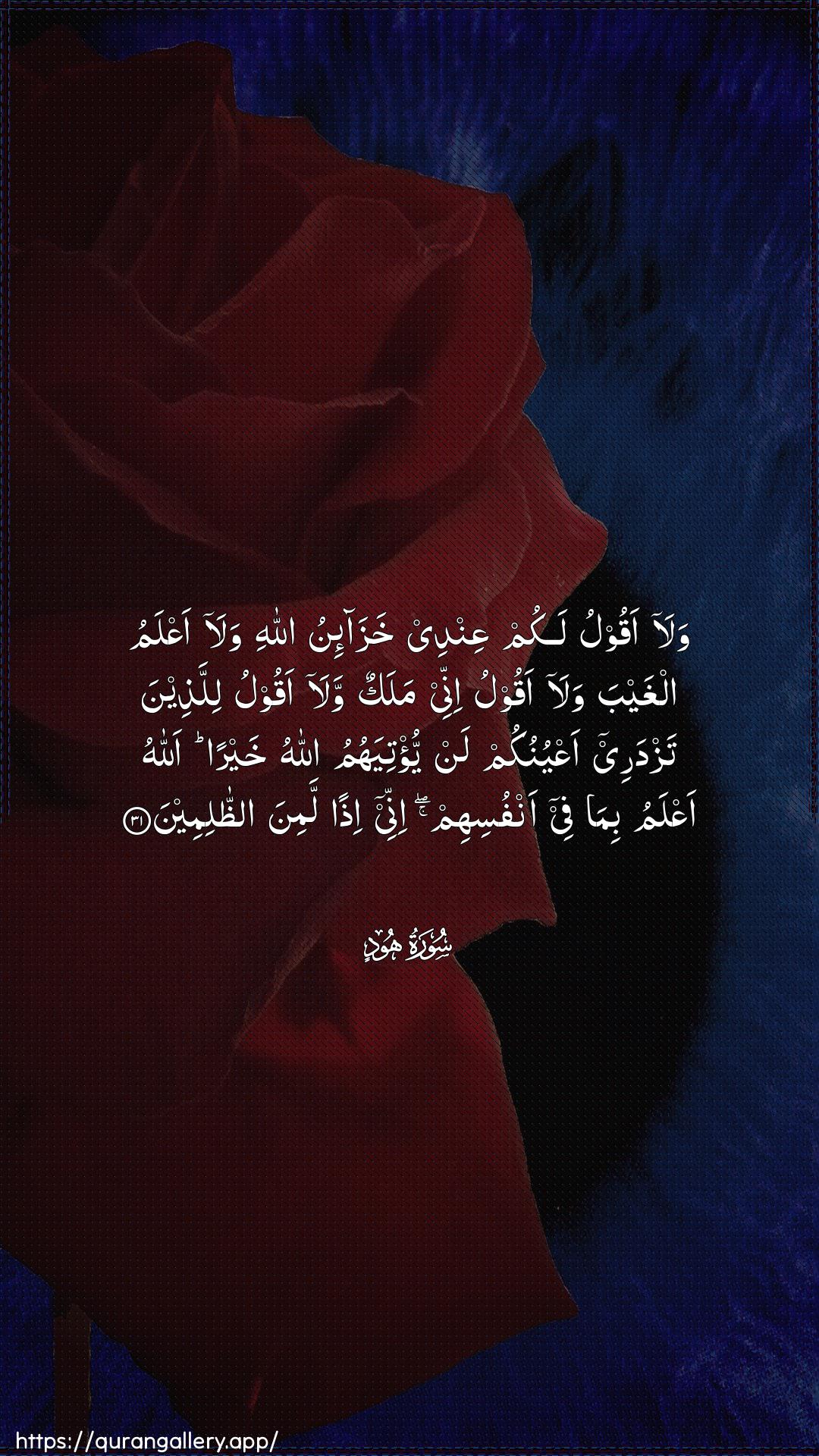
Arabic
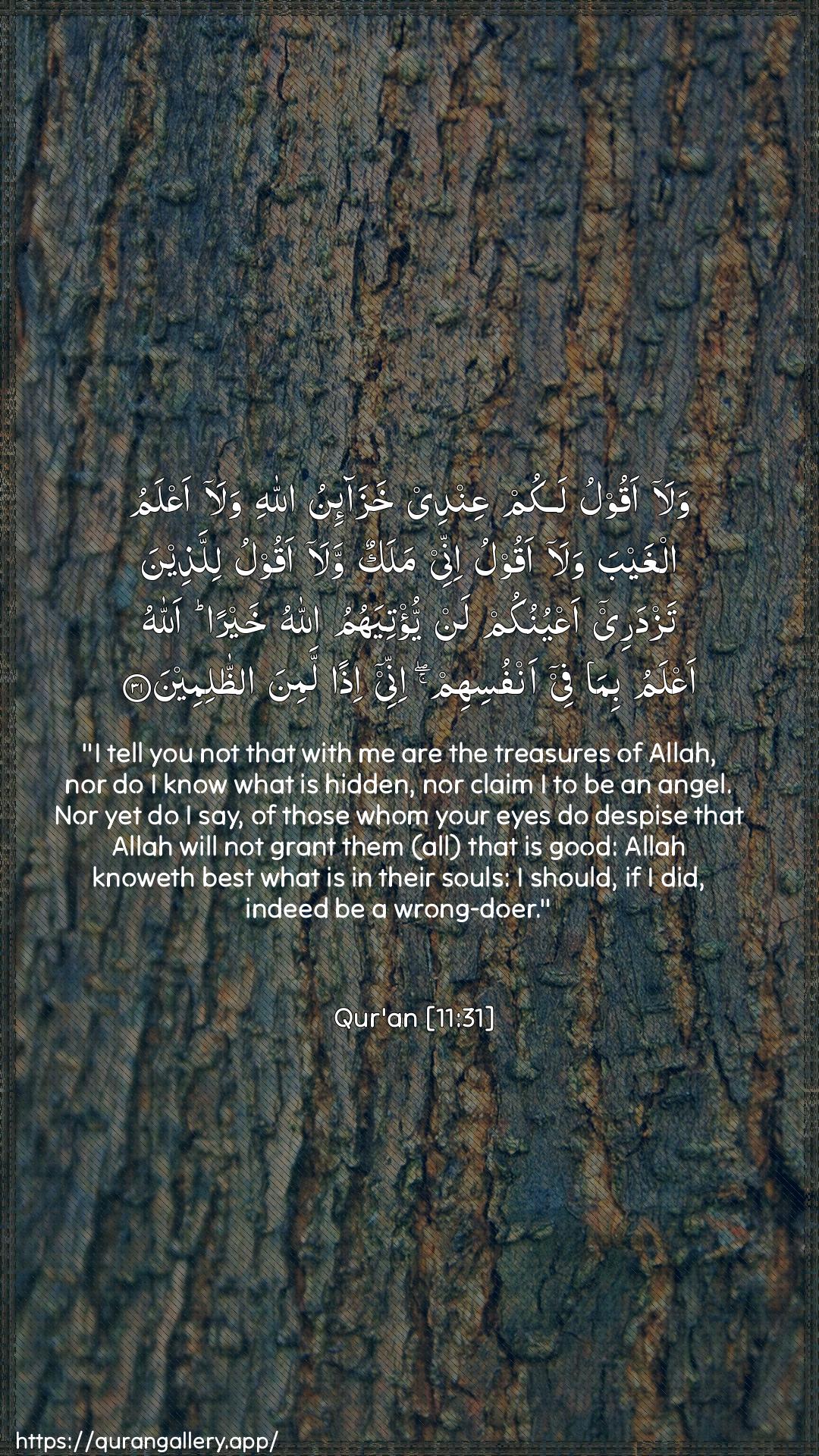
Arabic + English
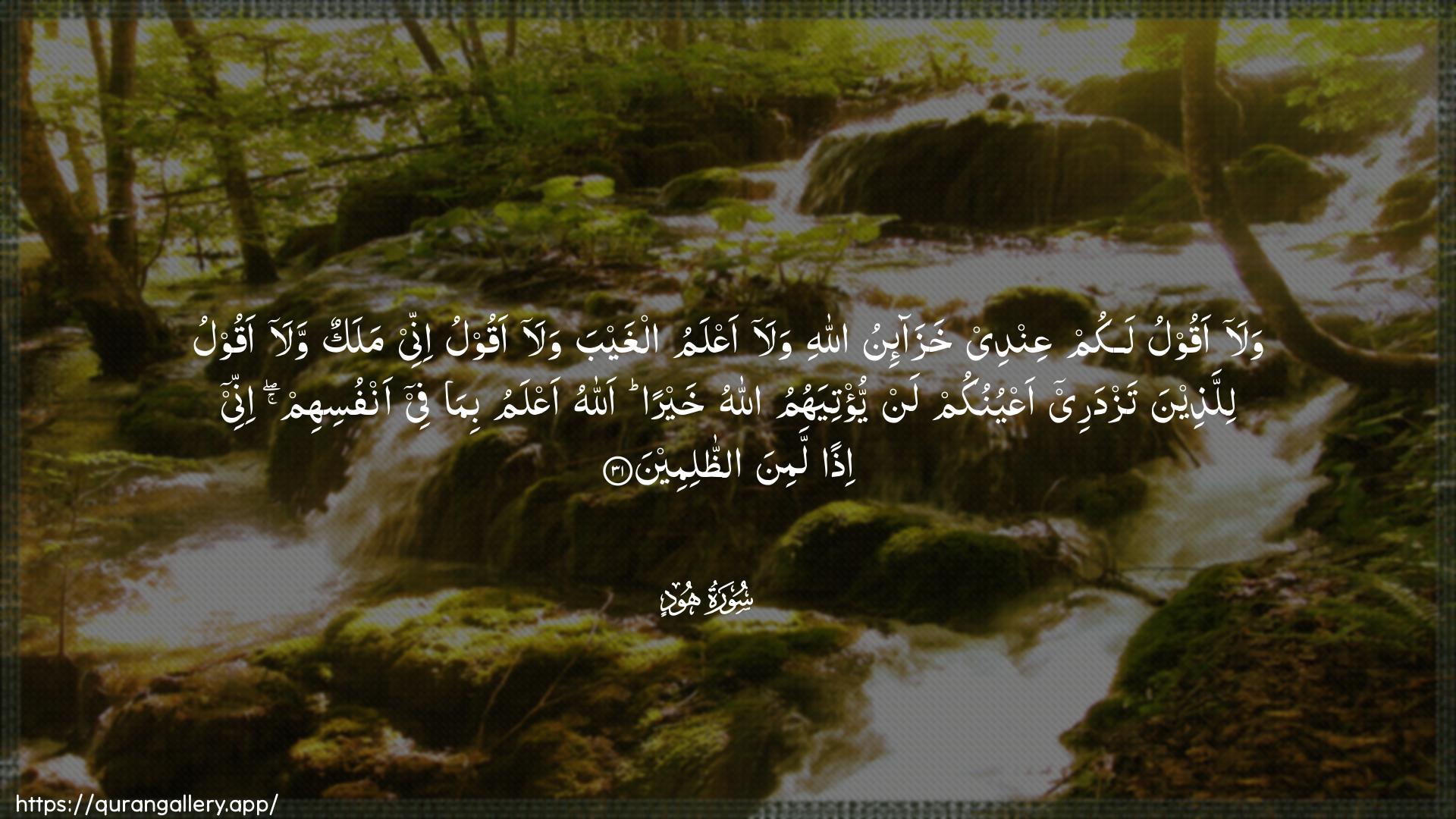
Arabic (Wide)
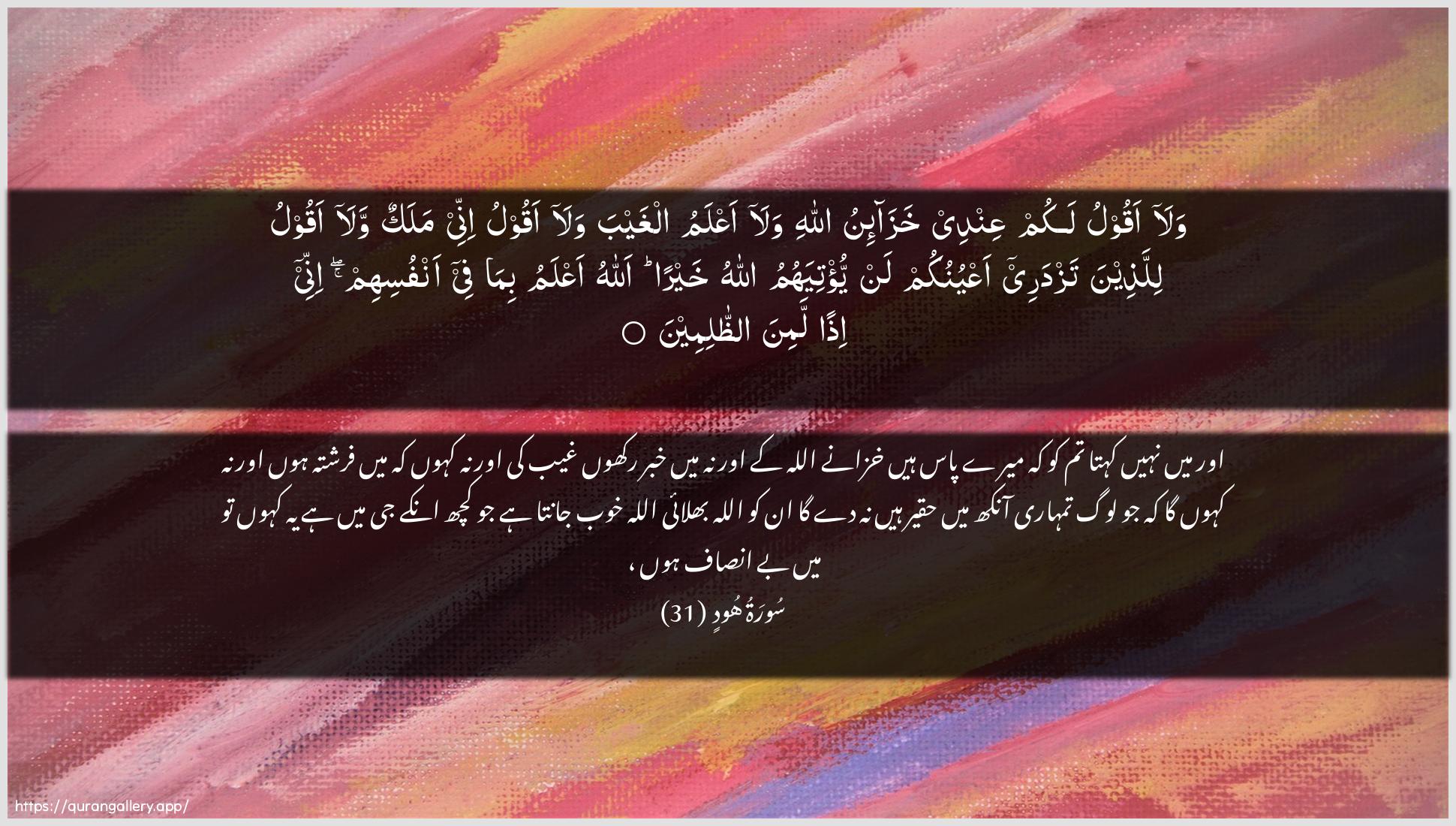
Arabic + Urdu
Free for personal & educational use with attribution
Quick Facts about this Verse
Surah
Hud
Revealed
Makki
Position
Juz 12,11
Explore this Verse
Verse Meaning
According to the classical exegete Imam Al-Tabari, Quran 11:31 is a masterclass in prophetic communication, where Nuh (Noah) systematically dismantles the materialistic and arrogant criteria of the elites. A comprehensive synthesis of tafsirs from Ibn Kathir and Al-Qurtubi reveals this verse is not merely a list of denials, but a structured argument establishing the true nature of prophethood and faith. While Ibn Kathir focuses on Nuh clarifying his human limitations—not possessing divine treasures, knowing the unseen, or being an angel—Al-Qurtubi highlights the profound justice in Nuh's refusal to judge the inner state of the poor believers whom the elites scorned. The hidden gem emerging from this synthesis is that Nuh's statement is a preemptive strike against the core fallacies of disbelief. He first clarifies what he is *not* (a demigod with supernatural powers), and then defines what he *is* (a messenger who defends the faithful regardless of their status). This powerful refutation pivots from correcting their perception of him to correcting their perception of God's justice, affirming that Allah alone knows the hearts and bestows good. By declaring he would be a 'wrongdoer' to act otherwise, Nuh establishes that true justice lies in valuing faith over worldly status, a foundational principle of Islam.
Questions for Reflection
Textual Contemplation
Ibn Kathir emphasizes Nuh's systematic denial of divine attributes. Contemplate the sequence: treasures (power), unseen (knowledge), and angelic nature (being). How does this logical progression dismantle the very foundations of the elites' materialistic worldview? What false expectations do people today place on spiritual leaders?
Personal Transformation
Al-Qurtubi provides linguistic analysis on the word `tazdari` (to scorn/despise). Reflect honestly on your first impressions of people. Are they ever based on appearance, job, or wealth? How does Nuh’s powerful defense of the believers challenge the subtle biases within your own soul?
Relational Wisdom
Nuh concludes that to judge the inner faith of others would make him a 'zalim' (wrongdoer). As Al-Tabari explains, this is an abuse of one's position. Contemplate your role in your family or community. In what ways can you actively protect and uplift those whom society might look down upon, thereby embodying the justice of Prophet Nuh?
Practical Applications
Practice 'Prophetic Limitation' in Leadership: When in a position of authority, explicitly state your human limitations. Clarify that you don't have all the answers (the unseen) or unlimited resources (treasures) to foster trust and direct reliance towards Allah, not yourself.
Applicable in management, community organizing, mentorship, and even parenting to set realistic expectations.
Uphold the 'Internal State' Principle: Consciously refuse to judge or devalue people based on their external appearance, wealth, or social status. When you feel contempt (`tazdari`), remind yourself with Nuh's words: 'Allah knows best what is in their souls.'
Crucial for interactions in diverse workplaces, social media, and community spaces where snap judgments are common.
Define Justice as Non-Presumption: Understand that a primary form of injustice (`zulm`) is to presume to know someone's inner reality or future reward from Allah. Before speaking about another's spiritual standing, pause and affirm that only Allah is the ultimate judge.
A vital principle for online discourse, community leadership, and avoiding self-righteousness.
Hidden Gem
The synthesis of scholarly thought reveals that this verse is not just a defense, but an act of profound love and loyalty. Nuh is willing to alienate the powerful to protect the vulnerable. He doesn't just tolerate the poor believers; he makes their dignity central to his own integrity. Contemplating this transforms the verse from a theological statement into a moving example of spiritual solidarity.
Scroll to see more verses or use the dropdown in the breadcrumb to jump to any verse
Common Questions
2 more questions available in the full page