
Hud - Hud
Arabic Name: هُوْد
Urdu Name: حود
Type: Makki
Serial Number: 11
Revelation Order: 52
Total Verses: 123
Parah: 12,11
Rukus: 10
Sajda: None
Share Verse Art
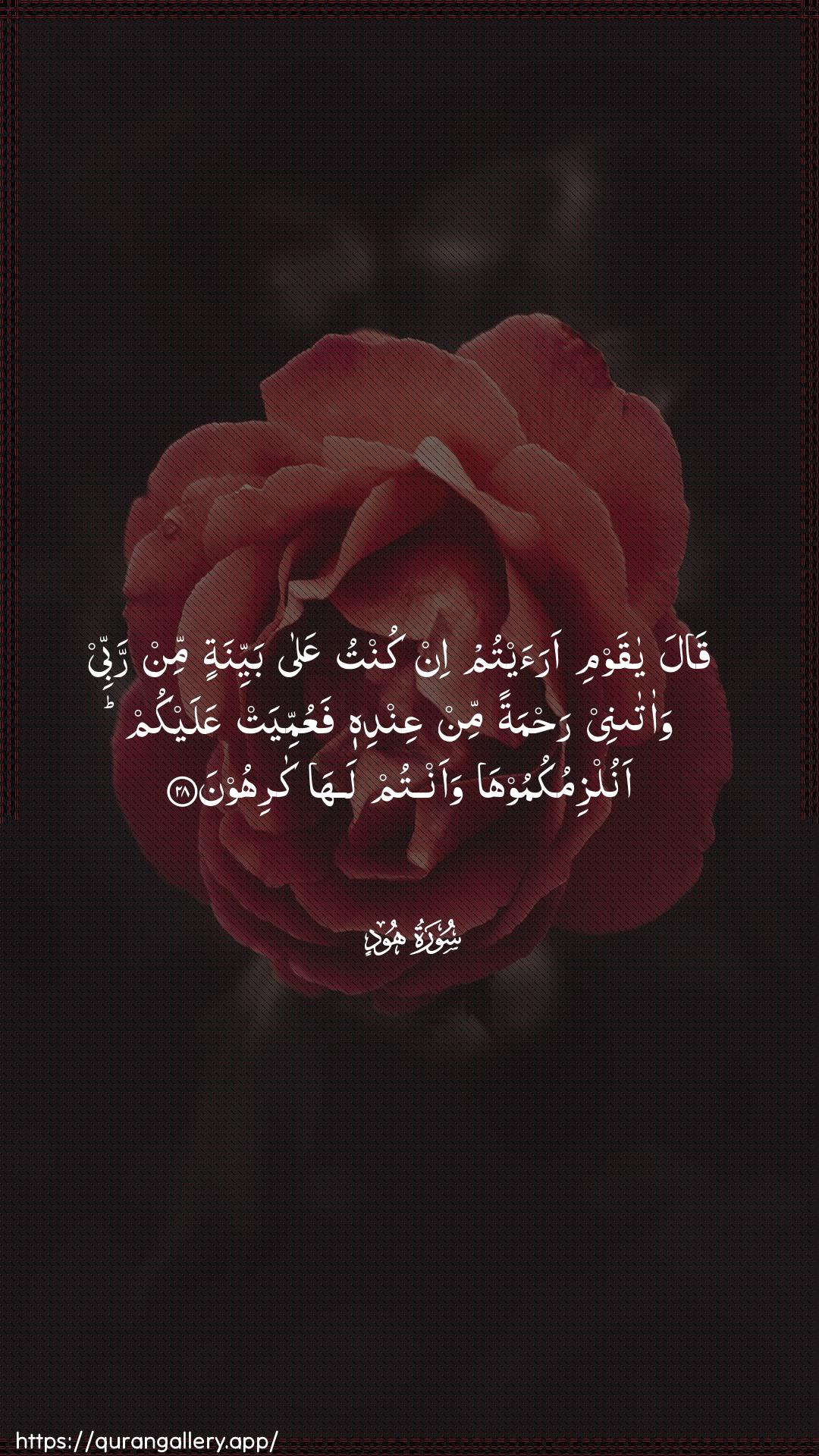
Arabic
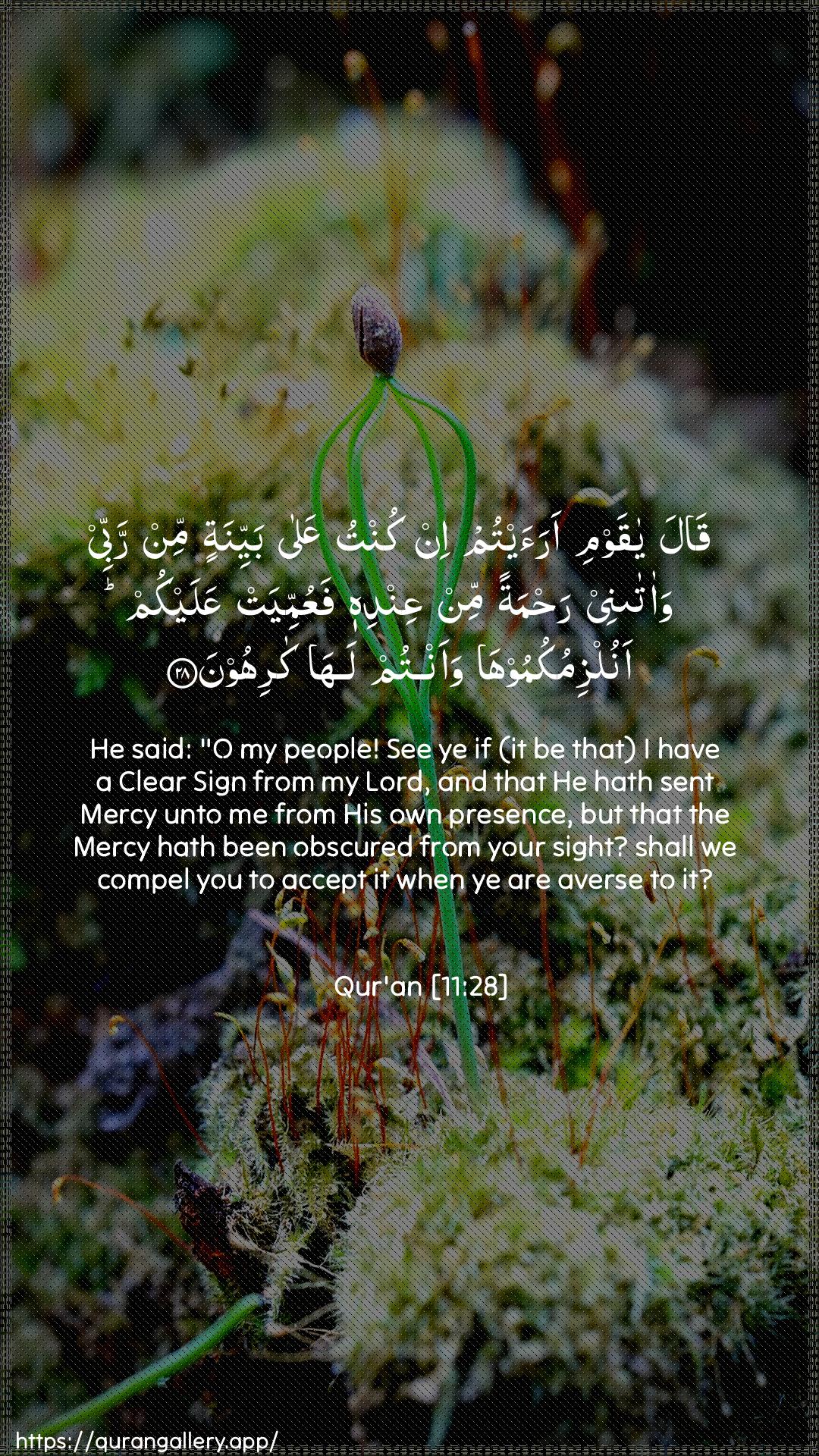
Arabic + English
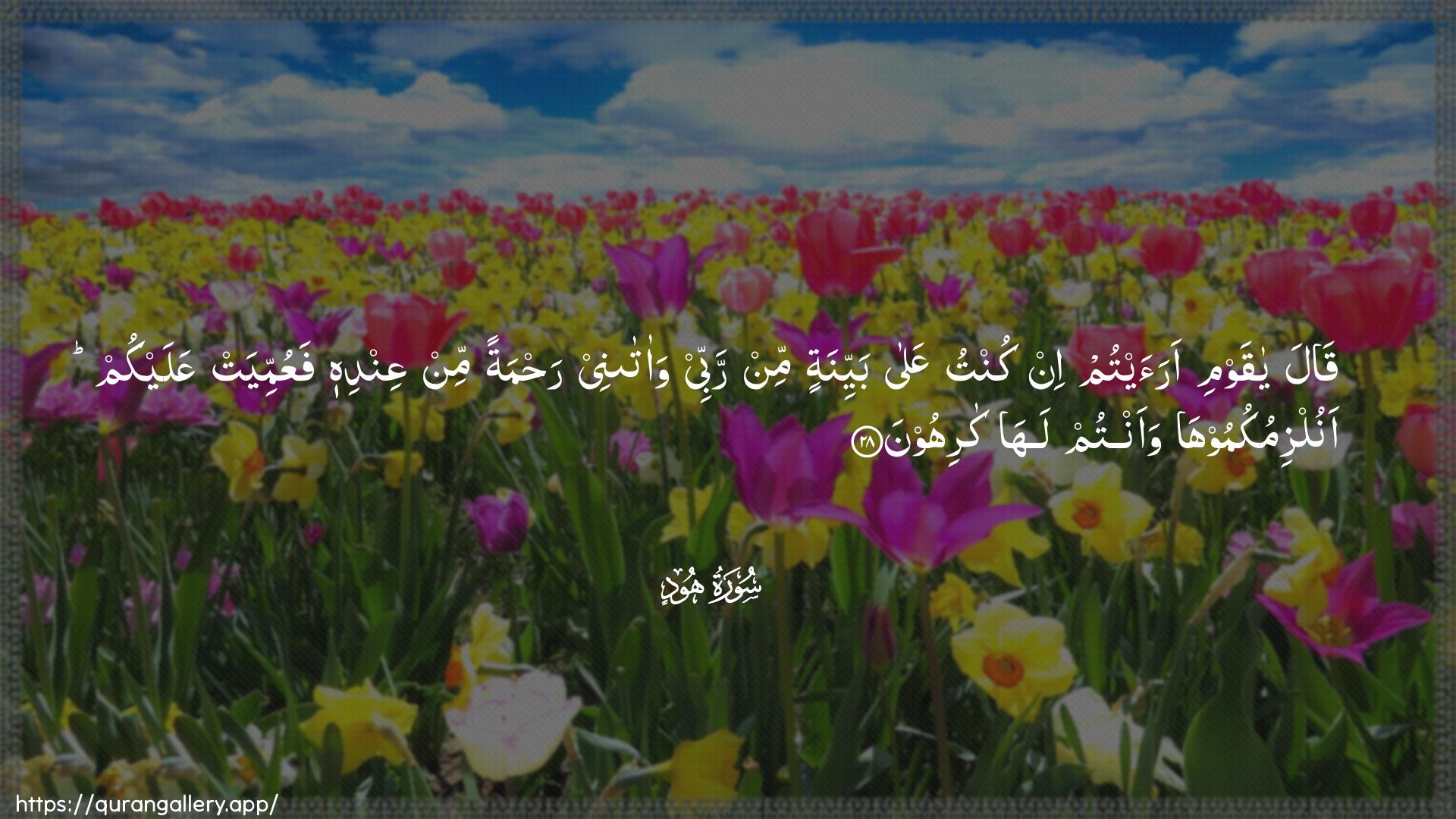
Arabic (Wide)
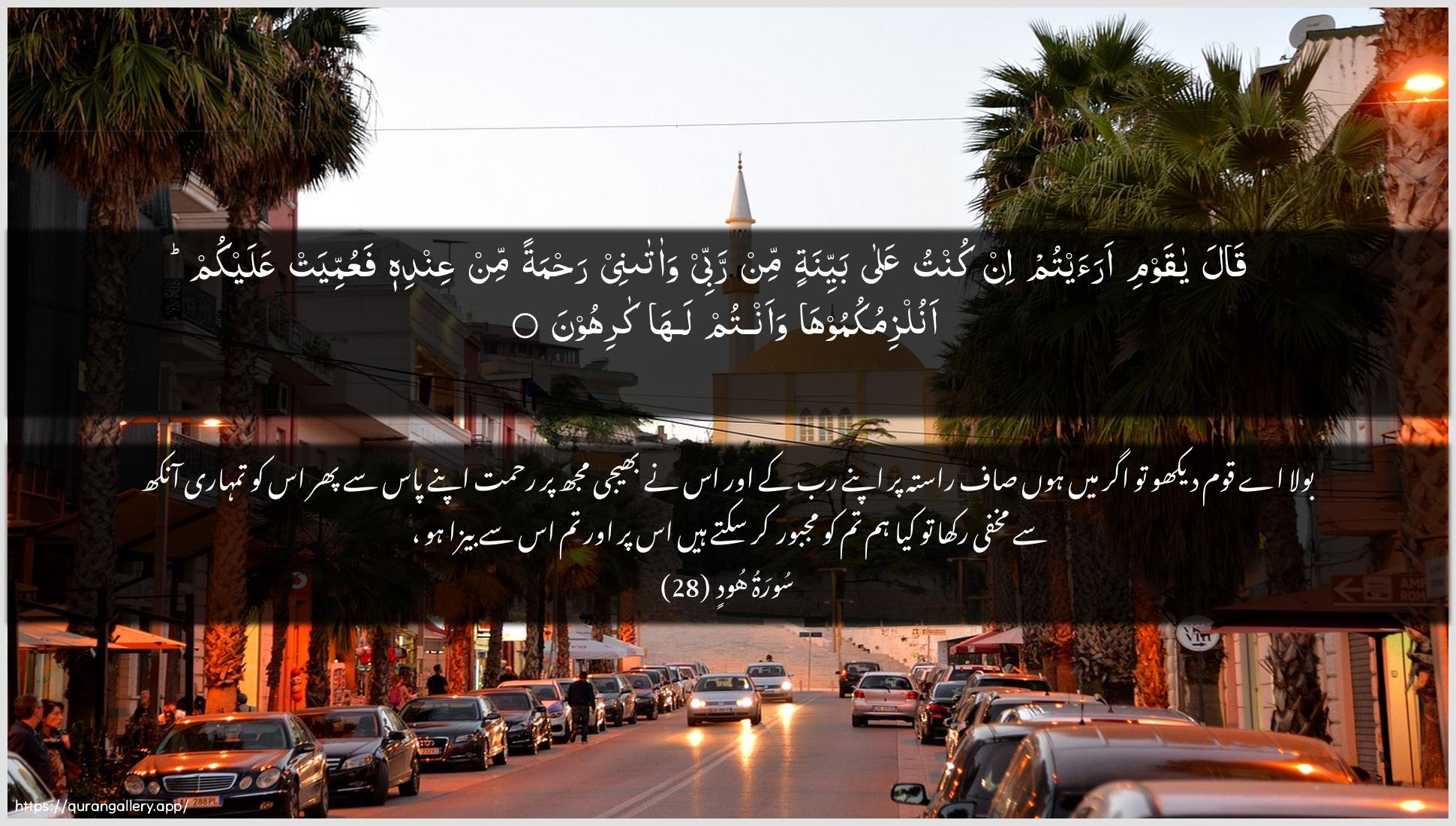
Arabic + Urdu
Free for personal & educational use with attribution
Quick Facts about this Verse
Surah
Hud
Revealed
Makki
Position
Juz 12,11
Explore this Verse
Verse Meaning
According to the classical exegesis of Ibn Kathir, Quran 11:28 contains Prophet Nuh's profound and logical response to the elites of his people who rejected his message. This verse encapsulates a core principle of divine guidance: it cannot be forced upon those who are unwilling to perceive it. Nuh (peace be upon him) argues that he stands on a 'clear proof' (bayyinah) from his Lord and has been granted a special 'mercy' (rahmah), which scholars like Al-Qurtubi and Dr. Mustafa Khattab identify as prophethood itself. However, he acknowledges that this mercy has been 'made obscure' (fa'ummiyat) to them, not because it lacks clarity, but because their own arrogance and aversion have blinded them. The crux of his argument lies in the powerful rhetorical question, 'Shall we compel you to accept it when you are averse to it?' (anulzimukumuha wa antum laha karihun). Al-Tabari highlights the linguistic depth here, explaining that the choice of words emphasizes the utter impossibility and inappropriateness of coercing faith. This verse is not an admission of weakness but a statement on the nature of truth and free will; guidance must be accepted by a willing heart, not imposed by force.
Questions for Reflection
Personal Conviction
Nuh (as) begins with, 'if I am on a clear proof from my Lord'. Contemplate your own life: What is the 'bayyinah' (clear proof) in your heart? Reflect on the moments or insights that give you certainty and how that foundation feels, as Ibn Kathir describes it as the primary mercy from Allah.
Relational Empathy
Reflect on the phrase 'but it has been made obscure to you'. As Al-Tabari notes, the truth was veiled from them. Think of a time you shared something precious with someone who couldn't see its value. Contemplate the feelings of patience and detachment required, mirroring Nuh's inability to force the matter.
Theological Humility
The powerful word 'anulzimukumuha' ('Shall we compel you to accept it?') is a lesson in divine protocol. Contemplate the reality that even a prophet cannot force guidance. Reflect on areas in your life where you might be trying to 'force' an outcome, whether in someone's beliefs or a life situation, and how this verse calls for humility and trust in Allah's plan.
Practical Applications
In discussions about faith, replace forceful arguments with gentle, logical questions that prompt self-reflection.
Use in conversations with family, friends, or colleagues who are skeptical or resistant to spiritual discussions, framing points as 'Have you considered...?' rather than 'You must believe...'.
Cultivate unwavering certainty in your own principles ('on a clear proof from my Lord') before engaging with others.
Before sharing your values or beliefs, ground yourself in your own sources of knowledge and spiritual conviction, whether in professional, social, or family settings.
Hidden Gem
The synthesis of the scholars' views reveals a profound spiritual insight: the 'rahmah' (mercy/prophethood) Nuh received is the very thing that was 'fa'ummiyat' (made obscure) to his people. Contemplate this paradox: the greatest gift can appear as nothing to a heart that is 'karihun' (averse). This teaches that our perception, not the gift itself, determines its value.
Scroll to see more verses or use the dropdown in the breadcrumb to jump to any verse
Common Questions
2 more questions available in the full page