
Hud - Hud
Arabic Name: هُوْد
Urdu Name: حود
Type: Makki
Serial Number: 11
Revelation Order: 52
Total Verses: 123
Parah: 12,11
Rukus: 10
Sajda: None
Share Verse Art
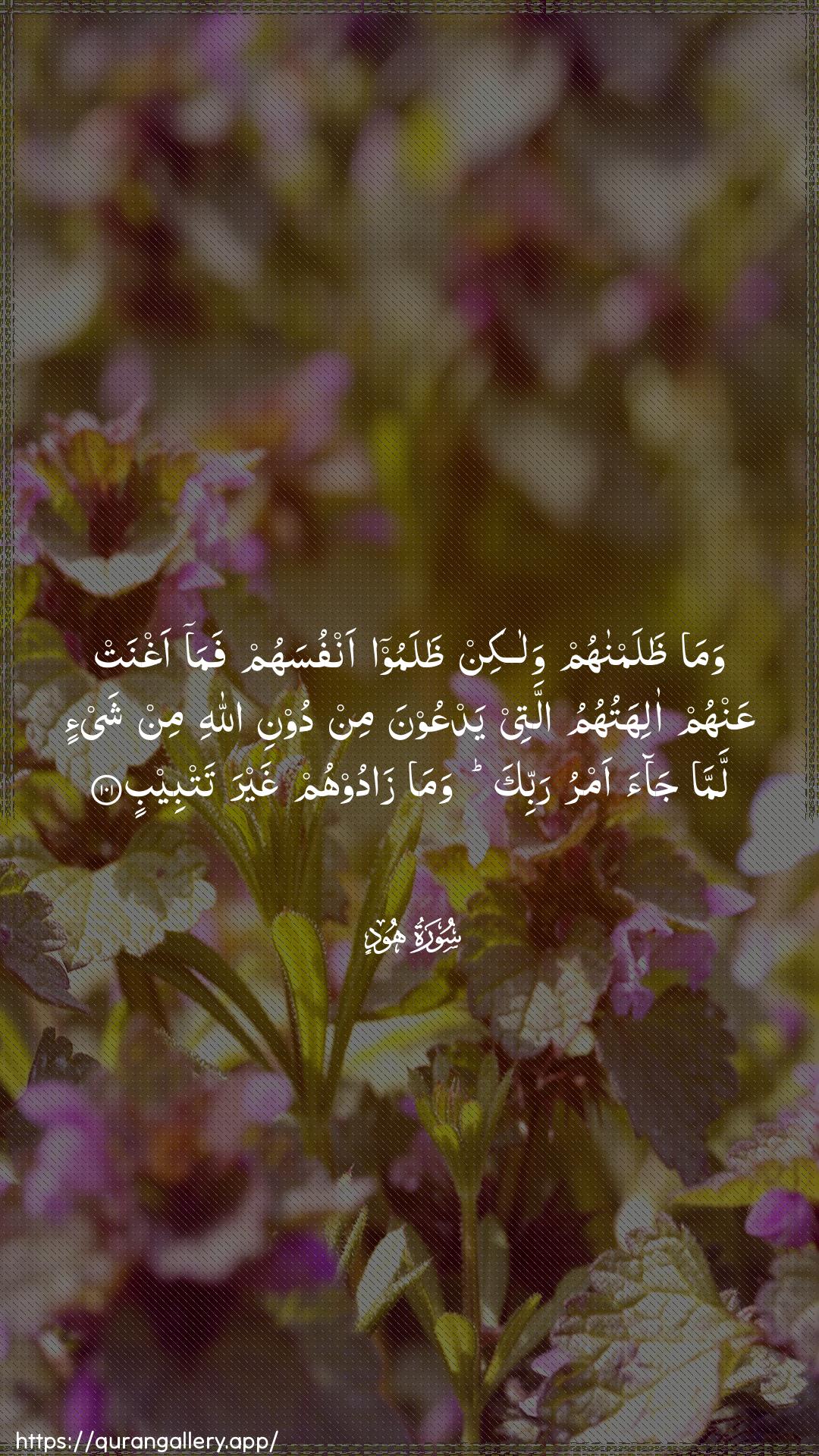
Arabic
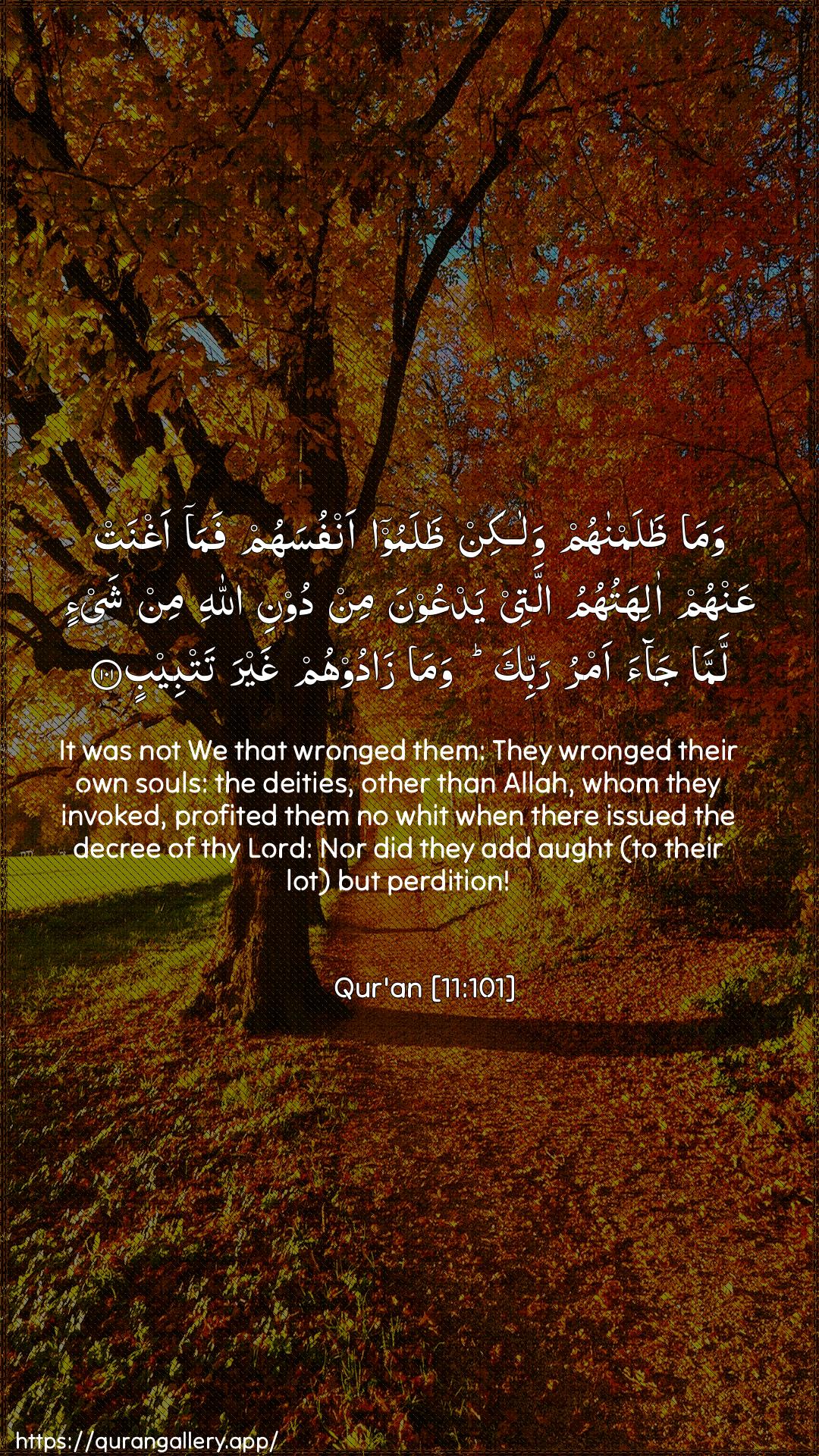
Arabic + English
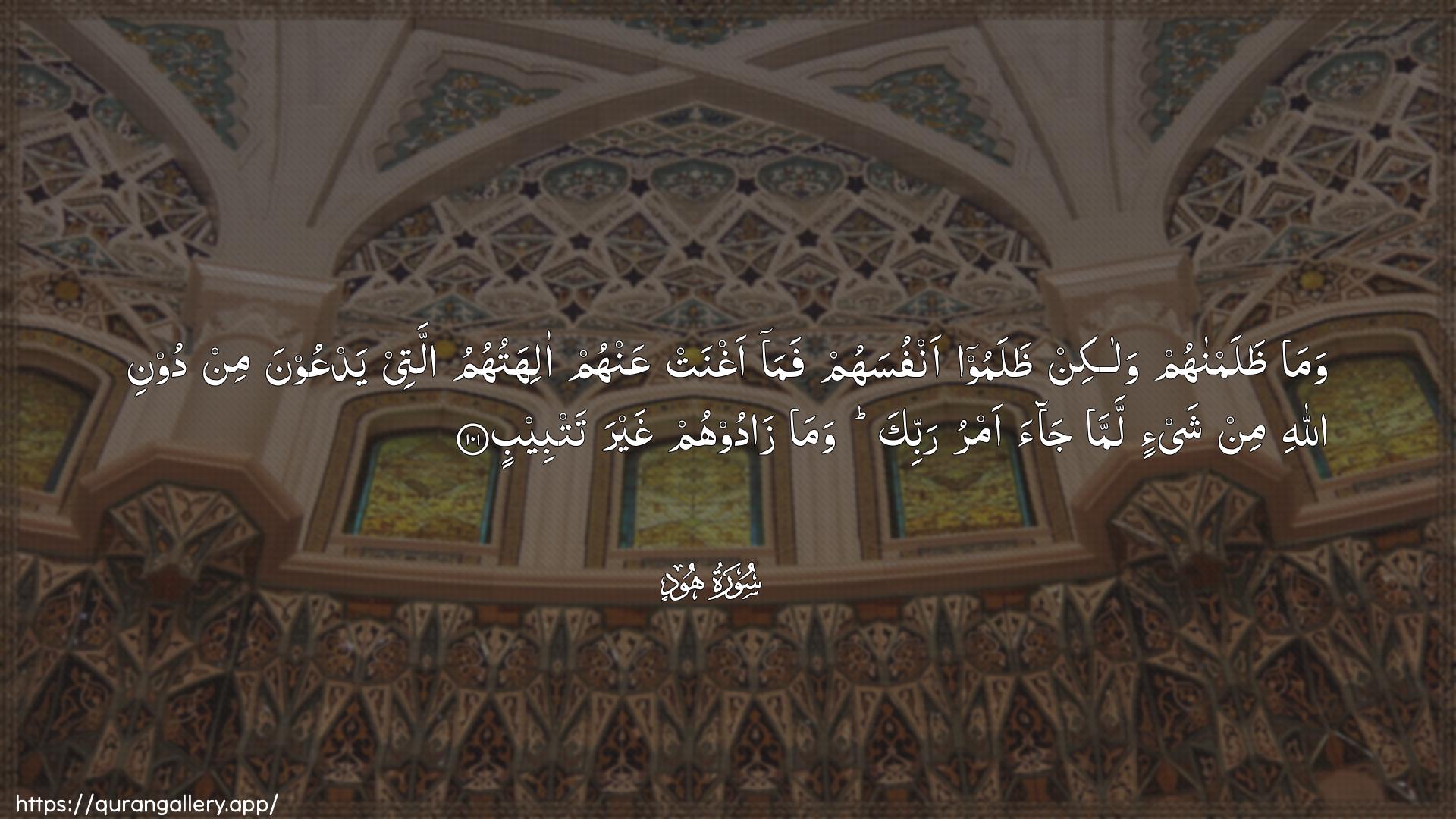
Arabic (Wide)
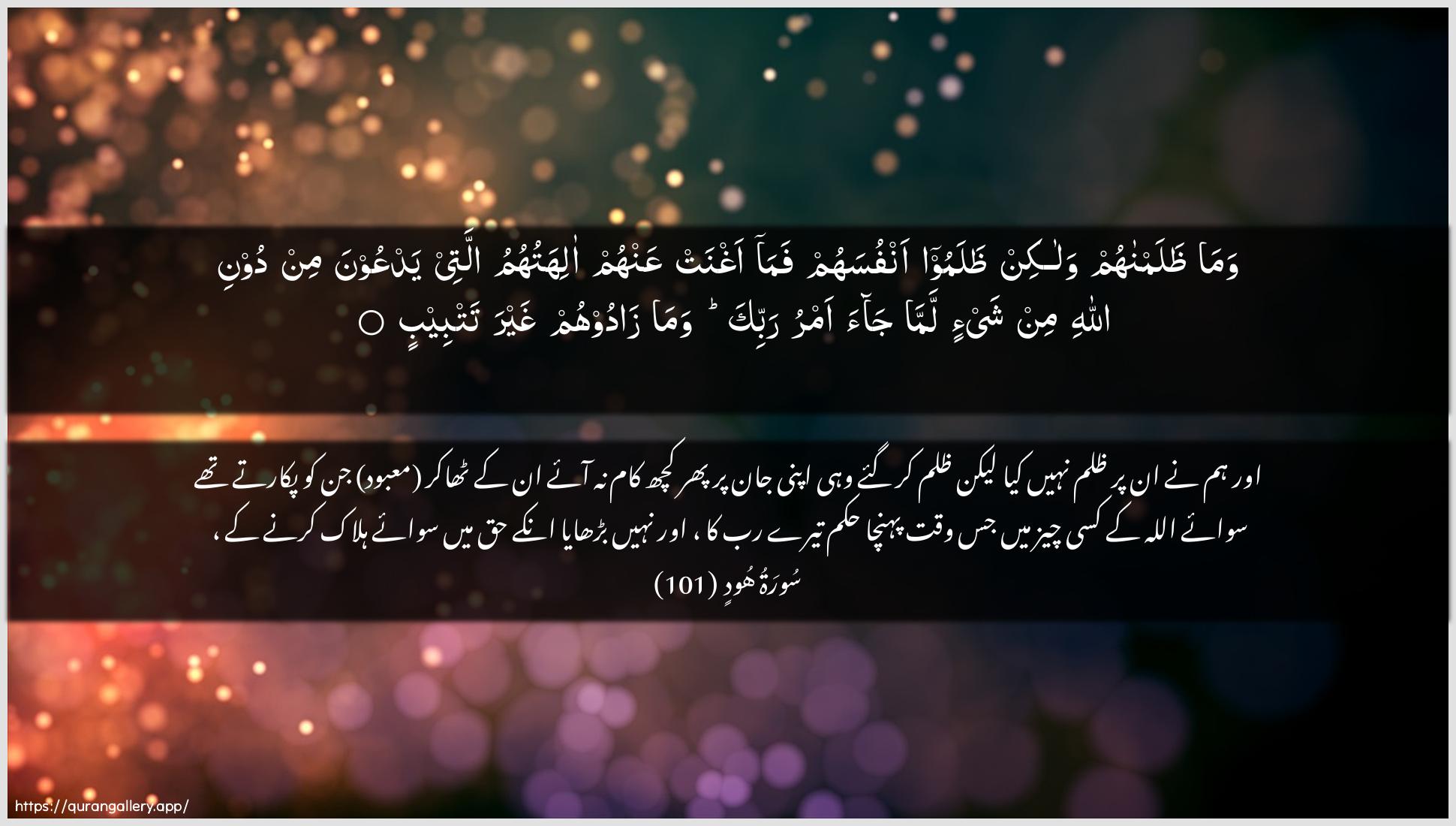
Arabic + Urdu
Free for personal & educational use with attribution
Quick Facts about this Verse
Surah
Hud
Revealed
Makki
Position
Juz 12,11
Explore this Verse
Verse Meaning
According to the classical exegete Imam al-Tabari, Quran 11:101 establishes a foundational principle of divine justice: Allah's punishment is a direct consequence of a people's own actions, not an arbitrary act of oppression. This verse clarifies that the destroyed nations of the past were not wronged by Allah; rather, they wronged their own souls through their disbelief and polytheism (shirk). The synthesis of classical tafsirs reveals a profound spiritual dynamic. Ibn Kathir explains that their self-inflicted 'zulm' (injustice) was their rejection of the messengers. Al-Qurtubi highlights the ultimate betrayal: the very 'aliha' (gods) they worshipped for protection were utterly useless when Allah's decree arrived. The most striking insight comes from the word 'tatbib' (تَتْبِيبٍ). As scholars like Mujahid and Qatada explained, this term means more than just failure; it signifies a complete and utter ruin, loss, and destruction. Thus, their false gods did not merely fail to help; their worship actively compounded their devastation, turning their hopes for salvation into a direct cause of their damnation.
Questions for Reflection
Personal Accountability
Al-Tabari emphasizes that the people 'wronged themselves.' Reflect on an area of your life where you feel stagnant or are facing loss. How might your own choices, habits, or reliances be contributing to this 'self-inflicted wrong,' and what would turning fully to Allah's guidance in this matter look like?
The Nature of Help
Ibn Kathir notes their gods 'availed them naught.' Contemplate the people, systems, or ideologies you rely on for help and security. In a moment of ultimate crisis, which of these would truly avail you, and which would, like the idols, 'add nothing but ruin'?
The Definition of Ruin
Al-Qurtubi and Mujahid interpret 'tatbib' as total loss and ruin. What does true 'ruin' look like in a spiritual sense? Is it financial loss, social decline, or something deeper? How does this verse challenge modern, materialistic definitions of success and failure?
Practical Applications
Conduct a 'spiritual audit' to identify any 'hidden idols'—such as reliance on wealth, status, or people—that you turn to for security instead of Allah.
Applicable in career planning, financial investments, and personal relationships, ensuring they are means and not the ultimate goal.
Before blaming external factors for hardships, reflect on how personal choices and actions may have contributed to the situation, in line with 'they wronged themselves.'
Useful for navigating personal setbacks, professional challenges, and relationship difficulties with a focus on self-improvement.
Hidden Gem
The synthesis reveals that the verse describes a spiritual inversion. The people invoked their gods for 'ghina' (enrichment, help), but the verse states 'fama aghnat' (they did not enrich/help). They sought benefit, but 'ma zadoohum ghayra tatbib' (they increased them in nothing but ruin). Contemplation on this inversion shows that shirk is not just ineffective; it is anti-effective—it produces the exact opposite of the desired outcome.
Scroll to see more verses or use the dropdown in the breadcrumb to jump to any verse
Common Questions
2 more questions available in the full page