
Al-Qaari"a - The Calamity
Arabic Name: الْقَارِعَة
Urdu Name: کھڑکھڑاہٹ
Type: Makki
Serial Number: 101
Revelation Order: 30
Total Verses: 11
Parah: 30
Rukus: 1
Sajda: None
Related Hadith
"The Hadith of the Bitaqah (Card), where the testimony of faith outweighs 99 scrolls of sins."
Demonstrates that belief and sincerity give immense weight to the scales of good deeds.
Share Verse Art
Arabic
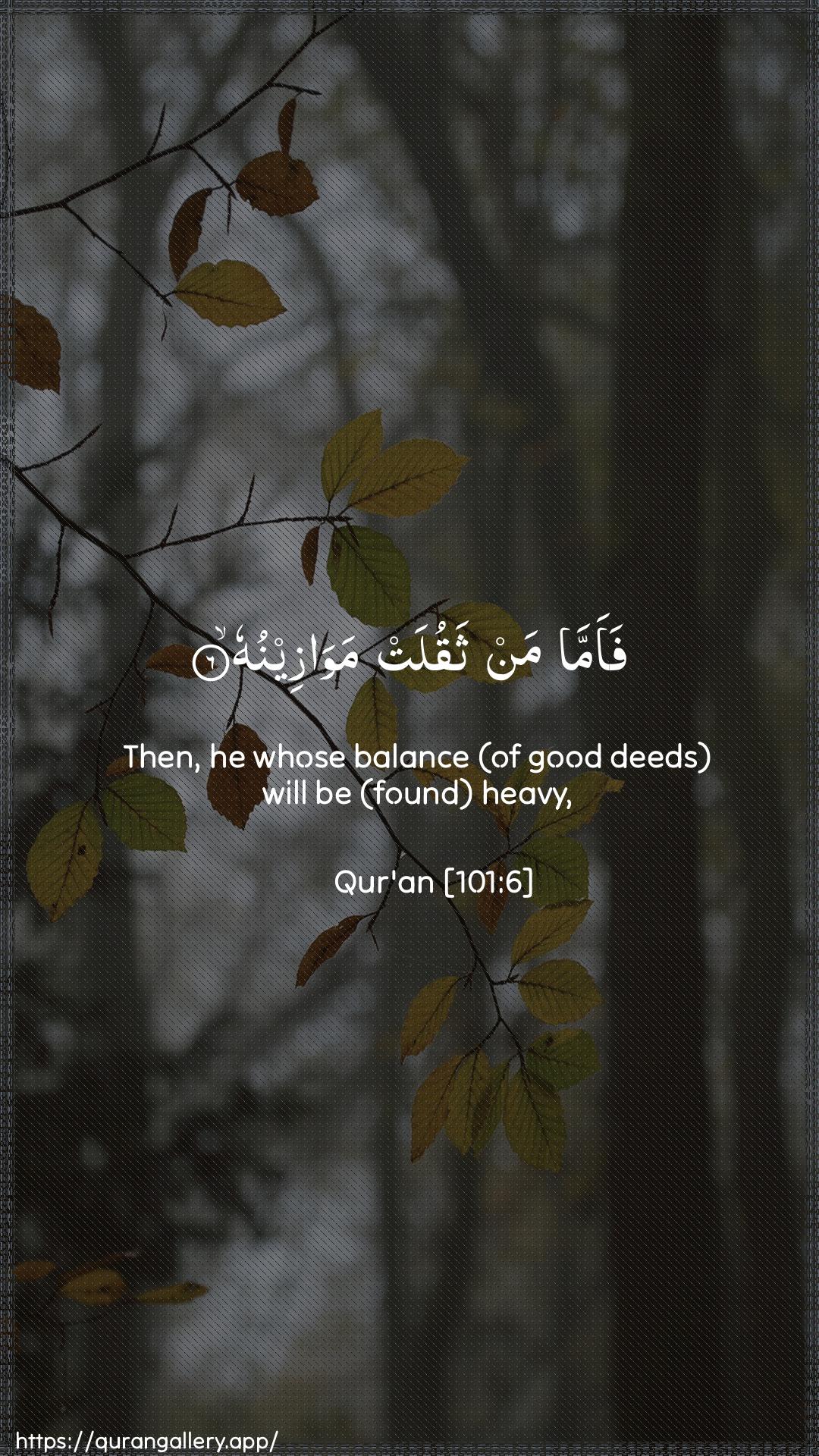
Arabic + English
Arabic (Wide)
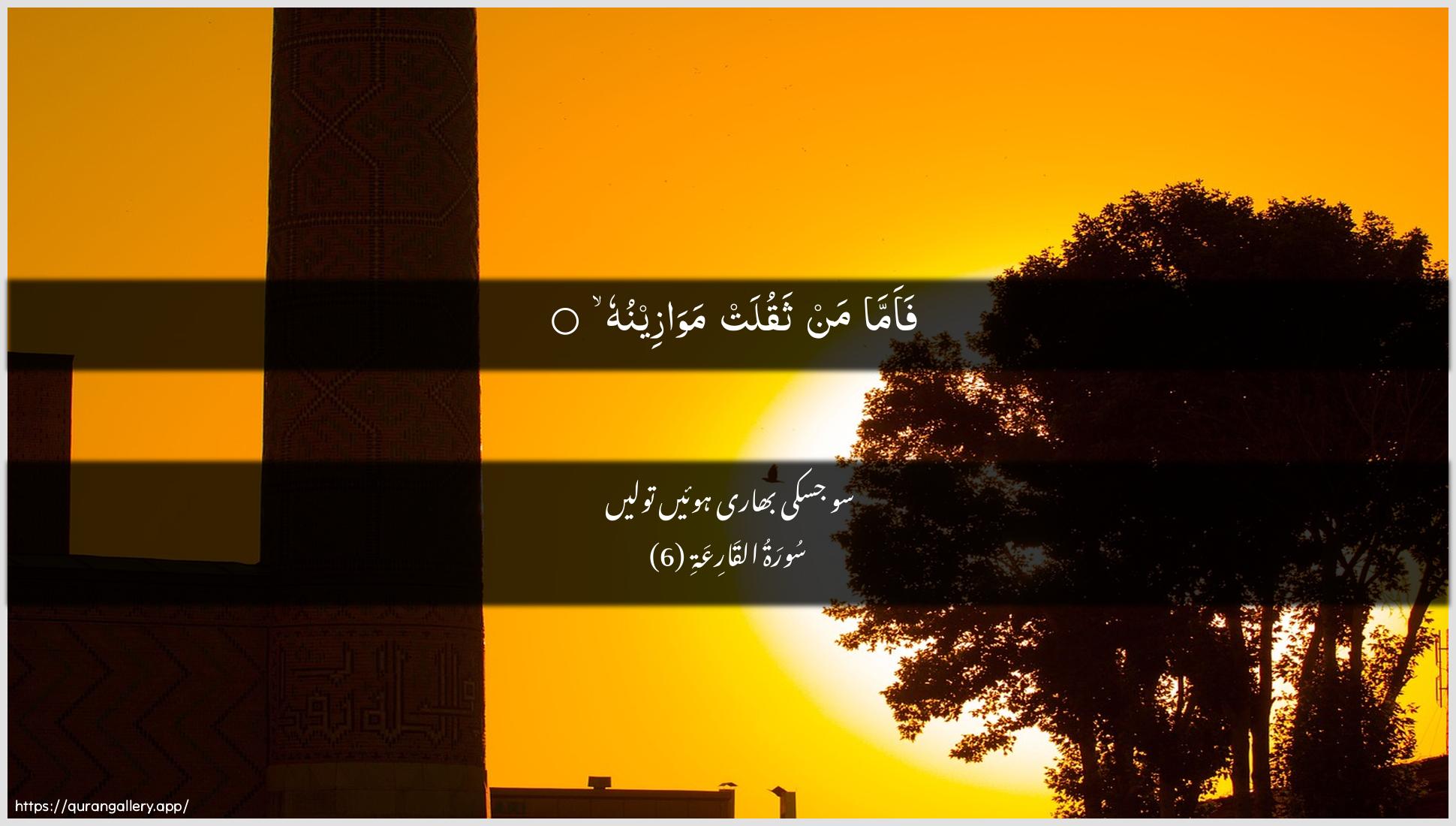
Arabic + Urdu
Free for personal & educational use with attribution
Quick Facts about this Verse
Surah
Al-Qaari"a
Revealed
Makki
Position
Juz 30
Explore this Verse
Verse Meaning
According to the classical exegete Imam Al-Tabari, Quran 101:6, 'Then as for he whose scales are heavy,' refers to the literal weighing of a person's good and bad deeds on the Day of Judgment. This interpretation is strongly supported by a consensus of major scholars, including Ibn Kathir, As-Sa'di, and Al-Qurtubi, who all explain that the 'heavy scales' (ثَقُلَتْ مَوَازِينُهُ) signify a state where one's righteous actions outweigh their sins. Al-Qurtubi elaborates on the nature of these scales (Mizan), citing narrations that describe a real, physical balance with two pans where the scrolls of deeds will be placed. While the concept is profound, the scholarly agreement points to a tangible, just, and decisive moment of accountability. Dr. Israr Ahmad adds a modern perspective, suggesting this 'heaviness' is not just about quantity but is measured against a unique standard of righteousness set for each individual based on their God-given capacity. Ultimately, this verse provides a clear and powerful image of salvation: success in the Hereafter is for those whose life's work of goodness has tangible weight and value in the sight of Allah.
Questions for Reflection
The Reality of the Scales
Imam Al-Qurtubi emphasizes that the scales are a physical reality on the Day of Judgment. Close your eyes and visualize this moment. What emotions arise when you think of your entire life's deeds being placed on a tangible scale for all to see? How does this reality shift your perspective on your actions today?
The 'Weight' of Your Daily Habits
Ibn Kathir and other scholars explain that every good deed has a weight. Reflect on your three most common daily habits. What is their spiritual 'weight'? Are they contributing to a heavy scale or a light one? What one small change could you make to increase the positive weight of your routine?
The Nature of a 'Heavy' Deed
Scholars agree that sincerity (ikhlas) and following the Sunnah give deeds their weight. Think of a good deed you performed recently. Contemplate your intention behind it. Was it purely for Allah, or were there other motivations mixed in? How can you purify your intentions to ensure every action carries its maximum spiritual weight?
Practical Applications
Focus on the 'weight' of sincerity in small, daily actions, such as a kind word or helping another.
In a world focused on measurable achievements, prioritize the inner state of sincerity in your work, family interactions, and personal worship.
Revive a forgotten Sunnah of the Prophet (ﷺ) in your daily routine, no matter how small.
This could be using the siwak, reciting the du'as for entering and leaving the home, or observing the etiquette of eating and drinking.
Dedicate a small, consistent portion of your wealth to charity (sadaqah), specifically for a continuous project (Sadaqah Jariyah).
Contributing to the building of a mosque, sponsoring an orphan's education, or supporting the printing of Islamic knowledge.
Hidden Gem
The synthesis of scholarly opinions reveals a transformative insight: the scales do not just measure actions, they measure the heart behind the actions. A simple smile given with pure sincerity for Allah's sake, as mentioned in hadith, could outweigh a grand display of charity done for recognition. This understanding shifts the focus of our spiritual efforts from outward performance to inward purification, which is the true source of a deed's 'weight'.
Common Questions
2 more questions available in the full page