
Yunus - Jonas
Arabic Name: يُوْنـُس
Urdu Name: یونس
Type: Makki
Serial Number: 10
Revelation Order: 51
Total Verses: 109
Parah: 11
Rukus: 11
Sajda: None
Related Hadith
"The Prophet (pbuh) challenged a man on forbidding animals for himself and his family, stating, 'Indeed, whatever Allah has given you is lawful for you.'"
Directly applies the principle of the verse, condemning the human act of making Allah's lawful provisions unlawful.
Share Verse Art
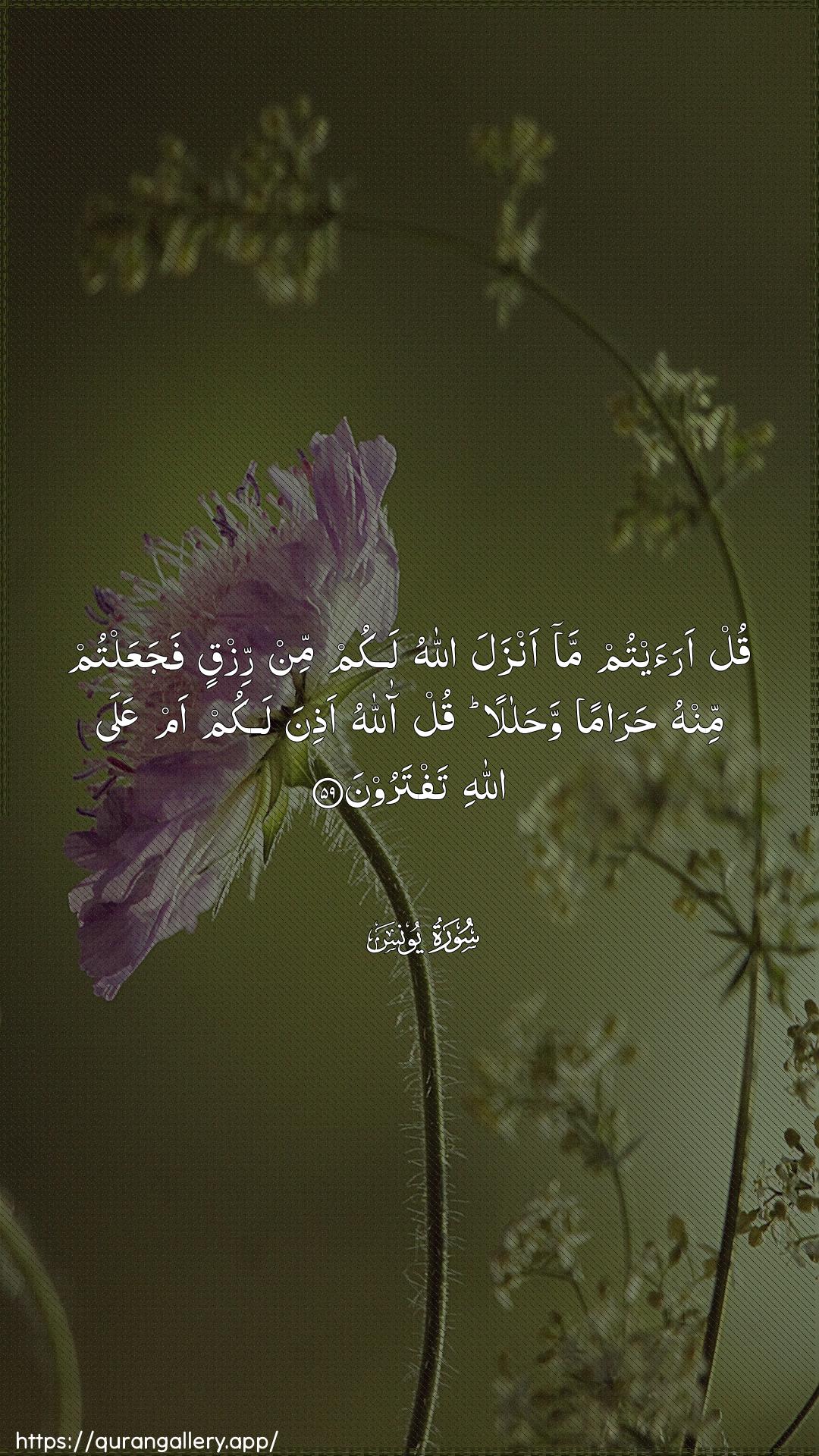
Arabic
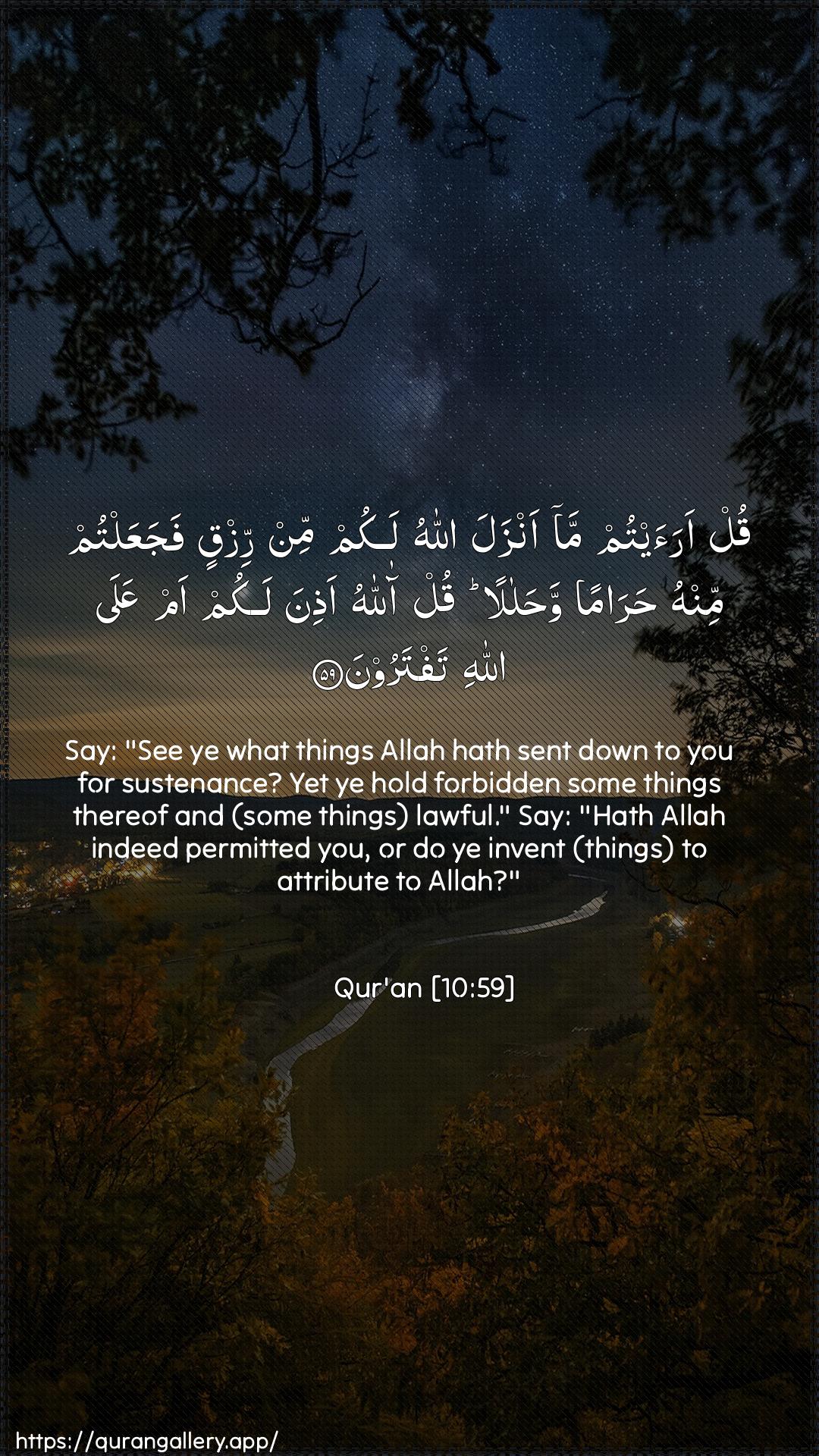
Arabic + English
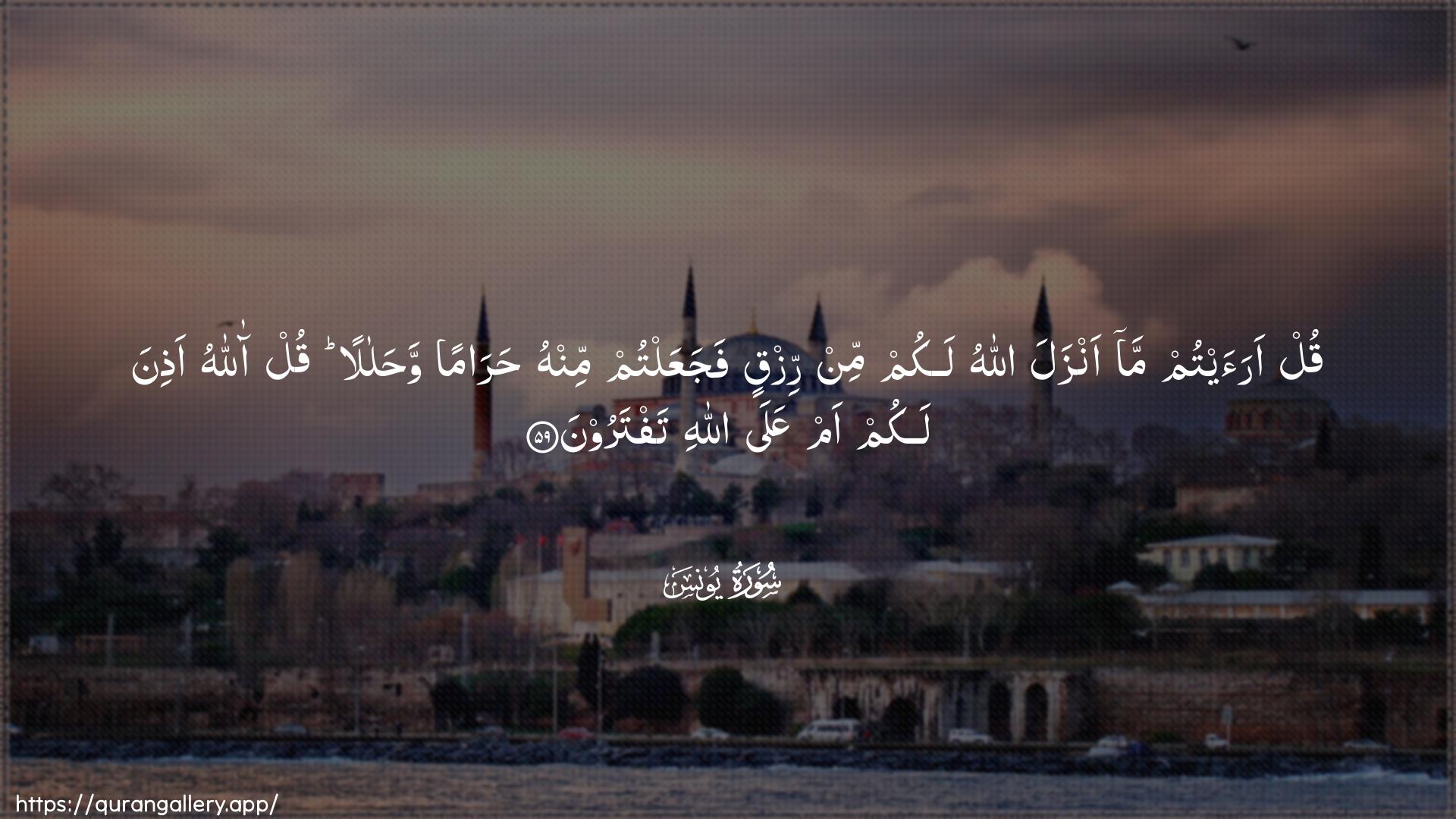
Arabic (Wide)
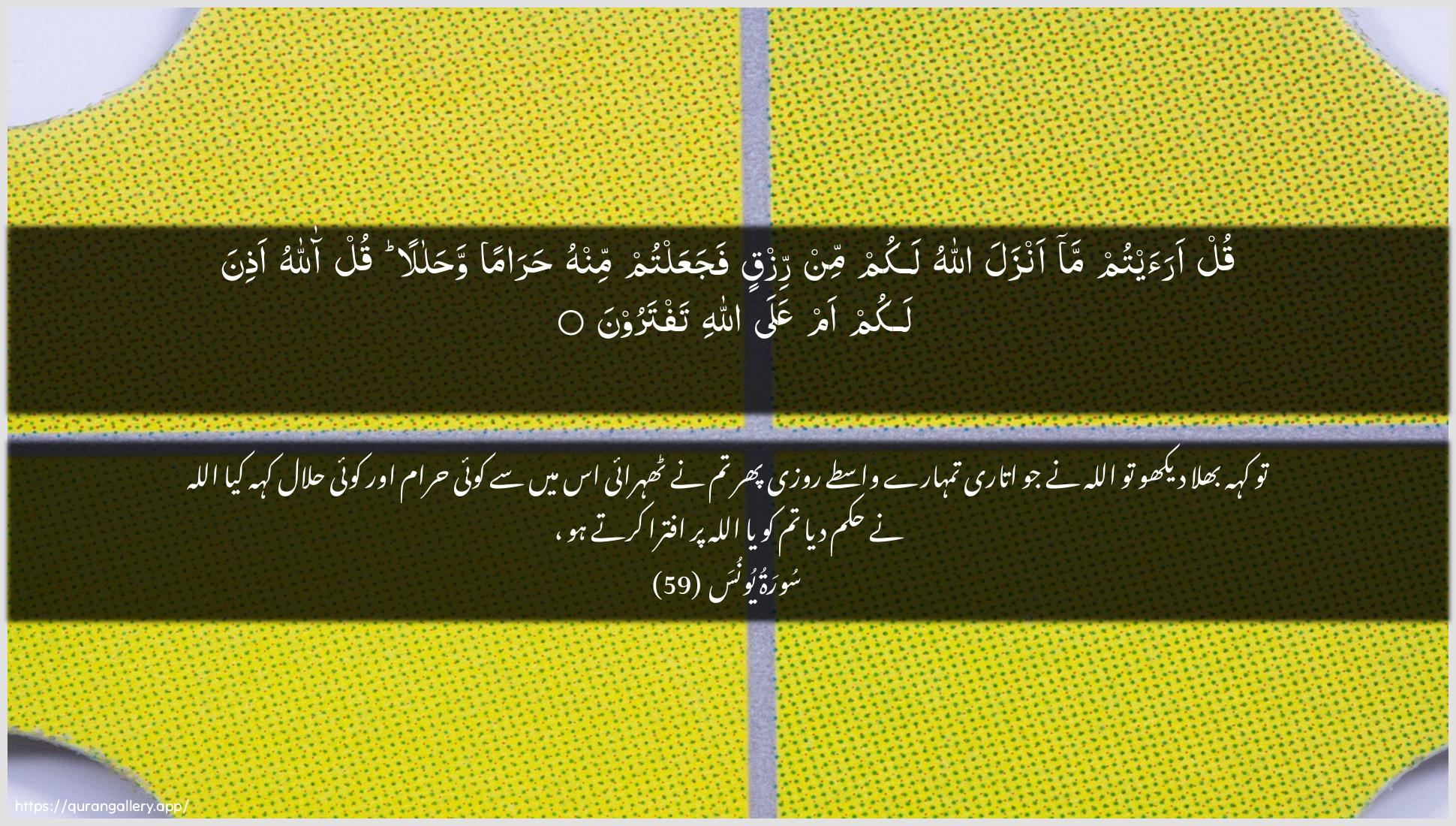
Arabic + Urdu
Free for personal & educational use with attribution
Quick Facts about this Verse
Surah
Yunus
Revealed
Makki
Position
Juz 11
Explore this Verse
Verse Meaning
According to the classical exegetes Imam Al-Tabari and Ibn Kathir, verse 10:59 serves as a direct and powerful rebuke to the pre-Islamic Arab practice of arbitrarily declaring parts of Allah's provision (rizq) as lawful or forbidden. This refers to customs like dedicating certain livestock (the Bahira, Sa'iba, etc.) to idols, thereby making them haram without any divine authority. The verse challenges this legislative arrogance with a pointed question: 'Has Allah permitted you, or do you invent a lie against Allah?' This is not merely a question about dietary rules; it strikes at the heart of Tawheed (monotheism), establishing that the sole right to legislate belongs to Allah alone. To claim this right for oneself or for idols is, as the verse concludes, a form of 'iftira'—fabricating a grave falsehood against God. The synthesis of classical tafsirs shows this verse as a cornerstone of Islamic jurisprudence, affirming that nothing is haram unless explicitly prohibited by Allah and His Messenger.
Questions for Reflection
Personal Authority
Al-Tabari explains this verse rebukes those who invented their own rules. In what subtle ways do I create my own personal 'haram' or 'halal' list based on my comfort, desires, or cultural upbringing, rather than on clear guidance from Allah?
Community Norms
Ibn Kathir links this verse to specific community practices like dedicating animals to idols. What are the modern equivalents in our communities, where cultural traditions are sometimes given the weight of divine law, creating unnecessary hardship or prohibitions?
The Nature of Slander (Iftira)
Al-Qurtubi emphasizes that this act is 'fabricating a lie against Allah'. How does forbidding something Allah made lawful effectively slander His character by portraying Him as more restrictive or less merciful than He truly is? How does this change my perception of religious extremism?
Practical Applications
Before declaring a modern issue 'haram' or 'halal', rigorously verify the ruling with authentic sources (the Quran and authentic Sunnah), freeing yourself from cultural dogmas and personal opinions.
Applicable to debates on modern finance, technology, entertainment, and social customs, ensuring one's stance is based on divine law, not cultural reaction.
Cultivate gratitude for Allah's 'rizq' (provision) by treating everything as permissible by default, unless a clear prohibition exists. This counters the tendency towards self-imposed austerity and negativity.
Helps in making decisions about lifestyle, diet, and enjoyment, encouraging Muslims to enjoy the good things Allah has provided within the clear boundaries He has set.
Hidden Gem
The synthesis of tafsirs reveals a profound spiritual insight: the act of inventing a prohibition is a subtle form of claiming partnership with God (shirk) in His attribute of Al-Hakam (The Judge/Legislator). It is not merely a legal mistake but a theological one, where the human ego attempts to usurp a right that belongs exclusively to the Divine. This transforms our understanding of religious innovation from a procedural error to a challenge against Tawheed.
Scroll to see more verses or use the dropdown in the breadcrumb to jump to any verse
Common Questions
1 more question available in the full page