
Yunus - Jonas
Arabic Name: يُوْنـُس
Urdu Name: یونس
Type: Makki
Serial Number: 10
Revelation Order: 51
Total Verses: 109
Parah: 11
Rukus: 11
Sajda: None
Share Verse Art
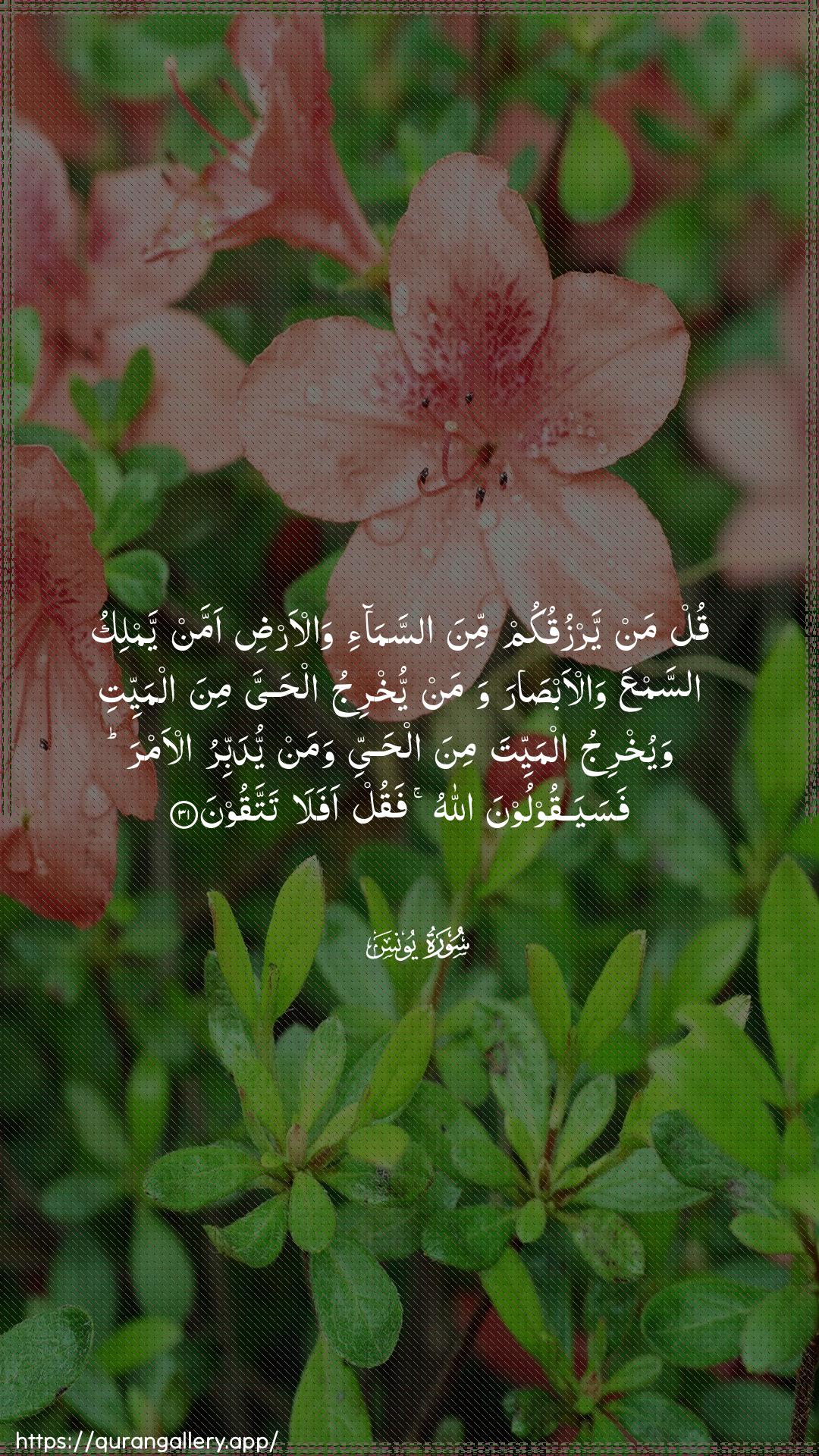
Arabic
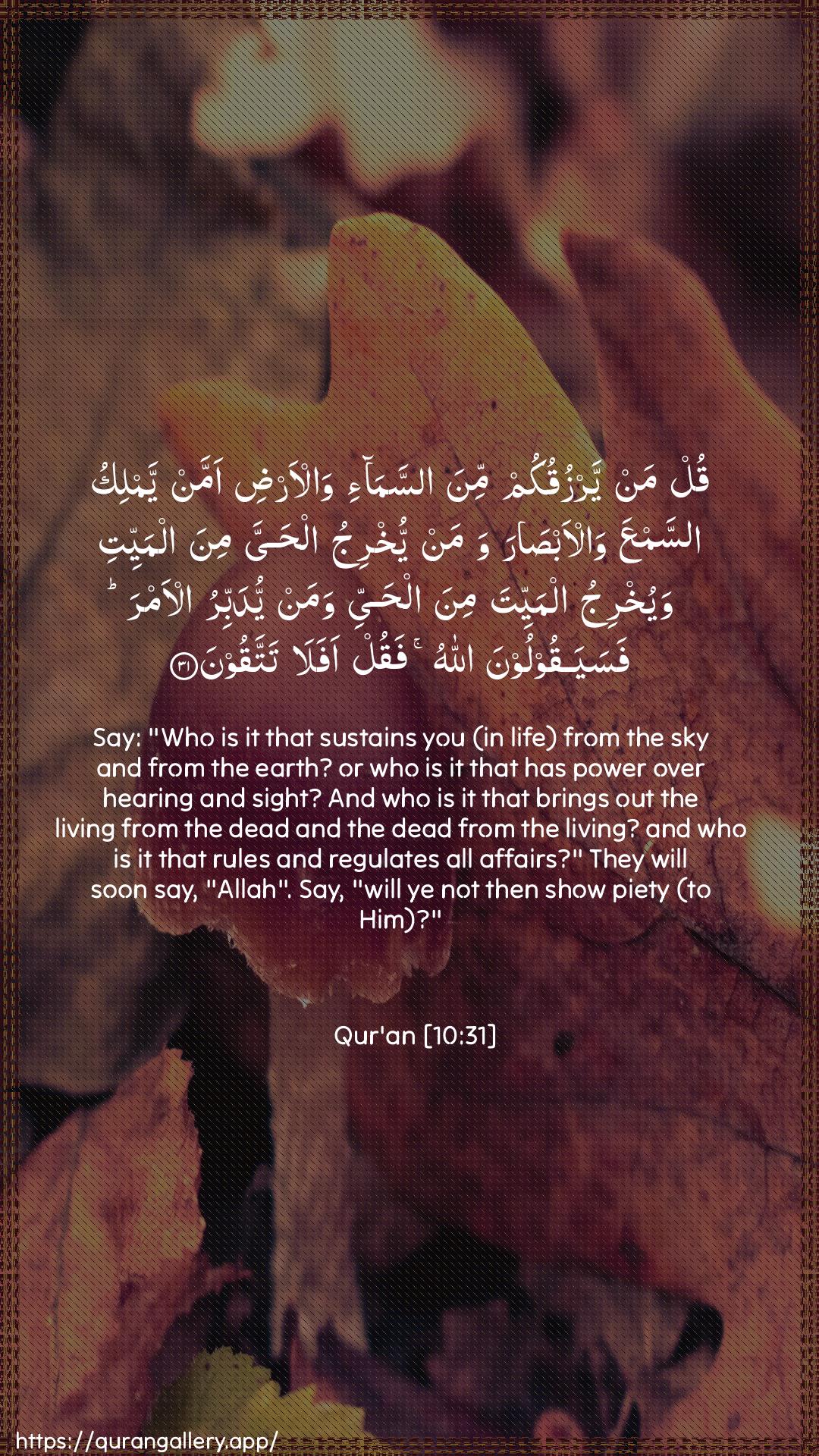
Arabic + English
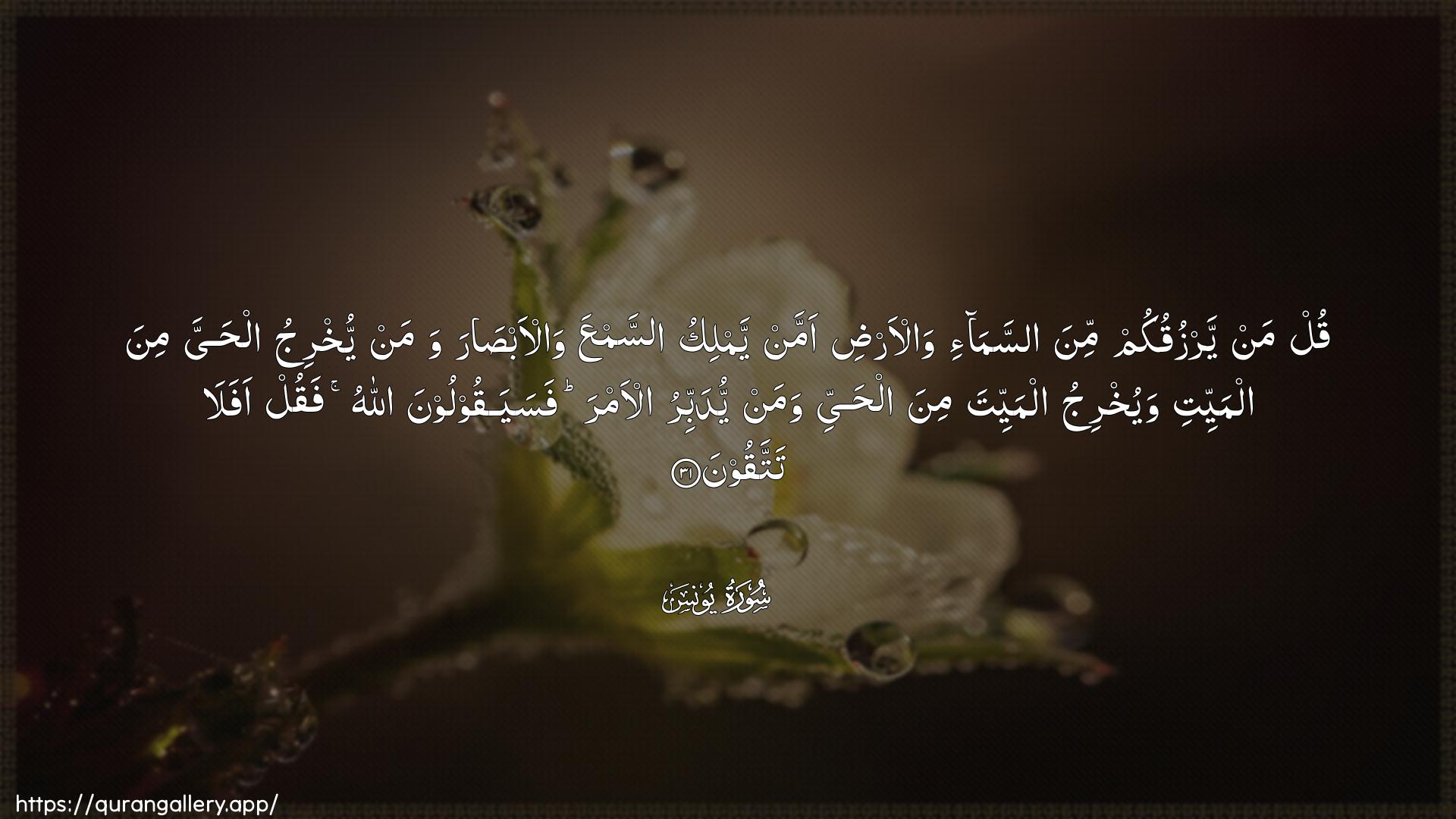
Arabic (Wide)
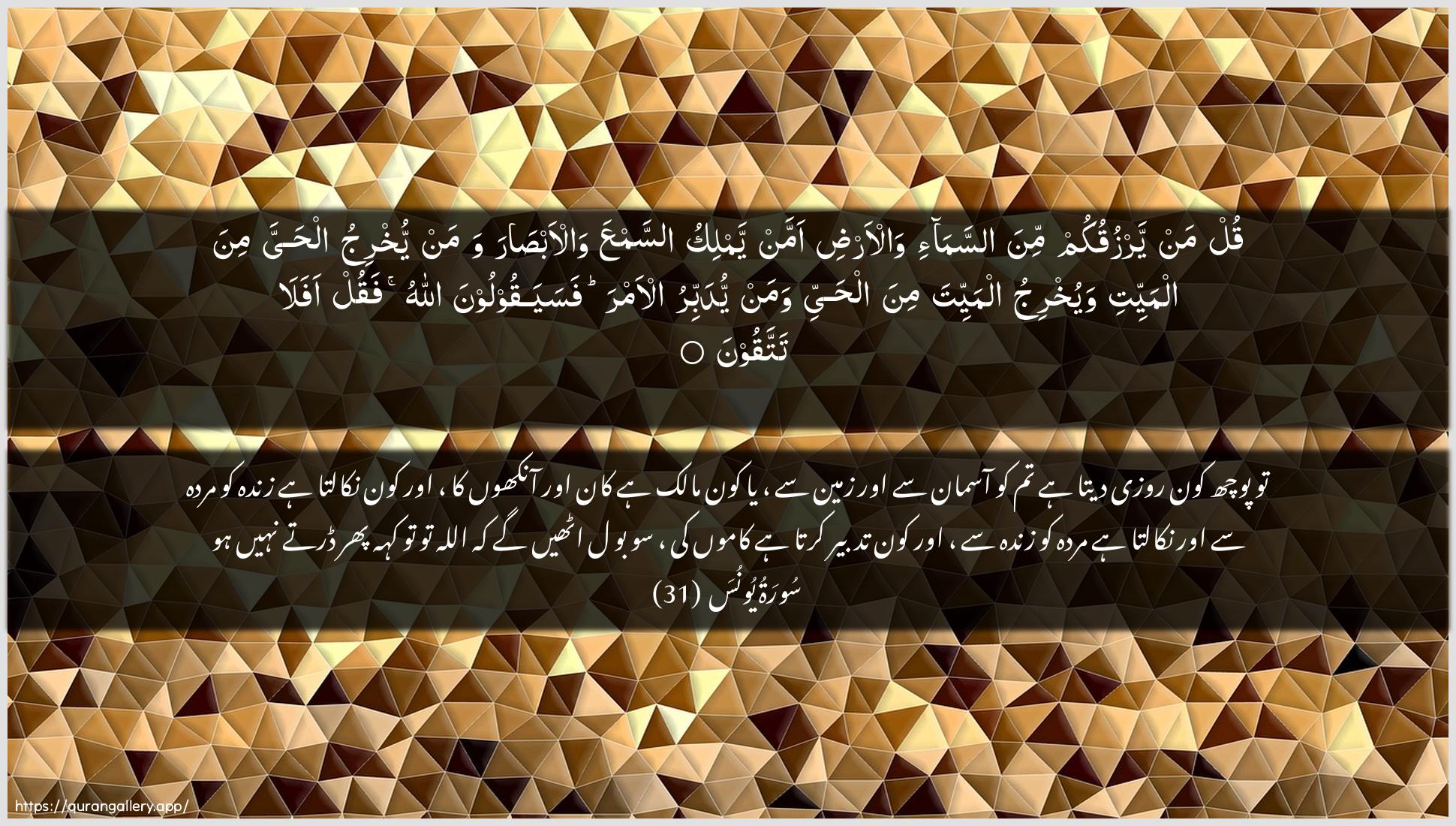
Arabic + Urdu
Free for personal & educational use with attribution
Quick Facts about this Verse
Surah
Yunus
Revealed
Makki
Position
Juz 11
Explore this Verse
Verse Meaning
According to the classical exegete Imam Al-Tabari, Quran 10:31 deploys a series of undeniable questions to establish Allah's absolute Lordship as a proof against polytheism. A comprehensive review of tafsirs shows how Ibn Kathir emphasizes these questions as proofs from creation that the pagans could not deny, while Al-Qurtubi highlights the rational inevitability of their admission. The synthesis of these scholarly views reveals a profound truth: the verse's power lies in using the polytheists' own foundational belief in Allah as the Supreme Creator and Sustainer (Tawhid al-Rububiyyah) to expose the illogical and contradictory nature of their idol worship (Shirk). What emerges from this comprehensive analysis is the hidden gem that this verse is a perfect encapsulation of the Quranic argumentative method. It doesn't introduce new information to the pagans but rather forces them to confront the logical consequences of what they already concede. As As-Sa'di explains, by admitting Allah alone controls sustenance, senses, life, death, and the entire administration of the cosmos, they leave no logical room for any other being to be worthy of worship. The final challenge, 'Then will you not fear Him?' is not a question of belief, but of spiritual and intellectual integrity. The linguistic synthesis across tafsirs highlights the power of the phrase 'Fasayaqulun Allah' ('They will say, "Allah"'), which denotes a certain and swift admission. This admission, as Ibn Kathir notes, makes their subsequent polytheism an act of profound inconsistency. The verse masterfully demonstrates that the path to pure monotheism (Tawhid al-Uluhiyyah) is the only logical conclusion after acknowledging Allah's supreme Lordship.
Questions for Reflection
Personal Ownership vs. Divine Ownership
Ibn Kathir draws attention to 'Who owns your hearing and sight?' You say 'my eyes' and 'my ears,' but this verse challenges that possessive pronoun. Contemplate a moment today when you used your sight or hearing. In that moment, did you act as a temporary trustee or as an absolute owner? How would your use of these faculties change if you truly internalized that Allah is the ultimate Malik (Owner)?
The Gap Between Admission and Action
Al-Qurtubi emphasizes the final, piercing question: 'Will you not then have Taqwa?' The pagans would easily say 'Allah' to the first five questions. The real challenge was the last one. Reflect on an area of your life where your tongue is quick to say 'Alhamdulillah' or 'Insha'Allah,' but your actions show anxiety, attachment, or disobedience. What exists in that gap between your verbal admission and your practical Taqwa?
Witnessing 'Living from the Dead'
The verse speaks of bringing the living from the dead. Scholars give examples like a plant from a seed or a believer from a disbeliever. Look at your own life or the world around you today. Where can you witness this process? Contemplate a 'dead' situation (a hopeless project, a hardened heart, a barren land after winter) and reflect on how acknowledging Allah as the One who brings forth life can instill hope, patience, and trust in His divine plan (`Tadbir al-Amr`).
Practical Applications
Conduct a daily 'Rububiyyah Audit': Actively identify five blessings—from the food you eat (rizq) to your ability to see and hear (sam' wal-abṣār)—and consciously trace them back to Allah as the ultimate source and manager (Mudabbir al-Amr).
In a world of distractions, this serves as a powerful mindfulness exercise to reconnect with the Divine Source of all blessings, from your internet connection to your heartbeat.
Use the verse's five questions as an 'Integrity Filter' for your decisions. Before a major choice, ask: 'Which path acknowledges Allah as the true Provider, Owner of my faculties, Giver of Life, and Controller of this affair?'
Apply this to career choices, financial decisions, and even interpersonal conflicts to ensure your actions align with your core faith.
Hidden Gem
The synthesis of tafsirs reveals that the verse is structured like a funnel. It starts with broad, cosmic questions (sustenance from heaven/earth) and funnels down to the most intimate reality (your own hearing and sight), and then culminates in the ultimate question of personal accountability ('Afala tattaqun?'). The hidden insight is that contemplation should follow this path: from the universal to the personal, leading inevitably to self-assessment.
Scroll to see more verses or use the dropdown in the breadcrumb to jump to any verse
Common Questions
3 more questions available in the full page