
Al-Ikhlaas - Sincerity
Arabic Name: الْإِخْلاَص
Urdu Name: اخلاص
Type: Makki
Serial Number: 112
Revelation Order: 22
Total Verses: 4
Parah: 30
Rukus: 1
Sajda: None
Related Hadith
"A Hadith Qudsi where Allah says: '...The son of Adam insults me... by saying I have a son, while I am The One, The Self-Sufficient Master, Who begets not, nor was He begotten, and there is none comparable to Him.'"
This is a direct divine affirmation of the verse's text and meaning, cited by Ibn Kathir to show its ultimate authority and the gravity of contradicting it.
Share Verse Art
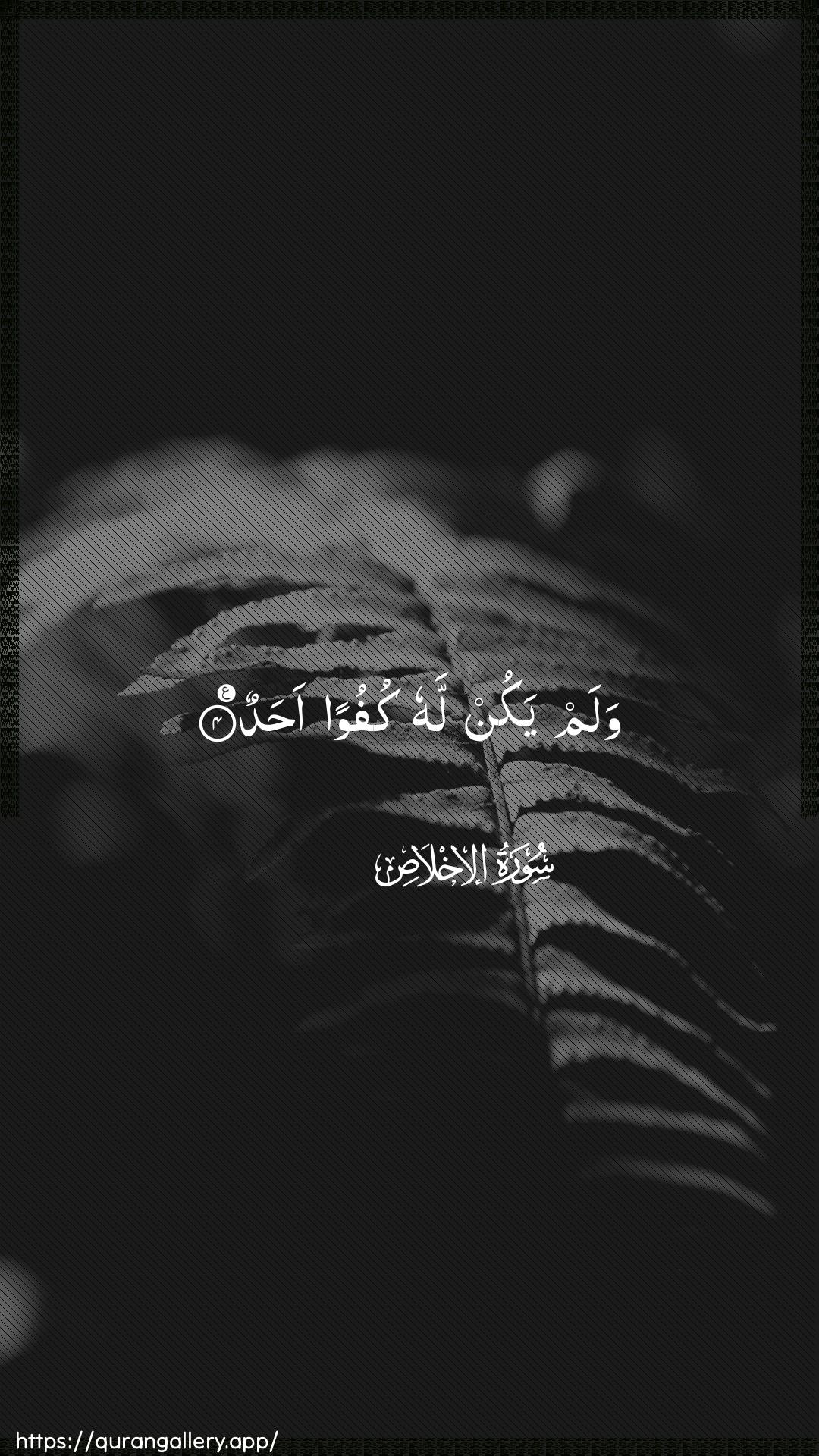
Arabic
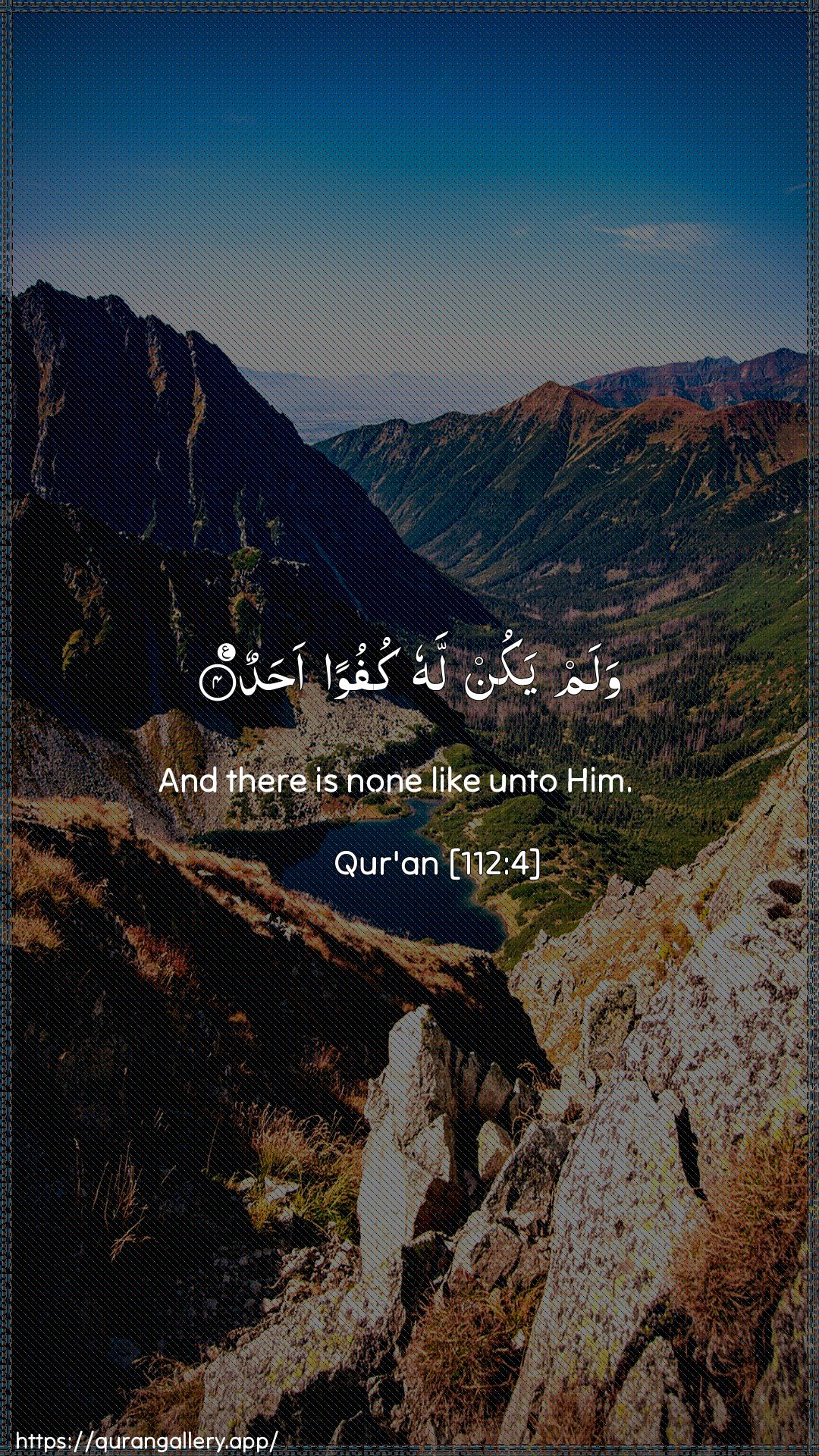
Arabic + English
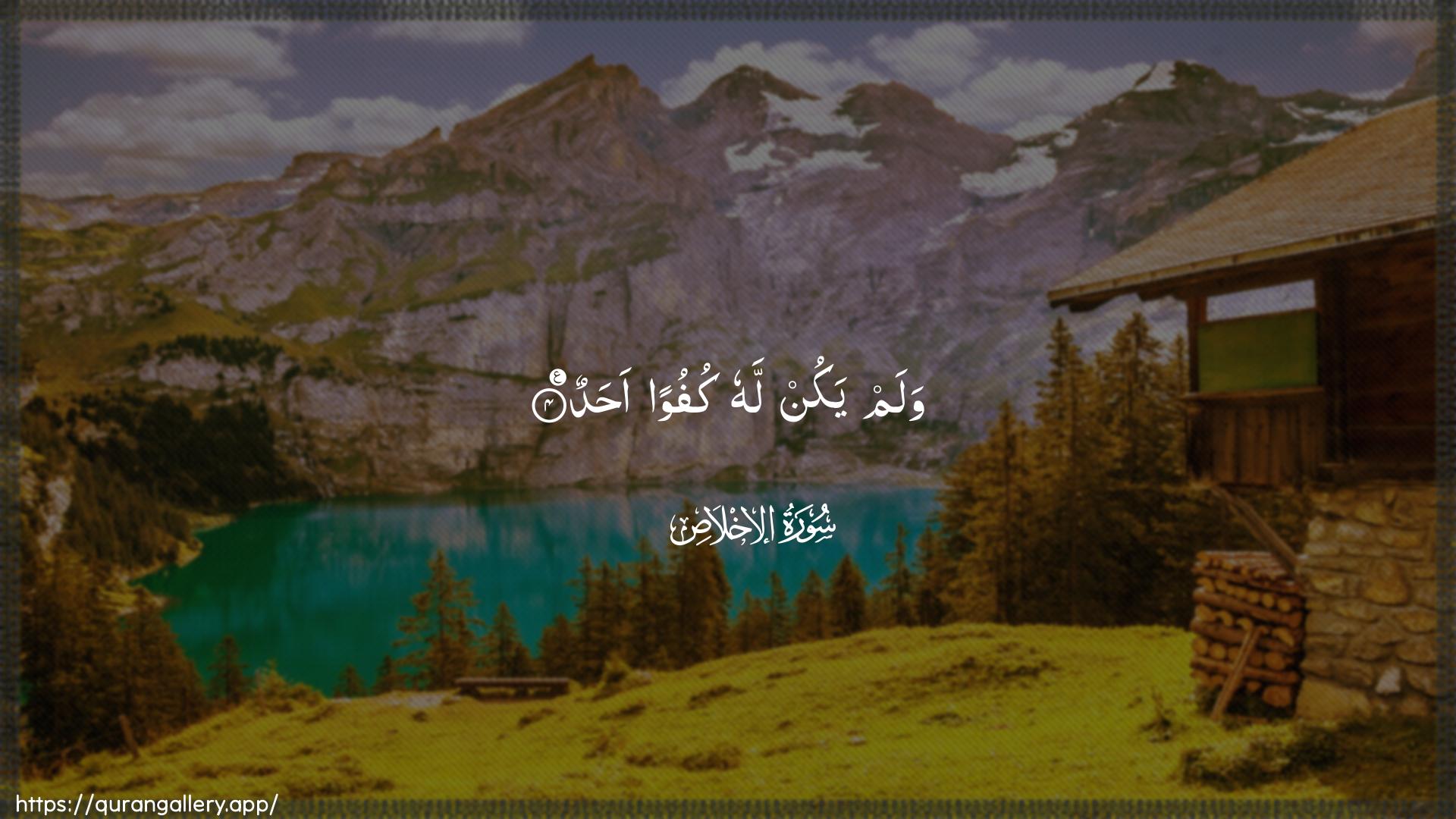
Arabic (Wide)
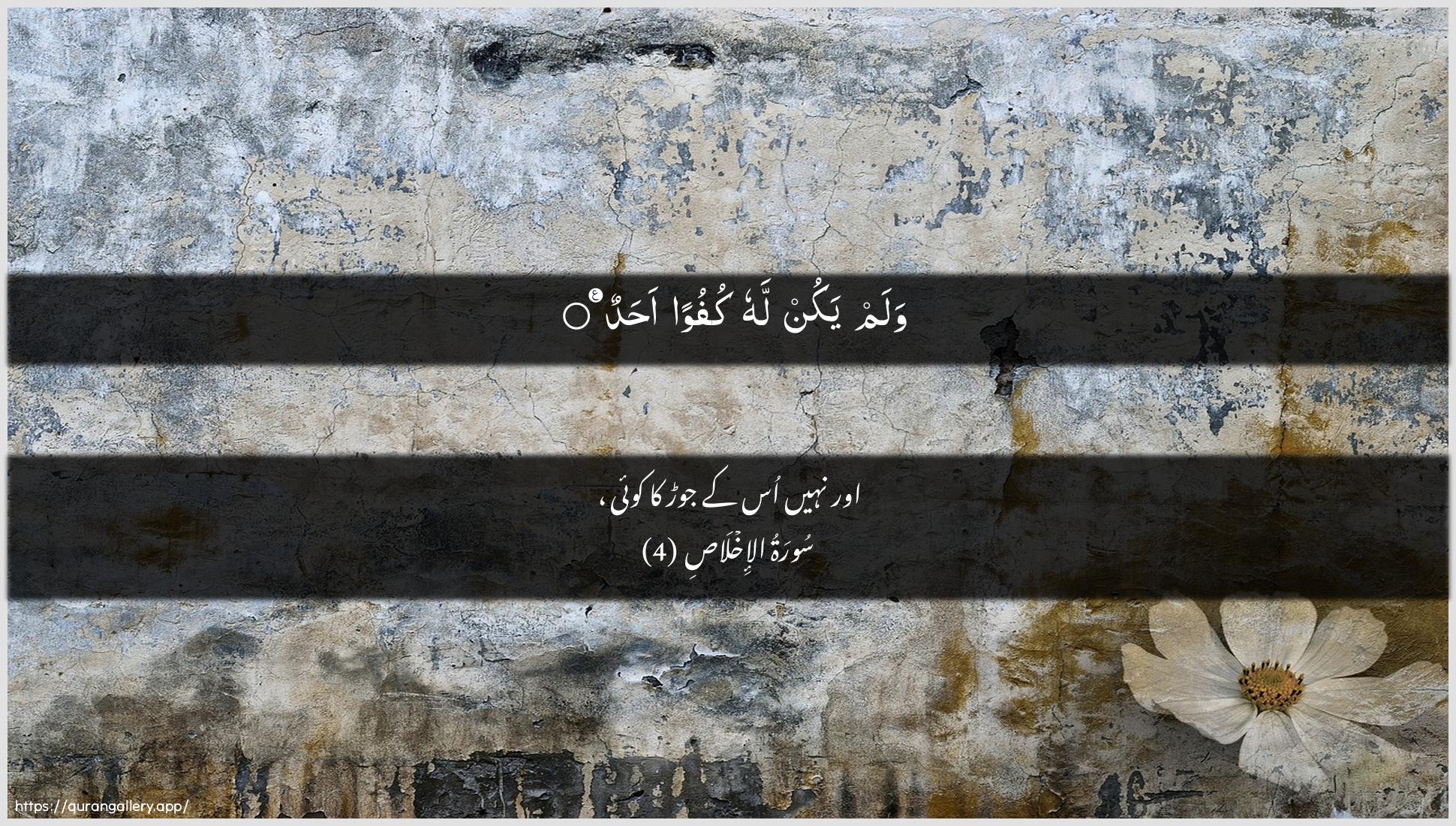
Arabic + Urdu
Free for personal & educational use with attribution
Quick Facts about this Verse
Surah
Al-Ikhlaas
Revealed
Makki
Position
Juz 30
Explore this Verse
Verse Meaning
According to the classical scholar Imam Al-Tabari, the verse 'Walam yakun lahu kufuwan ahad' (And there is none comparable to Him) serves as the ultimate theological conclusion to Surah Al-Ikhlas, unequivocally negating any form of similarity or equivalence for Allah. The word 'kufuwan' linguistically means a match, a peer, or an equal. Ibn Kathir's tafsir expands on this, explaining that this incomparability applies to Allah's essence, His attributes, and His actions; nothing in creation can be likened to the Creator. This is further clarified by the scholar Mujahid, who, as cited by both Ibn Kathir and Al-Tabari, interpreted this verse to specifically mean that Allah has no 'sahibah' (consort or spouse), thereby refuting the very basis for the claim that He could have a child. This comprehensive synthesis from classical tafsirs reveals that the verse is not merely a statement of abstract uniqueness but a direct refutation of polytheistic beliefs, such as those assigning partners, daughters, or sons to God. It establishes a core tenet of Tawheed (divine oneness): Allah is absolutely transcendent, beyond any comparison, partnership, or likeness, a principle echoed in the Quranic statement, 'There is nothing like unto Him' (42:11).
Questions for Reflection
Textual Contemplation
Imam Al-Tabari discusses the linguistic meaning of 'kufu' as a 'shabih' (likeness) and 'mithl' (similar). Reflect on the subtle differences between these words. How does Allah's negation of even the slightest similarity in this verse deepen your awe of His transcendence?
Personal Transformation
Ibn Kathir cites the Hadith Qudsi where Allah states that the gravest insult is to assign a son to Him, concluding with 'and there is none comparable to Me.' Reflect on your own life: are there subtle ways you might be treating created things (a job, a relationship, a personal goal) as an 'equal' to Allah in terms of your hope, fear, or devotion?
Relational Wisdom
Mujahid, as reported by Ibn Kathir and Al-Tabari, interpreted this verse as meaning Allah has no 'sahibah' (consort/partner). Contemplate how this divine reality should inform your understanding of human relationships. How does knowing that Allah is utterly independent and without peer help you form healthier, less dependent relationships with others?
Practical Applications
Liberate yourself from the fear of creation by internalizing that no being possesses power comparable to Allah's.
Apply this when facing workplace intimidation, peer pressure to compromise principles, or overwhelming anxiety about the future.
Purify your intentions in all actions by reminding yourself that no one's approval or validation is equivalent to Allah's.
Use this as a mental check before posting on social media, undertaking a major project, or doing an act of charity.
Cure the disease of envy and comparison by focusing on the absolute uniqueness of the Creator and the distinctness of His creation.
Contemplate this when feeling envy over someone's career, possessions, or life circumstances.
Hidden Gem
The synthesis reveals a profound spiritual insight: the verse's structure, 'Walam yakun lahu...' (And there *never has been* for Him...), uses a past-tense negation to affirm an eternal truth. Al-Tabari's linguistic focus combined with Ibn Kathir's theological explanation shows that Allah's uniqueness is not a recent development but an absolute, timeless reality. Contemplating this transforms the concept from a static fact into a dynamic, eternal principle that governs all of reality, past, present, and future.
Common Questions
2 more questions available in the full page